Solo travel is on the rise and almost 85 per cent of lone travellers are women, according to a recent study.
Supporting the report by ferry operator Condor Ferries, the main reasons women love to travel alone are freedom and flexibility, the opportunity to relax and enjoy “me time” and to challenge themselves, finds Statista. At the same time, they report worries about personal safety, higher costs, language barriers and getting lost.
The National rounds up seven of the best destinations for women travelling alone this year.
Iceland
The land of fire and ice has secured the top spot on the Global Peace Index for 17 consecutive years, as Iceland’s commitment to safety creates an environment where women can explore alone with confidence.
The country’s low crime rates foster a sense of security making ethereal landscapes such as geysers, waterfalls and volcanoes easy to explore. There are also plenty of chances to discover its fascinating culture and mingle with friendly locals.
Drive around the Golden Circle, which is easy to navigate, head into the depths of the wilderness in a camper van or simply relax in the hot springs around Reykjavik, where a combination of upmarket restaurants meet cool museums and artisanal boutiques.
Iceland also keenly focuses on gender equality and responsible tourism.
Galapagos Islands
This Ecuadorian archipelago offers an extraordinary experience for solo adventurers, with fascinating natural beauty protected by strict tourism regulations.
This year, it has been named one of the top destinations for solo travel by Flash Pack, a tour company that specialises in organising adventure trips for solo travellers in their thirties and forties.
The Galapagos are home to an extraordinary wealth of marine life and offer unique biodiversity on land and underwater.
Small group tours are also ideal for anyone looking to enjoy their independence while making friends along the way.
Japan
This is the year of Japan as, after almost 1,000 days of being closed to tourists during Covid, the world is returning.
While it’s popular with most traveller demographics, the country is also ninth on the Global Peace Index and topped Flash Pack’s list of top solo destinations this year.
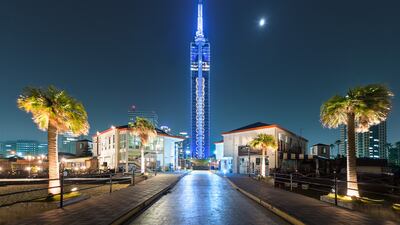
Whether you’re heading for the bustle of Tokyo, the quirky corners of Osaka, the majestic Mount Fuji or to experience the natural beauty of Kyoto, the country seamlessly blends tradition with modernity. It offers a diverse range of experiences, from visiting ancient temples to gawping at futuristic skyscrapers.
Canada
Travel experiences to witness the aurora borealis, or northern lights, are in high demand this year, as visibility is projected to be better than it has been in more than a decade.
For solo female travellers, Canada is a great option, particularly the quaint town of Churchill, Manitoba, where Natural Habitat Adventures offers women-only excursions to see the lights in unique situations.
Churchill’s strategic location under the auroral oval enhances the chances of clear, prime viewing conditions. Meanwhile, the tour company provides a supportive atmosphere for women, fostering camaraderie among like-minded adventurers, and organises Arctic activities such as snowshoeing and dog sledding.
The UAE
The UAE’s cities have often been ranked among the safest, especially Abu Dhabi, which has held online cost-of-living database Numbeo’s title of world’s safest city since 2017. It offers a deep and culturally rich experience with attractions such as Sheikh Zayed Grand Mosque and Louvre Abu Dhabi.
Dubai also stands as a beacon of security, offering travellers a taste of cosmopolitan luxury in some of the planet’s most famous landmarks.
For adventure seekers, there’s Ras Al Khaimah, which has plenty to offer outdoors, and Fujairah is great for keen divers.
This combination makes it one of the most popular destinations among solo female travellers.
Sri Lanka
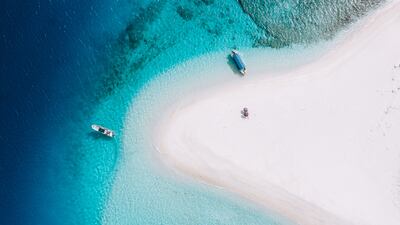
Ranking fourth on Flash Pack’s list of top solo destinations this year is Sri Lanka, where ancient history meets natural beauty and some of the warmest hospitality you’ll come across.
The island nation, nestled in the Indian Ocean, has a rich blend of temples, tea plantations, hikes and coastal wellness retreats. There are seaside towns such as Galle, bohemian escapes in the mountains like Ella and a bustling city vibe in Kandy.
The country’s climactic warmth extends to its people and the welcoming atmosphere for tourists.
Antarctica
As one of the most isolated and pristine environments on Earth, Antarctica is becoming an increasingly sought-after destination. With strict tourism regulations, it’s a great option for women going it alone.
The continent’s growing popularity among tourists is a testament to its rugged landscapes, diverse wildlife and unparalleled sense of remoteness.
Solo female travellers can join organised expeditions, navigate the icy waters and witness wildlife in their natural habitat, from penguins to seals and walruses.
Pick a reputable company and tread lightly since the continent is one of the last frontiers of tourism.

SM Town Live is on Friday, April 6 at Autism Rocks Arena, Dubai. Tickets are Dh375 at www.platinumlist.net
Ten tax points to be aware of in 2026
1. Domestic VAT refund amendments: request your refund within five years
If a business does not apply for the refund on time, they lose their credit.
2. E-invoicing in the UAE
Businesses should continue preparing for the implementation of e-invoicing in the UAE, with 2026 a preparation and transition period ahead of phased mandatory adoption.
3. More tax audits
Tax authorities are increasingly using data already available across multiple filings to identify audit risks.
4. More beneficial VAT and excise tax penalty regime
Tax disputes are expected to become more frequent and more structured, with clearer administrative objection and appeal processes. The UAE has adopted a new penalty regime for VAT and excise disputes, which now mirrors the penalty regime for corporate tax.
5. Greater emphasis on statutory audit
There is a greater need for the accuracy of financial statements. The International Financial Reporting Standards standards need to be strictly adhered to and, as a result, the quality of the audits will need to increase.
6. Further transfer pricing enforcement
Transfer pricing enforcement, which refers to the practice of establishing prices for internal transactions between related entities, is expected to broaden in scope. The UAE will shortly open the possibility to negotiate advance pricing agreements, or essentially rulings for transfer pricing purposes.
7. Limited time periods for audits
Recent amendments also introduce a default five-year limitation period for tax audits and assessments, subject to specific statutory exceptions. While the standard audit and assessment period is five years, this may be extended to up to 15 years in cases involving fraud or tax evasion.
8. Pillar 2 implementation
Many multinational groups will begin to feel the practical effect of the Domestic Minimum Top-Up Tax (DMTT), the UAE's implementation of the OECD’s global minimum tax under Pillar 2. While the rules apply for financial years starting on or after January 1, 2025, it is 2026 that marks the transition to an operational phase.
9. Reduced compliance obligations for imported goods and services
Businesses that apply the reverse-charge mechanism for VAT purposes in the UAE may benefit from reduced compliance obligations.
10. Substance and CbC reporting focus
Tax authorities are expected to continue strengthening the enforcement of economic substance and Country-by-Country (CbC) reporting frameworks. In the UAE, these regimes are increasingly being used as risk-assessment tools, providing tax authorities with a comprehensive view of multinational groups’ global footprints and enabling them to assess whether profits are aligned with real economic activity.
Contributed by Thomas Vanhee and Hend Rashwan, Aurifer
The Details
Article 15
Produced by: Carnival Cinemas, Zee Studios
Directed by: Anubhav Sinha
Starring: Ayushmann Khurrana, Kumud Mishra, Manoj Pahwa, Sayani Gupta, Zeeshan Ayyub
Our rating: 4/5
Ticket prices
General admission Dh295 (under-three free)
Buy a four-person Family & Friends ticket and pay for only three tickets, so the fourth family member is free
Buy tickets at: wbworldabudhabi.com/en/tickets
Scoreline
Syria 1-1 Australia
Syria Al Somah 85'
Australia Kruse 40'
Like a Fading Shadow
Antonio Muñoz Molina
Translated from the Spanish by Camilo A. Ramirez
Tuskar Rock Press (pp. 310)
Mercer, the investment consulting arm of US services company Marsh & McLennan, expects its wealth division to at least double its assets under management (AUM) in the Middle East as wealth in the region continues to grow despite economic headwinds, a company official said.
Mercer Wealth, which globally has $160 billion in AUM, plans to boost its AUM in the region to $2-$3bn in the next 2-3 years from the present $1bn, said Yasir AbuShaban, a Dubai-based principal with Mercer Wealth.
“Within the next two to three years, we are looking at reaching $2 to $3 billion as a conservative estimate and we do see an opportunity to do so,” said Mr AbuShaban.
Mercer does not directly make investments, but allocates clients’ money they have discretion to, to professional asset managers. They also provide advice to clients.
“We have buying power. We can negotiate on their (client’s) behalf with asset managers to provide them lower fees than they otherwise would have to get on their own,” he added.
Mercer Wealth’s clients include sovereign wealth funds, family offices, and insurance companies among others.
From its office in Dubai, Mercer also looks after Africa, India and Turkey, where they also see opportunity for growth.
Wealth creation in Middle East and Africa (MEA) grew 8.5 per cent to $8.1 trillion last year from $7.5tn in 2015, higher than last year’s global average of 6 per cent and the second-highest growth in a region after Asia-Pacific which grew 9.9 per cent, according to consultancy Boston Consulting Group (BCG). In the region, where wealth grew just 1.9 per cent in 2015 compared with 2014, a pickup in oil prices has helped in wealth generation.
BCG is forecasting MEA wealth will rise to $12tn by 2021, growing at an annual average of 8 per cent.
Drivers of wealth generation in the region will be split evenly between new wealth creation and growth of performance of existing assets, according to BCG.
Another general trend in the region is clients’ looking for a comprehensive approach to investing, according to Mr AbuShaban.
“Institutional investors or some of the families are seeing a slowdown in the available capital they have to invest and in that sense they are looking at optimizing the way they manage their portfolios and making sure they are not investing haphazardly and different parts of their investment are working together,” said Mr AbuShaban.
Some clients also have a higher appetite for risk, given the low interest-rate environment that does not provide enough yield for some institutional investors. These clients are keen to invest in illiquid assets, such as private equity and infrastructure.
“What we have seen is a desire for higher returns in what has been a low-return environment specifically in various fixed income or bonds,” he said.
“In this environment, we have seen a de facto increase in the risk that clients are taking in things like illiquid investments, private equity investments, infrastructure and private debt, those kind of investments were higher illiquidity results in incrementally higher returns.”
The Abu Dhabi Investment Authority, one of the largest sovereign wealth funds, said in its 2016 report that has gradually increased its exposure in direct private equity and private credit transactions, mainly in Asian markets and especially in China and India. The authority’s private equity department focused on structured equities owing to “their defensive characteristics.”
What are NFTs?
Are non-fungible tokens a currency, asset, or a licensing instrument? Arnab Das, global market strategist EMEA at Invesco, says they are mix of all of three.
You can buy, hold and use NFTs just like US dollars and Bitcoins. “They can appreciate in value and even produce cash flows.”
However, while money is fungible, NFTs are not. “One Bitcoin, dollar, euro or dirham is largely indistinguishable from the next. Nothing ties a dollar bill to a particular owner, for example. Nor does it tie you to to any goods, services or assets you bought with that currency. In contrast, NFTs confer specific ownership,” Mr Das says.
This makes NFTs closer to a piece of intellectual property such as a work of art or licence, as you can claim royalties or profit by exchanging it at a higher value later, Mr Das says. “They could provide a sustainable income stream.”
This income will depend on future demand and use, which makes NFTs difficult to value. “However, there is a credible use case for many forms of intellectual property, notably art, songs, videos,” Mr Das says.