
Novak Djokovic will not be competing in the Miami Open that starts next week after the Serbian star was denied special permission to play in the US.
World No 1 Djokovic is not vaccinated against Covid-19, and currently only international visitors who have taken the vaccine are allowed entry into the country.
Those restrictions are due to be lifted next month and the Serbian had hoped to gain special permission to play in the US this month at Indian Wells and Miami.
Djokovic had to withdraw from the BNP Paribas Open after being unable to secure special dispensation. Miami tournament director James Blake confirmed that Djokovic has also failed in his bid to feature at the Florida tournament.
"We tried to get Novak Djokovic to be allowed to get an exemption, but that wasn't able to happen," Blake told Tennis Channel.
"Obviously, we're one of the premier tournaments in the world, we'd like to have the best players that can play. We did all that we could. We tried to talk to the government, but that's out of our hands."
Florida governor Ron DeSantis and the state's two US senators were among those calling on the Biden administration to allow Djokovic to enter the US and compete at the tournament he has won six times.
Djokovic's opposition to being vaccinated resulted in him missing six important tournaments last season, including the Australian Open and US Open.
With vaccination against Covid-19 no longer required to enter Australia, he competed in this year's Australian Open in January and claimed a 22nd grand slam single title.
The 35-year-old is set to return to action on clay at the Monte Carlo Masters beginning on April 9.
-

Novak Djokovic of Serbia lifts the trophy after beating Stefanos Tsitsipas of Greece 6-3, 7-6, 7-6 to win his 10th Australian Open singles title - and a record-equalling 22nd Grand Slam crown - in Melbourne on Sunday, January 29, 2023. AP -
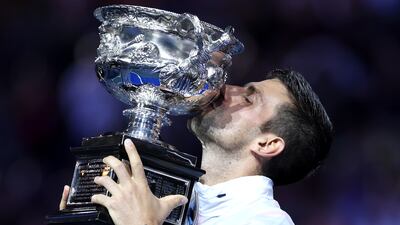
Novak Djokovic kisses the trophy. Getty -
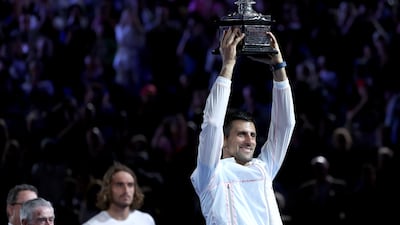
Novak Djokovic lifts the Australian Open trophy. Getty -
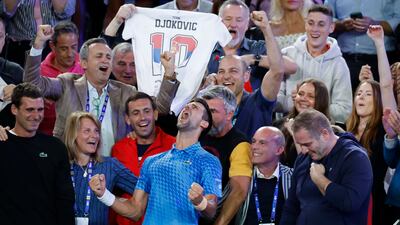
Novak Djokovic celebrates with his team including his mother, Dijana, second left, after defeating Stefanos Tsitsipas. AP -
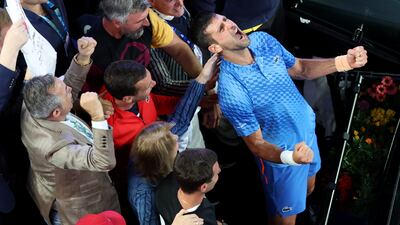
Novak Djokovic of Serbia celebrates his win. Getty -
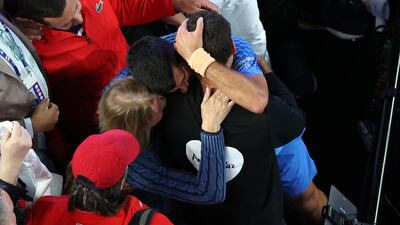
Novak Djokovic celebrates with his team and family. Getty -
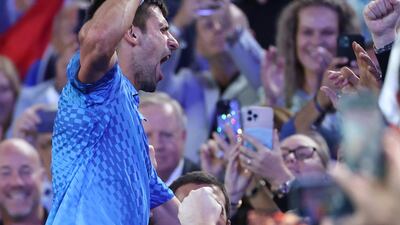
Novak Djokovic celebrates winning championship point in his players' box. Getty -

Novak Djokovic celebrates in the stands. AP -
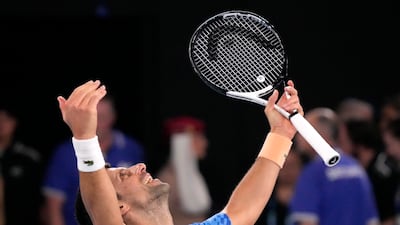
Novak Djokovic after his win. AP -
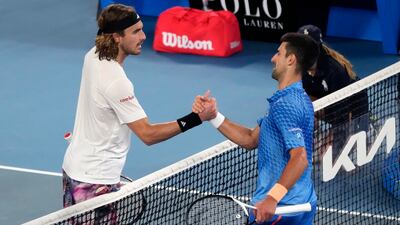
Novak Djokovic is congratulated by Stefanos Tsitsipas. AP -

Novak Djokovic embraces his mother Dijana as he celebrates victory. AFP -
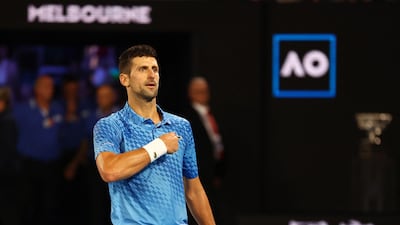
Novak Djokovic celebrates his win. Reuters -
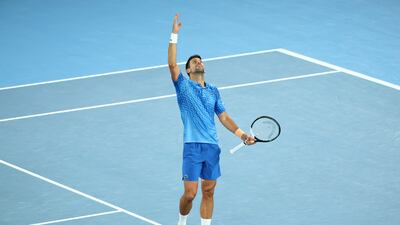
Novak Djokovic celebrates his victory. Getty -

Serbia's Novak Djokovic hits a return. AFP -
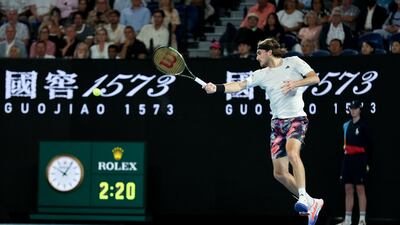
Stefanos Tsitsipas hits a return. AFP -
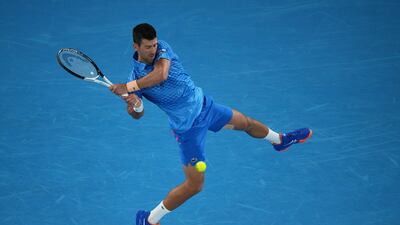
Novak Djokovic in action. Reuters -
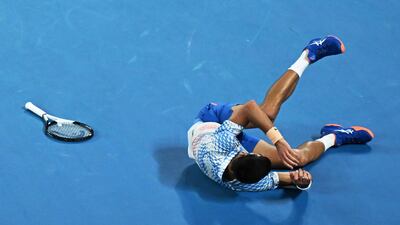
Novak Djokovic takes a tumble. EPA -
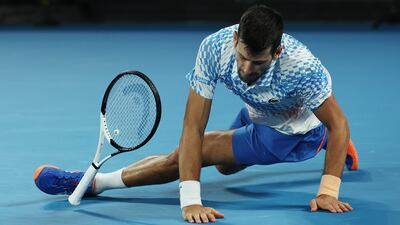
Novak Djokovic falls. Getty -
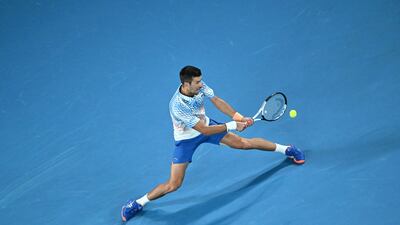
Serbia's Novak Djokovic plays a backhand return. AFP -

Stefanos Tsitsipas hits a return against Novak Djokovic. AFP -

Stefanos Tsitsipas returns. AFP -

Stefanos Tsitsipas of Greece celebrates winning a point. Getty -

Serbia's Novak Djokovic hits a return. AFP -
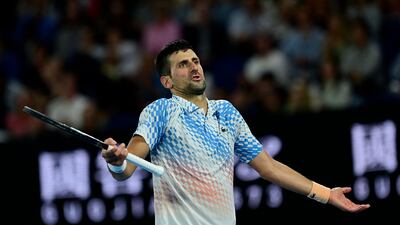
Novak Djokovic reacts. AFP -
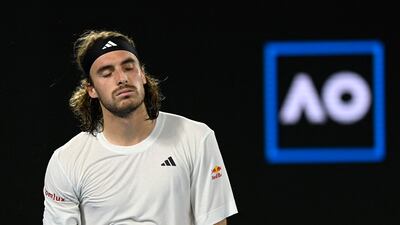
Greece's Stefanos Tsitsipas after losing the second set on a tie-break. Reuters -
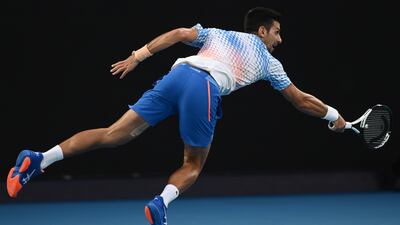
Novak Djokovic hits a backhand return. EPA -

Stefanos Tsitsipas celebrates a point. EPA -
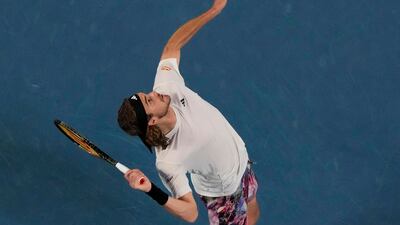
Stefanos Tsitsipas of Greece serves. AP -
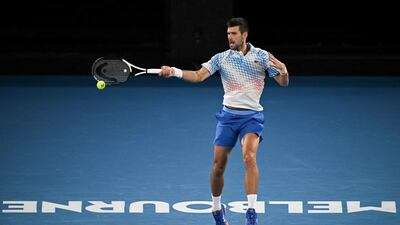
Serbia's Novak Djokovic hits a return. AFP -
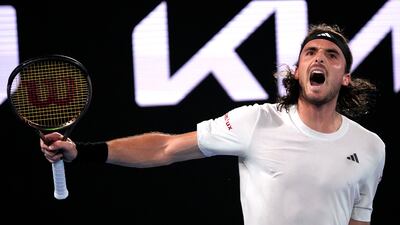
Stefanos Tsitsipas reacts after winning a point. AP -
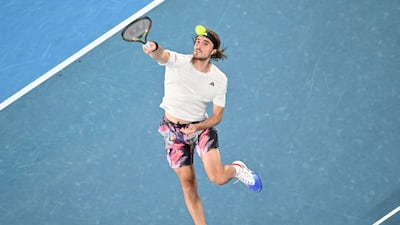
Stefanos Tsitsipas hits a return. AFP -
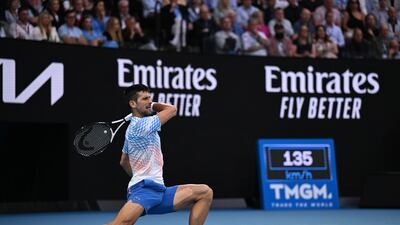
Novak Djokovic in action. EPA
Tales of Yusuf Tadros
Adel Esmat (translated by Mandy McClure)
Hoopoe
US versus China
Sulaiman Hakemy: Who really deserves to rule the Arctic?
Ni Jian: Covid-19 origins are a matter for science, not politics
Editorial: Global collaboration for a vaccine is the way to go
PRISCILLA
Company%20Profile
Blackpink World Tour [Born Pink] In Cinemas
Starring: Rose, Jisoo, Jennie, Lisa
Directors: Min Geun, Oh Yoon-Dong
Rating: 3/5
In numbers: PKK’s money network in Europe
Germany: PKK collectors typically bring in $18 million in cash a year – amount has trebled since 2010
Revolutionary tax: Investigators say about $2 million a year raised from ‘tax collection’ around Marseille
Extortion: Gunman convicted in 2023 of demanding $10,000 from Kurdish businessman in Stockholm
Drug trade: PKK income claimed by Turkish anti-drugs force in 2024 to be as high as $500 million a year
Denmark: PKK one of two terrorist groups along with Iranian separatists ASMLA to raise “two-digit million amounts”
Contributions: Hundreds of euros expected from typical Kurdish families and thousands from business owners
TV channel: Kurdish Roj TV accounts frozen and went bankrupt after Denmark fined it more than $1 million over PKK links in 2013
Infiniti QX80 specs
Engine: twin-turbocharged 3.5-liter V6
Power: 450hp
Torque: 700Nm
Price: From Dh450,000, Autograph model from Dh510,000
Available: Now
Dubai works towards better air quality by 2021
Dubai is on a mission to record good air quality for 90 per cent of the year – up from 86 per cent annually today – by 2021.
The municipality plans to have seven mobile air-monitoring stations by 2020 to capture more accurate data in hourly and daily trends of pollution.
These will be on the Palm Jumeirah, Al Qusais, Muhaisnah, Rashidiyah, Al Wasl, Al Quoz and Dubai Investment Park.
“It will allow real-time responding for emergency cases,” said Khaldoon Al Daraji, first environment safety officer at the municipality.
“We’re in a good position except for the cases that are out of our hands, such as sandstorms.
“Sandstorms are our main concern because the UAE is just a receiver.
“The hotspots are Iran, Saudi Arabia and southern Iraq, but we’re working hard with the region to reduce the cycle of sandstorm generation.”
Mr Al Daraji said monitoring as it stood covered 47 per cent of Dubai.
There are 12 fixed stations in the emirate, but Dubai also receives information from monitors belonging to other entities.
“There are 25 stations in total,” Mr Al Daraji said.
“We added new technology and equipment used for the first time for the detection of heavy metals.
“A hundred parameters can be detected but we want to expand it to make sure that the data captured can allow a baseline study in some areas to ensure they are well positioned.”
The specs
Price, base / as tested Dh100,000 (estimate)
Engine 2.4L four-cylinder
Gearbox Nine-speed automatic
Power 184bhp at 6,400rpm
Torque 237Nm at 3,900rpm
Fuel economy, combined 9.4L/100km
Seven tips from Emirates NBD
1. Never respond to e-mails, calls or messages asking for account, card or internet banking details
2. Never store a card PIN (personal identification number) in your mobile or in your wallet
3. Ensure online shopping websites are secure and verified before providing card details
4. Change passwords periodically as a precautionary measure
5. Never share authentication data such as passwords, card PINs and OTPs (one-time passwords) with third parties
6. Track bank notifications regarding transaction discrepancies
7. Report lost or stolen debit and credit cards immediately
Killing of Qassem Suleimani
National Editorial: Suleimani has been killed, now we must de-escalate
Jack Moore: Why the assassination is such a monumental gamble
Matthew Levitt: Iran retains its ability to launch terror attacks
Damien McElroy: A CEO tasked with spreading Iran's influence
Hussein Ibish: Trump's order on solid constitutional ground
Simon Waldman: Cautious Israel keeping a low profile
%20Ramez%20Gab%20Min%20El%20Akher
Teaching your child to save
Pre-school (three - five years)
You can’t yet talk about investing or borrowing, but introduce a “classic” money bank and start putting gifts and allowances away. When the child wants a specific toy, have them save for it and help them track their progress.
Early childhood (six - eight years)
Replace the money bank with three jars labelled ‘saving’, ‘spending’ and ‘sharing’. Have the child divide their allowance into the three jars each week and explain their choices in splitting their pocket money. A guide could be 25 per cent saving, 50 per cent spending, 25 per cent for charity and gift-giving.
Middle childhood (nine - 11 years)
Open a bank savings account and help your child establish a budget and set a savings goal. Introduce the notion of ‘paying yourself first’ by putting away savings as soon as your allowance is paid.
Young teens (12 - 14 years)
Change your child’s allowance from weekly to monthly and help them pinpoint long-range goals such as a trip, so they can start longer-term saving and find new ways to increase their saving.
Teenage (15 - 18 years)
Discuss mutual expectations about university costs and identify what they can help fund and set goals. Don’t pay for everything, so they can experience the pride of contributing.
Young adulthood (19 - 22 years)
Discuss post-graduation plans and future life goals, quantify expenses such as first apartment, work wardrobe, holidays and help them continue to save towards these goals.
* JP Morgan Private Bank
EXPATS
While you're here
Joyce Karam: Chaotic first debate unlikely to swing undecideds
Hussein Ibish: Donald Trump's 3-step plan to cling to power
Sulaiman Hakemy: Make America lose again
While you're here
Con Coughlin: To survive, Nato must renew its sense of common purpose
Gavin Esler: Nato summit failed for making news more than it made deals
Simon Waldman: Nato continues to be Ankara’s best security guarantor
UAE%20SQUAD
Ten tax points to be aware of in 2026
1. Domestic VAT refund amendments: request your refund within five years
If a business does not apply for the refund on time, they lose their credit.
2. E-invoicing in the UAE
Businesses should continue preparing for the implementation of e-invoicing in the UAE, with 2026 a preparation and transition period ahead of phased mandatory adoption.
3. More tax audits
Tax authorities are increasingly using data already available across multiple filings to identify audit risks.
4. More beneficial VAT and excise tax penalty regime
Tax disputes are expected to become more frequent and more structured, with clearer administrative objection and appeal processes. The UAE has adopted a new penalty regime for VAT and excise disputes, which now mirrors the penalty regime for corporate tax.
5. Greater emphasis on statutory audit
There is a greater need for the accuracy of financial statements. The International Financial Reporting Standards standards need to be strictly adhered to and, as a result, the quality of the audits will need to increase.
6. Further transfer pricing enforcement
Transfer pricing enforcement, which refers to the practice of establishing prices for internal transactions between related entities, is expected to broaden in scope. The UAE will shortly open the possibility to negotiate advance pricing agreements, or essentially rulings for transfer pricing purposes.
7. Limited time periods for audits
Recent amendments also introduce a default five-year limitation period for tax audits and assessments, subject to specific statutory exceptions. While the standard audit and assessment period is five years, this may be extended to up to 15 years in cases involving fraud or tax evasion.
8. Pillar 2 implementation
Many multinational groups will begin to feel the practical effect of the Domestic Minimum Top-Up Tax (DMTT), the UAE's implementation of the OECD’s global minimum tax under Pillar 2. While the rules apply for financial years starting on or after January 1, 2025, it is 2026 that marks the transition to an operational phase.
9. Reduced compliance obligations for imported goods and services
Businesses that apply the reverse-charge mechanism for VAT purposes in the UAE may benefit from reduced compliance obligations.
10. Substance and CbC reporting focus
Tax authorities are expected to continue strengthening the enforcement of economic substance and Country-by-Country (CbC) reporting frameworks. In the UAE, these regimes are increasingly being used as risk-assessment tools, providing tax authorities with a comprehensive view of multinational groups’ global footprints and enabling them to assess whether profits are aligned with real economic activity.
Contributed by Thomas Vanhee and Hend Rashwan, Aurifer


