
Coming off a knockout victory in May and trending towards the upper echelons of the featherweight division, Calvin Kattar surprised somewhat by accepting a match-up this week with Dan Ige.
He hasn't needed to justify that to himself, though.
“Main event? Fight Island? Hesitation? Hell no,” he told reporters in Abu Dhabi.
The headline bout at UFC Fight Night 1, the second of four events on the inaugural Fight Island in Abu Dhabi, was enough to get Kattar to seal the deal. The American, 21-4 in professional mixed martial arts and 5-2 in UFC, earned the spot following his most recent win, when he knocked out Jeremy Stephens in a stunning performance at UFC 249.
Now, with a serious move up the standings in mind, the No 6-ranked challenger is looking to make up for lost time – starting in the capital.
“I wanted to have a busy year this year, especially the way I finished off last year in November,” Kattar said. “I want to go 3-0 this year. I took a little late start. We were supposed to fight in March, then April, then it turned out May.
“A quick turnaround puts me right back on schedule. That’s it. I’m happy to have a big opportunity here: main event, Dan Ige. I got the green light from my manager and we took it. We jumped.”
Ige, ranked 10th in the featherweight division, represents a dangerous obstacle to overcome. The Hawaiian (14-2 MMA) has won all six of this fights since losing on UFC debut, most recently overcoming Edson Barbosa in a split decision in May.
“He’s a tough kid, man,” Kattar said. “He’s done what he’s had to do to the last six guys. I think we’re similar in the fact we’ve both been overlooked most of our careers. Here we are, main event, Fight Island.
“I’m not like the last six guys he’s fought. I won’t overlook him. He’s got my full attention. Come [Thursday], I’m going to take him out.”
Do that, and he should be right there for a title shot. Especially, given he feels there’s too little action going on above him.
“You're damn right, they’re all talking," Kattar said. "A win over [Ige] puts me in that mix, where if you want to fight, you’ve got to stay busy. If there’s one thing I’ve shown, it’s that.”
Ige, however, is seeking to throw a rather large spanner in the works. On Thursday at Flash Forum, he will contest his first UFC main event, a position he believes catapults him into title contention. At present, Alex Volkanovski is the guy with the gold having defeated former champion Max Holloway in their rematch at UFC 251, the Fight Island opener on Sunday.
_______________
Best photos from UFC 251
-
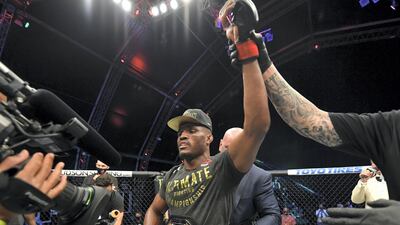
Kamaru Usman of Nigeria celebrates after his victory over Jorge Masvidal in their welterweight championship fight during the UFC 251 event on Yas Island in Abu Dhabi in July 2020. Getty -
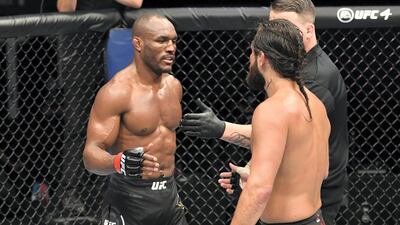
Kamaru Usman and Jorge Masvidal talk after their fight. Getty -
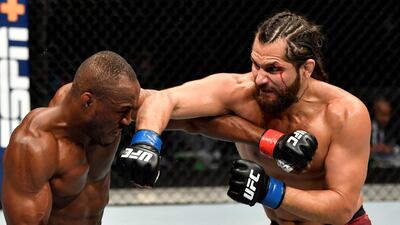
Jorge Masvidal punches Kamaru Usman. Getty -
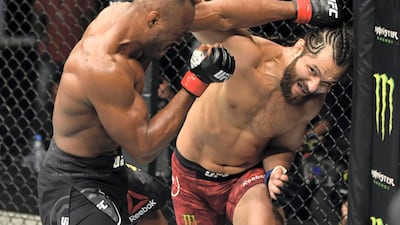
Jorge Masvidal punches Kamaru Usman. Getty -
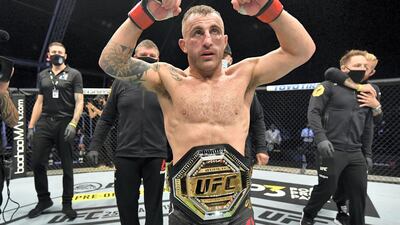
Alexander Volkanovski of Australia celebrates after his split-decision victory over Max Holloway in their UFC featherweight bout. Getty -

Max Holloway kicks Alexander Volkanovski. Getty -
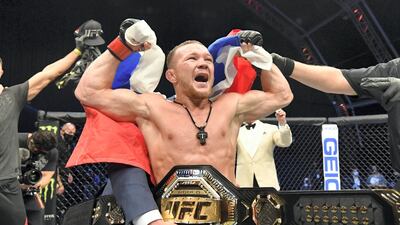
Petr Yan of Russia celebrates after his TKO victory over Jose Aldo in their UFC bantamweight fight. Getty -
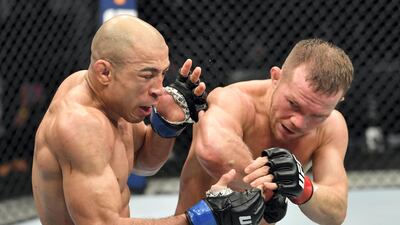
Petr Yan of Russia elbows Jose Aldo of Brazil. Getty -
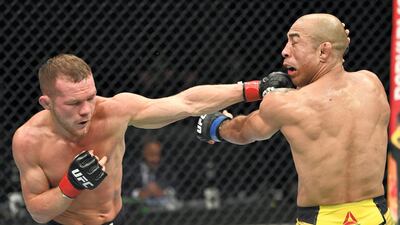
Petr Yan punches Jose Aldo. Getty -

Rose Namajunas celebrates after her split-decision victory over Jessica Andrade in their strawweight fight. Getty -
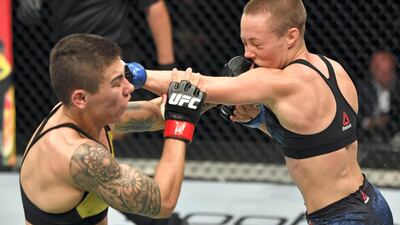
Rose Namajunas and Jessica Andrade trade punches. Getty -

Rose Namajunas lands a punch on Jessica Andrade. Getty -
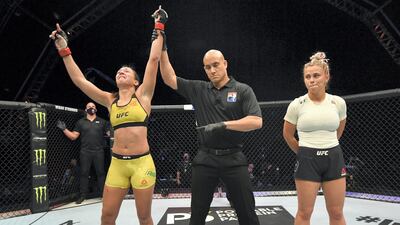
Amanda Ribas of Brazil celebrates after her victory over Paige VanZant in their flyweight fight. Getty -

Paige VanZant knees Amanda Ribas. Getty -
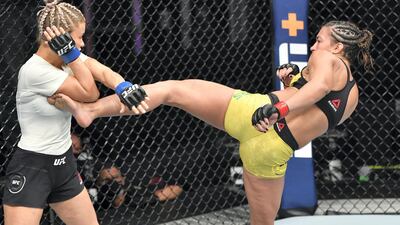
Amanda Ribas kicks Paige VanZant. Getty -

Jiri Prochazka of the Czech Republic celebrates after his knockout victory over Volkan Oezdemir in their light heavyweight fight. Getty -
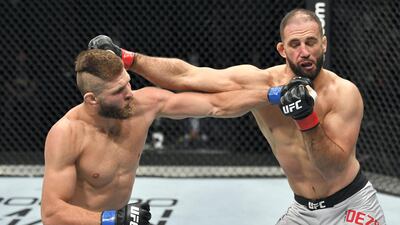
Jiri Prochazka and Volkan Oezdemir exchange blows. Getty -

Volkan Oezdemir of Switzerland punches Jiri Prochazka. Getty -
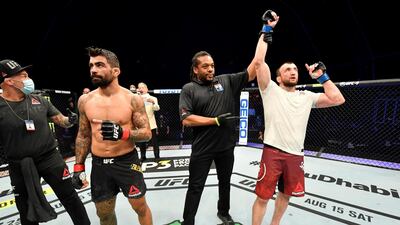
Muslim Salikhov of Russia reacts after his decision victory over Brazil's Elizeu Zaleski dos Santos in their welterweight fight. Getty -
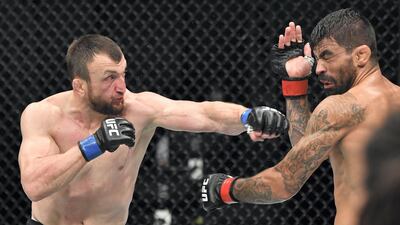
Muslim Salikhov punches Elizeu Zaleski dos Santos. Getty -

Elizeu Zaleski dos Santos Brazil punches Muslim Salikhov. Getty -

Makwan Amirkhani of Finland after his win over Danny Henry in their featherweight fight. Getty -
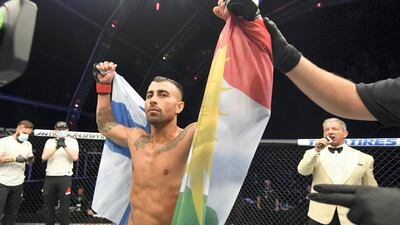
Makwan Amirkhani after his submission victory over Danny Henry. Getty -

Makwan Amirkhani secures an anaconda choke submission against Danny Henry. Getty -

Leonardo Santos of Brazil reacts after his decision victory over Russia's Roman Bogatov in their lightweight fight. Getty -

Leonardo Santos punches Roman Bogatov. Getty -
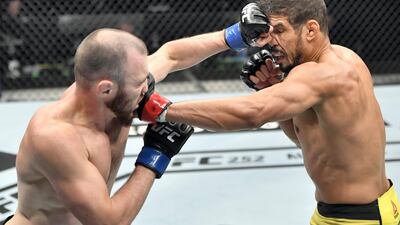
Roman Bogatov and Leonardo Santos trade punches. Getty -
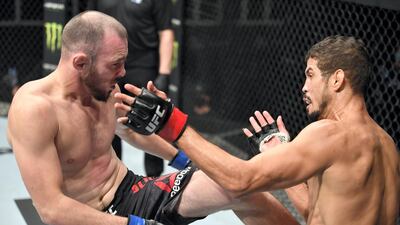
Roman Bogatov kicks Leonardo Santos. Getty -
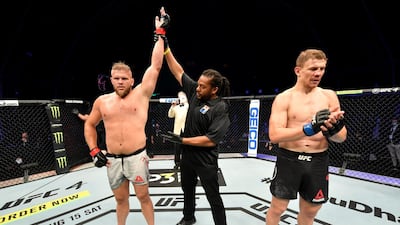
Marcin Tybura of Poland celebrates after defeating Russia's Maxim Grishin in their heavyweight fight. Getty -
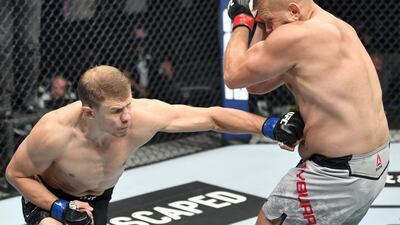
Maxim Grishin punches Marcin Tybura. Getty -

Maxim Grishin punches Marcin Tybura. Getty -
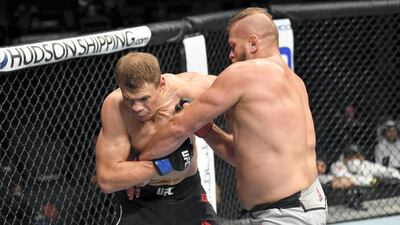
Marcin Tybura grapples with Maxim Grishin. Getty -

Brazil's Raulian Paiva after his decision victory over Zhalgas Zhumagulov of Kazakhstan in their flyweight fight. Getty -
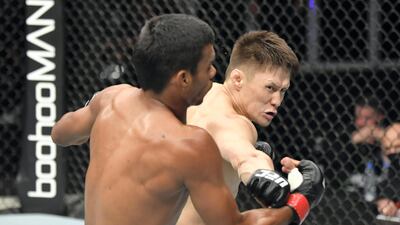
Zhalgas Zhumagulov punches Raulian Paiva. Getty -

Zhalgas Zhumagulov punches Raulian Paiva. Getty -
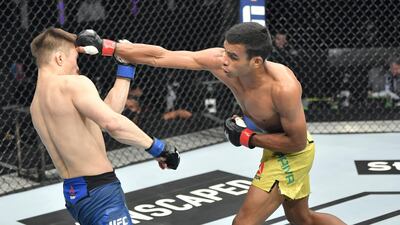
Raulian Paiva punches Zhalgas Zhumagulov. Getty -
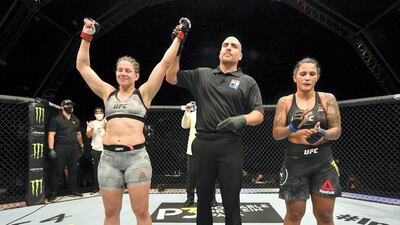
Brazil's Karol Rosa celebrates after her victory over countrywoman Vanessa Melo in their bantamweight fight. Getty -
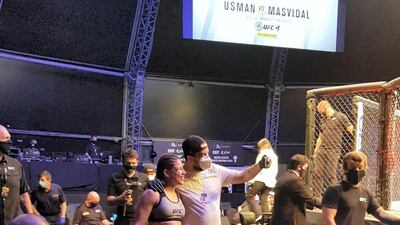
Karol Rosa of Brazil before the fight on Yas Island in Abu Dhabi. Erica Elkhershi / The National -
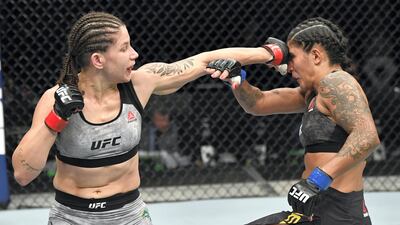
Karol Rosa punches Vanessa Melo. Getty -

Karol Rosa punches Vanessa Melo. Getty -
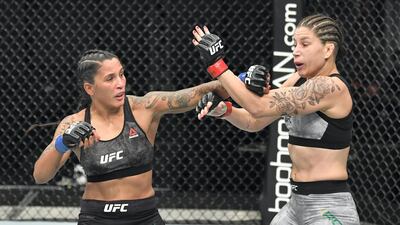
Vanessa Melo punches Karol Rosa. Getty -

Davey Grant of England after his knockout victory over countryman Martin Day in their bantamweight fight. Getty -
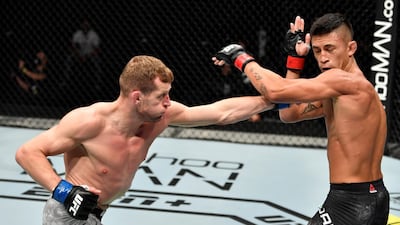
Davey Grant punches Martin Day. Getty -
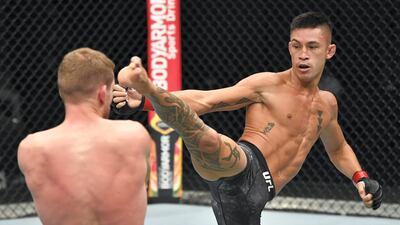
Martin Day kicks Davey Grant. Getty -
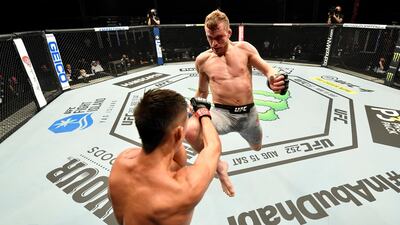
Davey Grant launches a flying knee against Martin Day. Getty -

A general view of the Flash Forum on UFC Fight Island prior to the UFC 251 event on Yas Island in Abu Dhabi. Erica Elkhershi / The National -

A general view of the Flash Forum on UFC Fight Island prior to the UFC 251 event on Yas Island in Abu Dhabi. Erica Elkhershi / The National -
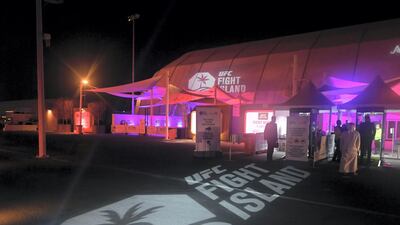
A general view of the Flash Forum on UFC Fight Island prior to the UFC 251 event on Yas Island, Abu Dhabi, United Arab Emirates. Photo by Jeff Bottari / Getty Images / Zuffa LLC -
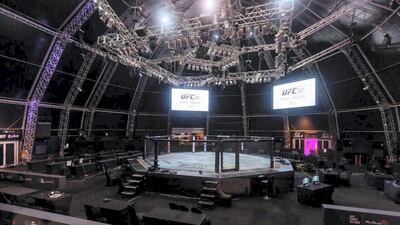
A general view of the Flash Forum on UFC Fight Island prior to the UFC 251 event on Yas Island in Abu Dhabi. John McAuley / The National -
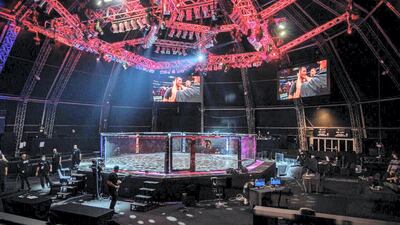
A general view of the Flash Forum on UFC Fight Island prior to the UFC 251 event on Yas Island in Abu Dhabi. John McAuley / The National


_______________
“A big win over Calvin Kattar, I make a big statement win, could easily very well get me a title shot,” Ige said. “Maybe the people won’t say I deserve it, but I will fight anyone, anywhere, any time to get what I want.
“That’s a world title. I know Volkanovski wants to fight the No 1 contenders. I’ve watched all of his interviews; I study every guy in the division. I know he has his eyes on me and he’ll have his eyes on this fight. We’ll see what happens.”
And Ige’s not exactly coming in cold, far from it. He’s competed six times in the past two years.
“I really want to go out there and show I’m a true contender, that I’m champion-worthy,” he said. “I can very well do that. I have a huge opportunity, a big platform to do so.
“With the way the division is tied up right now, these guys in the top five are not active. These guys, a lot of them haven’t fought in one year, two years, and they’re still up there in the top ranking in the world.
“This is big opportunity for me, I’ve been working my whole entire life for this, made a lot of sacrifices to be here and I’m just super grateful. I’m happy, I’m pumped up to go out there and showcase what I have to offer and bring out the best version of myself.”
And, just like Kattar did in agreeing to the fight, surprise somewhat.
“I do respect him, but in the cage I don’t," Ige said. "I’ll do anything to win - if I’ve got to bite his jugular I’ll bite his jugular. I’m different; I’m out there, I’m going to try to win, try to take your head off every second of the fight.
"But he’s definitely talented, he’s skilled, he’s slick, he’s a finisher. So he’s dangerous. I feel like I’m counted out, which is kind of nice. I’m going to go out there and shock a lot of people.”

