


Anthony Joshua has taken his eye off the ball before. When he faced Andy Ruiz Jr in New York 18 months ago, all the questions were about Deontay Wilder. As Kubrat Pulev stands in front of him this weekend, the presence of Tyson Fury is looming over events.
Ruiz knocked him down four times on the way to a stoppage win. If Joshua slips up again, he will wave goodbye to more than just a big payday against Fury.
Joshua puts the WBA, WBO and IBF titles that he won back from Ruiz in Saudi Arabia on the line on Saturday night against Pulev, a 39-year-old Bulgarian, who seems to have been around the heavyweight top ten for a lifetime.
“I took my eye off the ball with Ruiz in New York,” Joshua said. “For me in New York I knew I had a fight in front of me with a big media presence.
“It's good to talk about Fury, Wilder, [Daniel] Dubois, [Joe] Joyce and even the [Alen] Babics of the world. My main focus is always Pulev.
“We're painting the bigger picture. That's what I'm trying to create. It's tempting to look at what's beyond me, but it's motivation rather than a distraction – get through this and move on to the bigger fights.”
With just 1,000 fans in attendance at the SSE Arena, it will be a long way from a regular Joshua fight – 60,000 were expected when the fight was originally announced.
The last time he boxed in front of such a small crowd, he was an amateur learning his craft with dreams of competing at an Olympic Games.
These are unusual times, but what doesn’t change in boxing is an endless look ahead to other fights that might or might not take place.
If Joshua gets past Pulev – something he is an overwhelming favourite to do – a fight with Fury, who claimed the WBC crown from Wilder in February, for the undisputed world heavyweight title awaits.
A vague agreement has been reached for both to take a 50-50 split of all takings, with a late May date in the Middle East the most likely time and place – coronavirus permitting.
It is the very nature of boxing that you are judged as much by your defeats as your victories.
The last man to have a claim to be undisputed world heavyweight champion was Lennox Lewis (although he never held the WBO title), but even though he avenged both his defeats to Oliver McCall and Hasim Rahman, they are still pointed too when discussing Lewis’s legacy.
Pulev’s previous world title bid came against Wladimir Klitschko. He spurned defence to engage in a swinging match and was knocked down three times, Klitschko finishing the job with a huge left hook. It was the final knockout of the Ukrainian’s career.
___________________________________________________
Gallery: Joshua beats Ruiz in rematch
-
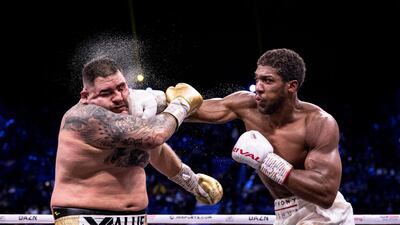
Anthony Joshua lands a big right on Andy Ruiz Jr during the British fighter's comprehensive victory in the heavyweight world title rematch in Saudi Arabia in December 2019. Getty -
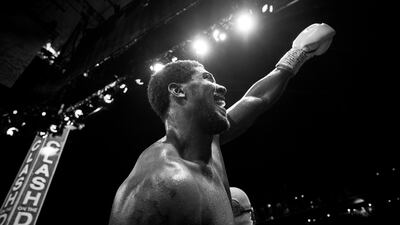
Anthony Joshua celebrates victory over Andy Ruiz Jr. Getty -
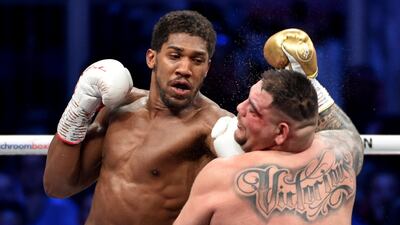
British boxer Anthony Joshua (white trunks) competes with Mexican-American Andy Ruiz Jr in Diriya. AFP -
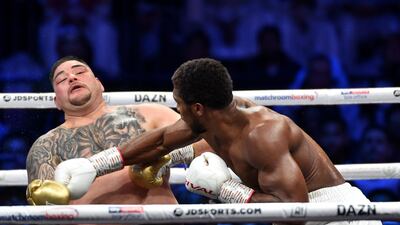
Joshua lands a right in his fight with Andy Ruiz Jr. AFP -
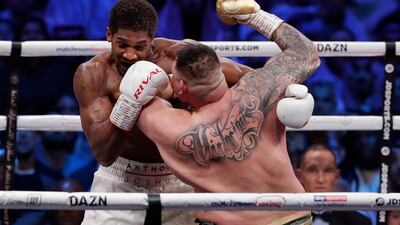
Defending champion Andy Ruiz Jr trades blows with Anthony Joshua. AP -
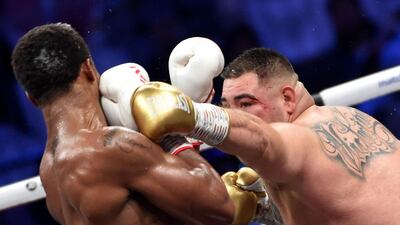
Joshua outclassed Andy Ruiz Jr for a unanimous points victory. AFP -
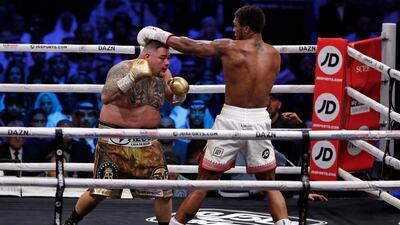
Defending champion Andy Ruiz Jr takes a punch during his fight against Britain's Anthony Joshua. AP -

Andy Ruiz Jr after losing on points to Britain's Anthony Joshua. PA -

Andy Ruiz Jr trades blows with Anthony Joshua. PA -
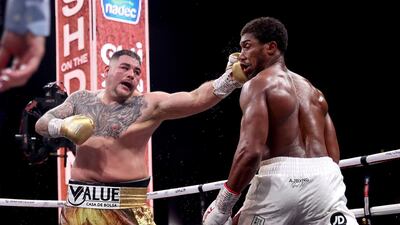
Andy Ruiz Jr tries to land a left Against Anthony Joshua. PA -
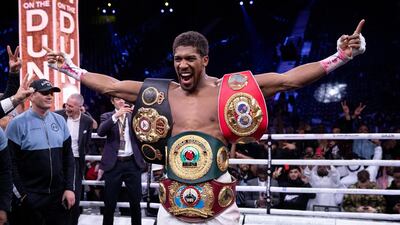
Anthony Joshua poses with the IBF, WBA, WBO & IBO world heavyweight title belts. Getty


___________________________________________________
By 2017, the Bulgarian had worked his way back to the top of the IBF rankings and was due to face Joshua in Cardiff, only to withdraw at 12 days’ notice with a pectoral muscle injury. It has taken him three years to get another chance.
Pulev was widely written off in 2017, against the fast-rising Joshua, but the loss to Ruiz showed signs of vulnerability that will take a long time to go away. While Joshua reversed the Ruiz defeat in December, he did by staying light on his feet and keeping Ruiz at arm's length.
Against Pulev, who is taller and more upright than Ruiz, Joshua is unlikely to be as safety-first, but the long-term legacy of the Ruiz loss could be a fighter who is more circumspect, he would say smarter.
“I went through a lot of my career not even knowing what I was doing,” Joshua said. “I was just fighting. Experience is the best teacher and I’m gaining so much experience every day I step in the gym.
“I’m more polished because I am more experienced. I was adapting a style I'd never used before, but I have more confidence now, knowing it’s in my locker and knowing I’ve got the punching power too.
"Through lockdown I trained to merge all these different dynamics – good feet, hand positioning, combination punching, the art of the jab. Now I am looking forward to putting on a great performance.
“Pulev is not going to be like someone in my tenth fight where they’re waiting to be hit, but it will be a clinical performance where I break him down and then. when the time is right. I am going to go in there and knock him out in devastating fashion.”
__________________________________________________
Gallery: Fury beats Wilder in rematch
-

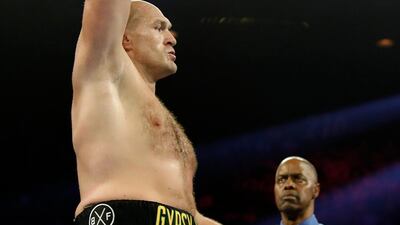
Tyson Fury knocks down Deontay Wilder during their rematch in Las Vegas in February 2020. -

Tyson Fury celebrates defeating Deontay Wilder to win the WBC World Heavyweight Championship at the Garden Arena in Las Vegas. -
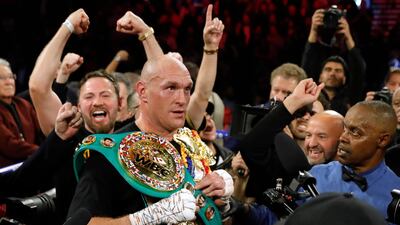
Tyson Fury celebrates with the belts after winning the fight. -
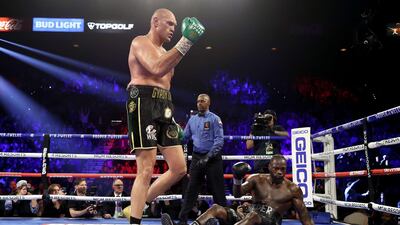
Tyson Fury knocks down Deontay Wilder in the fifth round. -
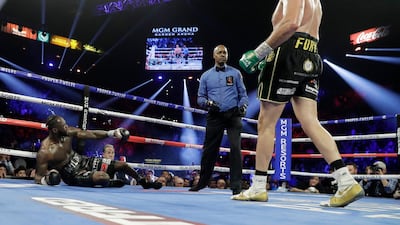
Tyson Fury knocks down Deontay Wilder. -
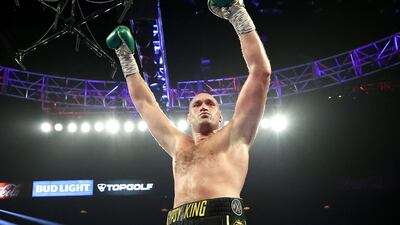
Tyson Fury celebrates after knocking down Deontay Wilder. -
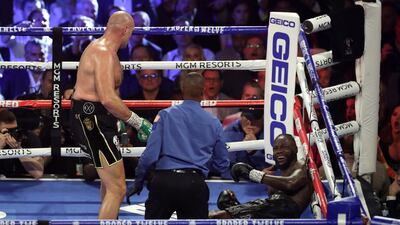
Tyson Fury watches Deontay Wilder hit the canvas. -
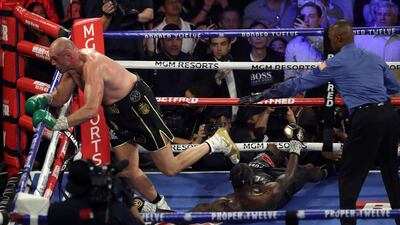
Tyson Fury knocks down Deontay Wilder. -
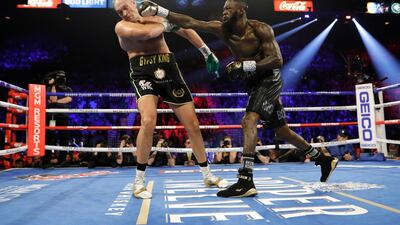
Tyson Fury in action against Deontay Wilder. -
Tyson Fury at the end of the first round. -
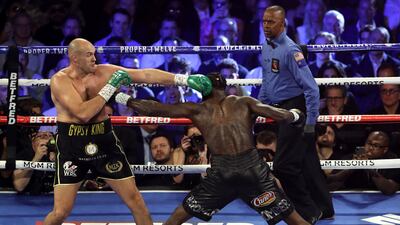
Tyson Fury and Deontay Wilder in the first round. -
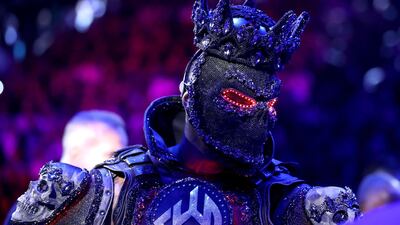
Deontay Wilder enters the ring. -
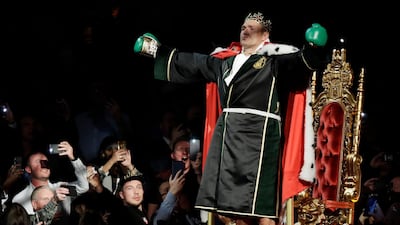
Tyson Fury arrives in the arena. -
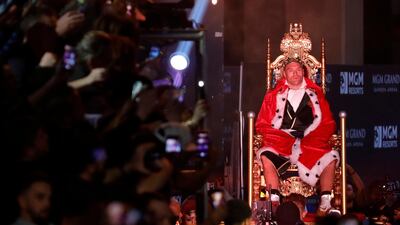
Tyson Fury makes his entrance. -
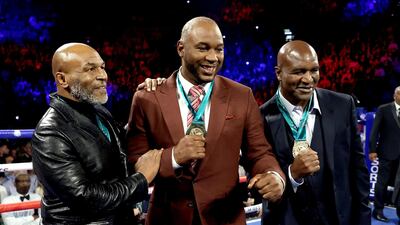
Former Heavyweight Champions Mike Tyson, Lennox Lewis and Evander Holyfield. -
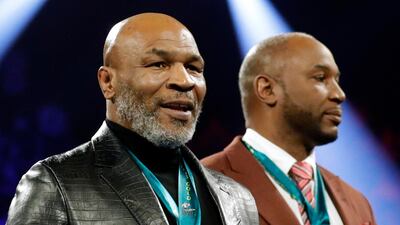
Former heavyweight champions Mike Tyson and Lennox Lewis in the ring. -
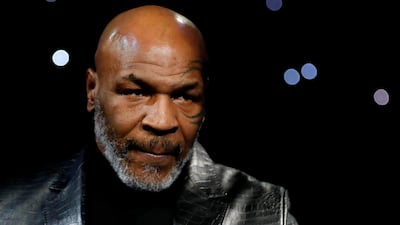
Former heavyweight champion Mike Tyson before the fight. -
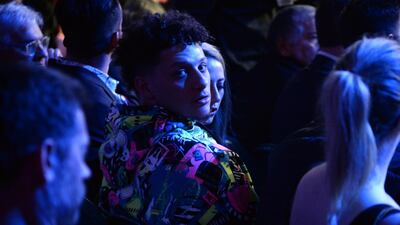
NFL player Patrick Mahomes attends the WBC heavyweight title bout between Deontay Wilder and Tyson Fury at MGM Grand Garden Arena. -
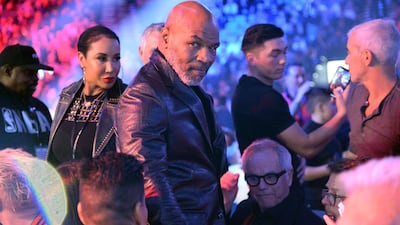
Boxing Hall of Fame member Mike Tyson attends the WBC heavyweight title bout between Deontay Wilder and Tyson Fury at MGM Grand Garden Arena. -
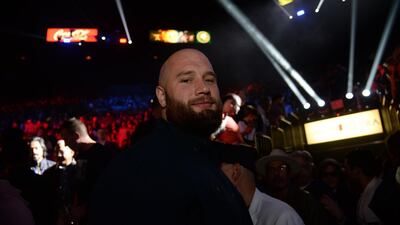
Philadelphia Eagles offensive lineman Lane Johnson attends the WBC heavyweight title bout between Deontay Wilder and Tyson Fury at MGM Grand Garden Arena. -
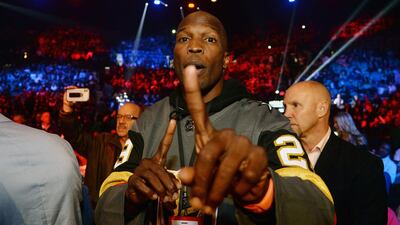
Former NFL player Chad Ochocinco Johnson. -
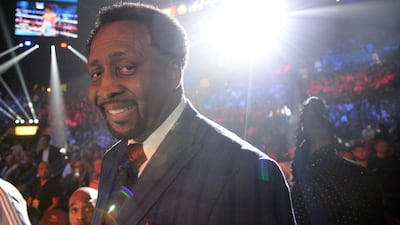
Boxing Hall of Fame member Thomas Hearns attends the WBC heavyweight title bout between Deontay Wilder and Tyson Fury at MGM Grand Garden Arena. -
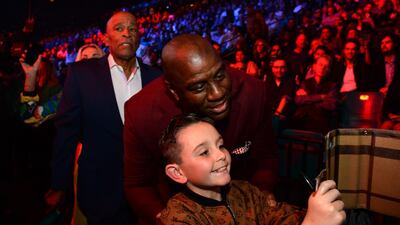
NBA Hall of Fame member Magic Johnson attends the WBC heavyweight title bout between Deontay Wilder and Tyson Fury at MGM Grand Garden Arena. -
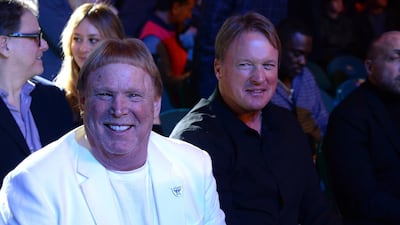
Las Vegas Raiders owner Mark Davis and head coach John Gruden.



