


Here is a look at past Olympic host cities and what they did with their infastructure and athletic venues after the Games have been and gone. The real challenge begins with the end of the Olympics. How do they continue to use the expensive stadiums after the party is over? What happens to the athletes’ villages? What is the legacy of the Games? Some results have been good while others have been devastating.
-
-
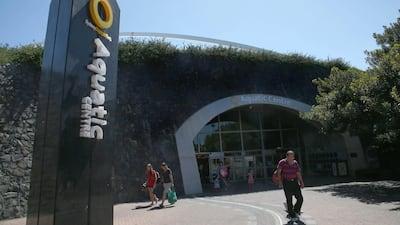
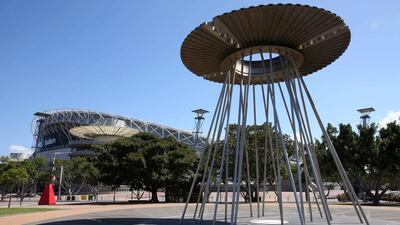
Patrons walk near the entrance of Sydney Aquatic Centre in Sydney on February 24, 2014. Before the 2000 summer Olympics, the site west of Sydney where the 1580-acre Sydney Olympic Park was built was a grungy, desolate wasteland of slaughterhouses, garbage dumps and factories. Since the games, it has slowly developed into its own suburb with hotels, offices, restaurants and parklands. The park now hosts thousands of events each year, from music festivals to sports to business conferences, drawing more than 12 million annual visitors. Rick Rycroft / AP Photo -
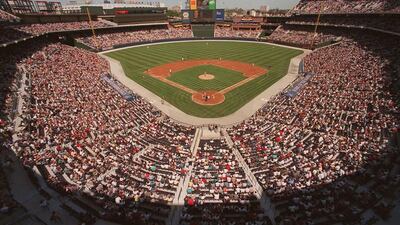
This is a March 29, 1997 file photo of baseball fans as they fill the stands as the Atlanta Braves play an exhibition game against the New York Yankess, the first baseball game ever to be played in the new Turner Field in Atlanta. Converting the Olympic Stadium to a baseball park helped to keep the Braves in downtown Atlanta. After the 1996 games, the Olympics stadium was converted into Turner Field, the baseball stadium that’s been home to the Atlanta Braves for the past several years (AP Photo/Ric Feld, File) -
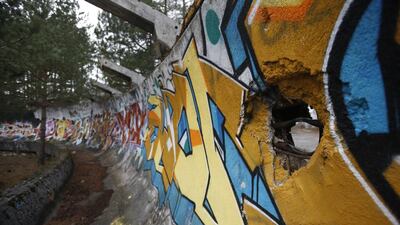
In this picture taken on February 21, 2014, the bobsleigh track damaged by artillery fire is painted with graffiti at Mt. Trebevic near Bosnian capital of Sarajevo. Wartime destruction and negligence have turned most of Sarajevo’s 1984 Winter Olympic venues into painful reminders of the city’s golden times. The world came together in the former Yugoslavia in 1984 after the West had boycotted the 1980 Olympics in Moscow and Russia boycotted the 1984 Summer Games in Los Angeles. Just eight years later, the bobsleigh and luge track on Mount Trbevic was turned into an artillery position from which Bosnian Serbs pounded the city for almost four years. Today, the abandoned concrete construction looks like a skeleton littered with graffiti. Amel Emric / AP Photo -
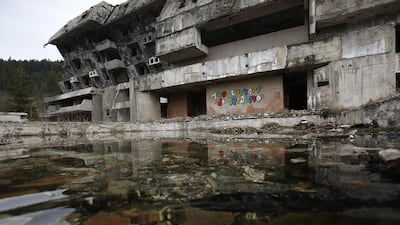
In this picture taken on February 21, 2014, graffiti by London creative collective The Lurkers “The Lurkers do Sarajevo” is written on a destroyed hotel at Mt. Igman. Wartime destruction and negligence have turned most of Sarajevo’s 1984 Winter Olympic venues into painful reminders of the city’s golden times. The world came together in the former Yugoslavia in 1984 after the West had boycotted the 1980 Olympics in Moscow and Russia boycotted the 1984 Summer Games in Los Angeles. Just eight years later, the bobsleigh and luge track on Mount Trbevic was turned into an artillery position from which Bosnian Serbs pounded the city for almost four years. Today, the abandoned concrete construction looks like a skeleton littered with graffiti. Amel Emric / AP Photo -
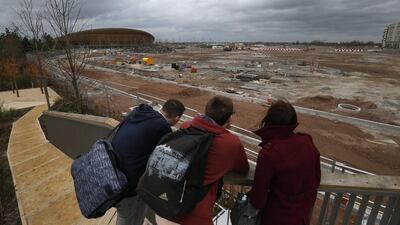
In this February 23, 2014 photo, people take a look at the construction site in Queen Elizabeth Olympic Park in east London. The Games’ Velodrome is seen left. London continues to bask in the success of the most recent Summer Games, but the Olympic legacy is difficult to determine. The flagship venue, renamed the Queen Elizabeth Olympic Park, is being converted into a massive park as big as London’s famous Hyde Park, complete with wildlife habitats, woods and sports facilities. The first part of the ambitious project will begin to open to the public in April. The 80,000-seat Olympic Stadium at the center of the park has been troubled by controversy since even before the games, and its post-games use was the subject of months of legal wrangling. The stadium is now being converted into a soccer venue and the home of the West Ham soccer club, with an expected price tag of $323 million. Many argue taxpayers should not have to fund a Premier League club, though officials insist that the stadium will continue to host other major sporting events, including the Rugby World Cup in 2015. Lefteris Pitarakis / AP Photo -
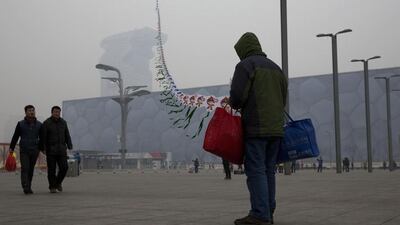
In this picture taken February 23, 2014, a street vendor flies kites printed with the Beijing Olympic games mascot image near the Water Cube aquatic center in Beijing, China. The Water Cube, where U.S. swimmer Michael Phelps made history by winning eight gold medals, has been transformed into a water park popular among local families. Its operators even peddle purified glacier water under the Water Cube brand for additional income. Beijing, which spent more than $2 billion to build 31 venues for the 2008 Summer Games, is reaping some income and tourism benefits from two flagship venues, though many sites need government subsidies to meet hefty operation and maintenance costs. Ng Han Guan / AP Photo -
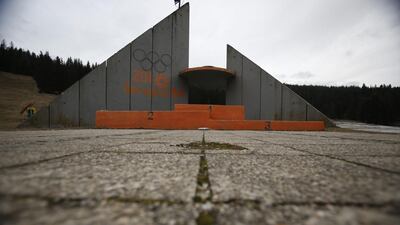
In this picture taken February 21, 2014, a concrete podium for winners with the text “Winter Olympic Games 1984” stands abandoned near jumping hills at Mt. Igman near the Bosnian capital of Sarajevo. Wartime destruction and negligence have turned most of Sarajevo’s 1984 Winter Olympic venues into painful reminders of the city’s golden times. The world came together in the former Yugoslavia in 1984 after the West had boycotted the 1980 Olympics in Moscow and Russia boycotted the 1984 Summer Games in Los Angeles. Just eight years later, the bobsleigh and luge track on Mount Trbevic was turned into an artillery position from which Bosnian Serbs pounded the city for almost four years. Today, the abandoned concrete construction looks like a skeleton littered with graffiti. Amel Emric / AP Photo -
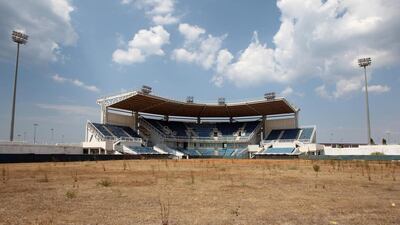
In this August 2, 2012 file photo, weeds sprout in the remains of what was once the playing field at the abandoned Olympic softball venue in southern Athens. The legacy of Athens’ Olympics has stirred vigorous debate, and Greek authorities have been widely criticized for not having a post-Games plan for the infrastructure. While some of the venues built specifically for the games have been converted for other uses, many are underused or abandoned, and very few provide the state with any revenue. Some critics even say that the multibillion dollar cost of the games played a modest role in the nation’s 2008 economic meltdown. Thanassis Stavrakis / AP Photo -
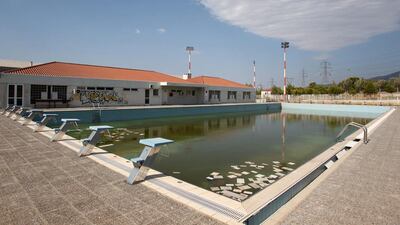
In this August 2, 2012 file photo, murky water and rubbish fill an abandoned training pool for athletes at the Olympic village on the northern fringes of Athens. The legacy of Athens’ Olympics has stirred vigorous debate, and Greek authorities have been widely criticized for not having a post-Games plan for the infrastructure. While some of the venues built specifically for the games have been converted for other uses, many are underused or abandoned, and very few provide the state with any revenue. Some critics even say that the multibillion dollar cost of the games played a modest role in the nation’s 2008 economic meltdown. Thanassis Stavrakis / AP Photo
In pictures: What happens at host cities after the Olympics
Most popular today

