Argentina captain Lionel Messi officially brought down the curtain on a glittering 21-year international career on Monday.
Messi guided Argentina to the 2026 World Cup final this summer, scoring eight goals along the way, but they fell to Spain in the championship match.
The 39-year-old said the loss to Spain, coupled with his father's recent death, left him "convinced" the time was right to call time on his Argentina career.

“After all this time since the final, and after thinking about it a lot, I want to tell everyone that I’m retiring from the national team. It was a decision that hurt and still hurts deep inside, but I understand that this is the right moment,” Messi said in a post on Instagram.
He added: "There isn’t much time left, and different chapters are coming to an end. This is one that hurts me a lot. I love, I loved, and I will always love being part of the national team. I gave everything I had, and I don’t have anything more to give.”
It ends one of the most prolific and productive international careers in history.
The numbers
Few players can better Messi's stats in international football.
In 207 caps, Messi scored 125 goals to retire as Argentina's all-time appearance maker and leading scorer. That's an average of 0.60 goals per game.
When you consider some of the players who came before him – Diego Maradona, Gabriel Batistuta, Hernan Crespo and Sergio Aguero – that's some achievement.
As well as an unprecedented eight Ballon d'Ors, he played at six consecutive World Cups from 2006 to 2026 - one of only three players to accomplish that feat.
While others have won more World Cups, Messi's longevity and his otherworldly ability single him out as arguably the greatest player of all time at the global finals.
No player in history has played more World Cup matches than Messi's 34. His tally of 21 goals at the global finals is only bested by Kylian Mbappe's 22. Of Messi's World Cup goals, seven of them were scored in knockout matches; two came in a final.
-
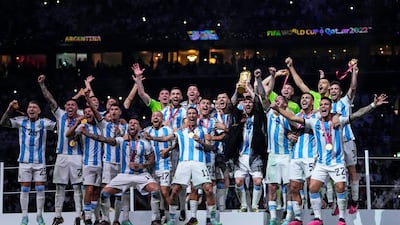
Lionel Messi holds up the trophy after Argentina defeated France on penalties in the World Cup final at Lusail Stadium in Qatar, on Sunday, December 18, 2022. AP -
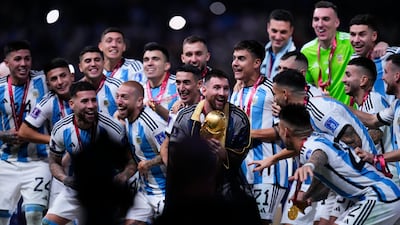
Argentina's Lionel Messi celebrates with teammates after beating France. AP -
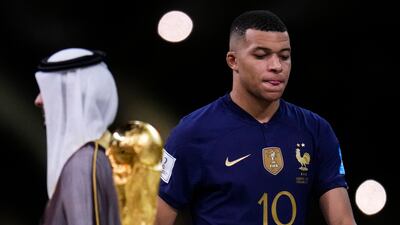
France's Kylian Mbappe walks past the trophy at the end of the match. AP -
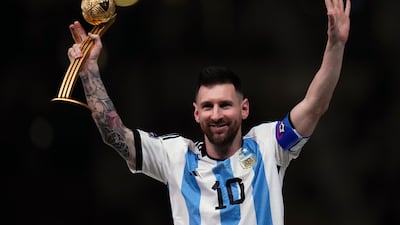
Argentina's Lionel Messi holds up the Golden Ball award for best player of the tournament. AP -
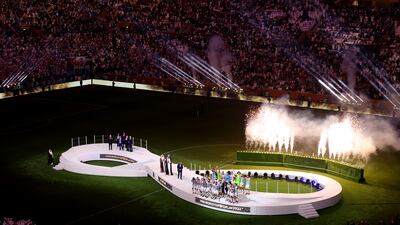
Argentina celebrate victory at Lusail Stadium. Getty -
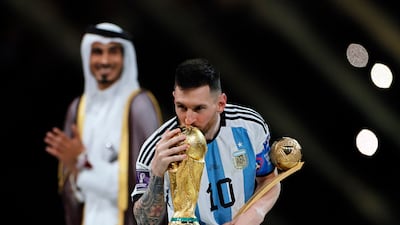
Lionel Messi of Argentina kisses the trophy after beating France 4-2 on penalties. EPA -

Argentina celebrate victory. AP -
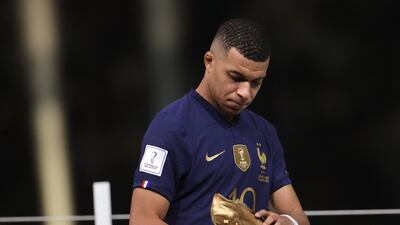
Kylian Mbappe of France with his Golden Boot award for finishing as the tournament's top scorer. EPA -

Argentina players celebrate after winning the World Cup final penalty shoot-out against France. Getty -
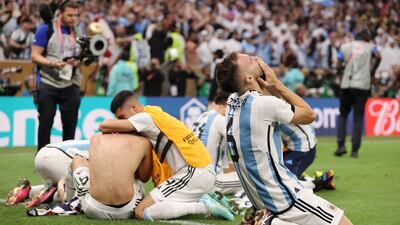
Argentina players celebrate victory. Getty -

Argentina's Lautaro Martinez and Lionel Messi celebrate after winning the World Cup. Reuters -
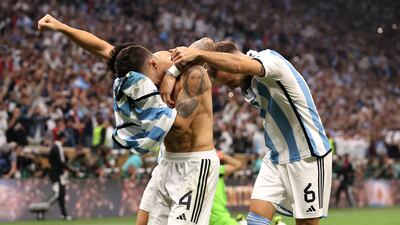
Argentina's Leandro Paredes celebrates scoring the winning penalty against France. Getty -
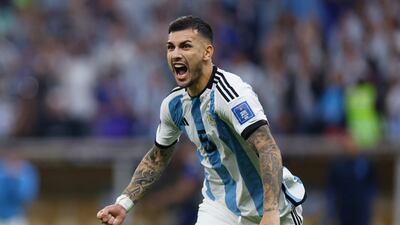
Argentina's Leandro Paredes celebrates scoring during the penalty shoot-out against France. Reuters -
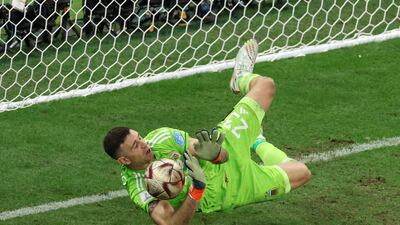
Argentina goalkeeper Emiliano Martinez saves from Kingsley Coman of France in the penalty shoot-out. Getty -
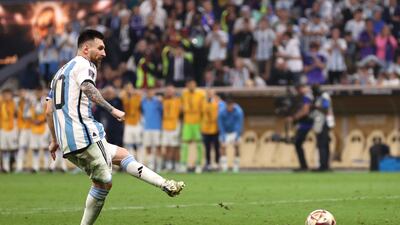
Lionel Messi scores for Argentina in the penalty shoot-out. Getty -
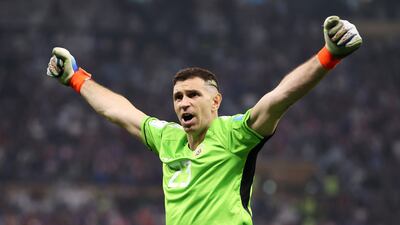
Emiliano Martinez of Argentina celebrates after saving Kingsley Coman's penalty. Getty -
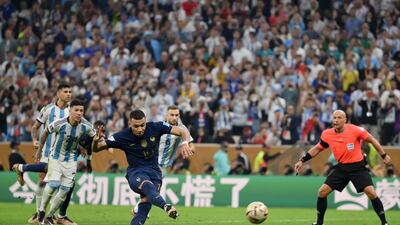
Kylian Mbappe completes his hat-trick from the spot to make it 3-3. Getty -
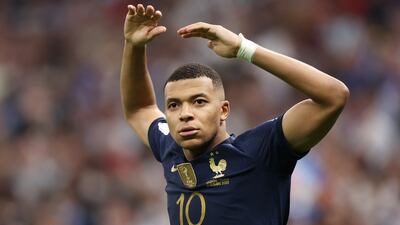
Kylian Mbappe celebrates after scoring his, and France's, third goal. Getty -
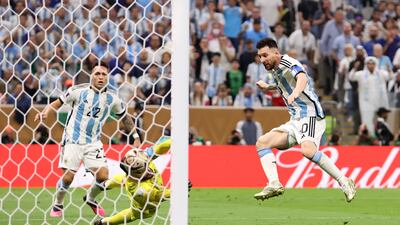
Lionel Messi scores Argentina's third goal. Getty -
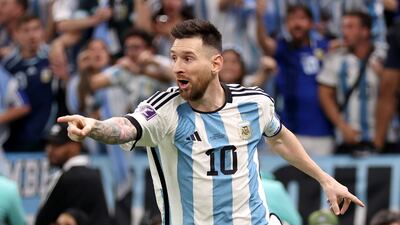
Lionel Messi celebrates scoring Argentina's third goal. Getty -
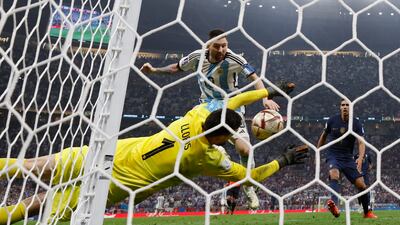
Lionel Messi scores Argentina's third goal. Reuters -
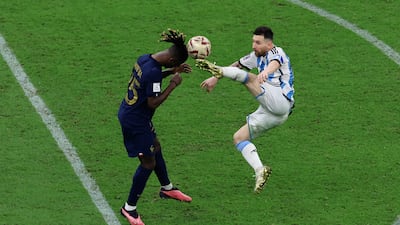
Argentina's Lionel Messi goes for a high challenge on Eduardo Camavinga of France. Getty -
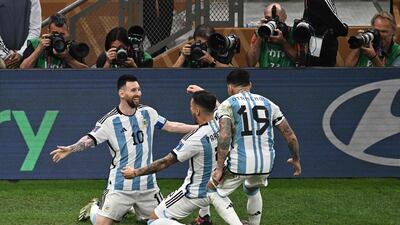
Lionel Messi celebrates with teammates after scoring Argentina's third. AFP -
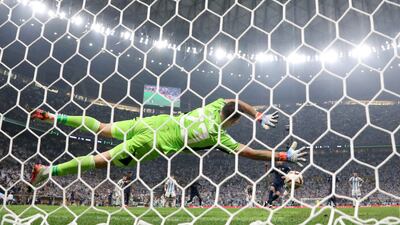
Argentina goalkeeper Emiliano Martinez is beaten by the penalty of France's Kylian Mbappe. Getty -
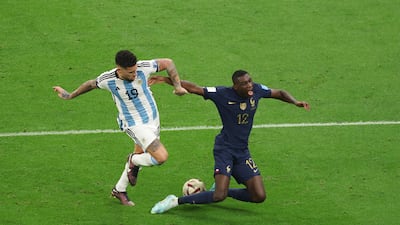
Argentina's Nicolas Otamendi fouls Randal Kolo Muani of France giving away a penalty. Getty -
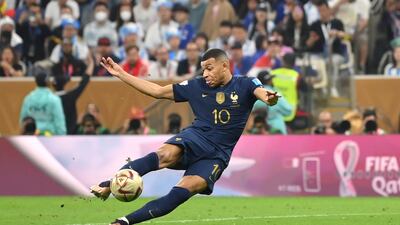
Kylian Mbappe volleys home France's second goal. Getty -
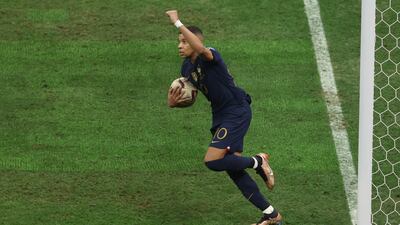
Kylian Mbappe celebrates after scoring the first France goal. Getty -
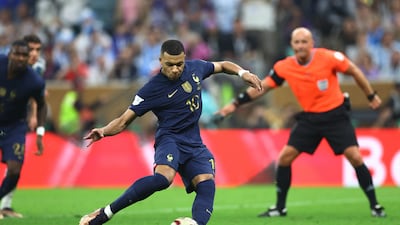
Kylian Mbappe scores France's first goal from the penalty spot. Reuters -

Angel Di Maria celebrates scoring Argentina's second goal. Reuters -
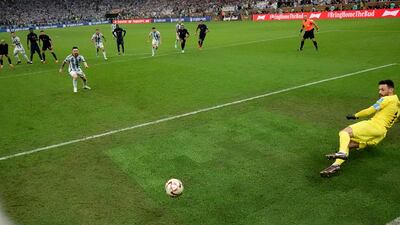
Argentina's Lionel Messi sends France goalkeeper Hugo Lloris the wrong way from the spot. Getty -
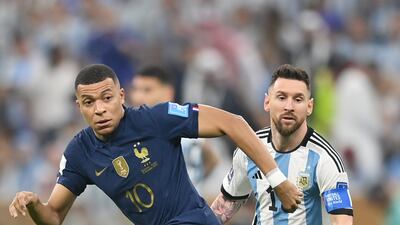
France's Kylian Mbappe with Lionel Messi of Argentina. Getty -
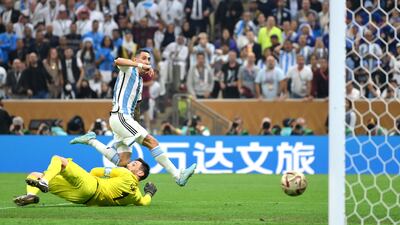
Angel Di Maria scores for Argentina in the first-half. Getty -
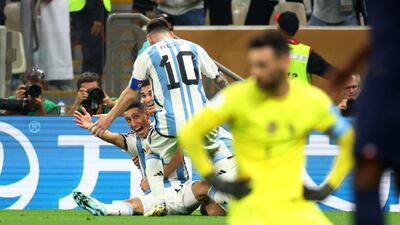
Argentina's Angel Di Maria celebrates after scoring with France goalkeeper Hugo Lloris on his knees. Reuters -
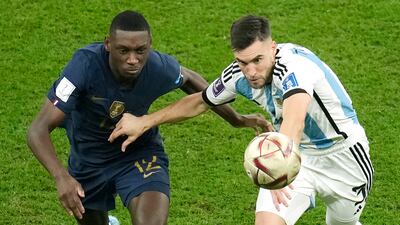
Argentina's Nicolas Tagliafico and Randal Kolo Muani fight for the ball. AP -
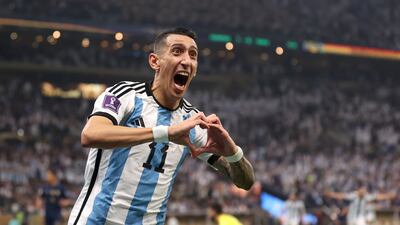
Angel Di Maria celebrates after scoring for Argentina. Getty -
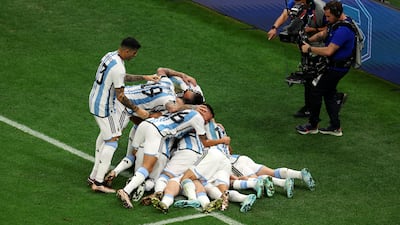
Lionel Messi is mobbed by Argentina teammates after scoring. Getty -
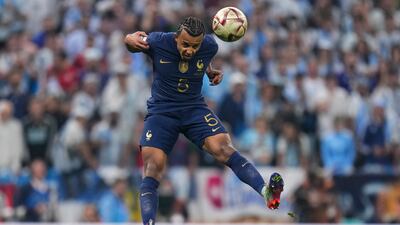
France's Jules Kounde heads the ball. AP -
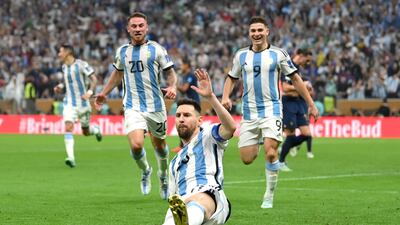
Lionel Messi celebrates after scoring for Argentina. Getty -
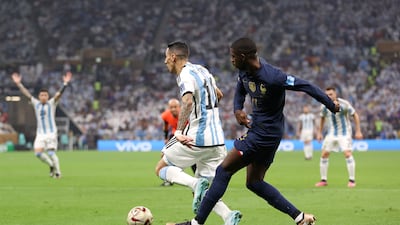
Argentina attacker Angel Di Maria earns a penalty after going down under the challenge of France's Ousmane Dembele. Getty -
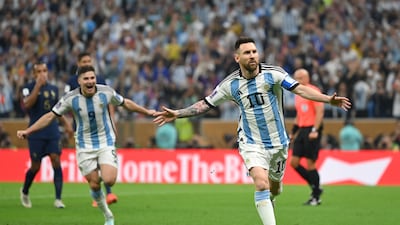
Lionel Messi celebrates after scoring a first-half penalty for Argentina. Getty -
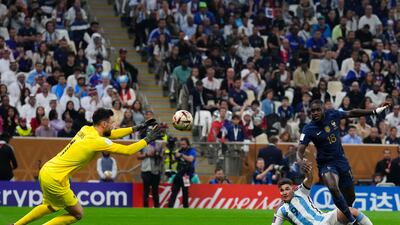
France goalkeeper Hugo Lloris saves from Argentina's Julian Alvarez. AP -
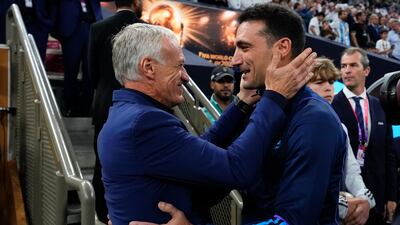
France manager Didier Deschamps, left, with his Argentina counterpart Lionel Scaloni before the game. AP -
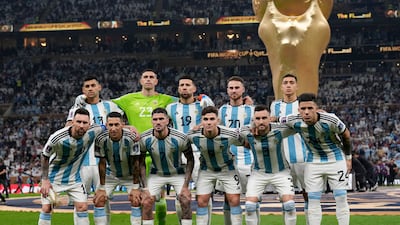
Argentina players before the match. AP -
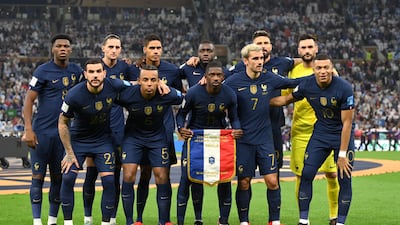
France players before the match. Getty


Messi played in three World Cup finals, winning once (2022) and losing twice (2014, 2026).
It's not just on the world stage where Messi shone.
His 14 Copa America goals have him third on the all-time list behind Norberto Mendez and Zizinho (17) and Severino Varela and Teodoro Fernandez (15).
In the Copa, he reached the championship game five times, with Argentina winning two editions (2021 and 2024).
Messi also guided Argentina to Finalissima success, with victory over Italy in 2022.
International bow
Messi made his international debut against Hungary on August 17, 2005, coming on as a substitute in the 63rd minute in place of Lisandro Lopez, and it was memorable for all the wrong reasons.
The 18-year-old was on the pitch for a mere 47 seconds when he was shown a red card for elbowing Vilmos Vanczak in the face.
First goal
The first of Messi's 125 Argentina goals came in a March 2006 friendly against Croatia.
After assisting Carlos Tevez's equaliser, he picked up a misplaced Stjepan Tomas pass, cut in on his soon-to-be-famous left foot, and curled home a terrific goal to cap a frantic opening six minutes.
World Cup arrival
Messi retires from international football as one of the World Cup's greatest goalscorers with 21 goals. The first of those came 20 years ago.
Messi was named in Jose Pekerman's 2006 World Cup squad in Germany. He sat out the 2-1 win over Ivory Coast but was introduced as a late substitute in the second group match against Serbia & Montenegro.
Carlos Tevez supplied the pass for Messi to open his World Cup account as Argentina ran out 6-0 winners.
First final
Messi has had his glory and his fair share of disappointments in an Argentina shirt.
His first final for Argentina came at the 2007 Copa America, but Argentina were no match for Brazil, with Julio Baptista instrumental in a 3-0 win.
Olympic gold
Few players can claim to have won the World Cup, Copa America and Olympic gold. But Messi is one of them.
The diminutive forward is not only one of the greatest goalscorers of all time, but also one of the best passers. It was his pass that fed Angel Di Maria, who scored the only goal against Nigeria in the 2008 final in Beijing.
World Cup heartache
Messi's first tournament as captain of the Albiceleste saw him shine in the group phase of the 2014 World Cup in Brazil before largely fading in the knockout rounds.
Argentina reached the final where they faced Germany. A dull game was settled by a Mario Gotze strike and ended with Messi in tears as he collected the trophy for best player at the finals.
Copa America success
Messi scored four and assisted five to help his side make the 2021 final in Brazil after the Copa was moved out of Colombia and Argentina due to the Covid-19 pandemic. Angel Di Maria's goal against the hosts saw Messi lift an international trophy for the first time.
Messi rules the world
Things did not look good for Messi when Argentina suffered a shocking opening defeat to Saudi Arabia at Qatar 2022.
Following that, Messi took the bull by the horns. He blew Mexico away and sent Australia packing in the last 16. Netherlands and Croatia were next to fall as Argentina set up a World Cup final against France in Lusail.
Messi's two goals in a thrilling 3-3 draw saw the game go to penalties, where he also scored. Argentina prevailed, and Messi finally got his hands on an elusive World Cup.
Home Copa triumph
Messi won the second of his Copa America titles, in 2024, on home soil.
In the final, he was forced off injured just after the hour mark against Colombia with the match goalless, but Lionel Scaloni's men battled on and eventually clinched a record 16th title thanks to an extra-time Lautaro Martinez winner.
Messi signs off
The 2026 World Cup proved to be Messi's final international tournament.
He may not have walked off with the trophy, but Messi certainly left his mark.
A hat-trick against Algeria in Argentina's opening match set the tone. Three more followed in the group phase. During the tournament, Messi surpassed Miroslav Klose's World Cup goalscoring record, and his goal against Egypt in the last 16 meant he had scored in nine consecutive World Cup matches.
The final proved a match too far for Messi and his teammates, with Spain running out worthy winners.