
Manchester United have unveiled plans to build a new 100,000-seat stadium next to the existing Old Trafford, aiming to provide their loyal fans modern facilities that would rival the big clubs across Europe.
"Today marks the start of an incredibly exciting journey to the delivery of what will be the world's greatest football stadium, at the centre of a regenerated Old Trafford," United's co-owner Jim Ratcliffe said in a statement.
"United is the world's favourite football club and the biggest in my opinion and it deserves a stadium befitting of its stature.
"It's more challenging to build a stadium of 100,000 but I think the UK needs a stadium of that kind of presence and the north of England I think is the best place to build it."
Manchester United said it plans to build the new stadium next to its existing Old Trafford site. The historic venue has the league’s highest capacity at over 74,000, but its leaky roof and other deteriorating facilities have aged badly compared to Premier League clubs including crosstown rivals Manchester City and Tottenham Hotspur in London.
Ratcliffe had been open about his desire for a new, state-of-the art facility since he became a minority owner in February of last year, and the club had been studying whether to redevelop the existing stadium or build a new one.
As things stand, United are unlikely to face any need to relocate during the construction process.
“Our current stadium has served us brilliantly for the past 115 years, but it has fallen behind the best arenas in world sport,” Ratcliffe added. “By building next to the existing site, we will be able to preserve the essence of Old Trafford, while creating a truly state-of-the-art stadium that transforms the fan experience only footsteps from our historic home.”
United did not reveal how much the stadium would cost or reveal a timeline for its completion, but architect Norman Foster said building work would take five years. The BBC reported that the venue will cost around £2 billion.
-
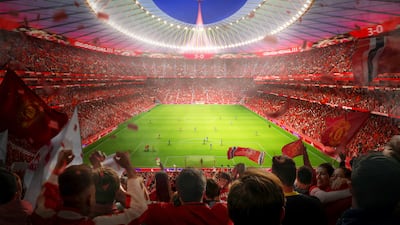
A handout image provided by Foster and Partners of what the new 100,000-seater Manchester United Stadium and surrounding area could look like. PA -

Handout of a conceptual image of what the new Manchester United stadium and surrounding area could look like. Photo: Foster + Partners / PA -

Architects at Foster and Partners, who will design the project, said the stadium would feature an umbrella design and a new public plaza that is "twice the size of Trafalgar Square". PA -
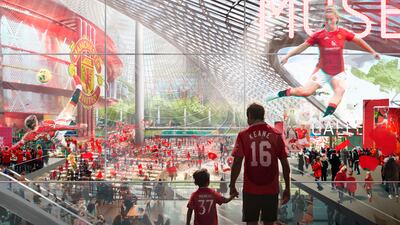
Manchester United's new stadium will form part of a wider regeneration of the Old Trafford area, predicted to be the biggest such project in the United Kingdom since the transformation of the Stratford area that accompanied the 2012 Olympics in London. PA -
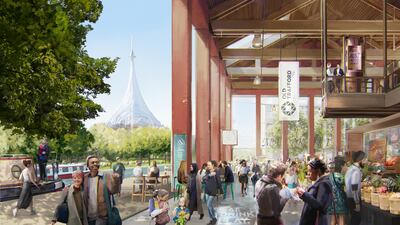
United say the entire project has the potential to create 92,000 new jobs, will involve the construction of 17,000 homes and bring an additional 1.8 million visitors to the area annually. PA -

Co-owner Sir Jim Ratcliffe said he wanted to build the "world's greatest football stadium" which the club hopes could be finished in five years. PA -
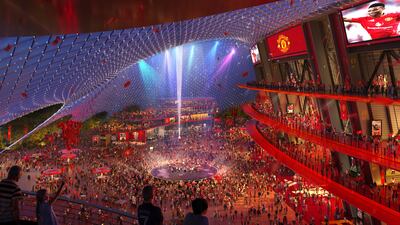
United's decision came after an extensive consultation process around whether to develop the existing stadium or build a new one. PA -
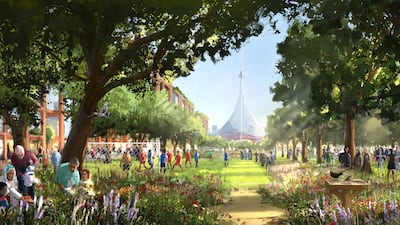
The stadium will be built using pre-fabrication, shipped in 160 components along the neighbouring Manchester Ship Canal. PA -
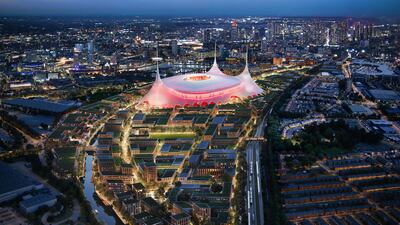
Foster and Partners designed the new Wembley Stadium, which opened in 2007, and the Lusail Stadium, the venue for the 2022 World Cup final in Qatar. PA -

Manchester United predict the project will be worth an additional £7.3bn per year to the UK economy. PA


British billionaire Ratcliffe paid $1.3 billion for an initial 25% stake in United last year and made a new stadium one of his priorities.
The possibility of redeveloping Old Trafford was considered but an entirely new construction emerged as a better option.
Wembley is currently the biggest stadium in the UK with a capacity of 90,000. Twickenham, which is home to the national rugby team, holds 82,500.
The move to a new ground has been backed by former United boss Alex Ferguson, who won 13 Premier League titles during his reign of more than 26 years.
"Manchester United should always strive for the best in everything it does, on and off the pitch, and that includes the stadium we play in," Ferguson said.
"Old Trafford holds so many special memories for me personally, but we must be brave and seize this opportunity to build a new home, fit for the future, where new history can be made."
Sebastian Coe, who chaired the Old Trafford regeneration task force, said Tuesday "marks an important step forward in what I firmly believe can be the biggest and most exciting urban regeneration project in the UK since the 2012 London Olympics".
United hope the stadium can be built in five years, with sections to be constructed off site and transported along the Manchester Ship Canal.
Regarding the financing of the project, chief executive Omar Berrada added: "It's a very attractive investment opportunity so we're quite confident we'll find a way to finance the stadium."

