


Sebastien Haller lords it over the 34th Africa Cup of Nations. It’s hard to travel more than a hundred yards along an urban road in Ivory Coast without seeing him, smiling here, looking focused there, on advertising billboards for everything from mobile networks to mineral water to electrical appliances.
To be the emblematic, high-profile centre-forward of the host nation of an Afcon is to be a magnet for commercial endorsements.
Trouble is that Haller the omnipresent brand ambassador is currently Haller the utterly-absent player, the ankle injury he sustained with his club Borussia Dortmund last month having kept him from playing any part in Ivory Coast’s perilous journey through the group phase.
He’s been longed for through successive defeats, including a 4-0 thrashing by Equatorial Guinea. The Elephants’ place in the knockouts, where Haller hopes to be fit enough to appear, was achieved only because their three points made them the fourth-best of the third-placed finishers.
Haller is not the only vanishing star. Mohamed Salah has controversially left the Egypt camp to have treatment in Liverpool on the muscle problem he picked up on match day two. Unless the Pharaohs reach the final, Salah may not be back.
Riyad Mahrez, dropped from eliminated Algeria’s first XI after two ineffective starts, is gone. Andre Onana, the Manchester United goalkeeper, has played one match of Cameroon’s three and, going into the last-16 tie against Nigeria, is no longer the man in possession of the Indomitable Lions’ gloves.
Even Africa’s star coach is obliged to retreat from the pitchside spotlight. Morocco’s Walid Regragui must, against South Africa on Tuesday, see out the second game of a touchline ban imposed for his hot-tempered confrontation with DR Congo players after a feisty 1-1 draw in the group phase.
All of which opens up a platform for a new star to emerge. Lead candidate: Lamine Camara, the gifted, 20-year-old Senegalese.

The managerial sack race
Regragui is at least safe in his job. Many coaches have lost theirs. Ivory Coast take on Senegal on Monday under a caretaker, former international midfielder Emerse Fae, following the removal of Jean-Louis Gasset, who oversaw one group win and two losses.
The Frenchman lost his job just as Chris Hughton’s 10 months in charge of homeward-bound Ghana was also coming to an end. The resignation of Tunisia’s Jalel Kadri took to six the number of Afcon coaches who have left their posts in the last 10 days.
The most resonant departure is that of Djamel Belmadi, who inspired Algeria to the 2019 Afcon title. He oversaw a run of 25 games unbeaten either side of the triumph, but the sequence ended in punishing fashion, with a first phase exit as defending champions at the 2021 Cup of Nations.
This campaign was another debacle. He is now the only Algeria coach to have presided over successive group stage failures. “I’m also only the second coach to have won Algeria an Afcon,” Belmadi was at pains to point out as his tenure came to an end.

Festival of giant-killers
So upended have been traditional hierarchies that it almost counts as an ‘upset’ now when an established heavyweight actually beats a lower-ranked so-called outsider.
Through to the knockouts as group winners are Angola (117th in the world ladder, according to Fifa), Equatorial Guinea (88th) and Cape Verde (73rd). Already home are Tunisia and Algeria (behind only Morocco and Senegal in Fifa’s African rankings) as well as Ghana (four-time African champions).
The structure of the last 16 ensures underdogs will still be growling into the quarter-finals. Angola meet Namibia, Fifa’s 115th and celebrating progress from a group for the first time, on Saturday. There’s a last-eight spot waiting for Mauritania (105th) or Cape Verde when they meet on Monday.
Northern chill
In the first 34 matches of this Afcon, the combined might of Africa’s Mediterranean nations – four teams, 11 of the 33 past titles between them – won just a single match. That was Morocco’s victory over Tanzania. Egypt, though through to the next round, have yet to record a victory; Algeria and Tunisia went home without one.
There is a long history of diminished performances by North African countries when the tournament takes place south of the Sahara, which is ominous. But the trend may yet be bucked.
Egypt, even without Salah and injured goalkeeper Mohamed El Shenawy, have a potential path to the semi-final in which DR Congo and then one of Guinea or Equatorial Guinea would normally seem surmountable obstacles.
And the Maghreb region may yet have plenty to celebrate. Morocco, who recorded their second group stage win against Zambia on the last evening of the group phase, look to have higher gears they can move up to. Mauritania, never before in the knockouts, are riding on the momentum of having beaten Algeria.
-
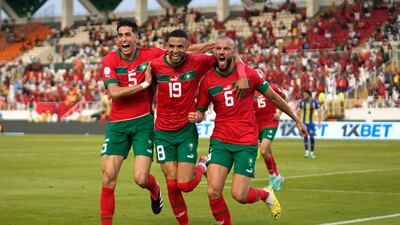
Romain Saiss, right, celebrates with teammates after scoring Morocco's opening goal during the Africa Cup of Nations Group F match between Morocco and Tanzania at the Laurent Pokou stadium in San Pedro, Ivory Coast on Wednesday, January 17, 2024. AP -
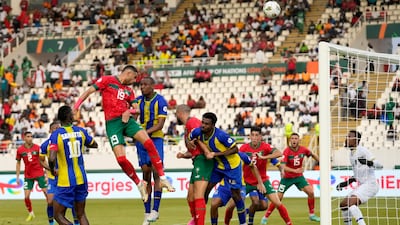
Morocco forward Youssef En-Nesyri heads the ball during the match against Tanzania. AP -
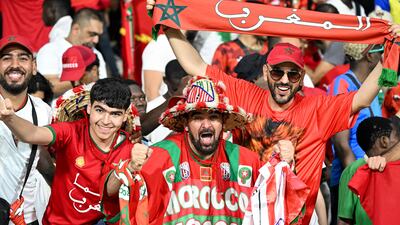
Morocco supporters cheer on their team inside the Stade Laurent Pokou. AFP -

Youssef En-Nesyri celebrates after scoring Morocco's third goal against Tanzania. AP -
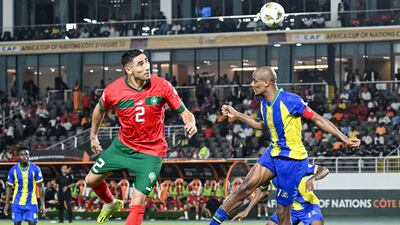
Morocco defender Achraf Hakimi heads the ball in front of Tanzania midfielder Himid Mao. AFP -
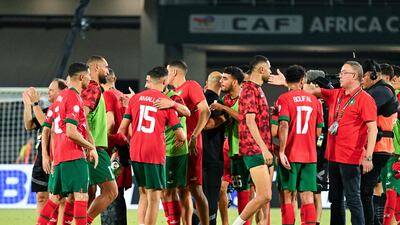
Morocco players celebrate after winning their Africa Cup of Nations match against Tanzania. AFP -
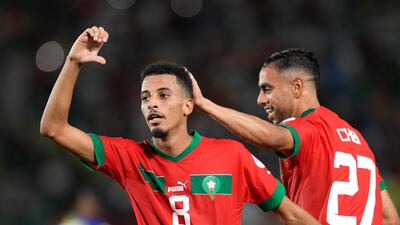
Azzedine Ounahi, left, celebrates with Mohamed Chibi after scoring Morocco's second goal. AP -
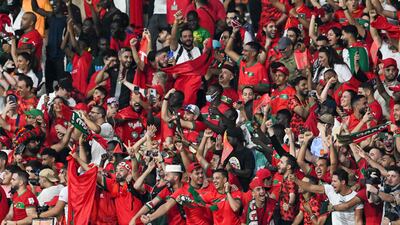
Morocco fans celebrate during the match against Tanzania at Stade Laurent Pokou. AFP -
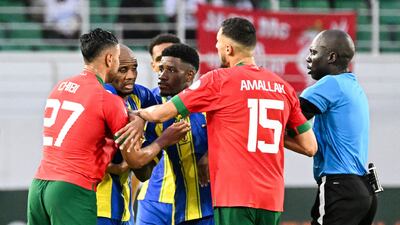
Tanzania defender Ibrahim Hamad argues with Morocco defender Mohamed Chibi and midfielder Selim Amallah as referee Al Hadi Allou Mahamat tries to intervene. AFP -
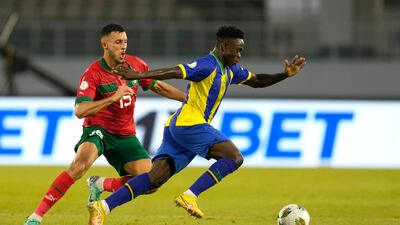
Tanzania's Morice Abraham tries to break clear with the ball against Morocco's Selim Amallah. AP -
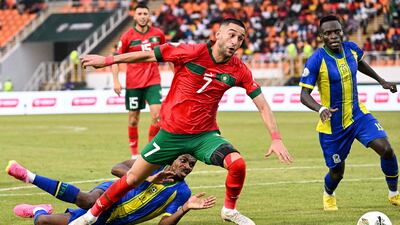
Morocco midfielder Hakim Ziyech shrigs off a challenge from Tanzania defender Ibrahim Hamad. AFP -
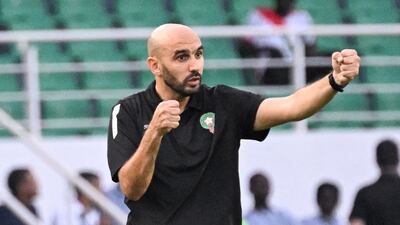
Morocco manager Walid Regragui gives out instructions from the touchline. AFP -
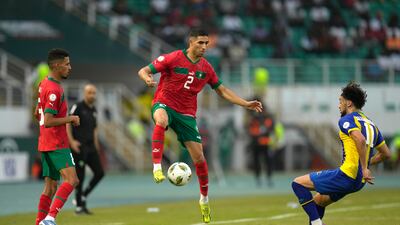
Morocco full-back Achraf Hakimi controls the ball in the air ahead of Tanzania's Tarryn Allarakhia. AP -
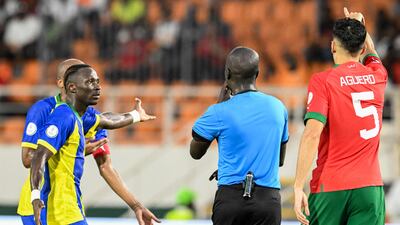
Tanzania's defender Novatus Miroshi speaks with referee Al Hadi Allou Mahamat. Miroshi was sent off in the second half. AFP


Goals galore
“The best Afcon ever,” promised various dignitaries at the tournament’s outset. When 12 days later, seasoned coaches are saying it feels like the best ever, the claim sounds more authentic.
The pitches are better than in the previous edition in Cameroon, the refereeing mostly good and the entertainment value sky high.
There had not been a single goalless draw until the last day of group games and the goals per game ratio rate is a generous 2.47. Last-minute drama has been a constant feature. The knockout rounds have a tough act to follow.

