

The beauty of the Europa League, now occupying the mezzanine storey of Uefa’s expanding hierarchy of midweek competitions, lies in the eye of the beholder. For Liverpool or Ajax, clubs who boast 10 European Cups between them and are far more accustomed in recent years to being in the senior Champions League, participation in this season’s second-tier event can feel grudging.
But for the teams who now get to rub shoulders with them, to visit Anfield and Amsterdam in a major international club competition for the first time, the Europa League is a thrilling endorsement of progress, a proof of upward mobility.
These are the sorts of nights that Brighton & Hove Albion, the admired upstarts of the English Premier League, and Union Saint-Gilloise, the agile climbers of the Belgian leagues, have to look forward to as they on Thursday embark on European campaigns that for both would have seemed far-fetched a very short time ago.
Six years ago, Brighton had only just come up from the Championship, England’s second division. They will host AEK Athens this evening, a landmark for a club who have never before qualified for a Uefa competition, ahead of a series of trips in the group phase to major hubs of the continent: Marseille next month; Ajax in Amsterdam in November; and then Athens.
Union SG, as they are known for short, have risen even more swiftly, up from the second level of the Belgian professional pyramid only in 2021, after almost half a century in the lower tiers. They were immediately competing for the league title.
This will be Union SG’s second successive Europa League adventure, and among the destinations ahead of them if they are to again reach the knockout phase are Liverpool, who they meet at Anfield next month and Toulouse, the French club they host on Thursday.
“Our target is to reach the next stage,” said Alexander Blessin, the Union SG head coach. “And to win every game, even if with Liverpool in the group that’s going to be hard. We have a lot of new players and I want them to enjoy the atmosphere, and write a new story.”
The high turnover of players is part of the ritual for any successful Belgian club, ambition driving the better performers to more prestigious, wealthier leagues. During the summer, Union SG sold key individuals to clubs in France’s Ligue 1, Italy’s Serie A, Spain’s La Liga and to the German Bundesliga, from where Bayer Leverkusen swooped for the Nigerian striker Victor Boniface.
He had performed well for Union SG against Leverkusen in last season’s Europa League; he has scored five times at a rate of a goal a game for his new club already this season. Union SG sold Boniface, 22, for over €20 million, more than three times what they had paid Bodo/Glimt, of Norway, a year earlier.

That, in a nutshell, is what Union SG do so skilfully: they scout talent from far and wide, in many cases painstakingly curating performance data and identifying what they perceive to be the most relevant metrics. On a bigger scale, in the wealthier Premier League, that’s been a key to Brighton’s rise: midfielder Moises Caicedo, scouted in Ecuador, was this summer sold to Chelsea for €116 million, more than four times what Brighton bought him for two-and-a-half years earlier.
The shared methods are no coincidence. Brighton chairman Tony Bloom, a methodical analyst of form and the numbers that explain it, has held a stake in Union SG for five years, a holding he was obliged to reduce so he was no longer the majority owner once Brighton and the Belgian club found themselves in the Europa League at the same time – in order to satisfy Uefa concerns about potential conflict of interest should the clubs meet one another.
The relationship between the clubs has involved some mutually beneficial transfers. Kaoru Mitoma, the Japan winger, was loaned to Union SG for a season ahead of his superb impact for Brighton in 2022/23. And when this summer, Union SG studied the form and the statistics of an Argentinian defender with the capacity to play across the back line and backed him to thrive in Europe, they were tracing very closely a path Brighton had already taken.
Union SG’s new Argentine is one Kevin Mac Allister. He’s the younger brother of Alexis, who joined Brighton direct from Argentinos Juniors in 2019, debuting in England a year later. The older Mac Allister has since won a World Cup and in July moved for over €40 million, yielding another handsome profit for Brighton. His new club are Liverpool, where, all being well, the Mac Allister brothers will face another in the Europa League next month.
Manchester United 1 Brighton 3 - player ratings
-
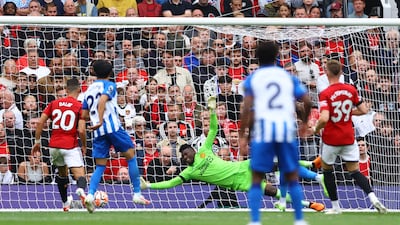
MANCHESTER UNITED RATINGS: Andre Onana - 5: Has conceded more than one goal in the last four league games, the first time this has happened in 44 years. It also meant United’s excellent home run of wins came to an end. Only got his fingers to the third, a finish that was going away from him. Fine save from Fati at the end. Reuters -
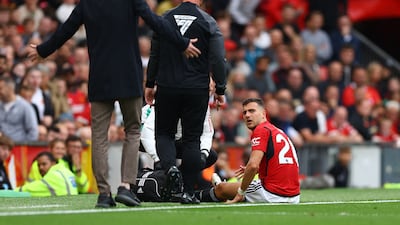
Diogo Dalot - 6: Third straight league start. Subject of a yellow card tackle by Lampety after three minutes. Top play to set up Rashford on 25. Nicked ball off Mitoma to stop a 48th-minute attack. Another who didn’t do enough to stop the second goal conceded. Reuters -
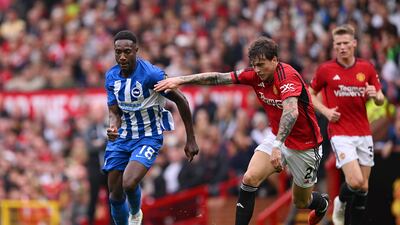
Victor Lindelof - 5: Ball ran by him before Brighton took the lead in a big setback after a bright start. Smart ball to Rashford to set up one attack. Did well to keep the ball when Lallana threatened to run at goal on 42. Getty -
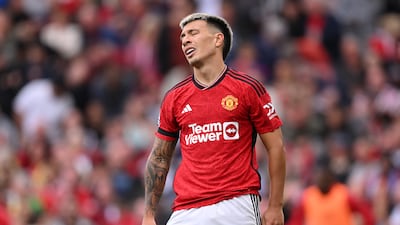
Lisandro Martinez - 5: Backed off and didn’t do enough to stop the cross for the first – a fine Welbeck finish. Static for Brighton’s second goal from Gross and, like Casemiro, a star player who has dipped this season. Getty -
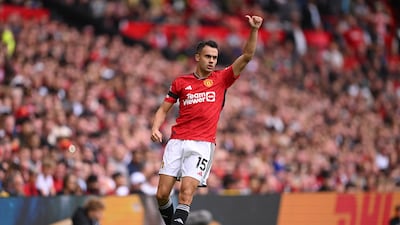
Sergio Reguilon - 5: Combined well with Rashford on the left at the start, but part of a defence that was continually carved open by Brighton. Getty -
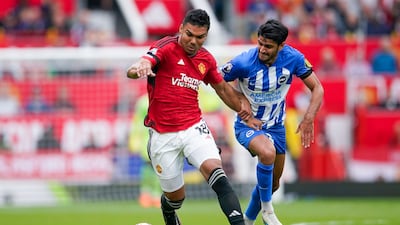
Casemiro - 5. Too casual and didn’t make a recovery run for Welbeck’s goal. Didn’t have the legs you need against Brighton. Disappointing so far this season. What on earth has happened? AP -
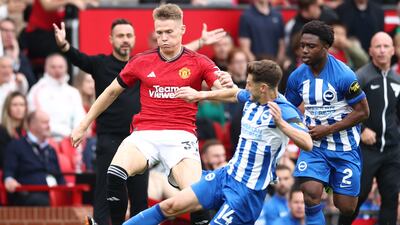
Scott McTominay - 5: First start of the season for his club. Didn’t do enough to stop Brighton’s second and struggled to stop them dominating possession. EPA -
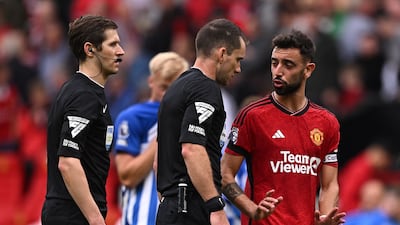
Bruno Fernandes - 5: Began on the right of a midfield, which started well, but got deeper and deeper against the best team to visit Old Trafford so far this season. Booked before the break. AFP -
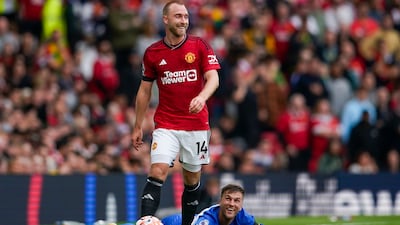
Christian Eriksen - 6. Beautiful pirouette to start a ninth- minute attack as United started on the front foot with high pressing. Tried to set up attacks for United who had 14 shots, but only four on target. Brighton had 10 shots – eight on target. AP -
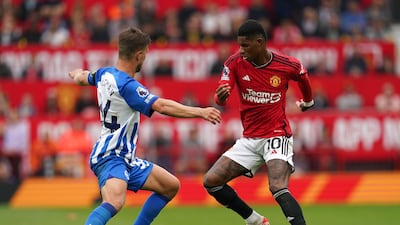
Marcus Rashford - 6: Drove into the box from the left. Took the first shot on target in the game – and the second after 11 minutes. And the third after 25, then the fourth, which hit the post on 33. Another shot went wide on 46. PA -
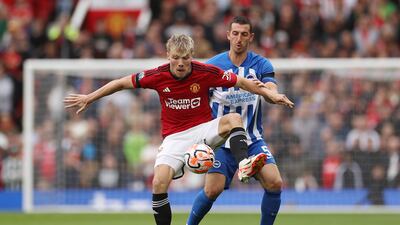
Rasmus Hojlund - 6: Aggressive on his first United start, getting in front of Dunk for early crosses. Thought he’d scored after 40 minutes. VAR didn’t. Linked well with Rashford. Decision to bring him off was booed. Getty -
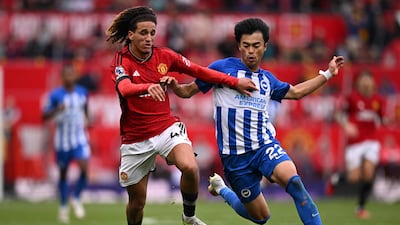
SUBS: Hannibal Mejbri (for Casemiro on 64') - 7: Pulled one back with a shot on the half turn from distance nine minutes later. Booked for a challenge on Ferguson, but a determined cameo. AFP -
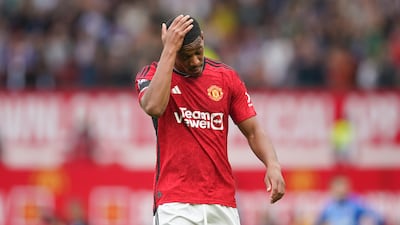
Anthony Martial (for Hojlund 64') - 4: Almost no impact. AP -
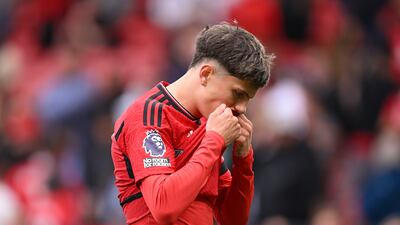
Alejandro Garnacho (for McTominay 85') - NR: Fans had sung his name. He came on as a last gamble. It was all too late. Getty -
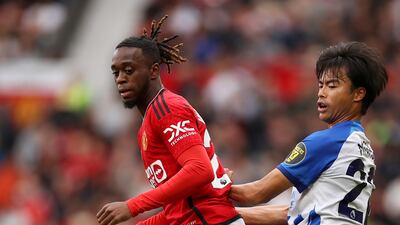
Aaron Wan-Bissaka (for Reguillon on 85') - NR: Went to right back. Getty -
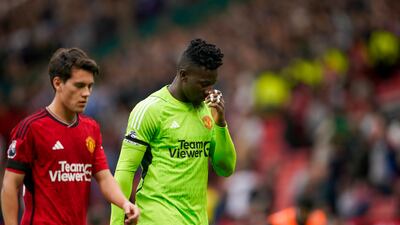
Facundo Pellistri (for Martinez on 85') - NR: Is he ever going to get sufficient minutes to show what he can really do, or not do? AP -
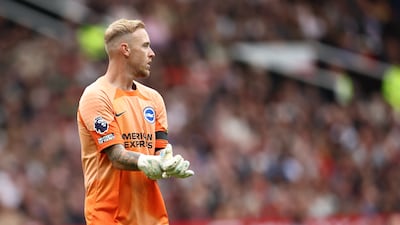
BRIGHTON RATINGS: Jason Steele - 7: Great distribution with his feet. Good anticipation to come out of his box and deny Rashford an opportunity from a long ball. Easy save from long-range Fernandes effort and another good stop from a Rashford free kick. No chance for Hannibal's goal. EPA -
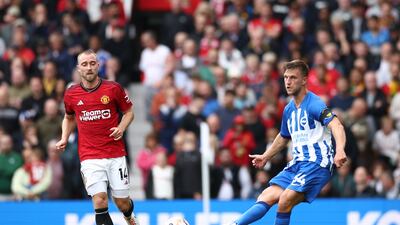
Joel Veltman - 6: Given a tough time by the pace of Rashford at times but made a vital block to deflect the United forward's first-half shot against the woodwork. Generally comfortable with the ball at his feet. Wasted a good chance to play Welbeck in from the edge of the area. Fiercely committed. EPA -
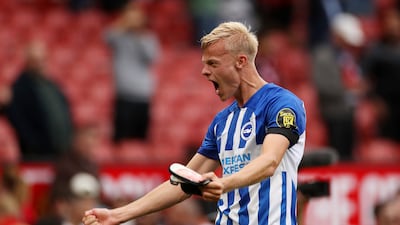
Jan Paul van Hecke - 8: Strong headed clearance from a United corner on 34 minutes. Twice managed to shepherd Rashford well as he broke into the box early in the second half. Snuffed out an opening for Hojlund. Getty -
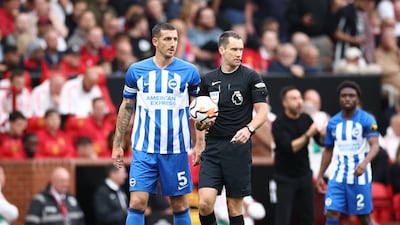
Lewis Dunk - 8: Solid in the heart of the Brighton defence. Cool under pressure and distributed well. Impressive shift. EPA -
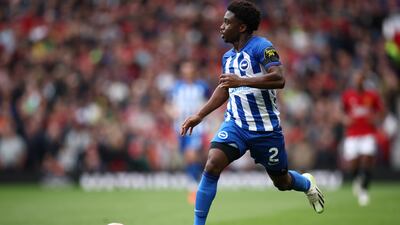
Tariq Lamptey - 7: Neat work on the left flank. Came forward well and involved in some well-worked passing moves out wide. Lovely ball to tee up Joao Pedro for Brighton's third. EPA -
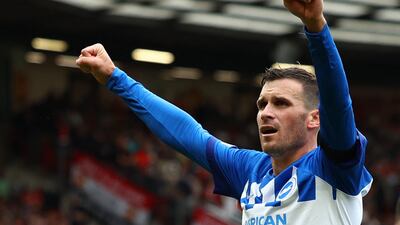
Pascal Gross - 9: Fresh from his first senior cap for Germany aged 32, he was the midfield kingpin for his team, linking up play and spraying passes before finishing brilliantly for Brighton's second. Reuters -
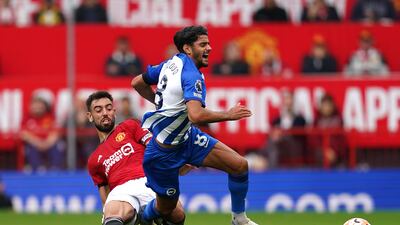
Mahmoud Dahoud - 6: Battled well on his first start since the opening game at Luton. PA -
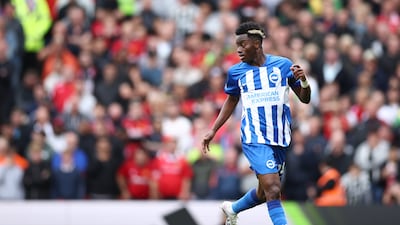
Simon Adingra - 6: Put Onana under pressure early in the second half with some sharp pressing. Showed great anticipation to cut out a dangerous cross-field pass. Allowed Reguilon to wriggle past him late in the game. EPA -
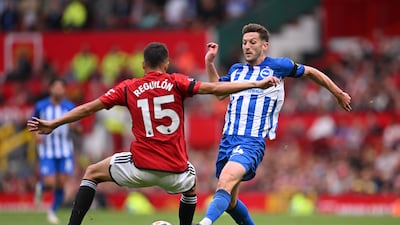
Adam Lallana - 7: Nice dummy to assist Welbeck's opener. Pressed United's backline well. Worked hard defensively. Getty -
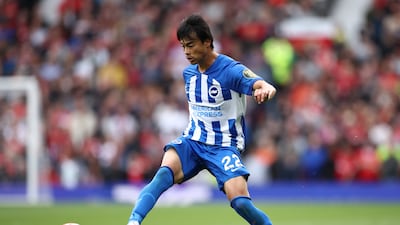
Kaoru Mitoma - 7: Harried the United defence well. Quiet game until he helped to set up Gross's goal. Surging run into the box in the 78th minute. EPA -
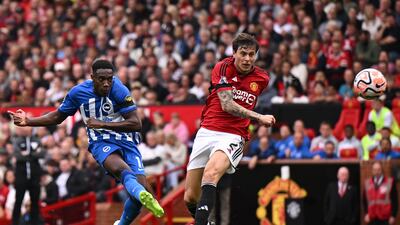
Danny Welbeck - 8: Sweet left-foot finish for Brighton's opener after he'd played the ball wide for cross into the box. Went close with a crisp strike from outside the box on 32 minutes. Held the ball up well and dropped back to put in a shift helping out his defence when required. AFP -
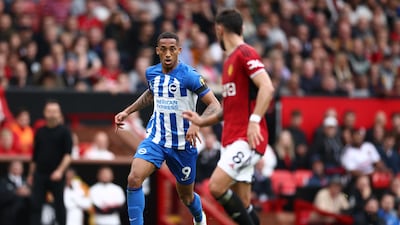
SUBS: Joao Pedro (for Welbeck 64') - 8: Stunning side-footed finish from the edge of the box. Wonderful technique. Looked good in everything he did. EPA -
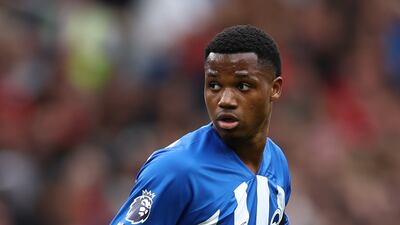
Ansu Fati (for Lallana 64') - 7: Set up Evan Ferguson on the edge of the area. Decent strike just inside the box that forced a sharp save from Onana. Another lightning quick run to force a save in added time. Promising debut. EPA -
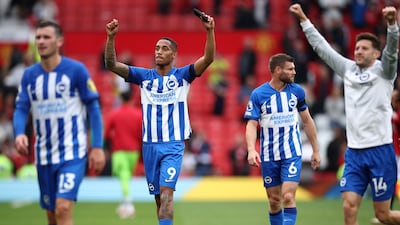
James Milner (for Lamptey 76') - NR. Good clearing header in the box. EPA -
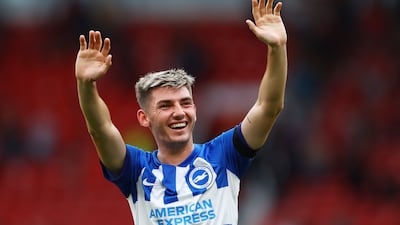
Billy Gilmour (for Dahoud 76') - NR. Reuters -
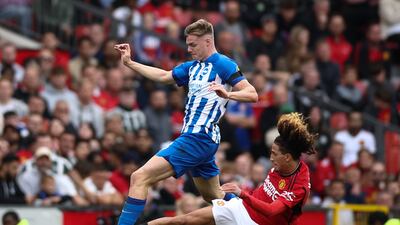
Evan Ferguson (for Adingra 83') - NR: Decent effort saved by Onana. EPA



