


In Antonio Conte’s strategic playbook, certain events come around like clockwork. In between the Tottenham Hotspur manager’s many successes as a club coach, there are the regular confrontations with his employers. Any student of Conte’s career can pinpoint accurately when and on what terms he will pick those battles.
Ahead of Thursday's evening trip with Spurs to Manchester City, Conte steered his pre-match press conference towards the issue of institutional responsibility, of club executives facing – or, rather, not facing – up in public.
It has been a tough task answering questions about Spurs’ form lately. They lost the derby at home to Arsenal at the weekend and have lost five of their last 10 Premier League matches, and slipping out of the top four in the table.
“I think it would be good to have the club present in the media, to speak,” said Conte. “Otherwise, there is only one face to explain a situation which is better for the club to explain.” That face, that voice is always his. “I have never seen the club, or sporting director, come to explain strategy and vision. If only the coach speaks, there are sometimes misunderstandings.”
If that could hardly be mistaken for anything other than a challenge to the Tottenham hierarchy, in the middle of a transfer window that, publicly and privately, Conte has urged his bosses to use to strengthen the squad, it also echoed remarks he has made in the past about feeling exposed.
Here’s Conte speaking in the summer of 2020, 14 months into his previous job, as coach of Inter Milan: “There’s very little protection from the club, absolutely zero,” he complained. The third transfer window of his time at Inter was just opening when he said those words. Note the timing. Conte is 14 months into managing Spurs, and in his third transfer window of his time in North London.
Rewind to early 2018, into his second season managing Chelsea, and reporters were listening to Conte pointedly saying “the club must be ready to share responsibility,” and suggesting “the club prepare a statement, a statement of support”.
Conte had guided Chelsea to the league title the previous May, in his first season working in England. But by his 14th month in charge there, with his second season not matching the same standards, he was already referring to Chelsea’s 2016/17 title as “a miracle.” The same word – “miracle” – has started to creep into how he describes Spurs’ achievement in finishing fourth last season.
Tottenham 0 Arsenal 2: Player ratings
-
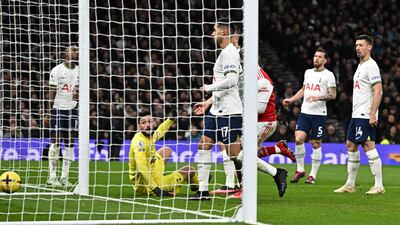
TOTTENHAM RATINGS: Hugo Lloris – 4. Was at fault for Arsenal’s opener when Saka’s shot somehow squirmed past the Spurs captain at his near post from the tightest of angles. Reuters -
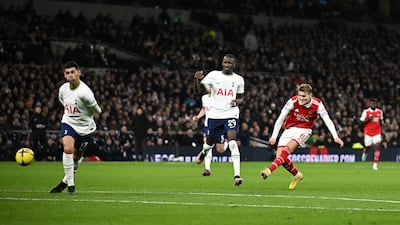
Cristian Romero – 5. Didn’t look assured at the back and the emotions of the fixture seemed to get to him, the Argentine making the occasional mistake alongside some rash tackles. Reuters -
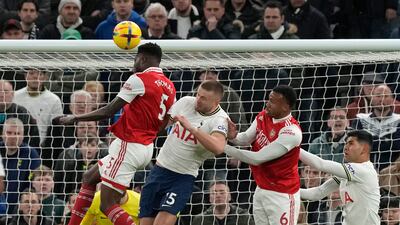
Eric Dier – 5. A birthday to forget for the centre-half who struggled to deal with Arsenal's attacking prowess. AP -
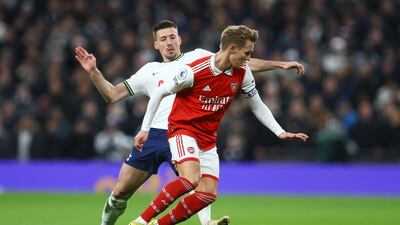
Clement Lenglet – 5. Couldn’t handle the pace of Arsenal’s attack. Spurs' defence looked alarmingly vulnerable at times. Action Images -
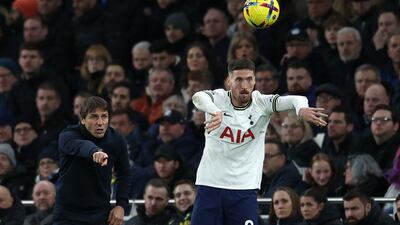
Matt Doherty – 6. Looked shaky defensively in his wing-back position and struggled with the overlaps of Zinchenko. Offered the occasional promising cross from the right flank. AFP -
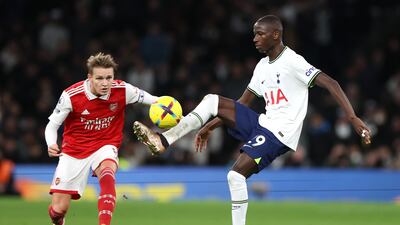
Pape Sarr – 6. Although a day to forget for his side, the young talent showed some positive signs in midfield. Getty -
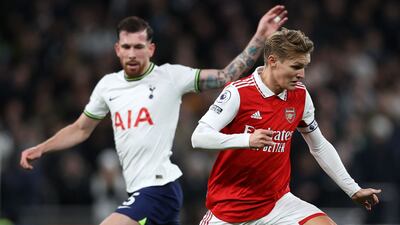
Pierre Hojbjerg – 5. Produced some enticing deliveries into the box which were not taken advantage of. AFP -
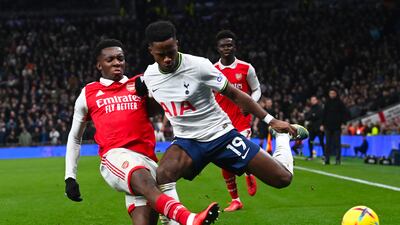
Ryan Sessegnon – 6. Could have done better defensively to stop Saka’s drive towards the box, which led to the away side breaking the deadlock. However, he provided a real threat going forward, and had a great opportunity to reduce the deficit but his effort was well saved. EPA -
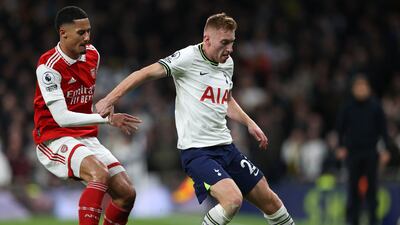
Dejan Kulusevski – 6. Looked the most likely to create something threatening going forward as his side searched for a way back into the game. Did well to drive with purpose at the Arsenal defence but was not enough in the end. AFP -
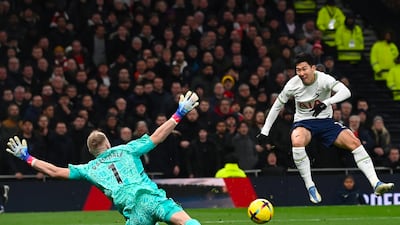
Son Heung-min - 5. Had a great opportunity to level the score but his effort was palmed away by Ramsdale. Other than the first half chance, he struggled to get himself in the game. EPA -
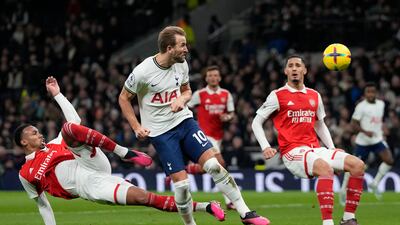
Harry Kane – 5. Had several clear-cut chances to get on the scoresheet but Ramsdale was able to keep his efforts out. Not a North London derby to remember for Tottenham’s main man. AP -
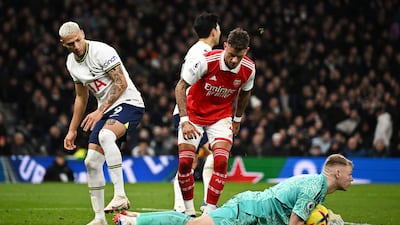
SUBS: Richarlison – (Doherty, 71) N/A - Provided a different dimension in attack with his side looking to rescue the game, but failed to offer anything threatening. Reuters -
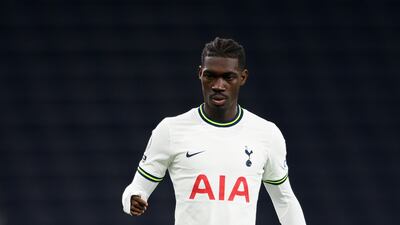
LONDON, ENGLAND - DECEMBER 21: Yves Bissouma of Tottenham Hotspur runs with the ball during the Friendly match between Tottenham Hotpsur and OGC Nice at Tottenham Hotspur Stadium on December 21, 2022 in London, England. (Photo by Alex Davidson / Getty Images) -

LONDON, ENGLAND - JANUARY 01: Ben Davies of Tottenham Hotspur runs with the ball during the Premier League match between Tottenham Hotspur and Aston Villa at Tottenham Hotspur Stadium on January 01, 2023 in London, England. (Photo by Clive Rose / Getty Images) -

Soccer Football - Premier League - Tottenham Hotspur v Aston Villa - Tottenham Hotspur Stadium, London, Britain - January 1, 2023 Tottenham Hotspur's Ivan Perisic reacts REUTERS/David Klein EDITORIAL USE ONLY. No use with unauthorized audio, video, data, fixture lists, club/league logos or 'live' services. Online in-match use limited to 75 images, no video emulation. No use in betting, games or single club /league/player publications. Please contact your account representative for further details. -
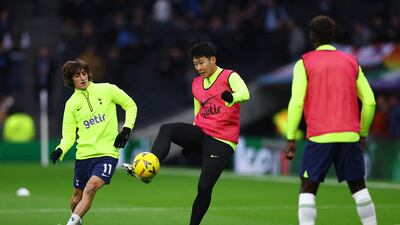
Soccer Football - FA Cup Third Round - Tottenham Hotspur v Portsmouth - Tottenham Hotspur Stadium, London, Britain - January 7, 2023 Tottenham Hotspur's Bryan Gil and Son Heung-min during the warm up before the match Action Images via Reuters / Matthew Childs -
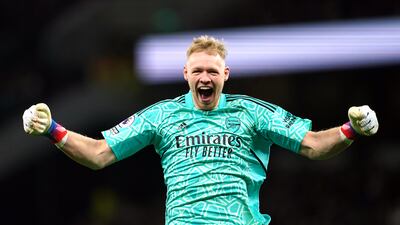
ARSENAL RATINGS: Aaron Ramsdale – 8. Made several crucial saves, especially in the second half when Spurs were trying to get back in the game. An excellent performance from Arsenal’s number one. PA -
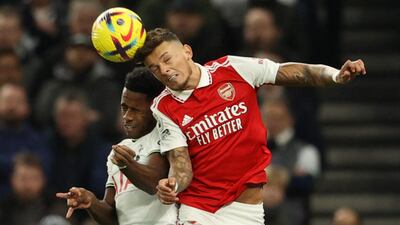
Ben White – 6. Struggled with the pace of Sessegnon when the Spurs man came forward, but did well to contain Son. AFP -
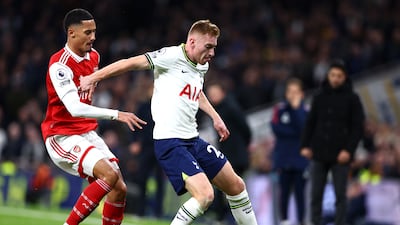
William Saliba – 7. There were a few dramatic moments at the end of the first half when the defender appeared to follow through his challenge on Doherty in the box, but referee Craig Pawson waved away the penalty shouts. A composed outing from the Frenchman. Getty -
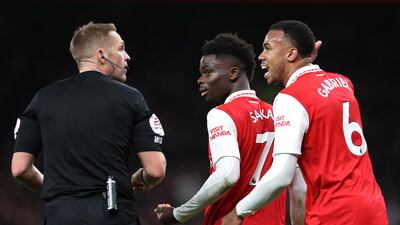
Gabriel Magalhaes – 8. A solid day at the office from the central defender who didn’t put a foot wrong, and who dealt with the physicality of Kane in the box. Getty -
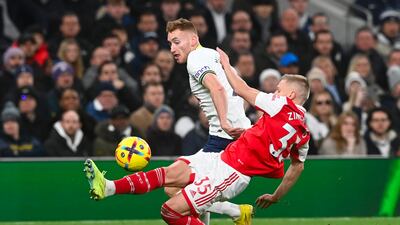
Oleksandr Zinchenko –7. Sound defensively and kept Kulusevski at bay. Going forward, he looked threatening and combined well with Martinelli. EPA -
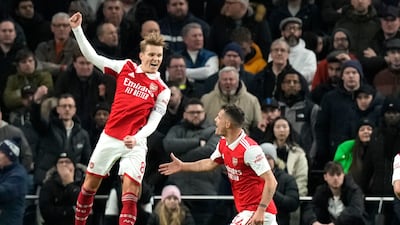
Martin Odegaard – 9. As usual, the Norwegian made Arsenal tick and topped off his performance when his effort from outside the box found the bottom right corner of the net to extend the lead. AP -
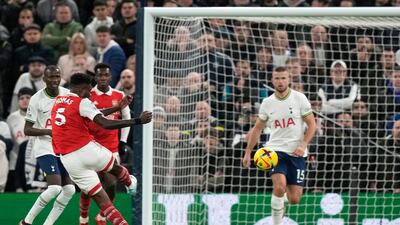
Thomas Partey – 9. Started an attack by playing a ball over the top to Saka, which resulted in his side taking the lead. The Ghanaian was unlucky to not get on the scoresheet after his powerful long-range strike in the first half clattered the post. AP -
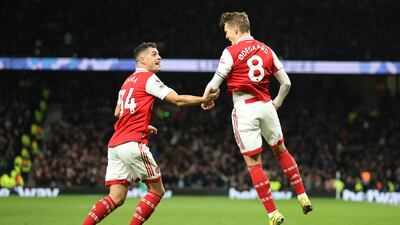
Granit Xhaka – 7. Known for his hot-headed antics on the pitch, the fierceness of this derby did not affect him this time and the midfielder had a cool and composed shift. Getty -
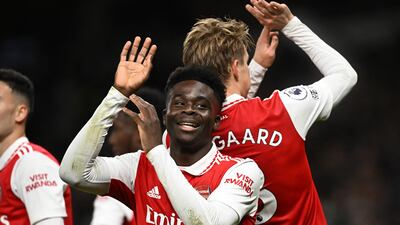
Bukayo Saka – 8. Another top performance from Saka who seems to be producing these displays week after week. His intelligent run down the right gave him the space to fire a shot directly at Lloris to give his side the lead. Reuters -
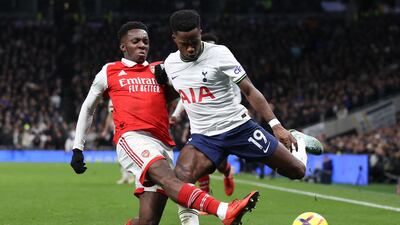
Eddie Nketiah – 7. Pressed well from the front and used his pace to get behind and threaten the opponent’s back line. Had a chance to make it 3-0, but his shot was well stopped. AFP -
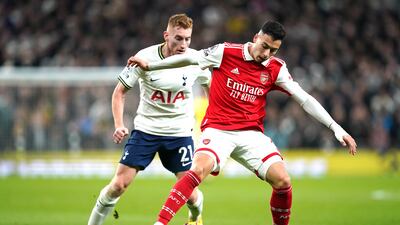
Gabriel Martinelli – 6. Not his most lively outing, but the Brazilian offered the occasional problem from the left wing. PA -
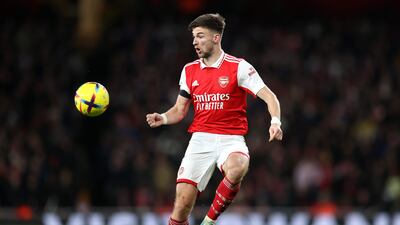
SUBS: Kieran Tierney (Martinelli, 79) N/A - The Scot’s arrival meant there was an extra defender on the pitch for his side, which helped get Arsenal over the line and take away all three points. Getty Images -
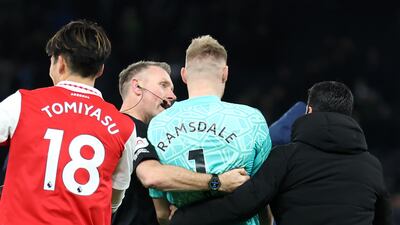
Takehiro Tomiyasu, (Zinchenko, 86’) N/A - Shored things up defensively. Getty -
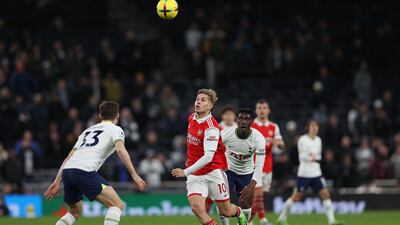
Emile Smith Rowe, (Nketiah, 90+3’) N/A - Came on with seconds left to just wind the clock down and secure the victory for Arteta’s side. AFP -
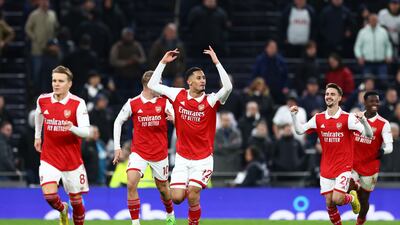
Fabio Vieira (Odegaard, 90+4) N/A - Was subbed on with seconds to go and didn’t impact the game. Getty


Thus the Conte calendar, where tussles with the board play out from one club to the next as deja vus. After this January window is over, the Spurs chairman, Daniel Levy and his advisers will turn their minds to how hard to push Conte into prolonging his stay beyond June.
The Italian insists he is keen to build at Spurs beyond then, but he has a famously restless history. His stints at Chelsea and Inter lasted two seasons each. He was at Juventus, where he won a trio of Serie A titles, for a year longer, up until 2014, but it was a three-year period sprinkled with spiky remarks about a perceived lack of investment in the squad compared with spending at other European superclubs.
Ahead of the trip to the Etihad Stadium, Conte described City, English football’s leading superclub, “as the best team in the world at moment”. No matter that, like Spurs, Pep Guardiola’s side are fresh from a defeat in their local derby, City the narrow losers, via a controversial goal, at the weekend to Manchester United.
It’s a fixture that, Conte must anticipate, will be taken as a measure of Spurs’s progress, year on year. Last February, Tottenham went to City and pulled off an improbable 3-2 victory, Harry Kane outstanding, and, significantly, two newcomers from last winter’s recruitment, Rodrigo Bentancur and Dejan Kulusevski, influential in directing Spurs’s effective counter-attacks.
Kulusevski, on a long-term loan from Juventus, scored within five minutes of his first start and set up Kane’s winning goal in the fifth-minute of stoppage time, just after Riyad Mahrez seemed to have salvaged a point for City.
“We were very good and showed great resilience,” recalled Conte of a win that began Spurs’ march up the table from the minor European positions to qualification for the Champions League. “Against Manchester City, you have to try to not make mistakes. You know, for sure, ball possession will be 70 or 75 per cent for them. If you have 25 per cent you have to be very good, move the ball well and create chances.
“Also, in this type of game, you need to be a bit lucky to get a good result.”

