

Chelsea's 4-0 loss at Manchester City in the FA Cup third round on Sunday extended a miserable run of form and further increased the scrutiny on manager Graham Potter.
For the past two decades, Chelsea had a rightful claim to be regarded the best club in London, sometimes the best in England, and on two occasions, the finest in Europe. On current Premier League standings, the Blues are not even the best in West London: both promoted Fulham and Brentford, in their second season in the top flight, are placed above their wealthy and powerful local rivals.
Sunday's humbling defeat at the Etihad means Chelsea have now won just one of their last eight matches; they are out of both cup competitions and languish down in 10th in the league table, 10 points behind fourth-placed Manchester United in the last of the Champions League spots.
It has been a remarkable collapse, especially when considering Potter's start to life at Stamford Bridge was quite encouraging. After beginning his Chelsea reign with a home draw against RB Salzburg in the Champions League, Potter oversaw five wins and three draws in his first eight games, including home and away wins over Italian champions AC Milan to finish top of their European Cup group.
So, what is going wrong at Chelsea and will the club be able to turn a corner this season before it's too late?
Injury problems
Potter has been desperately unlucky when it comes to having his best players available. Full-backs Ben Chilwell and Reece James have barely featured and make Chelsea a far more complete team in both defence and attack; defender Wesley Fofana has sustained two knee injuries since joining Chelsea last summer and is expected to be out until the end of the month, and midfielder Ruben Loftus-Cheek has been sidelined for two months with a calf injury.
Forward Armando Broja is out until the end of the season after rupturing his cruciate ligament during a friendly against Aston Villa in Abu Dhabi, and goalkeeper Edouard Mendy has undergone surgery on a fractured finger. Most recently, forwards Raheem Sterling (hamstring) and Christian Pulisic (knee) have been added to Chelsea's injury list.
But perhaps the most glaring absence under Potter has been defensive midfielder N'Golo Kante. The French World Cup winner has made just two appearances this season – the first two league games – and has since been recovering from a hamstring injury. He is not expected to be back in contention until the end of February.
Chelsea have always been a far more cohesive team with Kante on the pitch; his defensive and positional abilities, and the energy and drive he provides in midfield, have been sorely missed.
Potter needs the Frenchman, and indeed close to a full strength squad, to help reverse Chelsea's fortunes.

Massive transition
The Chelsea takeover, completed last May, was no ordinary takeover.
Former owner Roman Abramovich, who bankrolled and presided over the most successful chapter in the club's history, was forced to put Chelsea up for sale amid Russia's invasion of Ukraine and subsequent sanctions placed upon him and his assets by the UK government.
So, when Todd Boehly and Clearlake Capital assumed control, they did so with the club enduring unprecedented turbulence and operating under various government-imposed restrictions. Those included an inability to offer players and staff new contracts, strict travel budgets, and a transfer ban. Hardly ideal circumstances for new owners with no prior experience running a Premier League football club.
From the boardroom to the dressing room, Chelsea have had to contend with a squad in transition, too. The departure of three senior defenders – Antonio Rudiger, Andreas Christensen, and Marcos Alonso, all on free transfers – left the club with plenty of defensive gaps to fill, while the exits of Timo Werner and Romelu Lukaku meant replacements were needed in attack.
In all, nine players who were part of last season's squad left in the off-season, leading to a record-spending summer.
Then, to complete the transition hat-trick, Thomas Tuchel, the steady constant amid the uncertainty of sanctions and upheaval of the takeover, was stunningly sacked just weeks into the new season.
New owners, new players, and a new manager – it's little wonder Chelsea are struggling for consistency.
Manchester City v Chelsea - FA Cup player ratings
-
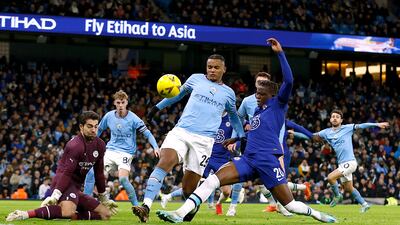
MANCHESTER CITY RATINGS: Stefan Ortega - 6: Had hardly anything to do but had to be bailed out by Rodrigo after under-hitting his pass. Reuters -
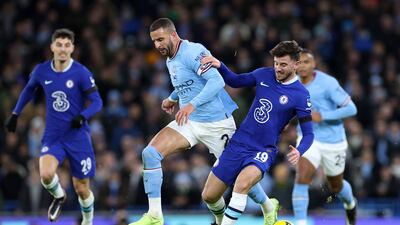
Kyle Walker - 8: Was brilliant at both ends of the pitch, cutting out Kai Havertz’s pass in a dangerous area and then providing a great cutback for Phil Foden’s goal. Getty -
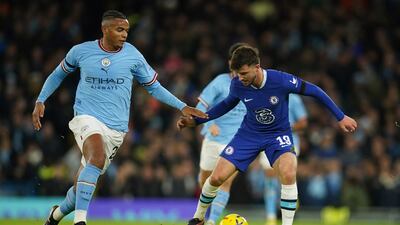
Manuel Akanji - 8: Looked confident throughout and made a potentially awkward situation look simple as he reached a through ball ahead of Havertz. Reached Hakim Ziyech’s cross before Denis Zakaria. AP -

Aymeric Laporte - 8: Put in a dominant defensive performance, halting Ziyech after a loose pass from Sergio Gomez, and his presence caused the panic that resulted in Havertz conceding a penalty. AP -
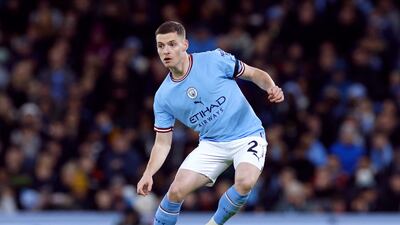
Sergio Gomez - 7: Looked vulnerable defensively at times in the first half but attacked well, providing a brilliant turn and cross and keeping the ball well in the build-up to Foden’s goal. Was alert to stop Mason Mount’s attempt in the second period. Reuters -
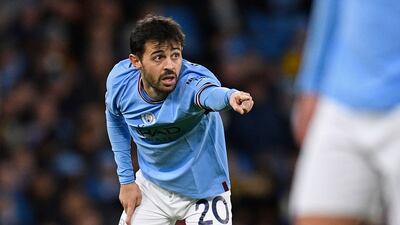
Bernardo Silva - 7: Moved the ball brilliantly in midfield and was happy to receive possession under pressure. Played a nice pass to get Riyad Mahrez into a promising position for his shot in the second half. Booked for a poor challenge on Conor Gallagher. AFP -
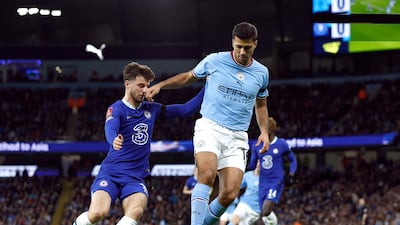
Rodri - 8: Took an early hit from Havertz but continued to show technique and commitment, winning the ball high for Julian Alvarez’s chance and playing a great switch in the build-up to Foden’s goal. Booked for fouling Mount after being unhappy with the Englishman’s previous challenge. Reuters -
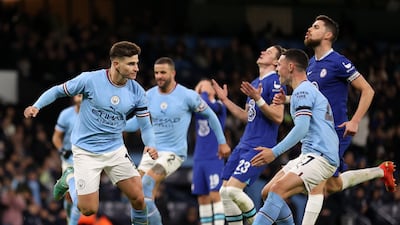
Phil Foden - 9: Provided some wonderful touches with one of those being a clinical finish to score City’s third. He also took up some good defensive positions at times and intelligently won the penalty for City’s fourth. Getty -
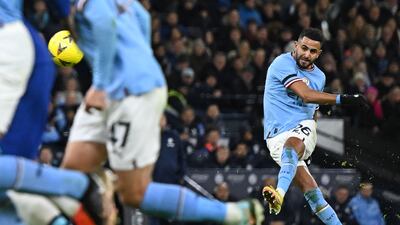
Riyad Mahrez - 9: Gave Lewis Hall a really hard time, luring the left-back into the foul then scoring an exquisite free-kick for the opener. Also held the ball up well before releasing Walker in the build-up to Foden’s goal. Bent a strike agonisingly wide but then scored from the penalty spot. AFP -

Julian Alvarez - 8: Marked his first appearance since winning the World Cup with a goal from the penalty spot, although he could have had another as he came agonisingly close to reaching Mahrez’s pass. Worked well and blocked an attempted clearance from Kepa Arrizabalaga. PA -
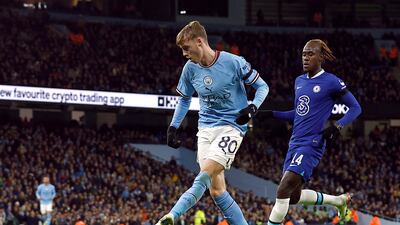
Cole Palmer - 6: Hit the side netting with a shot when there was a clear opportunity to cut the ball back and skied his effort moments later. Showed a willingness to work and moved the ball well in the second half. Reuters -
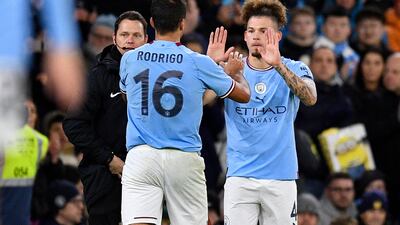
SUBS: Kalvin Phillips (Rodri, 58’) - 7: Cut out some passes well and moved the ball around nicely. Put in a good tackle on Omari Hutchinson. AFP -
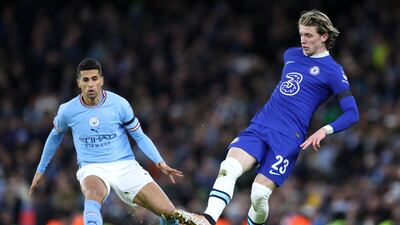
Joao Cancelo (Gomez, 59’) - 5: Was on the end of a couple of poor challenges but played some wayward passes and was seen off too easily by David Datro Fofana. Needlessly booked for a foul on Trevoh Chalobah. Getty -

Rico Lewis (Silva, 86’) – N/R: Was comfortable on the ball, maintaining possession despite a barge from Hutchinson, and coolly stopped a Chelsea counter attempt. Reuters -
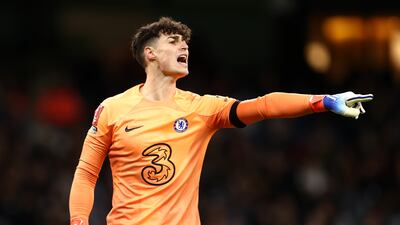
CHELSEA RATINGS: Kepa Arrizabalaga - 4: Played some poor passes and while he had no chance of stopping the goals from Mahrez or Foden, he’ll be frustrated to have been beaten by Alvarez’s penalty after getting a hand to it. Getty -
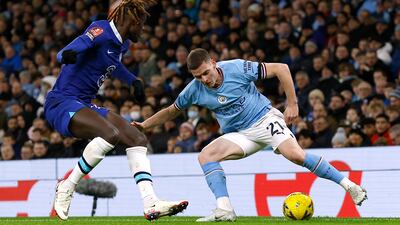
Trevoh Chalobah - 5: Was turned inside out by Gomez before his cross and allowed Palmer to run off him for the chance, but also put in some good defensive play and picked out some passes well. Reuters -

Bashir Humphreys - 6: Dispossessed Silva well in the early stages and looked very comfortable on the ball. Little he could have realistically done about any of the goals. Reuters -
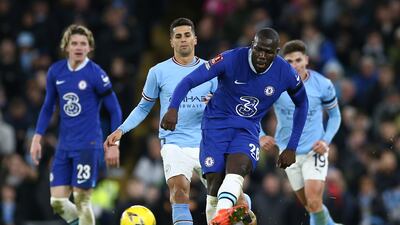
Kalidou Koulibaly - 4: Halted Walker in the early stages and put in a great tackle to stop Alvarez, but was unable to stop the City onslaught and clumsily fouled Foden to concede a penalty. EPA -
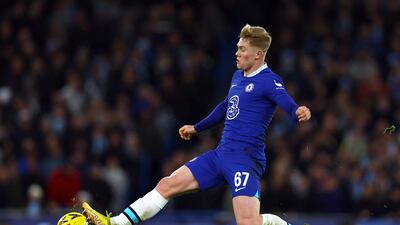
Lewis Hall - 4: Was confident enough to receive the ball in tight areas, but he simply couldn’t keep up with Mahrez in the first half. Got away with a poor pass that went to Alvarez but had a more comfortable second period. Reuters -
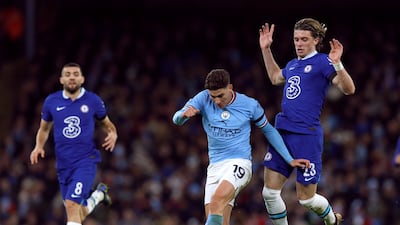
Conor Gallagher - 5: Put in a lot of defensive effort in the first half, notably dispossessing Palmer after Koulibaly had given the ball away in a dangerous area. Played the pass that released Mount for his chance but was switched between the midfield and right wing-back in the second half. Booked for an overzealous foul on Cancelo. Reuters -
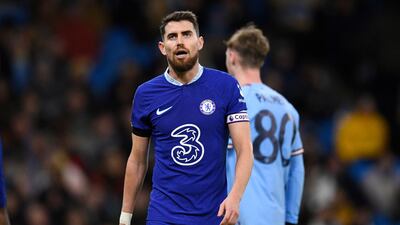
Jorginho - 3: Was dispossessed on the edge of his box to give Alvarez a chance and didn’t learn his lesson as he gave the ball away in dangerous positions on various other occasions, even giving away a corner. AFP -
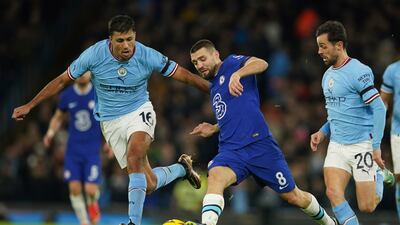
Mateo Kovacic - 4: Tried to make things happen but found himself crowded out on a few occasions, while he came nowhere near keeping up with Walker in the build-up to Foden’s goal. AP -
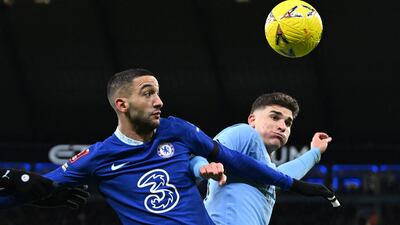
Hakim Ziyech - 4: Went down very tamely at times and some of his passes were wayward in a largely ineffective display. AFP -

Kai Havertz - 2: Offered absolutely nothing in attacking areas, with a loose pass letting him down when there was an opportunity to shoot and a poor pass wasting an opportunity to counter. Made things worse by handling the ball in his own box to concede the first penalty. Reuters -
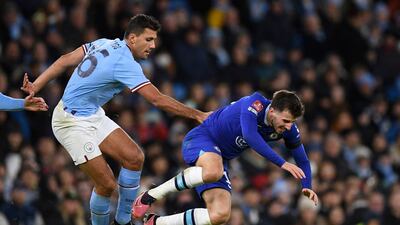
Mason Mount - 4: Looked ineffective in the first half but showed some fight at the beginning of the second period, hitting a shot that was deflected wide. Soon faded back out of the game. AFP -
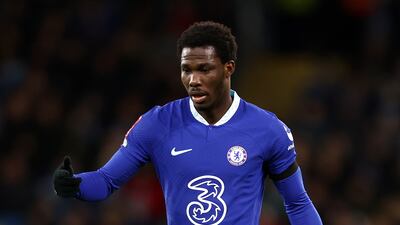
SUBS: David Datro Fofana (Havertz, HT) - 6: Linked play well and saw off Cancelo in the corner, although he wasn’t able to get in any troubling positions. Getty -
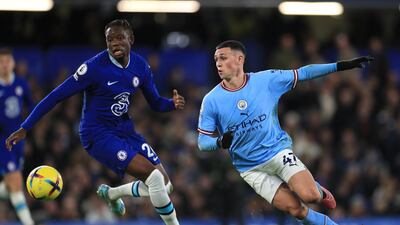
Denis Zakaria (Kovacic, HT) - 7: Saw off Palmer well to win a goal kick and gave a good account of himself in midfield, although his shot was blocked by Akanji. Did well to stop Foden running through on goal, then put in a great tackle on Mahrez in his own box. PA -
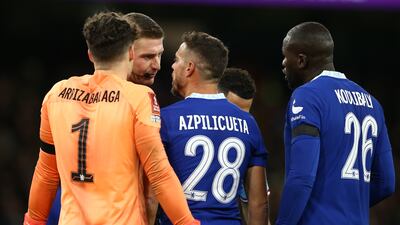
Cesar Azpilicueta (Jorginho, 63’) - 6: Showed his usual commitment to defend well but played a wasteful pass in a promising area. The Spaniard’s frustration was highlighted when he kicked the ball away. EPA -
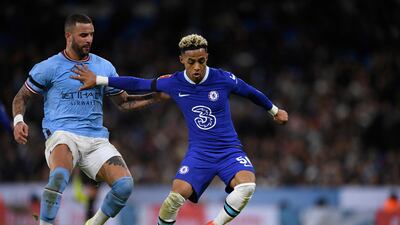
Omari Hutchinson (Ziyech, 63’) - 5: Had some bright moments but lacked precision at times as he hit a tame shot wide and failed to find Carney Chukwuemeka with his attempted pass through. AFP -

Carney Chukwuemeka (Mount, 73’) – N/R: Did well in the move that resulted in Zakaria’s chance and looked comfortable on the ball. Action Images


Scattergun transfer policy
After years of heavy spending, Chelsea were expected to take a more calculated approach to the transfer market under their new owners.
That has all gone out the window for now: Chelsea last summer set a record for most money spent in a single transfer window, £278.4m, on eight new players. That has since increased to around £340m following the January arrivals of defender Benoit Badiashile from Monaco, teenage midfielder Andrey Santos from Vasco de Gama, and young Ivorian striker David Datro Fofana from Molde.
The problem is, none of the new signings can yet be considered unqualified successes. Sterling, signed from Manchester City, has had his moments but is not prolific enough, Fofana has been injured more than he's been fit, and Pierre-Emerick Aubameyang looks a shadow of his former self.
Marc Cucurella, signed for an eye-watering £60m from Brighton, does not look an elite-level player, while Kalidou Koulibaly has struggled since joining from Napoli and looks a significant downgrade on the superb Rudiger.
Ironically, the most impressive new arrival has been the cheapest: midfielder Denis Zakaria joined on loan from Juventus but has only just been given opportunities in the starting line-up.
Yet, despite all the investment, glaring weaknesses remain in the squad. There is an over-reliance on James at right-back, while the lack of a top-level centre-forward is a key reason for Chelsea's goalscoring problems.
More money will be spent in January, and it is encouraging to see several young talents being recruited to build for the future, but will Chelsea adopt a more measured strategy to rebuilding their squad? The pursuit of a £100m-plus deal for Benfica midfielder Enzo Fernandez, for all his undoubted talent, would suggest otherwise.

Players out of form
In past seasons when Chelsea hit a stumbling block, there was at least a player or two who could drag them out of trouble and mask any immediate issues. Eden Hazard was a prime example of that; Willian had a season where he perpetually delivered when his team struggled; even during Chelsea's most dominant period, the likes of Frank Lampard or Didier Drogba were on hand to produce a goal or moment of magic to steal a win when needed.
At present, too many talented players, those capable of making the difference in key moments and tight games, are out of form or low on confidence. Kai Havertz has all the makings of a world beater and has shown glimpses but not yet over a full season, Hakim Ziyech and Pulisic have been too inconsistent, Sterling has been too wasteful, and Aubameyang is nowhere near his best.
Mateo Kovacic, Chelsea's standout central midfielder, has not dominated games this season like he did last, and Mason Mount has scored just three Premier League goals this campaign.
Potter needs to get his game-changing players back in form quickly, so even as this transition process continues, Chelsea can start winning games ugly when required. At the moment, any wins will do.


