



Wolverhampton Wanderers manager Julen Lopetegui was left furious after he felt two key decisions went against his team in the 2-2 FA Cup third-round draw at Liverpool on Saturday.
Goncalo Guedes had given Wolves the lead in the 26th minute after intercepting a poor pass from Liverpool goalkeeper Alisson, before Darwin Nunez pulled the hosts level with a superb volley just before the break.
Mohamed Salah then gave Liverpool the lead seven minutes after the interval when he capitalised on defender Toti's failed headed clearance, but even though the Egyptian was in an offside position when the initial pass was played, the goal stood.
Hwang Hee-Chan levelled for Wolves 14 minutes later, and the visitors thought they had taken a late lead when Toti scored from a back-heel, but the assistant referee had his flag up for offside against Matheus Nunes.
Consulting the video assistant referee, VAR had no camera angle available to potentially overturn the original offside decision, ruling Toti's goal out and leaving Wolves to settle for a draw and a replay.
"We’ve seen it and it wasn’t offside. Sorry. It’s impossible," Lopetegui said, referring to Toti's disallowed goal. "We have seen it, but someone told him that it’s offside, because we have seen the image and it doesn’t exist.
"Our player, Matheus Nunes, is not offside. It’s very clear. [Trent] Alexander-Arnold is on the left and is breaking the line. We have tried to explain this to the referee.
“The decision is not unfair, the decision is wrong. I make big mistakes every day but today we have the help of VAR and it was a pity because we saw the image and, sorry, but it’s not offside."
Liverpool v Wolves player ratings
-
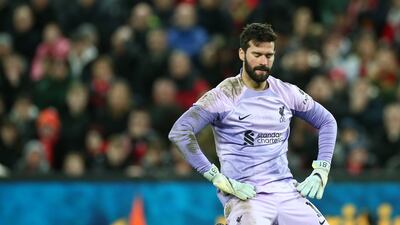
LIVERPOOL PLAYER RATINGS: Alisson 5 - A calamitous error gifted an early goal to Wolves, which provided the visitors an injection of confidence to get something from the game. EPA -
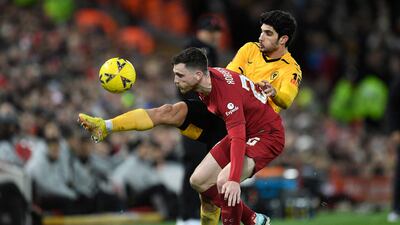
Andrew Robertson 6 - Brighter in the second half after allowing too much space to Adama Traore early on. AFP -
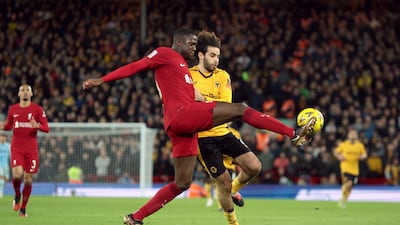
Ibrahima Konate 7 - Liverpool’s best defender on the day as Konate put aside a poor display at Brentford. Reuters -
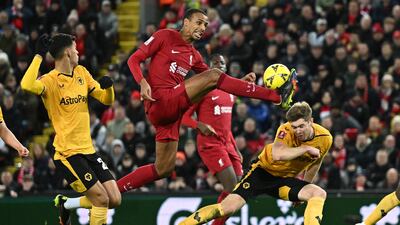
Joel Matip 5 - Normally assured at bringing the ball out from the back, but his decision-making was poor against Wolves, with too many passes misplaced. Almost cost his team a goal when giving away possession in his own box. AFP -
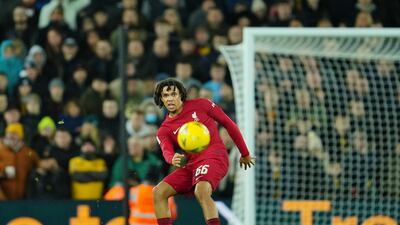
Trent Alexander-Arnold 8 - Excellent going forward as one of Liverpool’s main outlets, with a pass to Nunez for the first goal that defined his overall performance. Defended well in isolation. AP -
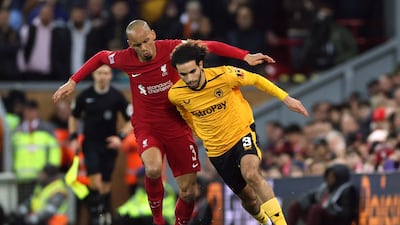
Fabinho 6 - Positioned himself astutely to deal with the danger while also showing aggression when pressing. Reuters -
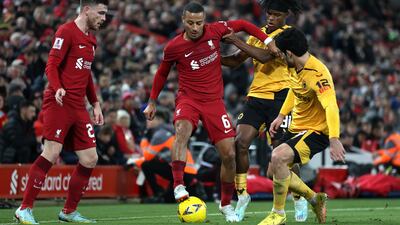
Thiago 6 - Not at his best. The midfielder needed time to grow into the game after giving the ball away on a number of occasions. Poor play in the build-up to the opener saw him give away possession before Alisson’s mistake. Getty -
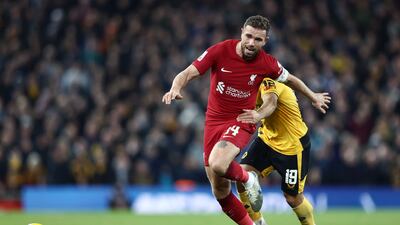
Jordan Henderson 6 - Faded out of the game after a bright start and was eventually replaced. Getty -
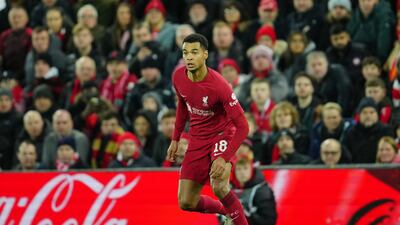
Cody Gakpo 6 - Positive signs from his debut. Involved in Liverpool’s second goal with a pass that was helped onto Salah. AP -

Darwin Nunez 7 - An expert finish allowed Nunez to secure the equaliser for Liverpool after Alexander-Arnold’s pass. Quietened down in the second half in a physical battle with Nathan Collins. EPA -
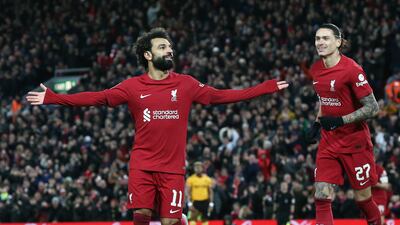
Mohamed Salah 6 - Decision-making could have been better at times. He did get on the scoresheet through some good fortune before the chance, but Liverpool’s talisman needs to do more. EPA -
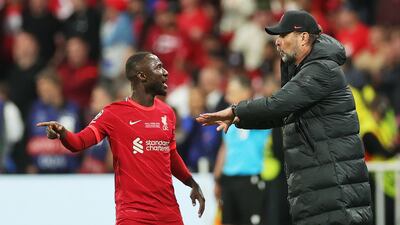
SUBS: Naby Keita (Henderson 68’) 7 - Allowed Liverpool to find a new gear when introduced, rarely making a wrong decision. EPA -
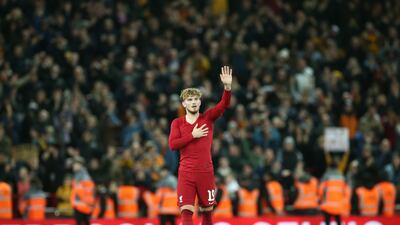
Harvey Elliott (Fabinho 75’) N/R - Didn’t do much when introduced. EPA -

Alex Oxlade-Chamberlain (Gakpo 84’) N/R - Came on in place of Gakpo but didn’t have enough time to influence the game. Reuters -

Joe Gomez (Alexander-Arnold 85’) N/R - On for Alexander-Arnold for the final five minutes. AFP -

Ben Doak (Salah 85’) N/R - Showed confidence but never found himself in promising areas. EPA -

WOLVES PLAYER RATINGS: Matija Sarkic 6 - Not much he could have done about either of the goals he conceded on the night. Getty -
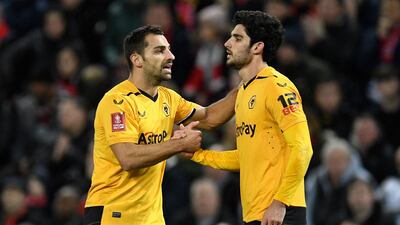
Jonny Otto 6 - Showed intensity with his defending and tracked runs well from the back. Booked for a foul on Henderson in the second half. AFP -
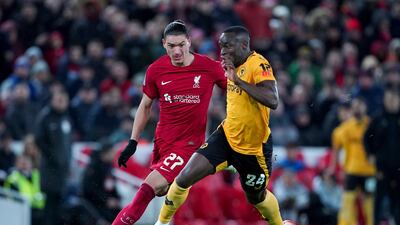
Toti Gomes 5 - A costly error for the second goal allowed Salah to capitalise, even if there were arguments the Egyptian was offside. Perhaps unlucky to have his winner ruled out for offside. PA -

Nathan Collins 7 - Brave in the challenge against Nunez and put in a very respectable display in the air, particularly in the second half where he helped keep the Uruguay international quiet. Getty -
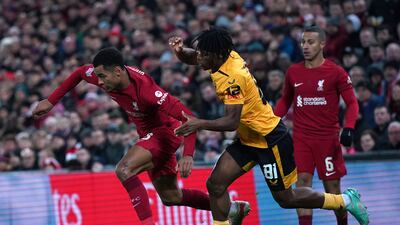
Dexter Lembikisa 7 - Kept tight to Gakpo and stood up well despite Liverpool targeting his flank. The Reds didn’t enjoy as much success as they hoped for down Lembikisa’s side. PA -
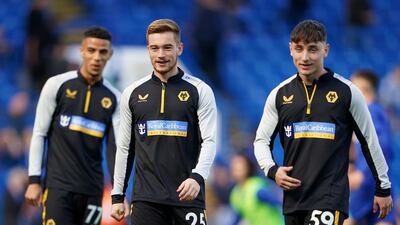
Joseph Hodge 7 - The 20-year-old battled well throughout the game and was quick to apply pressure to Thiago. A solid performance from midfield. PA -
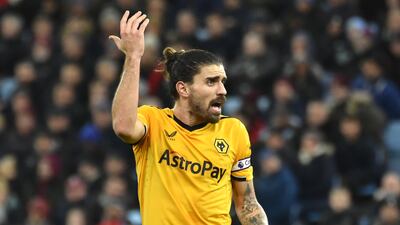
Ruben Neves 8 - Dictated the play well from the middle of the park and was at the heart of the majority of Wolves’ promising attacks. The Portugal international avoided pressure well on the ball and showed composure in possession, all while demonstrating his excellent passing range. AP -

Rayan Ait-Nouri 6 - Bright when given space and attacked directly, though he should have done better with his finish against Alisson. AP -

Goncalo Guedes 8 - Dispossessed Matip early on and then did the same by cutting off the angle against Alisson. A bright display. Reuters -

Adama Traore 6 - Kept wide and impressed with his delivery into the box. Unlucky not to pick up an assist when flashing a ball across the box in the 38th minute, but quiet after the restart. Getty -
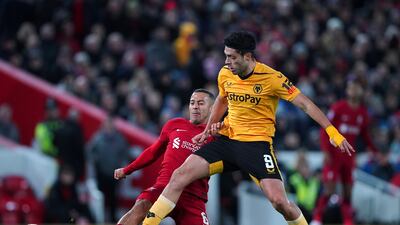
Raul Jimenez 6 - Worked hard but struggled against Konate at times. His runs helped create space for players around him. PA -
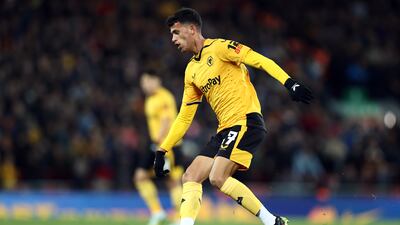
SUBS: Matheus Nunes (Jimenez 63’) 6 - Gave away the ball in needless moments, and looked to be the player adjudged to be offside in what could have been the winning goal. Getty -
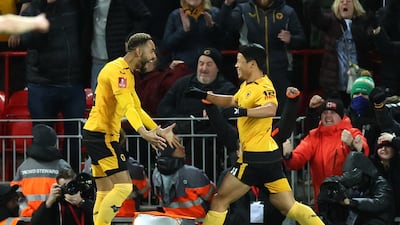
Matheus Cunha (Neves 63’) 5 - Quiet when introduced. Reuters -

Hwang Hee-chan (Guedes 63’) 7 - Rewarded for his work ethic with a goal when running directly at the Liverpool defence before continuing his run to get onto the end of a cross. AFP -
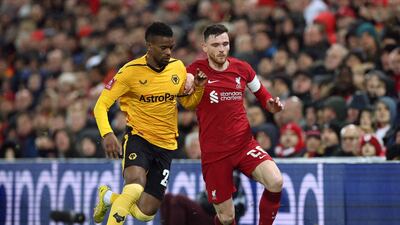
Nelson Semedo (Lembikisa 68’) 6 - Helped keep Liverpool’s attacks quiet down his side. Stretched play with his pace when looking to break. Reuters -
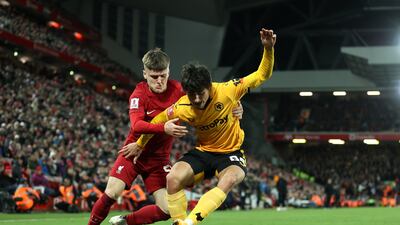
Hugo Bueno (Ait-Nouri 73’) N/R - Rarely had a touch when substituted on, but didn’t make any mistakes defensively. Getty


Lopetegui was also frustrated by the decision to allow Salah's goal to stand, saying: "The second goal of Liverpool is the same. We have talked a lot with referees about this kind of situation and one player, one touch of his position, Salah was offside with the first touch before Toti touched the ball, so he took advantage of his position.
"The rule is, if you take advantage of one position despite the ball coming off an opponent, this is offside. This is my interpretation of the rule and the rule is the same for all of the countries. Despite my player touching the ball, he is in an offside position."
Despite his unhappiness with the decisions, Lopetegui said he was delighted with the performance of his team and believes Wolves can build on it to turn around their Premier League campaign. Wolves are currently 19th in the table, one point from safety.

“For me, the most important thing about tonight is how we should be proud of our players," the Spaniard said. "They showed themselves that they can play against any team. Liverpool is one of the best teams in the world, with the best squad and the best coach, so for us it was a very important test.
“This is only one step. The real situation is that we’re in a bad position in the league and this is the most important thing. We have to change it and we have three matches where we have to be ready a lot, and ready to arrive in the last match, in the last minute, to achieve what we want. We have to be strong in our mind, believe in ourselves and work very hard for each match."
After facing Nottingham Forest in the League Cup quarter-finals on Wednesday, Wolves are back in Premier League action with a crucial home game against fellow strugglers West Ham on Saturday.

