



There are few untried tricks in Lionel Messi’s vast portfolio of skills. But the overhead volley he used to score his third goal of the season so far for Paris Saint-Germain is, it seems, the first of that type in all the 772 he has netted in his senior career. He took it elegantly, cushioning the ball on his chest before rolling backwards into a half-somersault and connecting cleanly with his left foot.
Because it was Messi, points of comparison were sought. Pele, the greatest South American goalscorer of the last century, struck some dazzling scissor-kick goals during his prolific career. But this being Messi, the goal was inevitably, instantly analysed through the lens of spectacular goals catalogued by Messi’s chief contemporary rival, Cristiano Ronaldo.
A little over four years ago, in a Champions League quarter-final at Juventus, Ronaldo struck a superb overhead volley to push Real Madrid towards a third European Cup in succession. Some place it among the top three of all Ronaldo’s 815 senior goals. Juventus fans spontaneously stood to applaud. Ronaldo remembered that generosity when he joined Juventus the following summer.
It did not take long for commentators to make direct comparisons between Messi’s ‘chilena’ goal at the weekend and Ronaldo’s for Madrid at Juventus. Even Ronaldo’s sister posted on the subject, and outlined some key distinctions.
Ronaldo had leapt high to meet the cross for his wonderstrike; Messi had his right foot grounded when he connected. Ronaldo’s breathtaking volley was struck, first touch, in a high-stakes knockout game against the Italian champions; Messi’s came at the end of a 5-0 victory against Clermont in a French league PSG routinely dominate.
Manchester United v Brighton ratings
-
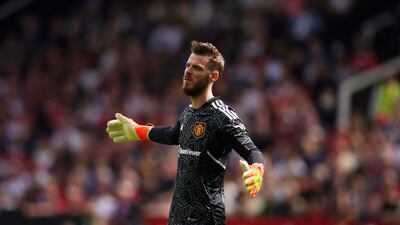
MANCHESTER UNITED RATINGS: David de Gea 5 - Busy from the start. Needlessly gave possession back to Brighton on 16 minutes and could have done better for the second. And all this against a side who had lost 12 and drawn two of their previous 14 games at Old Trafford. AP -

Diogo Dalot 5 - Lost the ball for the first time after 8 seconds, which led to Brighton’s first chance as United conceded another goal from a cross and cut back. Balls played inside him and he doesn’t look comfortable defending, but he’s better in attack and his header led to United’s first goal. Shot on target after 73 minutes. Reuters -
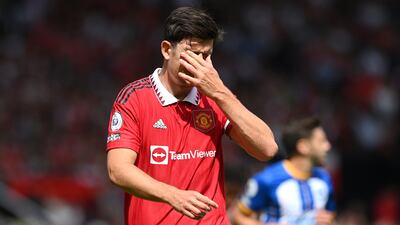
Harry Maguire 6 - Well supported by fans inside the stadium and tried to do the same to the team he captains. Tussling with Trossard and booked for it at the start of the second half. Busied himself, but Brighton battered United in the middle in the first half. Getty -
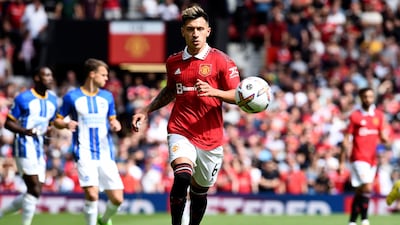
Lisandro Martinez 5 - Neatly beat Lallana after controlling the ball at 0-0, but welcome to the Premier League. Heavy touches. Clumsy challenge on Welbeck, who had the better of him, looked like a penalty. Shot from distance after 75 and again ten minutes later before a Dunk block. EPA -
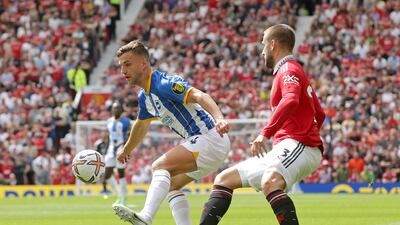
Luke Shaw 5 - Went with the runner but unable to stop Gross’ opener. Booked after 73. Well short of the required standard and he now has Malacia for competition. PA -
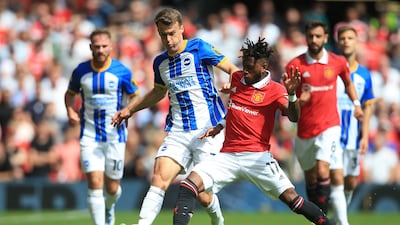
Fred 4 - Played in the holding midfielder role after a positive pre-season, but it wasn’t a positive afternoon for him. Set Rashford free, then gave the ball away, before winning it back, on eight minutes. Tried his luck from distance after 35. No reaction to stop Brighton’s second and brought off after 52 – he wasn’t happy. AFP -
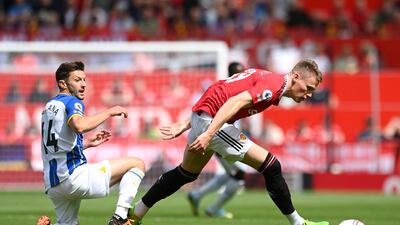
Scott McTominay 4 - Set up Fernandes with a fine early chance. Booked for a heavy challenge on Caicedo after 26. Overrun in midfield as Brighton busted Ten Hag’s central overload. Gave the ball away at the start of the second. Clear to see why Ten Hag wants Frenkie de Jong. Getty -

Jadon Sancho 5 - Fine ball across the pitch to Eriksen after 23. Improved towards the end on the right, but too peripheral overall and ultimately disappointing after a bright pre-season. Reuters -
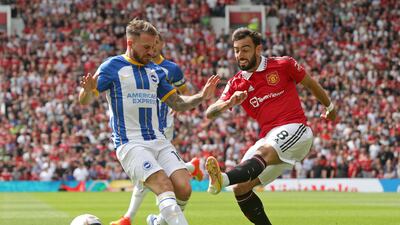
Bruno Fernandes 5 - Swept a 6th minute shot over when he should have hit the target. Poor cross on 18. Creative but too wasteful. Must do better. PA -
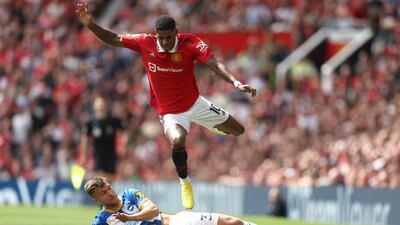
Marcus Rashford 5 - When he failed to control a ball just after half time it summed up where United are at. Shot wide after 49 and then shot – but was well saved by Sanchez on 60. Connected with a Fernandes cross on 65 but could have done better. Getty -
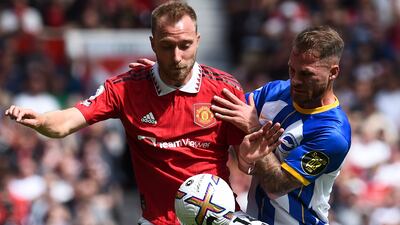
Christian Eriksen 7 - Played as a false nine in the first half and should have done better with his shot after an early counter attack. Fired a 48th minute shot across goal towards Rashford. Dropped deeper and became more effective as he had the best United shot of the game after 66. He can build play well and his assist record is impressive, but it’s doubtful he should be used as the most forward player. EPA -
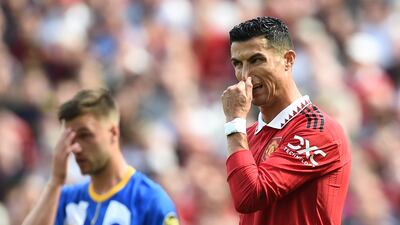
SUBS: Cristiano Ronaldo 6 - On for Fred and crossed for Rashford from the right. Got in the right positions, urged the crowd on for more support. United improved with him on the pitch, but not enough to get back in the game. EPA -
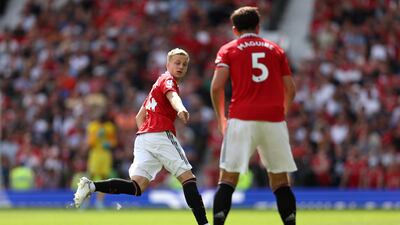
Donny van de Beek 6 - On for McTominay after 77. Lovely touch to Sancho on 82, where United found the most space. Getty -
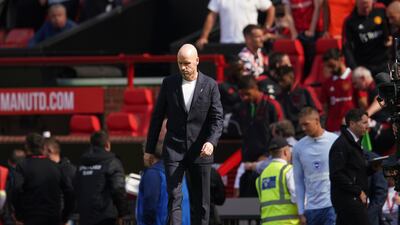
Anthony Elanga N/A On for Fernandes after 89. AP -
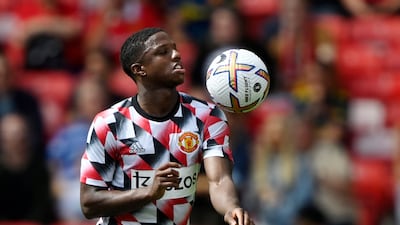
Tyrell Malacia N/A On for Shaw after 89. Reuters -
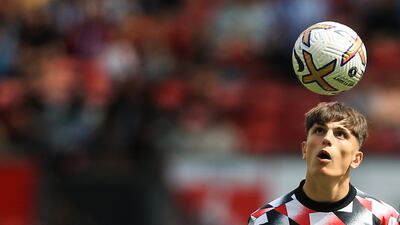
Alejandro Garnacho N/A On for Sancho after 89. He’s been training well. AFP -

BRIGHTON RATINGS: Robert Sanchez 8 – Outside of a poorly timed mistake for the goal, Sanchez pulled off a few world class saves to keep the Seagulls in control. Getty -
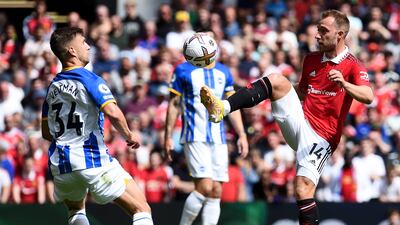
Joel Veltman 7 – Got dragged out of position from time to time but overall, utilised his physicality and had some nice reactions when in tough situations. EPA -

Lewis Dunk 8 – Covered loose passages of play well and used his imposing size to make some really nice blocks. PA -
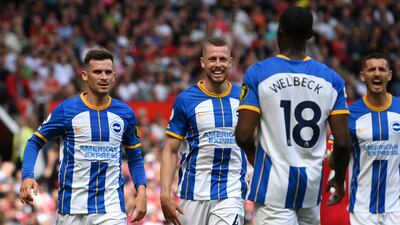
Adam Webster 8 – Grew into the game after looking nervy early on and saved Brighton on more than one occasion. Getty -
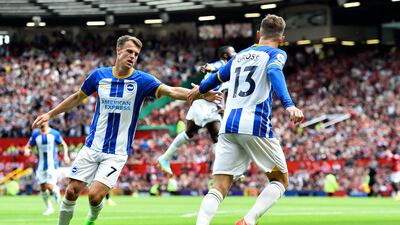
Solly March 8 – Forced a good save for the second goal, had a cracking work ethic and was as determined as anyone on the pitch. EPA -
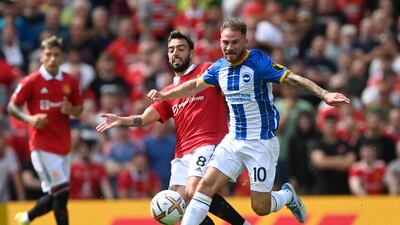
Alexis Mac Allister 6 – Did well playing deeper than usual but made a big mistake that helped make it 2-1, and he probably could’ve done better with his decision making. Reuters -

Moises Caicedo 8 – Played a top through ball for the second goal and read the game beautifully with some great football IQ. PA -
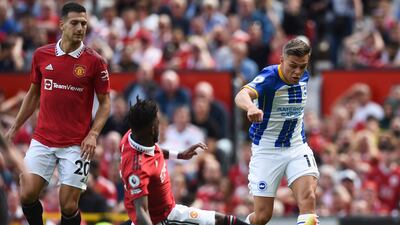
Leandro Trossard 9 – The positional play of the Belgian was matched only by his brilliant urgency and cardio from start to finish. EPA -
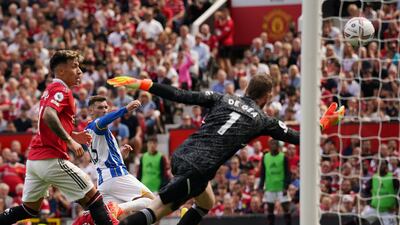
Pascal Gross 9 – Got into incredible spots on two occasions to grab the vital brace that helped Brighton to victory. AP -

Adam Lallana 8 – Helped to string things together and put on the performance of a composed veteran. Getty -

Danny Welbeck 8 – Squared the ball for a nice assist, got after United’s back four at every available opportunity and was a constant thorn in his former club’s side. Getty -
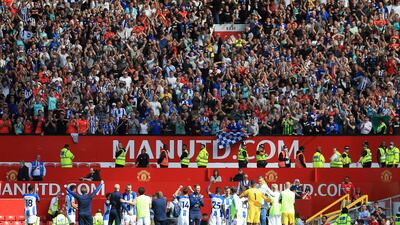
SUBS: Tariq Lamptey, N/A – Constantly hounded United down the flank and did a great job of keeping the ball for his side. AFP -

Levi Colwill N/A – Was active and pushing the tempo during his brief cameo in the final minutes at Old Trafford. PA -
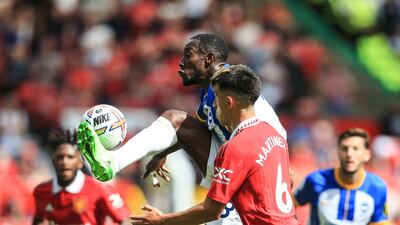
Enock Mwepu N/A – Was steady, controlled and calm after coming on to help steady the ship in the middle of the park. AFP -
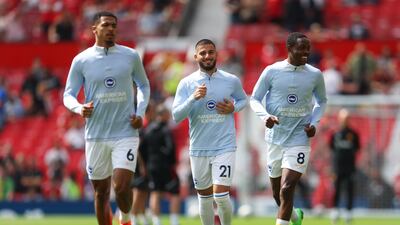
Deniz Undav N/A – Came on to help kill the last few seconds of the game for the visitors. Getty


It all made for a fresh episode of chatter in what has been one of elite sport’s most vivid debates - Messi or Ronaldo? - for over a decade but a duel that has lost some of its voltage lately.
In the last 12 months, the enduring assumption that they are the finest pair of footballers on the planet has been challenged as strongly as any time since 2008. This year’s Men’s Ballon D’Or, held by either Ronaldo or Messi for 12 of its last 13 editions, will probably have neither on the podium for the first time in 16 years.
Yet there’s little question which of the two is the more cheerful as an epoch-defining season, with perhaps a last World Cup for either in the middle of it, gets under way.
A year after Messi departed, tearfully, from a Barcelona where he had spent all his adult career but who told them they could no longer afford him, he seems more content at PSG than at any time. In his two outings so far in 2022-23, the 4-0 Trophee des Champions win over Nantes and the dismantling of Clermont, he has been involved in four PSG goals.
In the whole of last season, Messi scored just six times in French domestic competition; he is already halfway to that total. “Last year was hard, he was still getting used to things,” said Christophe Galtier, the new PSG head coach. “When Messi smiles, PSG smiles.”

Over in Manchester, Ronaldo spent the weekend frowning. He was on the bench for the first 52 minutes of his second season since his return to Manchester United and finished on the losing side at Old Trafford against Brighton.
Ronaldo missed much of pre-season and has made it plain he wants to leave United before the close of the transfer window, mostly in order to play Champions League football. His 18 Premier League goals last term were not enough to lift United into the top four.
Among other things, he looks over his shoulder and sees that Messi, who will be targeting a long run in the Champions League with PSG, is only 16 goals shy of Ronaldo’s all-time record of 141 goals in that competition. A blank year for CR7 would almost certainly narrow that gap.
The difficulty is that the kinds of clubs who might promise Ronaldo a strong season in the Champions League are not jostling to prise him away from United. A reunion with Real Madrid is far-fetched, a return to Juventus even less likely.
Messi, by contrast, last week heard the Barcelona president, Joan Laporta, say he would like the club legend to return, one day, as a Barca player. Messi, tied to PSG at least until next summer, did not respond. He is busy finding his groove in Paris.

