



Manchester City manager Pep Guardiola has dismissed reports that claimed Paris Saint-Germain had offered Neymar to the Premier League champions.
French outlet Le Parisien reported that PSG had been in contact with City about a potential swap deal that would involve Neymar and City's Portuguese midfielder Bernardo Silva. They also claimed that City had rejected the offer.
However, Guardiola, while admiring Neymar as a player, insisted the report was false.
"I'm so sorry for Le Parisien but it's not true," Guardiola told reporters ahead of City's pre-season friendly against Club America in Houston, Texas. "I'm sorry for them because the information they were leaked was false.
"Neymar is an incredible player and, with the information I have, an incredibly nice guy. So leave him calm, let him express the huge talent he has in Paris alongside [Lionel] Messi and all the big stars they have.
"But I would say Manchester City every season bought 150 players. It looks like we are interested in all players around the world. You know that is not true. I'm sorry for Neymar, of course!"
Focusing on the players who are in his squad, Guardiola admitted that the absence of Phil Foden, Ilkay Gundogan, and John Stones from the pre-season tour of the United States was a blow to City's preparations for the new campaign.
All three players failed to meet US entry requirements, which demands all foreign visitors be fully vaccinated against Covid-19. Foden, Gundogan, and Stones have been training with City's Under-23s in Croatia and will rejoin the senior squad when they return from the US.
PSG squad train for Kawasaki Frontale friendly
-
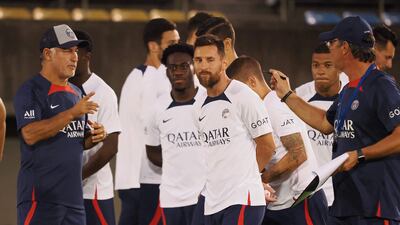
Paris Saint-Germain star Lionel Messi listens to head coach Christophe Galtier, left, with other players during a training session. AFP -
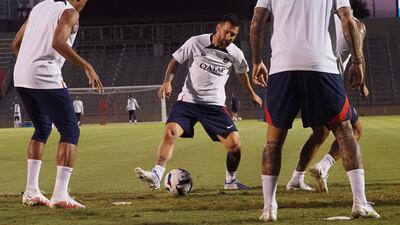
Lionel Messi traps the ball beside Kylian Mbappe. AFP -

Paris Saint-Germain striker Kylian Mbappe, centre, smiles with Neymar during a training session at a stadium in Tokyo on July 19, 2022. AFP -
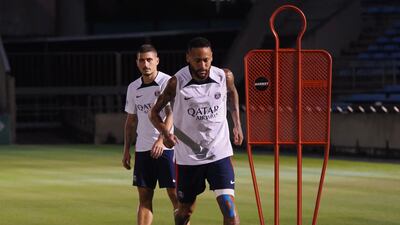
Paris Saint-Germain forward Neymar dribbles the ball. AFP -
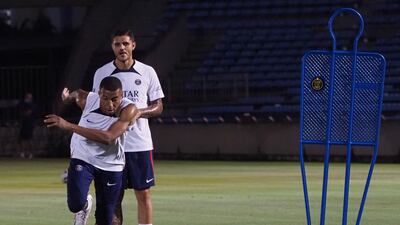
Kylian Mbappe dribbles the ball. AFP -
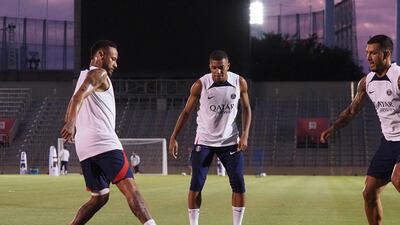
PSG take on Japanese side Kawasaki Frontale at Tokyo's Japan National Stadium on Wednesday. AFP -

Paris Saint-Germain players hold a training session at a stadium in Tokyo on July 19, 2022. AFP -
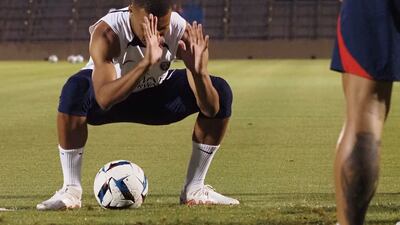
Kylian Mbappe gestures during a training session. AFP -
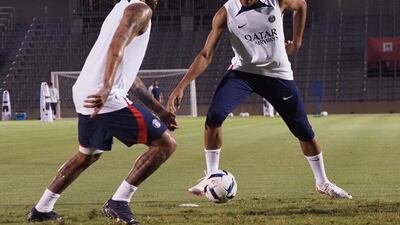
PSG's Kylian Mbappe passes the ball to Neymar. AFP -
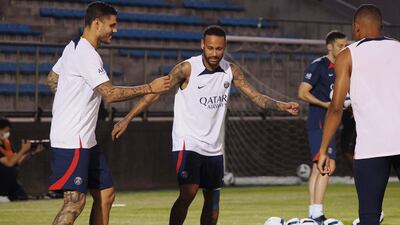
Neymar in action. AFP -
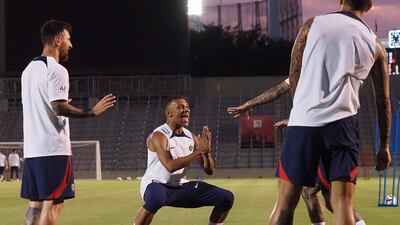
Kylian Mbapee shares a joke with teammates. AFP -

Paris Saint-Germain head coach Christophe Galtier watches his players. AFP


Asked if their absence was disappointing, Guardiola said: "Yeah, a lot. I would like them to be here.
"The second season here [in 2017/18], when we finished with 100 points, that was the only pre-season when we were all together from day one. Since then it's always four players arrive, then after a few weeks some other ones and we start the season with incredible problems. That's why we drop every season at the beginning many, many points.
"This season I thought, 'maybe we will be all together', but due to personal situations with these three players, and other situations with some other ones, we cannot be together. We are delayed but it is what it is. We are going to move forward and today you have to adapt."
After Tuesday night's match against Club America, City travel to Green Bay, Wisconsin where they face Bayern Munich at Lambeau Field on Saturday. City then return to England and begin their season with the FA Community Shield against FA Cup holders Liverpool at King Power Stadium next Saturday, July 30.

