
The World Cup 2022 in Qatar is about five months away. All 32 teams who will fight it out for the biggest prize in football have also been finalised, with Costa Rica clinching the last spot after defeating 10-man New Zealand 1-0 in their intercontinental play-off.
The focus of the teams and their supporters is now on the main tournament, with the venues the centre of attention in what will be the first World Cup in the Middle East.
Each venue in the country has a unique tale behind it. Like the 974 Stadium. The Ras Abu Aboud Stadium, as it is officially known, has a capacity of 40,000 and is basically a 'pop-up' stadium built out of shipping containers on Doha's waterfront.
The Al Thumama Stadium continues the trend of innovation. The 40,000-capacity stadium has been designed keeping tradition in mind. The stadium resembles a gahfiya, which is the cap worn underneath a ghutra.
With heat always a concern in the region, every seat has air conditioning vents below it throughout the stadium, which is a salient feature at all venues at the World Cup.
The 80,000-capacity Losail Stadium is the main venue for the World Cup and will host the final on December 18. The other locations for the showpiece event are the Al Bayt Stadium, Khalifa International Stadium, Ahmed bin Ali Stadium, Education City Stadium, and the Al Janoub Stadium.
Eight venues of Qatar World Cup 2022 and their capacity
-
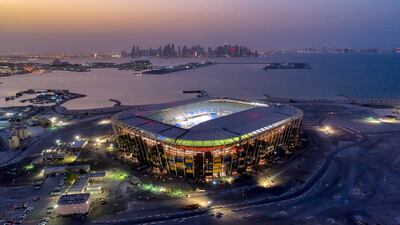
Stadium 974 in Doha that will host matches at the 2022 Fifa World Cup. It has a capacity of 40,000. AFP -
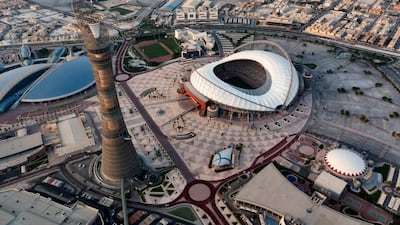
The Khalifa International Stadium in Qatar. Capacity: 40,000. AFP -
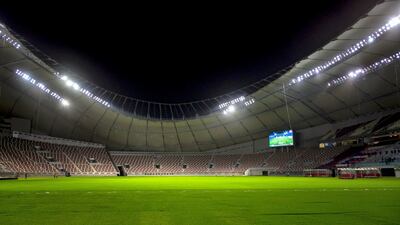
The Khalifa International Stadium. AFP -
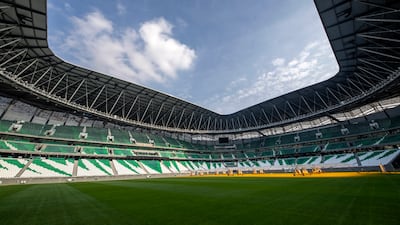
The Education City Stadium in Al Rayyan. Capacity: 45,000. AFP -
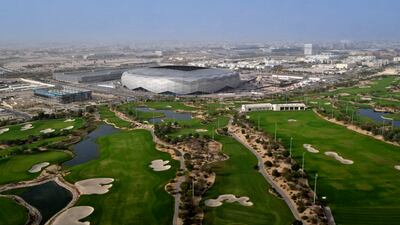
The Education City Stadium in Al Rayyan. AFP -
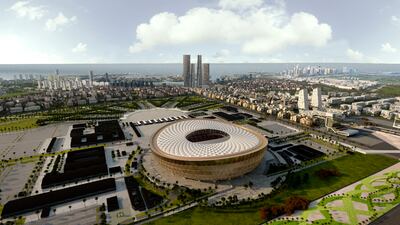
The Lusail Stadium is around 20 km north of Doha. Capacity: 80,000. AFP -
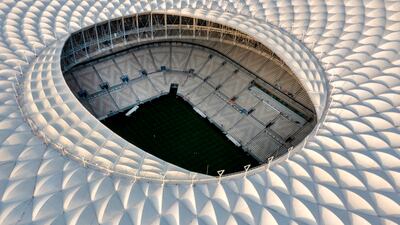
The Lusail Stadium in Qatar. AFP -
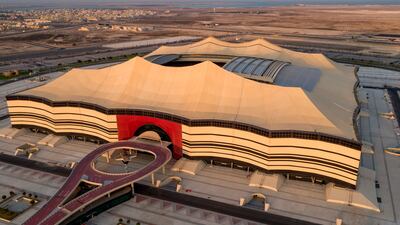
The Al Bayt Stadium in Al Khor. Capacity: 60,000. AFP -
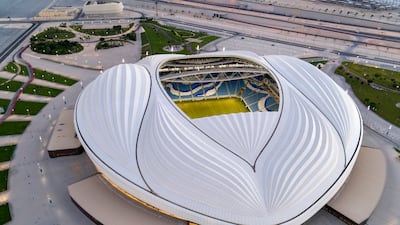
The Al Janoub Stadium in Al Wakrah. Capacity: 40,000. AFP -
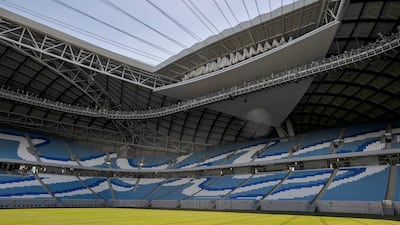
The Al Janoub Stadium in Al Wakrah, Qatar. AFP -
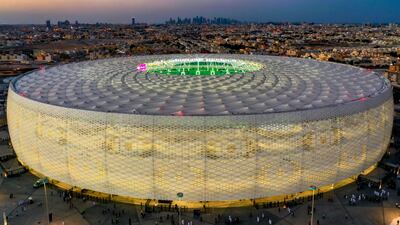
The Al Thumama Stadium in Doha. Capacity: 40,000. AFP -
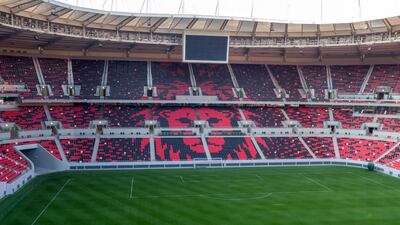
The Ahmad Bin Ali Stadium in Al Rayyan. Capacity: 44,000. AFP -
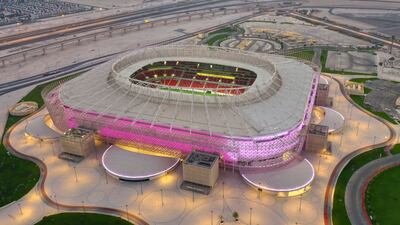
The Ahmad Bin Ali Stadium. AFP
'The Batman'
Stars:Robert Pattinson
Director:Matt Reeves
Rating: 5/5
Race card
6.30pm: Handicap (TB) $68,000 (Dirt) 1,200m
7.05pm: Meydan Cup – Listed Handicap (TB) $88,000 (Turf) 2,810m
7.40pm: UAE 2000 Guineas – Group 3 (TB) $125,000 (D) 1,600m
8.15pm: Firebreak Stakes – Group 3 (TB) $130,000 (D) 1,600m
9.50pm: Meydan Classic – Conditions (TB) $$50,000 (T) 1,400m
9.25pm: Dubai Sprint – Listed Handicap (TB) $88,000 (T) 1,200m
White hydrogen: Naturally occurring hydrogen
Chromite: Hard, metallic mineral containing iron oxide and chromium oxide
Ultramafic rocks: Dark-coloured rocks rich in magnesium or iron with very low silica content
Ophiolite: A section of the earth’s crust, which is oceanic in nature that has since been uplifted and exposed on land
Olivine: A commonly occurring magnesium iron silicate mineral that derives its name for its olive-green yellow-green colour
Who has been sanctioned?
Daniella Weiss and Nachala
Described as 'the grandmother of the settler movement', she has encouraged the expansion of settlements for decades. The 79 year old leads radical settler movement Nachala, whose aim is for Israel to annex Gaza and the occupied West Bank, where it helps settlers built outposts.
Harel Libi & Libi Construction and Infrastructure
Libi has been involved in threatening and perpetuating acts of aggression and violence against Palestinians. His firm has provided logistical and financial support for the establishment of illegal outposts.
Zohar Sabah
Runs a settler outpost named Zohar’s Farm and has previously faced charges of violence against Palestinians. He was indicted by Israel’s State Attorney’s Office in September for allegedly participating in a violent attack against Palestinians and activists in the West Bank village of Muarrajat.
Coco’s Farm and Neria’s Farm
These are illegal outposts in the West Bank, which are at the vanguard of the settler movement. According to the UK, they are associated with people who have been involved in enabling, inciting, promoting or providing support for activities that amount to “serious abuse”.
Tamkeen's offering
- Option 1: 70% in year 1, 50% in year 2, 30% in year 3
- Option 2: 50% across three years
- Option 3: 30% across five years
Desert Warrior
Starring: Anthony Mackie, Aiysha Hart, Ben Kingsley
Director: Rupert Wyatt
Rating: 3/5
MATCH INFO
Uefa Champions League quarter-final, second leg (first-leg score)
Porto (0) v Liverpool (2), Wednesday, 11pm UAE
Match is on BeIN Sports
Watch live
The National will broadcast live from the IMF on Friday October 13 at 7pm UAE time (3pm GMT) as our Editor-in-Chief Mina Al-Oraibi moderates a panel on how technology can help growth in MENA.
Dubai Bling season three
Cast: Loujain Adada, Zeina Khoury, Farhana Bodi, Ebraheem Al Samadi, Mona Kattan, and couples Safa & Fahad Siddiqui and DJ Bliss & Danya Mohammed
Rating: 1/5
The%20specs
ABU%20DHABI'S%20KEY%20TOURISM%20GOALS%3A%20BY%20THE%20NUMBERS
Rahul Gandhi in UAE:
Mercer, the investment consulting arm of US services company Marsh & McLennan, expects its wealth division to at least double its assets under management (AUM) in the Middle East as wealth in the region continues to grow despite economic headwinds, a company official said.
Mercer Wealth, which globally has $160 billion in AUM, plans to boost its AUM in the region to $2-$3bn in the next 2-3 years from the present $1bn, said Yasir AbuShaban, a Dubai-based principal with Mercer Wealth.
“Within the next two to three years, we are looking at reaching $2 to $3 billion as a conservative estimate and we do see an opportunity to do so,” said Mr AbuShaban.
Mercer does not directly make investments, but allocates clients’ money they have discretion to, to professional asset managers. They also provide advice to clients.
“We have buying power. We can negotiate on their (client’s) behalf with asset managers to provide them lower fees than they otherwise would have to get on their own,” he added.
Mercer Wealth’s clients include sovereign wealth funds, family offices, and insurance companies among others.
From its office in Dubai, Mercer also looks after Africa, India and Turkey, where they also see opportunity for growth.
Wealth creation in Middle East and Africa (MEA) grew 8.5 per cent to $8.1 trillion last year from $7.5tn in 2015, higher than last year’s global average of 6 per cent and the second-highest growth in a region after Asia-Pacific which grew 9.9 per cent, according to consultancy Boston Consulting Group (BCG). In the region, where wealth grew just 1.9 per cent in 2015 compared with 2014, a pickup in oil prices has helped in wealth generation.
BCG is forecasting MEA wealth will rise to $12tn by 2021, growing at an annual average of 8 per cent.
Drivers of wealth generation in the region will be split evenly between new wealth creation and growth of performance of existing assets, according to BCG.
Another general trend in the region is clients’ looking for a comprehensive approach to investing, according to Mr AbuShaban.
“Institutional investors or some of the families are seeing a slowdown in the available capital they have to invest and in that sense they are looking at optimizing the way they manage their portfolios and making sure they are not investing haphazardly and different parts of their investment are working together,” said Mr AbuShaban.
Some clients also have a higher appetite for risk, given the low interest-rate environment that does not provide enough yield for some institutional investors. These clients are keen to invest in illiquid assets, such as private equity and infrastructure.
“What we have seen is a desire for higher returns in what has been a low-return environment specifically in various fixed income or bonds,” he said.
“In this environment, we have seen a de facto increase in the risk that clients are taking in things like illiquid investments, private equity investments, infrastructure and private debt, those kind of investments were higher illiquidity results in incrementally higher returns.”
The Abu Dhabi Investment Authority, one of the largest sovereign wealth funds, said in its 2016 report that has gradually increased its exposure in direct private equity and private credit transactions, mainly in Asian markets and especially in China and India. The authority’s private equity department focused on structured equities owing to “their defensive characteristics.”



