
A crush outside a football stadium in Cameroon where the host nation qualified for the Africa Cup of Nations quarter-finals on Monday has left at least eight people dead and 50 injured, according to Cameroon state television.
Crowds attempted to enter Olembe Stadium in the capital Yaounde to watch Cameroon beat Comoros 2-1 to reach the last eight at Afcon 2021.
Although the stadium's capacity of 60,000 has been limited over coronavirus fears, the cap of 60 per cent is raised to 80 percent when Cameroon's Indomitable Lions play.
"Eight deaths were recorded, two women in their thirties, four men in their thirties, one child, one body taken away by the family," according to a preliminary health ministry report obtained by AFP.
The ministry said victims were "immediately transported" in ambulances, but "heavy road traffic slowed down the transport".
Some 50 people were injured in the crush, including two people with multiple injures and two more with serious head wounds, the ministry said.
A baby was also reportedly trampled by the crowd, the ministry added, although the infant was "immediately extracted and taken to Yaounde General Hospital" and is in a "medically stable" condition.
Earlier, Africa Cup of Nations organising committee spokesperson Abel Mbengue told AFP: "There was a crush as can happen when there is a stampede. We are waiting for reliable information on the number of casualties in this tragic incident".
Naseri Paul Biya, the governor of the central region of Cameroon, told the Associated Press there could be more deaths.
“We are not in position to give you the total number of casualties,” he said.
The stadium, which hosted the tournament’s opening ceremony, was built in preparation for the delayed competition, which kicked off earlier this month.
The capacity was supposed to be capped at 48,000 people, and the stampede occurred once stadium officials closed the gates.
"Some of the injured are in desperate condition," nurse Olinga Prudence told reporters. "We will have to evacuate them to a specialized hospital."
-

Cameroon forward Clinton Njie kicks the ball during the Africa Cup of Nations 2021 last-16 match against Comoros at Stade d'Olembe in Yaounde on January 24, 2022. Cameroon won the match 2-1. AFP -

Comoros' replacement goalkeeper Chaker Alhadhur. AFP -

Comoros midfielder Youssouf M'Changama celebrates scoring his team's late consolation goal in a 2-1 defeat. AFP -

Comoros midfielder Youssouf M'Changama celebrates. AFP -
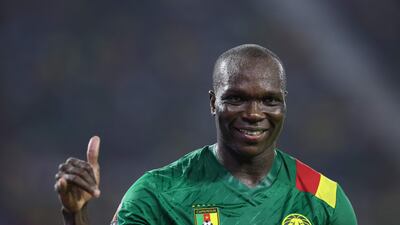
Cameroon forward Vincent Aboubakar celebrates scoring his team's second goal. AFP -

Cameroon forward Vincent Aboubakar celebrates. AFP -
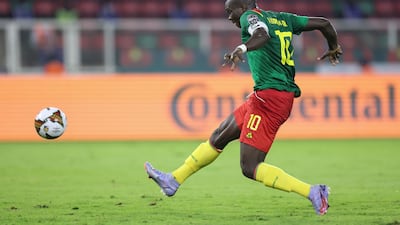
Cameroon forward Vincent Aboubakar shoots at goal. AFP -

Cameroon forward Eric Choupo Moting shakes hands with coach Antonio Conceicao after being substituted. AFP -

Comoros defender Younn Zahary. AFP -

Comoros midfielder Mohamed Youssouf. AFP -

Cameroon coach Antonio Conceicao gestures from the touchline. AFP -

Cameroon forward Vincent Aboubakar heads the ball as Comoros' midfielder Rafidine Abdullah watches on. AFP -

Comoros' Fouad Bachirou, second from right, leaves the field with team staff members at the end of the match. AP Photo -

Comoros midfielder Fouad Bachirou. AFP -
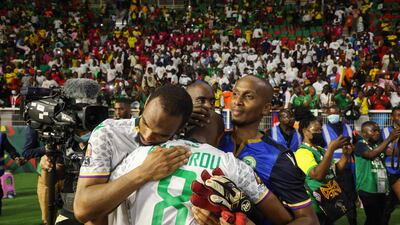
Comoros midfielder Fouad Bachirou is consoled by teammates after defeat to Cameroon. AFP -
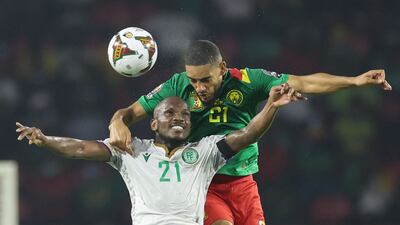
Cameroon defender Jean-Charles Castelletto is challenged by Comoros'forward El Fardou Nabouhane. AFP -

Cameroon midfielder Martin Hongla fights for the ball with Comoros midfielder Fouad Bachirou. AFP -

Cameroon goalkeeper Andre Onana makes a save. AFP -
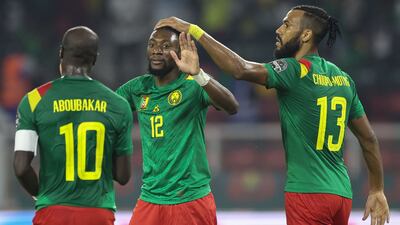
Cameroon forward Karl Toko Ekambi celebrates with Vincent Aboubakar and Eric Choupo Moting after scoring his team's first goal. AFP -

Comoros defender Younn Zahary fights for the ball with Cameroon forward Eric Choupo Moting. AFP


The Confederation of African Football (CAF), the continent's governing body, said it was "investigating the situation and trying to get more details on what transpired" and that it had sent its secretary general, Véron Mosengo-Omba, to "visit the supporters in hospital in Yaounde".
It added it was in "constant communication with Cameroon government and the Local Organizing Committee".
Cameroon's health minister, Manaouda Malachie, tweeted images showing him visiting a hospital treating those hurt in the incident.
"Everything is done to give them free care and the best support," he tweeted.
It is understood the CAF will hold a "crisis meeting" with the organising committee on Tuesday morning at 9.30am (8.30 GMT), dedicated exclusively to security issues in the stadiums.
On the pitch, before news of the incident emerged, Cameroon sealed their place in the last eight as they took advantage of a numerical advantage after Comoros' Jimmy Abdou was shown a red card after only seven minutes. Karl Toko Ekambi and captain Vincent Aboubakar scored for the hosts before Youssouf M'Changama scored a late consolation for the tiny island nation.
The Indomitable Lions are now due to play Gambia in the quarter-finals this weekend in Douala.
Previously, overcrowding at football matches has resulted in scores of deaths.
Thousands of fans in the Egyptian capital Cairo in 2015 attempted to enter a stadium to watch a game, triggering panic as police fired tear gas and birdshot and resulting in 19 dead.
In April 2001, 43 people died in a stampede at Johannesburg's Ellis Park stadium during a game between Orlando Pirates and Kaizer Chiefs.
And in Guatemala in October 1996, 90 people were killed in a crush during a World Cup qualification match between the host nation and Costa Rica at an overpacked stadium.

