



Nuno Espirito Santo's future as Tottenham Hotspur manager is under threat after only 17 games in charge after chairman Daniel Levy and managing director of football Fabio Paratici are understood to have met on Sunday to discuss the 47-year-old’s fate.
The Portuguese’s job at the North London club has come under further scrutiny following Saturday's lacklustre 3-0 defeat at home to Manchester United in which the crowd booed the team off at the final whistle.
Fans reacted badly to Nuno taking Lucas Moura off early in the second half and continued to make their displeasure known throughout the game and called for both Nuno and Levy to go.
Nuno was only appointed at the end of June as Jose Mourinho’s successor after a farcical managerial search which saw Spurs go through a number of candidates.
His tenure, however, has been marred by dour performances in which Spurs have lost five of his 10 Premier League games in charge.
Two of Nuno's compatriots - Sergio Conceicao and Paulo Fonseca - are being mooted as potential replacements should Levy decide to part ways with Nuno.
Antonio Conte, who held talks with the club over the summer before being broken off due to the Italian's demands over a greater say in transfers, is also a serious target.
Spurs v Man United ratings
-
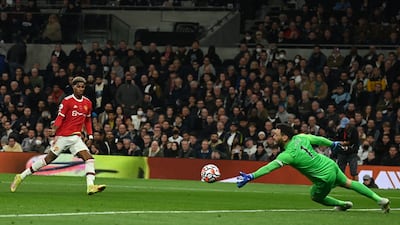
TOTTENHAM RATINGS: Hugo Lloris 5 - A strong hand pushed a travelling effort from Fred out for a corner, but that was the only positive in a game where the France international could do little about any of the goals. AFP -

Emerson Royal 7 - Looked to get forward to support the attack which saw the right-hand side of Spurs enjoy some success. The Brazilian was a standout performer in what was a poor team display. Getty -

Cristian Romero 6 - Romero had the ball in the net and looked certain to score before Davies took the header on himself, directing it from the corner way over the bar. Reuters -
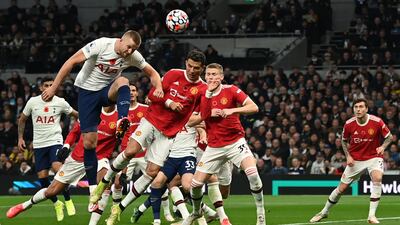
Eric Dier 5 - The left side of Spurs’ defence was too messy, and that was picked up on by Cristiano Ronaldo who looked to exploit the lack of organisation. Marking Cavani and Ronaldo is never an easy task, but Dier didn’t do enough. AFP -

Ben Davies 5 - Lost track of Ronaldo for United’s opening goal. Disappointing overall from the left-back who didn’t show why he should start ahead of Sergio Reguilon. AFP -
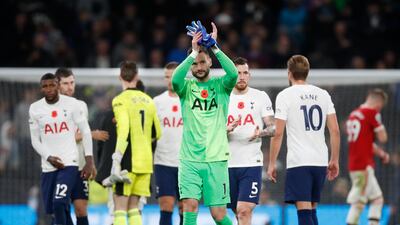
Oliver Skipp 5 - Couldn’t get near the ball and struggled to impose himself. Gave away the ball in a dangerous area which led to United doubling their lead. Reuters -

Pierre Hojbjerg 5 - The Denmark international is usually much more influential and a regular ball winner in the Spurs side but we didn’t see that. Reuters -

Lucas Moura 7 - An intricate ball from a broken down free-kick presented Son with the best chance of the first half. It was a bright performance from Moura who stood out as one of the players who was desperate to win - this made his substitution questionable. Getty -

Giovani Lo Celso 5 - The Spurs attacking midfielder wasted a great chance as he got the pass all wrong when Son Heung-min had a channel destined for the United box. Not the most creative display. Getty -

Son Heung-min 6 - Son’s runs consistently upset the United defensive line, but the Spurs star had to do much better with the chance where he was played through by Lucas Moura. Getty -

Harry Kane 5 - Lead the Tottenham press from the front but was kept quiet overall by United’s back three, drifting in and out of the game. Best opportunity came when he intercepted a back pass on the flank, but the final ball was easy to deal with. Getty -
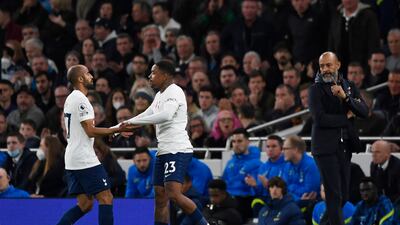
SUBS: Steven Bergwijn (Lucas 54) 6 - On for Lucas and looked to beat his man but Spurs struggled to get him on the ball once the score went to 2-0. Reuters -

Tanguy Ndombele (Skipp 66) 6 - Introduced for Skipp after going two goals down but a tough ask for the French star. Bright on the ball and fought to try and get Spurs back into the match. Getty -
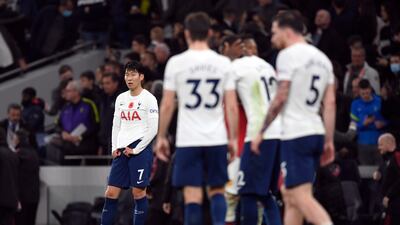
Dele Alli (Lo Celso 72) N/R - Brought on for Lo Celso but was anonymous in a poor team performance. Reuters -
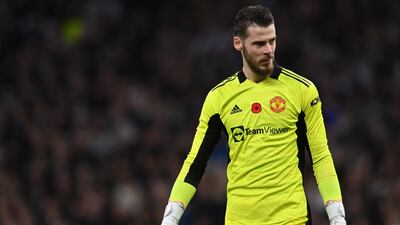
MANCHESTER UNITED RATINGS: David de Gea 6 - Had little to do in the first half. And the second. His goal was well protected by his five-man defence. Not a privilege he’s had this season. He deserved a break. Spoke well after the game. Getty -

Aaron Wan-Bissaka 8 - Bright start in a defensive back five against a side who’d collectively scored fewer goals than Mo Salah so far this season. Got into advanced positions but unsure with his final balls. Sublime tackle on Son after 34. Reuters -
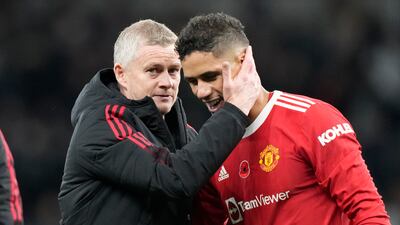
Raphael Varane 8 - Back after injury and his presence improved the defence. Fast enough, strong enough and untroubled by a Spurs attack he helped look limp. Needs to get into the groove now, play every game and show why he’s one of the best defenders in the world. AP -

Harry Maguire 7 Booked – for a tackle made by Varane after 22 minutes. Key nudge to win ball and end a Spurs attack on 51. Kept the other Harry, Kane, quiet. AP -
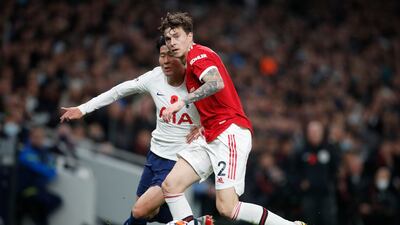
Victor Lindelof 7 - Right of Varane, but sometimes came more forward out of defence because he’s so competent on the ball. Another one who needed a good game and had one. Worked on the formation for a few days and felt very happy with it. Reuters -

Luke Shaw 7 - Lot of responsibility on him and hit a lovely ball over the top to Fernandes after 23. Much better than in recent weeks and energy levels remained high. Got forward, got back. Unrecognisable from last week. AP -

Fred 8 - Best effort of the first half with a shot from distance after 32. Played well, though susceptible to running into trouble with the ball. Tenacious. Yellow card on 72 after a double tackle. He deserved that, but he still moaned about it. AP -
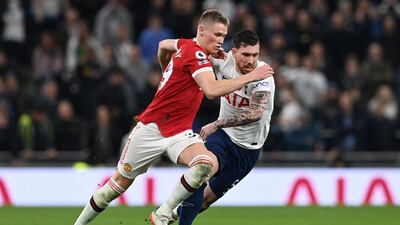
Scott McTominay 9 - Aggressive and effective – and more confident with a extra player behind him. Drove forward with Fred effectively. Tackled heavily by Spurs’ players. He can handle it. Excellent. AFP -
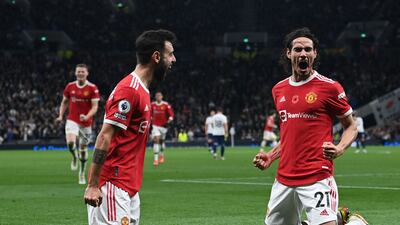
Bruno Fernandes 8 - Key position as the link between the midfield, Ronaldo and Cavani. Super run from deep to meet a Shaw pass after 23. Hooked a cross wide on 33, but then set Ronaldo up for the first with a fine ball. Defended, attacked. Best game for a while. AFP -

Cristiano Ronaldo 8 - On it from the start. Magnificent finish from a Bruno ball to put United ahead. Struck another rocket into the goal on 47 but it was offside. Played a key part in the second goal. Motivated his team midweek and delivered at the weekend. Getty -
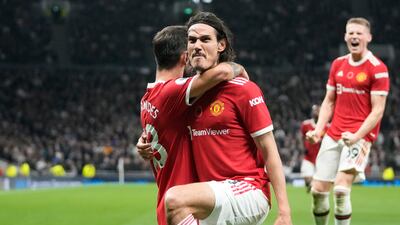
Edinson Cavani 8 - Headed wide after seven minutes. Worked hard as always, intelligent touches. Scored here last year and scored again this year with the coolest finish. Cult hero. But gave the ball away just before he was substituted. Left the field with his name being sung. AFP -
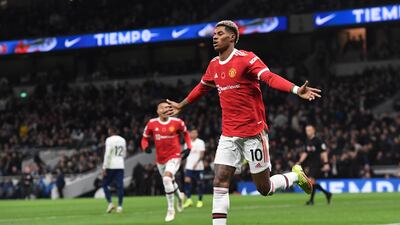
SUBS: Marcus Rashford 7 - Came on for Ronaldo after 70. Jumped onto a Matic pass after 86 to finish United’s third with confidence. A fit and productive Rashford is a big addition to United. AP -

Nemanja Matic 7 - On for Fernandes after 75. Bring balance and stability. Did just that and played a pass forward for fellow sub Rashford to score the third. AP -
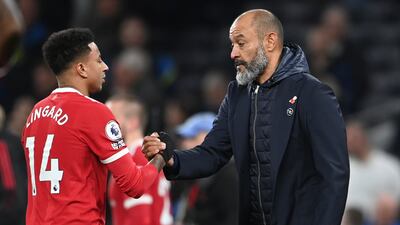
Jesse Lingard N/R - On for Cavani after 83. Little time to make an impact. EPA



