


Four-time world champion Sebastian Vettel said on Friday that Formula One must "act responsibly" over the environment if the sport wants to remain relevant.
"I think this sport has some big challenges ahead," the Ferrari driver told a video news conference ahead of this weekend's Italian Grand Prix.
"Obviously, the whole situation with the pandemic around the world doesn't help, but nevertheless, there are some big questions to be answered for the future to make sure that this sport is still around in years to come.
"With where the world is going, there are big things that we need to tackle. We need to address (them) and Formula One is, maybe, not at the forefront of this.
"We can do better than what we're currently doing.
"Looking after the world, the environment, I think there's some interesting aspects that we are trying to fulfil or achieve, but I think F1 has to do more and be a bit more open and tolerant. Otherwise ... it could get difficult in the future."
The 33-year-old German, who won successive world titles from 2010 to 2013, said F1 should be "setting examples rather than reacting to pressure from the outside" when it came to cleaning up its environmental performance.
"As a global sport, we should act responsibly," he said. "When it comes to the environment, obviously we are driving around the weekend in cars, we're burning fuel which is probably a very small amount of the total energy, or total carbon footprint, if you want to talk in CO2 terms.
"But still I think we need to be setting the right example, not just in our carbon footprint, but also on other things.
"Every little bit makes a difference. The amount of plastic bottles we consume during the weekend, I think there are solutions to that.
_______________
Ferrari's passionate tifosi facing a miserable afternoon at Monza
-
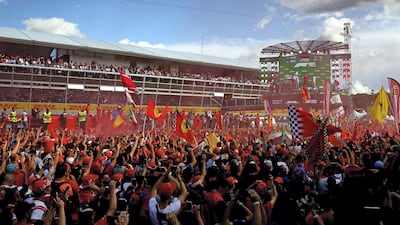
Scuderia Ferrari supporters at the awards ceremony after the Italian Grand Prix in 2019. Getty -
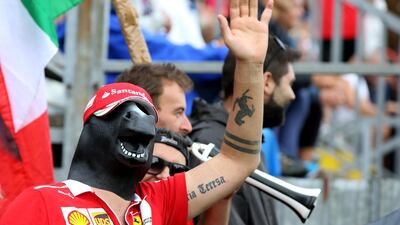
A Ferrari fan with a horse mask watches the action during qualifying at Monza in 2018. Getty -
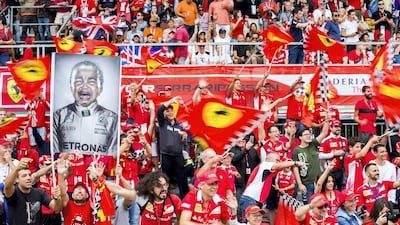
Ferrari fans hold up a banner featuring Lewis Hamilton of Mercedes. Getty -
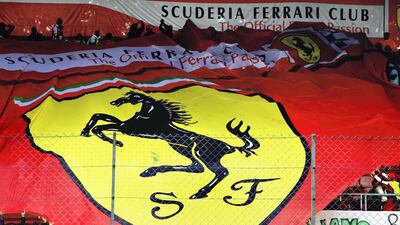
The Tifosi wave a Ferrari banner during qualifying in 2017. Getty -
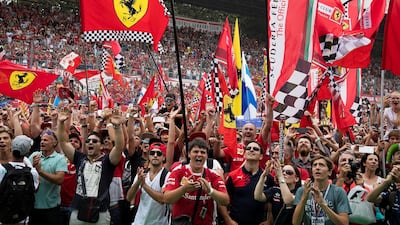
Grand Prix of Italy, Autodromo Nazionale Monza, September 2016. Getty -
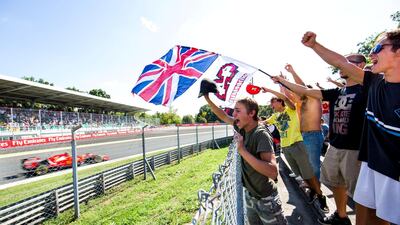
Tifosi during qualifying for the Formula One Grand Prix of Italy in 2015. Getty -
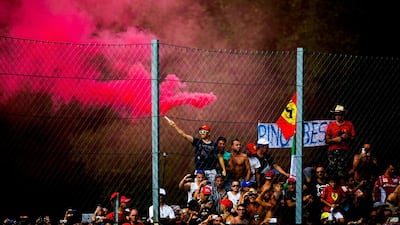
Tifosi light up flares in 2014. Getty -
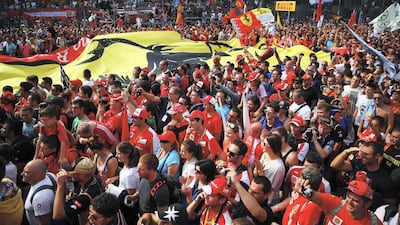
Fans invade the track in 2013 . Getty -
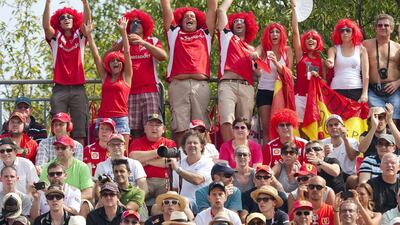
Tifosi during the Italian Grand Prix in 2012. Getty -
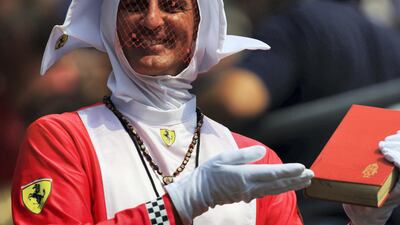
A tifosi in 2011 in Monza. Getty -
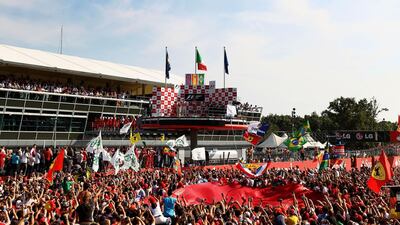
Tifosi invade in 2010. Getty -
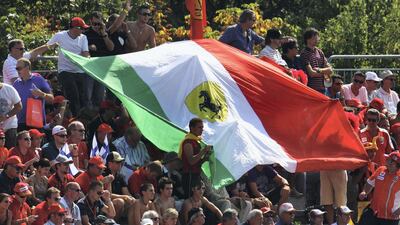
Ferrari tifosi in 2009. Getty -
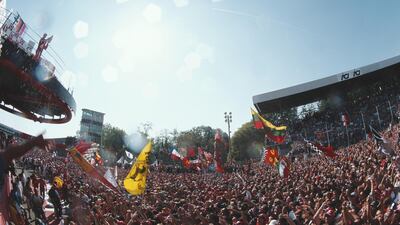
Ferrari driver Michael Schumacher salutes the flag waving Tifosi in 2006. Getty -
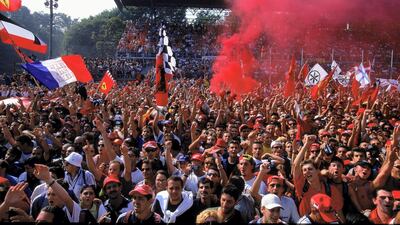
Tifosi storm the track in 2000. Allsport -
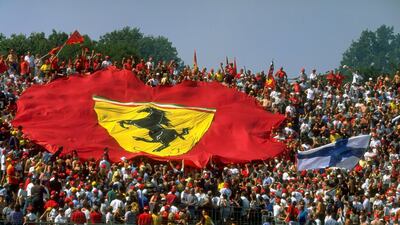
Ferrari Tifosi at Monza in Iin 1999. Allsport -
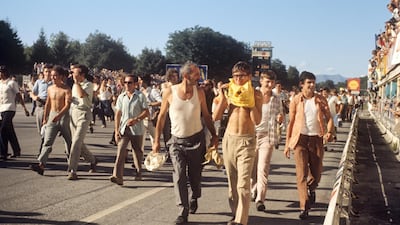
Tifosi fans in 1970. Getty


_______________
"How we power some panels in the paddock, there are solutions to that.
"We should be at the forefront in pushing developments rather than using a convenient and cheap way in order to make things work and easy.
"F1 is obviously the pinnacle of motorsports when it comes to development of the cars, but I think it doesn't just stop there.
"When you talk about the cars, I think there's more that can be done in order to have greater relevance for the future."
Vettel added that he remained "very open" with Ferrari despite knowing he is in his last season with the team and is, this weekend, racing for them at Monza for the last time.
"I don't feel pushed out," he said. "We're very open, also vocal, and when something is not right - and that's for Charles (Leclerc) and myself -- if I get asked, I would answer. And if I don't get asked, I might say it, nevertheless.
"I'm open, I'm here to do my job until the end of the year.
"I enjoy racing and I want to make sure I can get out of the car at the end of the year knowing that I've done everything I can to put all the things together, that mattered, to get the best result."

