
The plaudits are flooding in for Max Verstappen and Red Bull following victory at Sunday's Hungarian Grand Prix.
If you include the minimal input from Sergio Perez Red Bull have won a record 12 races in a row.
Some pundits sniffily insist it’s only 11 because the first win was the final race of last season. But who really cares? It’s 12 in row and the greatest winning streak in the history of Formula One.
It beats one of the oldest and toughest records, set in 1988 by McLaren and its legendary drivers Alain Prost and Ayrton Senna.
But those who reflect on that year do not go all misty-eyed over McLaren’s ability to win 11 in a row and all but one of the 16 rounds.
Their memories are of a spell binding rivalry that created one of the most enthralling championship stories of all time.
Senna and Prost were two equally driven but very different characters with different talents. But when it was all put together only tenths of a second separated them in the cockpit. 1988 was so close; Senna won eight races that year and Prost seven.
They proved (again) equal cars and drivers spell box office dynamite.
So how has the sport contrived through the decades to keep the best drivers apart?
First, it's important to note that Verstappen and Perez are no Senna and Prost.
-
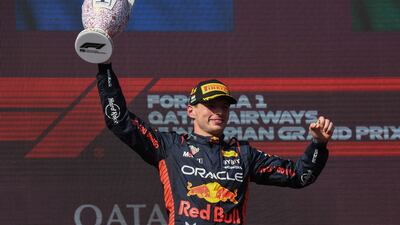
Red Bull driver Max Verstappen celebrates on the podium after winning the Formula One Hungarian Grand Prix at the Hungaroring, on July 23, 2023. AFP -
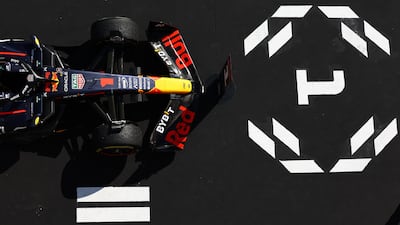
Race winner Max Verstappen stops in parc ferme after his victory. Getty -
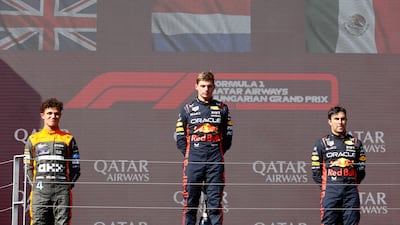
Race winner Max Verstappen with second placed Lando Norris, left, and Sergio Perez, right, who ws third. Getty -
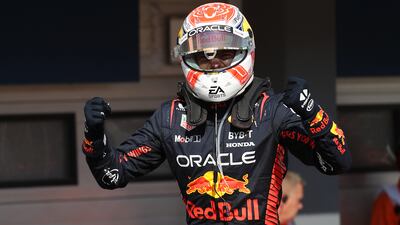
Max Verstappen celebrates after the race in Budapest. Getty -
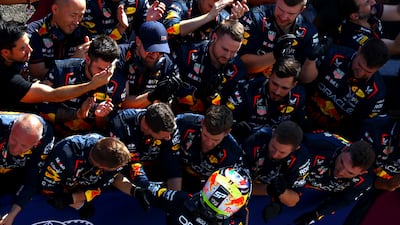
Race winner Max Verstappen celebrates with his Red Bull team. Getty -
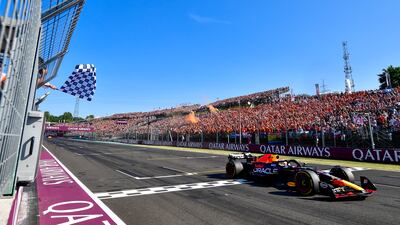
Dutch driver Max Verstappen takes the chequered flag to win the race. AP -
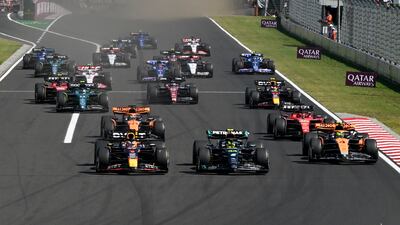
Max Verstappen overtakes Mercedes driver driver Lewis Hamilton at the start of the race. AP -
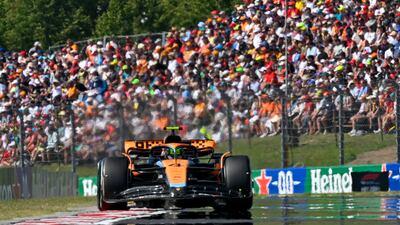
McLaren's British driver Lando Norris on his way to second place. AP -
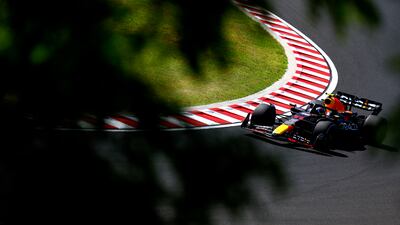
Red Bull's Sergio Perez finished third in Hungary. Getty -
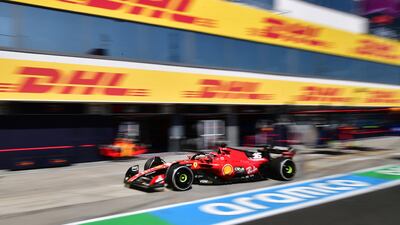
Ferrari's Charles Leclerc, who finished seventh, makes a pit stop during the race. Reuters


It’s interesting to note that aside from Nico Rosberg beating Mercedes teammate Lewis Hamilton in 2016 you have to go back to the days of Senna and Prost and the late 80s to find a time when the champion was beaten to a title in his own car.
Those who reflect on 1988 also point to 2007 when Fernando Alonso was paired with a rookie Hamilton and such a poisonous feud developed at McLaren it resulted in a $100 million fine, a lost world title and the Spaniard walking out on the team.
It may be a remarkable new landmark but the average fans’ reaction to Verstappen’s achievements this year is ‘meh, so what?' The processional racing of 2023 certainly won’t be remembered with the same slack-jawed awe as 1988, however many races he wins.
The mandarins of F1 appear to have forgotten it’s not the result that makes for great sport, it’s the trial and tribulation.
At F1’s inception in the 1950s, Juan Manuel Fangio won four titles on the trot with three teams. For the next 50 years no other driver won more than a couple of championships in succession.
Since the turn of the century everything has changed. Michael Schumacher won five on the trot, Sebastian Vettel four and Hamilton six titles in seven.

That’s not real sport. That’s (largely) dreary repetition.
People point to the Netflix series Drive To Survive (DTS) as vindication of the popularity of Formula One racing. But I would argue it’s just the opposite.
When all they could see was the dreary lappery with the same names at the front week after week the watching public stayed away.
But DTS peeled back the covers and exposed the human endeavour, the pain, the drama, the sacrifice and the joy. Who could fail to be engaged by that?
Of course, it’s not Red Bull’s fault they are so much better. Mercedes team boss Toto Wolff sat gloomily on packing crates after the Hungary race and lamented the rest were “a field of F2 cars against an F1 [car]”. His machines finished 40 seconds adrift of Red Bull.
The fault lies in a system that will not put the best drivers together or encourage equally competitive cars.

And that’s down to FIA, and a system (that the teams collectively mastermind) which creates the framework of competition.
How can the cars be equal when the rules change more often than I change my trousers?
And each new change creates a new hierarchy and a new surge to catch up. And just as they get there it’s all change again.
And when a sport lives by who has designed the best wing flaps or undertray aero flooring no-one can see it’s bound to be this way.
In an era of cork, open-faced crash helmets and no seat belts Fangio carved out one of the greatest careers the sport has seen, winning 24 Grands Prix in eight years.
Verstappen equalled that in the past 18 months. Some say that shows the greatness of the man. But you could equally argue it also demonstrates the paucity of the sport.

