Is now the time to reset sport? To rip up established ways of doing things, and build a new perfect, fairer future?
Or is it the exact opposite? When sport does return, surely there will only be one option: to back convention.
Little can be predicted with any certainty about how the world of sport will look after the pandemic. Other than to say, it will be financially poorer.
As such, loss-leading concepts designed to save their sports – like The Hundred in English cricket, or some guise of the Nations Championship in international rugby – will surely be left in the sidings for some time yet.
Backing an idea that might work, and might attract new fans to the game, and might lead to a better version of what went before, is a risk. There are too many mights in that sentence for it to be anything else.
Forget about targeting new audiences for now. Drastic reform risks alienating the existing followers. And when sport does return, it is that group who will be needed most.
Rugby in particular has shown how precarious expansion can be.
There have been successes, an obvious one being Japan.
The sport has a long history in Japan, but it remains regarded by many as a new territory, outside the cosy elite.
It is now a great example of what can be done outside of the mainstream, with canny planning, generous financing from the private sector, and imported knowledge.
Their World Cup, last year, was the best ever. That was due in no small part to their performances of their brilliant team.
But remember that it took Japan years to be an overnight success.
Their first two wins in Rugby World Cups came 24 years apart, and it took 32 years – plus extraordinary home support – to make it beyond the group stage in that competition.
Which only goes to show breaking into the elite at the top of rugby is a fraught business.
Elsewhere in that sport, most attempts at expansion have brought woeful results.
Is Super Rugby better now than it was 15 years ago, say? Hardly. And the Rugby Championship in its current guise? Surely not.
The Six Nations, which is surely the most popular and successful regular event in the sport, outside of its World Cups and British & Irish Lions series, might even have been better when it was just five.
Even here in Asia, attempts at progress have been stunted.
For seven season between 2008 and 2014, the top tier of continental competition was expanded to five teams, and rebranded as the Asian Five Nations.
Japan won all 28 matches in that time, each with a bonus point. Maybe only one team – Hong Kong – benefitted appreciably from the competition, having made massive strides on the field and as a union in the time since.
But competitive standards across the board are scarcely better than what they were at the start, and Asia’s top-tier competition has long since contracted.
World Rugby’s chief executive Brett Gosper has spoken about the chance of “more meaningful international matches with a more meaningful international calendar” when the game returns.
The Nations Championship has been thrown out once before, and is not being revisited now, but some of the theories it proposed are being discussed again.
Will it lead to a more open, inclusive – and better - game? Let’s see.
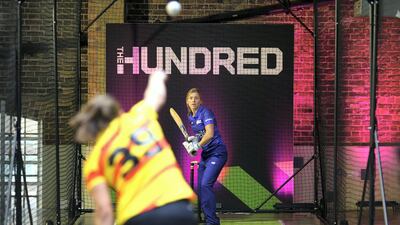
And what of cricket? The England and Wales Cricket Board have been vocal in saying the launch of their new format, The Hundred, is only on pause, and is essential to the future of the game in the country.
Its pilot edition, due for this summer, has understandably been aborted, with all the players being advised this week that their contracts for it have been terminated.
That competition is purportedly supposed to appeal to people who do not like cricket.
As with rugby, the idea that there are lucrative markets for cricket waiting to be tapped seems ambitious. And certainly risky in a post-Covid-19 climate.
So while challenging accepted practice might be essential for any business to progress, maybe now is really not the right time for sport.

Gulf Men's League final
Dubai Hurricanes 24-12 Abu Dhabi Harlequins
Sunday's Super Four matches
Dubai, 3.30pm
India v Pakistan
Abu Dhabi, 3.30pm
Bangladesh v Afghanistan
Russia's Muslim Heartlands
Dominic Rubin, Oxford
INVESTMENT PLEDGES
Cartlow: $13.4m
Rabbitmart: $14m
Smileneo: $5.8m
Soum: $4m
imVentures: $100m
Plug and Play: $25m
What can victims do?
Always use only regulated platforms
Stop all transactions and communication on suspicion
Save all evidence (screenshots, chat logs, transaction IDs)
Report to local authorities
Warn others to prevent further harm
Courtesy: Crystal Intelligence
'Cheb%20Khaled'
%3Cp%3E%3Cstrong%3EArtist%3A%20%3C%2Fstrong%3EKhaled%3Cbr%3E%3Cstrong%3ELabel%3A%20%3C%2Fstrong%3EBelieve%3Cbr%3E%3Cstrong%3ERating%3A%3C%2Fstrong%3E%204%2F5%3C%2Fp%3E%0A
The view from The National
The specs
Engine: 3.9-litre twin-turbo V8
Transmission: seven-speed
Power: 720hp
Torque: 770Nm
Price: Dh1,100,000
On sale: now
The Voice of Hind Rajab
Starring: Saja Kilani, Clara Khoury, Motaz Malhees
Director: Kaouther Ben Hania
Rating: 4/5
UAE currency: the story behind the money in your pockets
THE CLOWN OF GAZA
Director: Abdulrahman Sabbah
Starring: Alaa Meqdad
Rating: 4/5
The specs
Engine: 4.0-litre V8 twin-turbocharged and three electric motors
Power: Combined output 920hp
Torque: 730Nm at 4,000-7,000rpm
Transmission: 8-speed dual-clutch automatic
Fuel consumption: 11.2L/100km
On sale: Now, deliveries expected later in 2025
Price: expected to start at Dh1,432,000
The specs
Engine: 3-litre twin-turbo V6
Power: 400hp
Torque: 475Nm
Transmission: 9-speed automatic
Price: From Dh215,900
On sale: Now
The National's picks
4.35pm: Tilal Al Khalediah
5.10pm: Continous
5.45pm: Raging Torrent
6.20pm: West Acre
7pm: Flood Zone
7.40pm: Straight No Chaser
8.15pm: Romantic Warrior
8.50pm: Calandogan
9.30pm: Forever Young
The%20specs
%3Cp%3E%3Cstrong%3EEngine%3A%3C%2Fstrong%3E%201.8-litre%204-cyl%20turbo%0D%3Cbr%3E%3Cstrong%3EPower%3A%20%3C%2Fstrong%3E190hp%20at%205%2C200rpm%0D%3Cbr%3E%3Cstrong%3ETorque%3A%3C%2Fstrong%3E%20320Nm%20from%201%2C800-5%2C000rpm%0D%3Cbr%3E%3Cstrong%3ETransmission%3A%20%3C%2Fstrong%3ESeven-speed%20dual-clutch%20auto%0D%3Cbr%3E%3Cstrong%3EFuel%20consumption%3A%3C%2Fstrong%3E%206.7L%2F100km%0D%3Cbr%3E%3Cstrong%3EPrice%3A%3C%2Fstrong%3E%20From%20Dh111%2C195%0D%3Cbr%3E%3Cstrong%3EOn%20sale%3A%20%3C%2Fstrong%3ENow%3C%2Fp%3E%0A
You may remember …
Robbie Keane (Atletico de Kolkata) The Irish striker is, along with his former Spurs teammate Dimitar Berbatov, the headline figure in this season’s ISL, having joined defending champions ATK. His grand entrance after arrival from Major League Soccer in the US will be delayed by three games, though, due to a knee injury.
Dimitar Berbatov (Kerala Blasters) Word has it that Rene Meulensteen, the Kerala manager, plans to deploy his Bulgarian star in central midfield. The idea of Berbatov as an all-action, box-to-box midfielder, might jar with Spurs and Manchester United supporters, who more likely recall an always-languid, often-lazy striker.
Wes Brown (Kerala Blasters) Revived his playing career last season to help out at Blackburn Rovers, where he was also a coach. Since then, the 23-cap England centre back, who is now 38, has been reunited with the former Manchester United assistant coach Meulensteen, after signing for Kerala.
Andre Bikey (Jamshedpur) The Cameroonian defender is onto the 17th club of a career has taken him to Spain, Portugal, Russia, the UK, Greece, and now India. He is still only 32, so there is plenty of time to add to that tally, too. Scored goals against Liverpool and Chelsea during his time with Reading in England.
Emiliano Alfaro (Pune City) The Uruguayan striker has played for Liverpool – the Montevideo one, rather than the better-known side in England – and Lazio in Italy. He was prolific for a season at Al Wasl in the Arabian Gulf League in 2012/13. He returned for one season with Fujairah, whom he left to join Pune.
City's slump
L - Juventus, 2-0
D - C Palace, 2-2
W - N Forest, 3-0
L - Liverpool, 2-0
D - Feyenoord, 3-3
L - Tottenham, 4-0
L - Brighton, 2-1
L - Sporting, 4-1
L - Bournemouth, 2-1
L - Tottenham, 2-1
