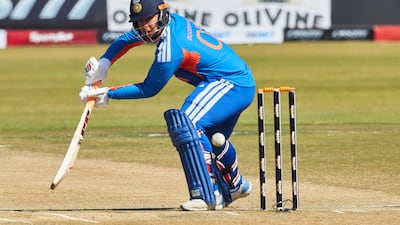
India barely broke a sweat as they secured a T20 series win over Afghanistan in Delhi.
The Afghans were 'hosting' India at the Arun Jaitley Stadium – they have had similar arrangements with other cricket boards – but it was the double world champions who felt at home as they completed near identical seven-wicket wins in the first two matches.
In both games, Afghanistan batted first and posted similar scores – 156-8 and 159-8 – and India chased down the target at almost the same pace – in the 14th and 15 overs respectively.
There was another common factor in those games – young India batter Vaibhav Sooryavanshi was benched with fellow southpaw Abhishek Sharma and Sanju Samson opening in the two outings.
Samson was the player of the series when India defended the T20 world title at home earlier in the year. But a few months later, the wicketkeeper batter lost his spot after a few failures during the tour of Ireland and England.
Sooryavanshi, fresh from a stellar IPL campaign, was brought in and finished as player of the series in Zimbabwe in July at just 15 years of age.
Against Afghanistan, however, India went back to the experienced partnership of Abhishek and Samson.
The former smashed 82 in the first match and the latter hit a quick 57 in the second. Samson, 31, found himself fighting for his spot despite delivering a world title a few months back. But he has played most of his career under similar pressure and took the challenge in his stride.
“You see a young guy [Sooryavanshi] coming in after scoring 700-800 runs in the Indian Premier League. I had played a tournament prior to that, but then Sooryavanshi performed so well that he had to be brought into the side one way or another,” Samson said after the second T20 against Afghanistan.
“I hadn't performed in two or three games [in Ireland and England] while he was in great form. And since we wanted to win that series, the decision made perfect sense from a leadership perspective.”
Where is Vaibhav?
Samson seems the preferred choice when India play in Asian conditions as he offers high-impact runs and also reliable wicketkeeping, even with Ishan Kishan in the side.
Also, Sooryavanshi and Abhishek together at the top are highly unpredictable, with both batters known to attack irrespective of the match situation.
But the team management will soon have to take a tough call. Keeping a once-in-a-generation talent like Sooryavanshi, who is also in form, out for whatever reason will be difficult to justify.
The next two ICC tournaments – ODI and T20 World Cups – are outside Asia, in South Africa and Australia. The challenges on faster pitches will be different to what the current world champions have grown accustomed to. Having a top order with the tools for those surfaces is crucial, and Sooryavanshi appears to have a better all-round game for all conditions.
The Indian team is highly likely to play Sooryavanshi in the third T20 on Thursday, once again in Delhi. Irrespective of how he fares, the team will have to take a definitive decision about him for the immediate future.
Frequent changes to the top order have already seen an all-format talent like Yashasvi Jaiswal slide further down the pecking order; it happens fairly regularly in India once you have been away from the team for six months or so.
India will not want to let Sooryavanshi blend into the background simply because other players are doing reasonably well. Because if that happens, the loss will be Indian cricket's.

