
Desperation is not an ideal emotion to have in a World Cup final. It leads to nerves and then the fear of failure. Ideally, you want to play it like any other match and by the end, the better team wins.
But try telling that to India and South Africa. For a decade, the team in blue had made it a painful habit of playing almost flawlessly up until the knockout matches, where all their worst fears would come true and the trophy would slip by. Either the semi-finals, or the final but never the trophy.
The Proteas did not even know what appearing in a World Cup final felt like, despite having many world-class squads with an embarrassment of riches across decades.
So when the two teams faced off in the T20 World Cup final in Barbados, one desperate search for glory was going to end.
South Africa had the title at their fingertips. They needed 30 from 30 balls. Heinrich Klaasen had just smashed Axar Patel for 24 runs in one brutal over. They could have just knocked the ball around and won the title.
But India were probably more alert. Or desperate. Jasprit Bumrah, Hardik Pandya and Arshdeep Singh bowled five death overs of the highest calibre to win the unwinnable match by seven runs.
In the last over by Pandya, South Africa still had hope with David Miller on strike. A full toss smashed down the ground was plucked just as it was sailing over by Suryakumar Yadav, juggled back into play and caught with the most incredible calmness under pressure.
Pandya then bowled out the over to win the title very few expected India to lift but many felt they deserved.
-
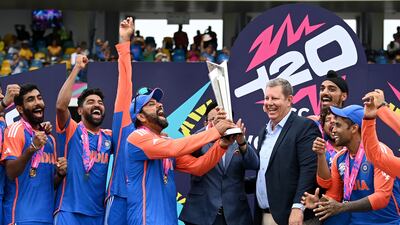
India captain Rohit Sharma lifts the T20 World Cup trophy after a seven-run win over South Africa in the final at the Kensington Oval in Bridgetown, Barbados, on Saturday, June 29, 2024. Getty Images -
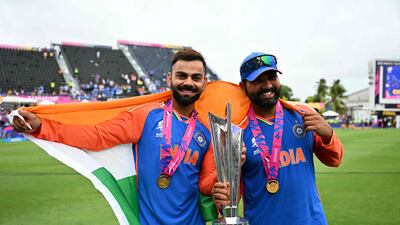
India's Virat Kohli and captain Rohit Sharma celebrate with the T20 World Cup trophy in Barbados. AFP -
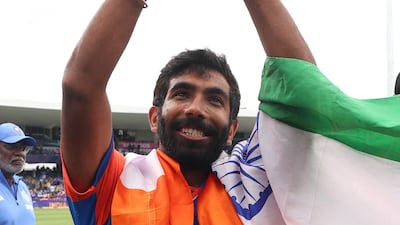
India pacer Jasprit Bumrah was the player of the tournament. Reuters -
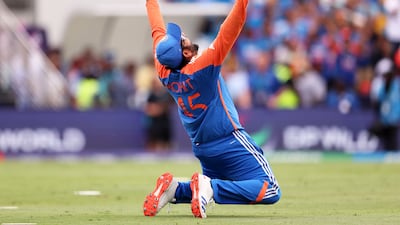
India captain Rohit Sharma celebrates after winning the T20 World Cup final against South Africa by seven runs at the Kensington Oval. Getty Images -

Hardik Pandya starred with the ball for India, picking up three wickets in a tense victory. Getty Images -
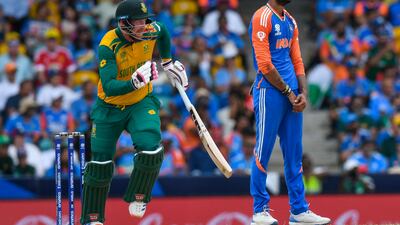
South Africa's Heinrich Klaasen smashed 52 from 27 balls and took his team close to victory. AFP -
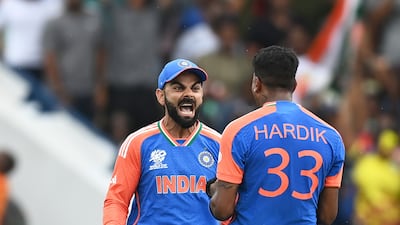
Hardik Pandya celebrates with Virat Kohli after dismissing David Miller. Getty Images -
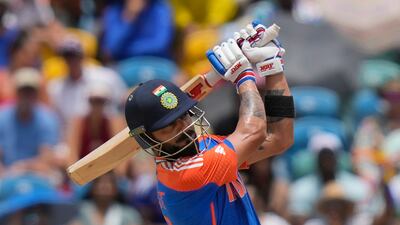
Virat Kohli held India's inning together with a timely knock of 76. AP -
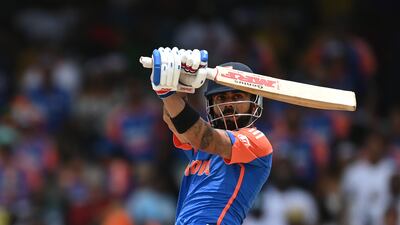
Virat Kohli made 76 from 59 balls to help India reach 176-7. Getty Images -
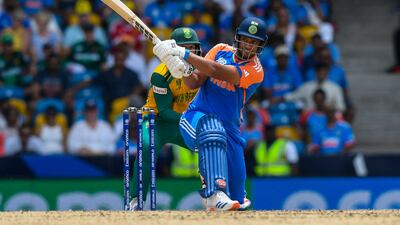
Shivam Dube gave good support to Kohli, hitting 27 from 16 at the Kensington Oval in Barbados. AFP -

Anrich Nortje of South Africa celebrates after dismissing Shivam Dube. Getty Images -
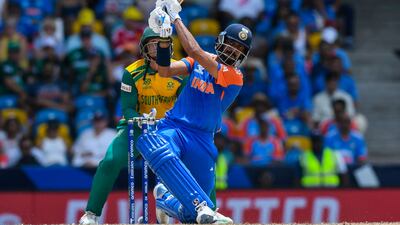
Axar Patel rescued India's innings with 47 from 31 balls. AFP -

Quinton de Kock celebrates with teammates after running Axar Patel out. Getty Images -
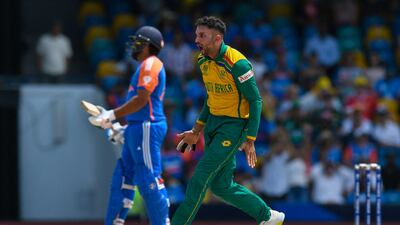
South Africa's Keshav Maharaj dismissed India captain Rohit Sharma in his first over. AFP -

South Africa's Keshav Maharaj got Rishabh Pant out for a duck. AFP


India were playing their third world final in 12 months – the World Test Championship, the ODI and now the T20 World Cup. They had consistently been the best team in Test and ODI cricket across cycles, but were beaten in both finals by Australia.
The defeat in the ODI final in Ahmedabad was particularly painful as Rohit Sharma’s side were streets ahead of their rival teams, winning 10 matches by huge margins on the way to the final. There, Travis Head played the innings of his life to snatch yet another title from India’s grasp.
Victory there would have allowed some of the best players of a generation to walk off into the sunset with great fanfare. Rohit, Virat Kohli, Mohammad Shami, and even Ravindra Jadeja are unlikely to be around much longer. Had India won, most of them would likely have vacated their spots for the next generation of players ahead of the T20 World Cup; Shami is recovering from surgery so was never considered.
It put Indian selectors into an uncomfortable position where they were almost required to give this great group of players one last chance at redemption, possibly at the expense of some exceptional T20 talent.
Amid all the celebrations of India’s victory in Barbados, it must be remembered that dashing talents like Yashasvi Jaiswal and Rinku Singh did not get a spot in the team, Sanju Samson remained on the bench and high impact T20 players like Abhishek Sharma and Harshit Rana were not considered.
In hindsight, it was an excellent decision to go with senior regulars. The pitches in the US and Caribbean were extremely difficult for batting. Anything over 150, and 120 in some instances, proved to be match-winning totals, and that meant players with experience of attritional cricket in longer formats succeeded.
You only need to look at Kohli’s 76 from 59 balls in the final to understand the value of experience on such surfaces and on the big stage.
With the trophy in the bag, Rohit and Kohli announced their retirement from T20 Internationals. Rahul Dravid signed off as a World Cup winning coach. It is an exit sportspersons dream of.
India have thus been handed a golden opportunity very few teams in sport receive – an ideal transition phase.
Gautam Gambhir is set to become the next coach of the Indian team. And according to reports, he has demanded greater control of the squad and decision making. Pandya should find himself as the next undisputed leader of the team having overcome months of hardship in the IPL, tussle over captaincy and vitriol from cricket followers.
A completely new set of players is waiting in the wings, most likely to be guided by a hard taskmaster in Gambhir whose cricket philosophy is putting the team first and moving away from superstar culture.
One immediate change that the India team is likely to undergo is separate squads. For long, the same core of players featured in all three formats. That worked well in helping India reach knockout stages and title matches but the need of the hour is having specialists for each format.
ODIs are receding from the consciousness of fans and teams, which means we could see fewer 50-over games. Cricket, therefore, is likely to be split between Tests and T20s, which will put even more emphasis on format-specific players.
Indian cricket is getting ready for a hard reset. It was always going to happen, whether they won the T20 title or not. They now have the freedom to do so with the belief that the system works and that hard work never goes to waste. Even if you have to wait a decade for it.

