

Pakistan’s decision to rest Shaheen Afridi from the third Test against Australia in Sydney has further fueled the debate of player priority towards the longest and oldest format of the game.
Afridi was left out of the squad to manage his workload ahead of a five-match T20 series against New Zealand starting January 12.
It comes just days after South Africa announced a second-string squad for a two-Test series in New Zealand in February, which coincides with their own domestic T20 tournament SA20.
Workload management is common in international cricket, but the players usually are rested from white-ball cricket to prioritise Tests, considered the game’s purest format. Afridi is the first player in Pakistan’s history to be rested from Tests to be able to play T20s, where he captains Pakistan as well as Lahore Qalandars, his franchise in the Pakistan Super League (PSL).
The writing has been on the wall for Afridi's Test career since he was named Pakistan’s T20 captain in November. Fitness permitting, the 23-year-old will play most of Pakistan's 16 matches before the T20 World Cup in June. In between that he is also contracted to play the whole PSL and a few games for Desert Vipers at ILT20 in the UAE. It must be noted that while such decisions are based on the feedback of the team management, the players also have their say. When the management wanted to rest Babar Azam and Mohammad Rizwan from T20s recently, both refused.
With lucrative deals on offer in franchise cricket, players’ interest in Test cricket, particularly outside of Australia, England and India, is diminishing. Afridi’s decision to take a rest from Tests does not appear to be one-off and, considering there isn’t another Pakistan Test tour Down Under in the foreseeable future, he might have played his last Test in Australia. By the time Pakistan do tour there again, Afridi will be in the late 20s and will most probably have become a T20 specialist.
Another Pakistan left-arm pacer, Mohammad Amir, took this route in 2019, announcing his retirement from Tests at the age of 27. Being a three formats bowler, his workload was also a subject of debate and a year before the retirement from Tests he had said, “I am a human, not a machine.”
Afridi’s workload is higher than Amir's was and in 2022 he also sustained a knee injury which kept him out for nearly six months, including five Tests at home. Last year, Afridi played 62 matches (First-class, List A and T20s). Among eight fast bowlers, who played more than 50 matches in 2023, only him and Alzarri Joseph are Test regulars.

Over the past five years, Afridi has bowled 1,432.4 overs in international cricket, fourth most in the world. On top of that he also bowled 409.5 overs in T20 leagues (PSL, T20 Blast, the Hundred) and the four-day county cricket in England.
Those above him in workload (Pat Cummins, Tim Southee, Mitchell Starc) either take rests from white-ball cricket or don’t have to worry about a franchise contract outside of the Indian Premier League, a luxury Afridi does not have.
Player fees for playing a Test match for England is approximately $19,000, India $18,000 and Australia closer to $12,000. By contrast, Pakistan players are paid 12,579,75 rupees (about $4,500).
Pakistan have seven Test matches in 2024. Even if Afridi had played in all of them, he would have pocketed just $31,500 compared to his nearly $220,000 salary, including commercial support, with Lahore Qalandars in the PSL.
-
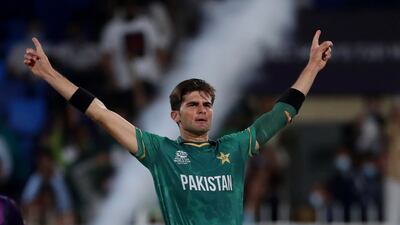
Pakistan fast bowler Shaheen Afridi was named the ICC men's cricketer of 2021. He became the youngest recipient of the award at 21. AP -
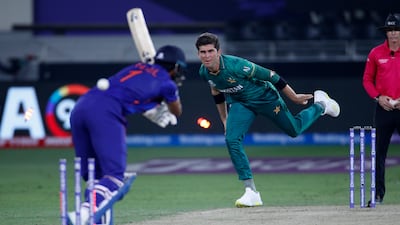
Shaheen Afridi decimated India's top order during 2021 T20 World Cup in Dubai. Reuters -
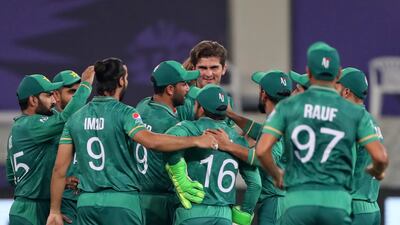
Pakistan players celebrate with Shaheen Afridi after the dismissal of India's KL Rahul during the 2021 T20 World Cup in Dubai. AP -
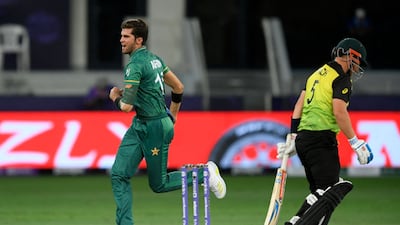
Shaheen Afridi celebrates after taking the wicket of Australia captain Aaron Finch during the T20 World Cup semi-final in Dubai. AFP -
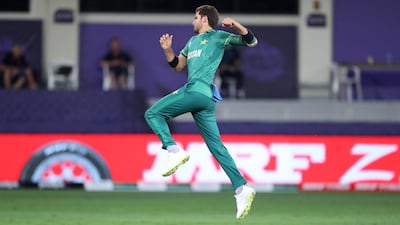
Shaheen Afridi has become a star in a short period. AP -
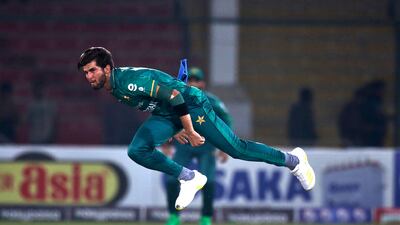
Pakistan's Shaheen Afridi has emerged as the leading bowler in the world across formats and leagues. AP


The incentive of being an all-format player in Pakistan isn’t much either. Two years ago, Afridi was named ICC Cricketer of the Year chiefly for his performances in Tests but his monthly retainer with Pakistan is just $5,000 more than what white-ball specialists Shadab Khan, Fakhar Zaman or Haris Rauf. For Afridi, the value of bowling four overs in a franchise game is five times more than a Test match.
Usman Khawaja, the Australian opener who scored most runs (1,210) in Test matches in 2023, said last week he would have also prioritised T20 matches over Test cricket if he was a player from another country.
Gone are the days when legacies would be built on Test careers alone. Rauf, who has played just one Test and is unlikely to play another, is more popular in Australia than Afridi due to his performances for Melbourne Stars in the Big Bash League. He turned down Pakistan's Test call-up to play in the BBL this season.
Almost every budding cricketer in Pakistan is modeling his game to be a successful T20 player and aiming for lucrative contracts in franchise cricket. Unless Pakistan raise the monetary benefits of playing Test cricket the trend will not to be changed.

