

Pakistan team director Micky Arthur said the team will bounce back at the Cricket World Cup, despite admitting his concern with their "timid" batting performance in the seven-wicket thrashing by rivals India.
Hosts India, passionately cheered on by more than 100,000 fans at Narendra Modi Stadium, maintained their unbeaten record against Pakistan with a comprehensive victory on Saturday, outperforming their rivals in all departments.
Pakistan, cruising at 155-2 in the 29th over, suffered a spectacular meltdown to be all out for 191 with more than seven overs left in their innings.
India then returned to lay bare Pakistan's bowling frailties and romped home with nearly 20 overs to spare in the lop-sided blockbuster.
Arthur accepted Pakistan's batters lacked aggression in their first loss in three matches, following wins over the Netherlands and Sri Lanka.
"I just think we were a little bit timid tonight with our overall performance," Arthur said. "To go from 155 for two, as it was, to 190-odd all out is just not on.
"Credit to India, I thought they bowled really well, but I just thought our performance was just a little bit timid."
Skipper Babar Azam (50) and in-form Mohammad Rizwan (49) forged the only half-century partnership in the Pakistan innings.
Arthur described the pair as "classy performers" but felt they too should have asserted themselves more, especially against the Indian spinners.
"I did think we could probably have taken on the Indian spinners just a little bit more. But again, they were building and building nicely," he said.
"I think we've got to realise that there are two ways to always skin a cat. And we've had success by taking it deep and then cashing in at the back end."
Pakistan's bowling also lacked firepower against India.
-

India's captain Rohit Sharma celebrates after reaching his half century on his way to top scoring with 86 in his side's seven-wicket victory over Pakistan in their World Cup clash at Narendra Modi Stadium on Saturday, October 14, 2023. Reuters -

India's captain Rohit Sharma walks back to the pavilion after his dismissal for 86. AFP -
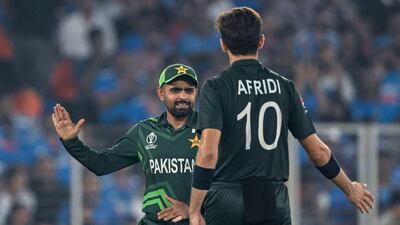
Pakistan's captain Babar Azam celebrates with Shaheen Afridi after the dismissal of India's captain Rohit Sharma. AFP -
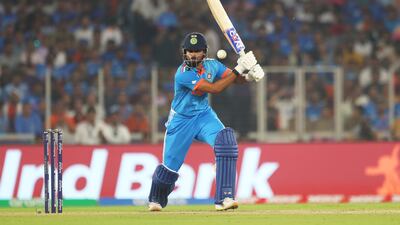
Shreyas Iyer of India bats. Getty -
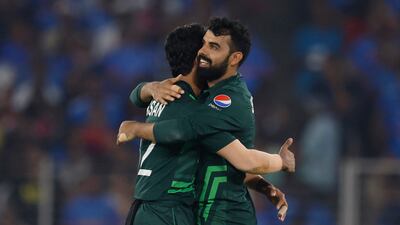
Pakistan's Hasan Ali celebrates with Shadab Khan after taking the wicket of India's Virat Kohli, caught by Mohammad Nawaz. Reuters -
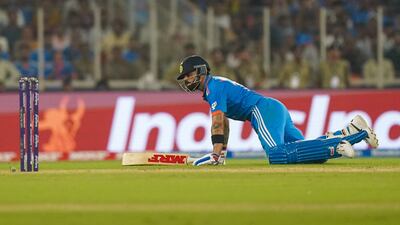
India's Virat Kohli dives to make his ground. EPA -
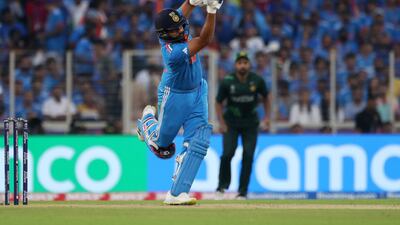
Rohit Sharma of India. Getty -

India's Rohit Sharma hits out. Reuters -
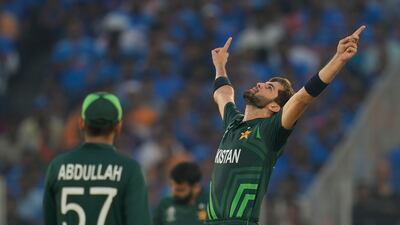
Pakistan's Shaheen Afridi celebrates the wicket of India's Shubman Gill. AP -

Pakistan's Shaheen Afridi celebrates with teammates after taking the wicket of India's Shubman Gill, left. AFP -

India's Shubman Gill drives. AP -
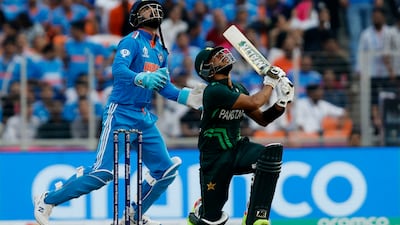
Pakistan's Hasan Ali skies a ball from India's Ravindra Jadeja before being caught out by Shubman Gill. Reuters -
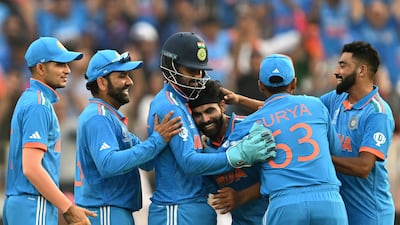
India's Ravindra Jadeja celebrates with teammates after taking the wicket of Pakistan's Haris Rauf. AFP -

India's Kuldeep Yadav celebrates after taking the wicket of Pakistan's Iftikhar Ahmed. AFP -
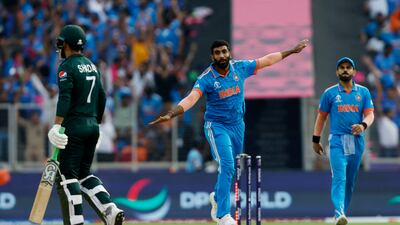
India's Jasprit Bumrah celebrates after taking the wicket of Pakistan's Shadab Khan. Reuters -
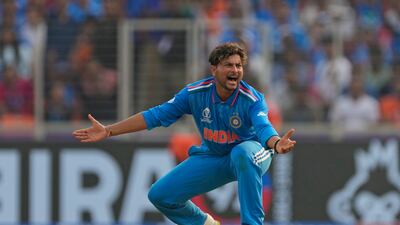
India's Kuldeep Yadav successfully appeals successfully for the lbw against Pakistan's Saud Shakeel. AP -
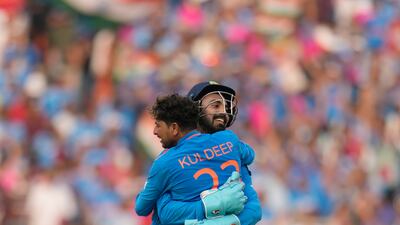
India's Kuldeep Yadav celebrates after taking the wicket of Pakistan's Iftikhar Ahmed with KL Rahul. AP -

Pakistan's Iftikhar Ahmed is clean bowled by India's Kuldeep Yadav. AFP -
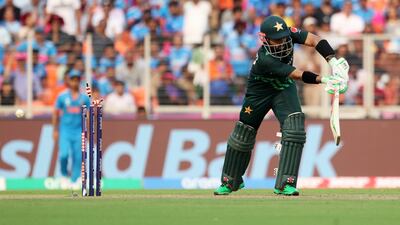
Mohammad Rizwan of Pakistan is bowled out Jasprit Bumrah of India. Getty -

India's Jasprit Bumrah celebrates with Virat Kohli after taking the wicket of Pakistan's Mohammad Rizwan. Reuters -
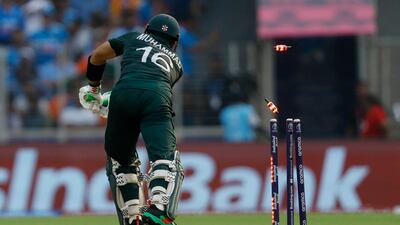
Pakistan's Mohammad Rizwan is bowled out by India's Jasprit Bumrah. Reuters -

India's Jasprit Bumrah celebrates after taking the wicket of Pakistan's Mohammad Rizwan. Reuters -

India's Mohammed Siraj celebrates after taking the wicket of Pakistan's Babar Azam. Reuters -
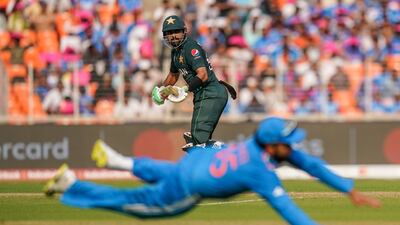
Pakistan's captain Babar Azam beats the field. EPA -
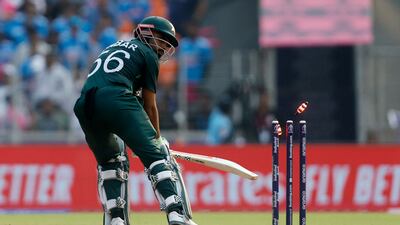
Pakistan's Babar Azam gets bowled out by India's Mohammed Siraj. Reuters -

India's Mohammed Siraj celebrates after taking the wicket of Pakistan's Abdullah Shafique, left. AFP -
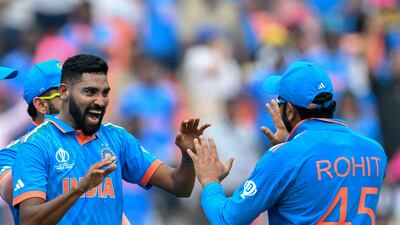
India's Mohammed Siraj celebrates with his captain Rohit Sharma after taking the wicket of Pakistan's Abdullah Shafique. AFP -

Pakistan's Imam-ul-Haq and Abdullah Shafique run between the wickets. AP -
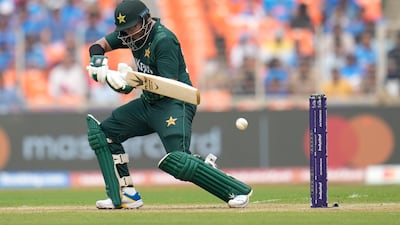
Pakistan's Imam-ul-Haq plays a shot. AP -

India's Shubman Gill celebrates after the dismissal of Pakistan's Imam-ul-Haq, right. AFP -
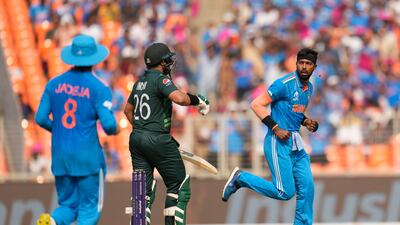
India's Hardik Pandya celebrates the wicket of Pakistan's Imam-ul-Haq. AP


Pace spearhead Shaheen Afridi has not been at his best since returning from a knee injury, while spinner Shadab Khan's lack of success in the middle overs has been a talking point of late.
Arthur said they were trying to address those issues.
"Look, it'd be remiss of me to discuss it out here, but we've been doing some work with them," the former Australia coach said.
"The key for us now is getting our players to remain calm. It's getting our players to focus on the next game, and it's to build them up and make sure that they go into that next game thinking they can run through a brick wall."

Pakistan fans inside the Narendra Modi Stadium were conspicuous by their absence, a result of Pakistanis not being granted visas for the tournament. It ensured the home support for India was even more pronounced than it might have been, giving the match a feel of a home series rather than a World Cup.
Arthur conceded that the atmosphere did play a part in Pakistan's defeat but was keen not to use it as an excuse.
"Look, I'd be lying if I said it did [not affect us]," Arthur said. "It didn't seem like an ICC event to be brutally honest. It seemed like a bilateral series; it seemed like a BCCI event.
"But I'm not going to use that as an excuse because for us it was about living the moment, it was about the next ball, and it was about how we were going to combat the Indian players."
India return to action on Thursday aiming for a fourth straight World Cup win when they play Bangladesh in Pune, before Pakistan take on Australia in Bengaluru on Friday.

