

Batters KL Rahul and Shreyas Iyer recovered from their long-term injuries in time to be selected to the Indian team for the upcoming Asia Cup 50-over tournament.
The selectors picked a 17-member squad which also included returning pacers Jasprit Bumrah and Prasidh Krishna, and young batsman Tilak Varma.
While Bumrah and Krishna proved their fitness following back surgeries during the ongoing T20 series in Ireland, there is uncertainty over the match readiness of Rahul (thigh injury) and Iyer (back), especially in the 50-over format.
The management seems to have taken a chance on the batsmen's fitness, given they have not played any competitive cricket for months.
Fast bowlers Mohammad Shami and Mohammad Siraj have been picked, while leg spinner Yuzvendra Chahal failed to make the cut. Wrist spinner Kuldeep Yadav is the lone specialist, with all-rounders Ravindra Jadeja and Axar Patel named as the other slow bowlers.
The Asia Cup squad is more or less the team that will be selected for the ODI World Cup at home. Given the paucity of matches leading up to the showpiece event, the selection committee headed by Ajit Agarkar has been forced to pick players who are not yet certain to last the distance in a 50-over tournament.
Bumrah and Krishna have only just returned to bowling in T20s. While Agarkar announced Iyer has been declared fully fit, Rahul is still carrying a niggle. Sanju Samson has been named as a travelling reserve, underlining the uncertainty surrounding the Indian team.
"We've picked these 18 guys, it [World Cup squad] will be in and around these guys," Agarkar was quoted as saying by ESPNcricinfo. "Few important guys coming back form injury, hopefully all goes well with them. They have a few games now at the Asia Cup. There's a short camp followed by a couple of games before we announce the World Cup squad, but it's quite obvious it'll be around these guys."
The Asia Cup will be held in Sri Lanka and Pakistan from August 30 to September 17, with India's matches to be held in the island nation.
Asia Cup squad: Rohit Sharma (captain), Hardik Pandya (vice-captain), Shubman Gill, Virat Kohli, Shreyas Iyer, Suryakumar Yadav, Tilak Varma, KL Rahul, Ishan Kishan (wk), Ravindra Jadeja, Shardul Thakur, Axar Patel, Kuldeep Yadav, Jasprit Bumrah, Mohammad Shami, Mohammad Siraj, Prasidh Krishna
-
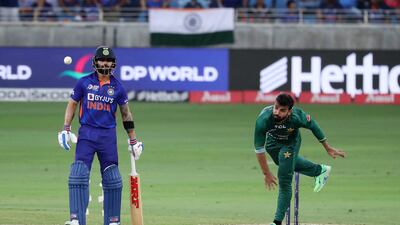
Pakistan's Shadab Khan bowls against India in the Asia Cup 2022 clash at Dubai International Cricket Stadium. Pawan Singh / The National -
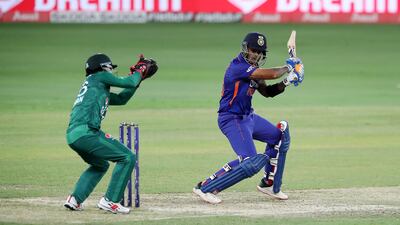
India's Virat Kohli playing a shot in Dubai. Pawan Singh / The National -
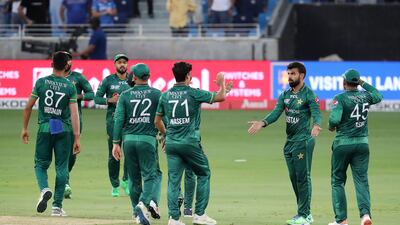
Shadab Khan, second from right, celebrates after taking the wicket of KL Rahul. Pawan Singh / The National -

Shadab Khan celebrating after taking the wicket of KL Rahul. Pawan Singh / The National -
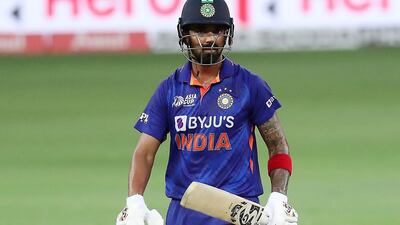
KL Rahul walks back to the pavilion after being bowled by Shadab Khani. Pawan Singh / The National -
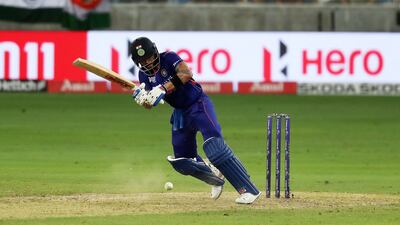
Virat Kohli playing a shot during his innings of 60. Pawan Singh / The National -
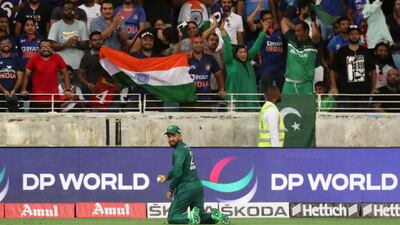
Mohammad Nawaz catches Suryakumar Yadav. Pawan Singh / The National -

Virat Kohli is run out by Asif Ali. Pawan Singh / The National -
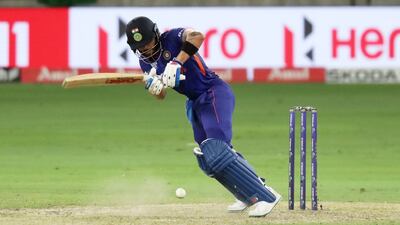
Virat Kohli top scored for India. Pawan Singh / The National -

Pakistan's Mohammad Rizwan plays a shot. Pawan Singh / The National -
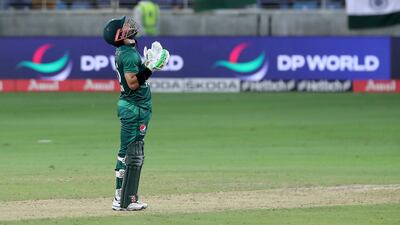
Mohammad Rizwan celebrates after scoring his half-century against India. Pawan Singh / The National -
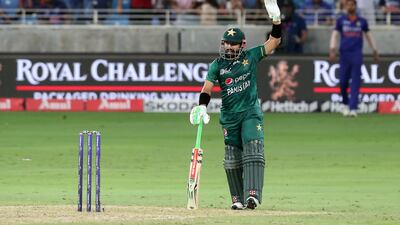
Mohammad Rizwan celebrates his half-century. Pawan Singh / The National -
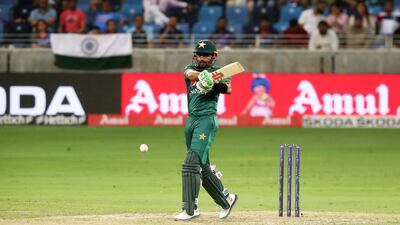
Pakistan's Babar Azam hits out. Pawan Singh / The National -
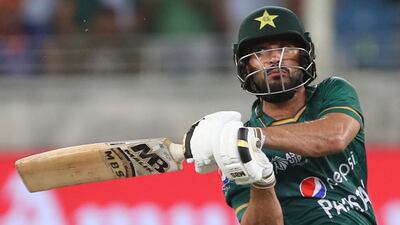
Pakistan's Mohammad Nawaz on his way to a quickfire 42 as Pakistan beat India during the Asia Cup Twenty20 Super Four match at the Dubai International Cricket Stadium on September 4, 2022. AFP -

The view from the stands during India vs Pakistan at the Asia Cup 2022. Pawan Singh / The National -

India fans during the match. Pawan Singh / The National -
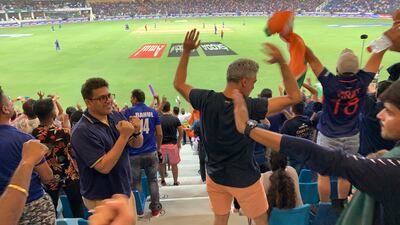
India fans during the game. Pawan Singh / The National -

The view from the crowd during the game. Pawan Singh / The National -
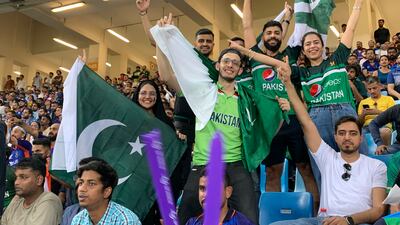
Pakistan at the Asia Cup 2022 match against India. Pawan Singh / The National -

The view from the stands during India vs Pakistan at the Asia Cup 2022. Pawan Singh / The National -
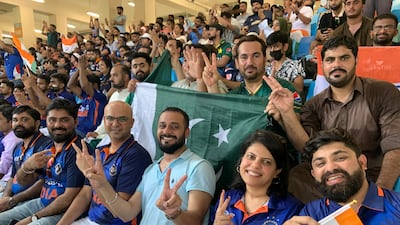
India fans at the Asia Cup 2022. Pawan Singh / The National -
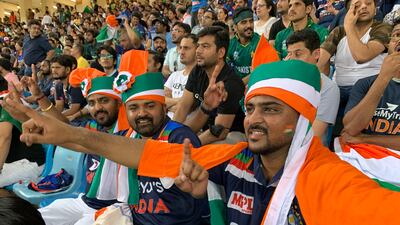
The crowds at the Asia Cup in Dubai. Pawan Singh / The National -
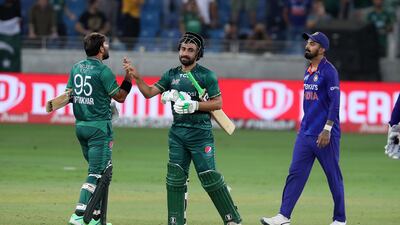
Pakistan celebrate their victory. Pawan Singh / The National -
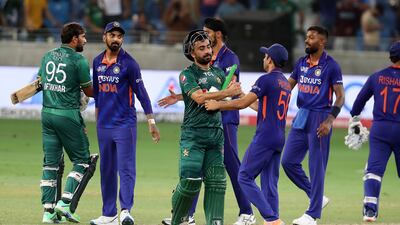
Players shake hands at the end of the game. Pawan Singh / The National



