Virat Kohli is the highest earning player at Royal Challengers Bangalore. Sportzpics for IPL

Top 10 highest paid cricketers at Royal Challengers Bangalore for IPL 2023


  • English
  • Arabic

The Indian Premier League can transform careers, offering world-class players huge salaries for what amounts to two months' work.

This year saw England all-rounder Sam Curran become the most expensive player in the history of the tournament, bagged for a whopping 185 million Indian rupees ($2.23 million) by Punjab Kings.

Young England batting sensation Harry Brook also attracted a lot of interest, finally going to Sunrisers Hyderabad for 132.5m rupees ($1.6m).

Whether the tournament is the best T20 league in the world is always up for debate. However, there is no doubt it is the biggest and richest in the world, and among the most valuable in all sport.

Here, we break down the top player salaries for Royal Challengers Bangalore ahead of the 2023 season. This year, the IPL starts on March 31 with the final on May 28.

Top 10 highest earning players at Royal Challengers Bangalore

1. Virat Kohli - 150 million rupees ($1.8 million)

2. Glenn Maxwell - 110m rupees ($1.33m)

3. Harshal Patel - 107.5m rupees ($1.3m)

4. Wanindu Hasaranga - 107.5m rupees ($1.3m)

5. Josh Hazlewood - 77.5m rupees ($936,000)

6. Faf du Plessis - 70m rupees ($845,000)

7. Mohammad Siraj - 70m rupees ($845,000)

8. Dinesh Kartik - 55m rupees ($660,000)

9. Anuj Rawat - 34m rupees ($410,000)

10. Shabaz Ahmed - 24m rupees ($290,000)

Note: Will Jacks has been ruled out of IPL 2023 due to injury

  • England all-rounder Sam Curran will be the top earning player in IPL 2023 with a salary of 185 million rupees ($2.26m) playing for Punjab Kings. PA
    England all-rounder Sam Curran will be the top earning player in IPL 2023 with a salary of 185 million rupees ($2.26m) playing for Punjab Kings. PA
  • Australia's Cameron Green will earn 175m rupees ($2.14m) playing for Mumbai Indians in IPL 2023. AFP
    Australia's Cameron Green will earn 175m rupees ($2.14m) playing for Mumbai Indians in IPL 2023. AFP
  • KL Rahul (Lucknow Super Giants): 170m rupees ($2m). Sportzpics for IPL
    KL Rahul (Lucknow Super Giants): 170m rupees ($2m). Sportzpics for IPL
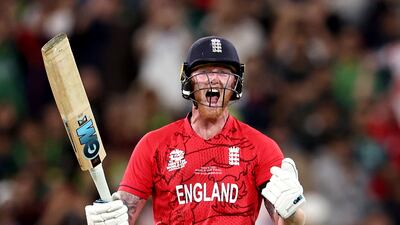
  • Ben Stokes (Chennai Super Kings): 162.5m rupees ($1.98m). AFP
    Ben Stokes (Chennai Super Kings): 162.5m rupees ($1.98m). AFP
  • Nicholas Pooran (Lucknow Super Giants): 160m rupees ($1.95m). AP
    Nicholas Pooran (Lucknow Super Giants): 160m rupees ($1.95m). AP
  • Ravindra Jadeja (Chennai Super Kings): 160m rupees ($1.95m). Sportzpics for IPL
    Ravindra Jadeja (Chennai Super Kings): 160m rupees ($1.95m). Sportzpics for IPL
  • Rishabh Pant (unavailable, Delhi Capitals): 160m rupees ($1.95m). Sportzpics for IPL
    Rishabh Pant (unavailable, Delhi Capitals): 160m rupees ($1.95m). Sportzpics for IPL
  • Andre Russell (Kolkata Knight Riders): 160m rupees ($1.95m). Sportzpics for IPL
    Andre Russell (Kolkata Knight Riders): 160m rupees ($1.95m). Sportzpics for IPL
  • Rohit Sharma (Mumbai Indians): 160m rupees ($1.95m). Sportzpics for IPL
    Rohit Sharma (Mumbai Indians): 160m rupees ($1.95m). Sportzpics for IPL
  • Ishan Kishan (Mumbai Indians): 152.5m rupees ($1.86m). Sportzpics for BCCI
    Ishan Kishan (Mumbai Indians): 152.5m rupees ($1.86m). Sportzpics for BCCI
GIANT REVIEW

Starring: Amir El-Masry, Pierce Brosnan

Director: Athale

Rating: 4/5

Iran's dirty tricks to dodge sanctions

There’s increased scrutiny on the tricks being used to keep commodities flowing to and from blacklisted countries. Here’s a description of how some work.

1 Going Dark

A common method to transport Iranian oil with stealth is to turn off the Automatic Identification System, an electronic device that pinpoints a ship’s location. Known as going dark, a vessel flicks the switch before berthing and typically reappears days later, masking the location of its load or discharge port.

2. Ship-to-Ship Transfers

A first vessel will take its clandestine cargo away from the country in question before transferring it to a waiting ship, all of this happening out of sight. The vessels will then sail in different directions. For about a third of Iranian exports, more than one tanker typically handles a load before it’s delivered to its final destination, analysts say.

3. Fake Destinations

Signaling the wrong destination to load or unload is another technique. Ships that intend to take cargo from Iran may indicate their loading ports in sanction-free places like Iraq. Ships can keep changing their destinations and end up not berthing at any of them.

4. Rebranded Barrels

Iranian barrels can also be rebranded as oil from a nation free from sanctions such as Iraq. The countries share fields along their border and the crude has similar characteristics. Oil from these deposits can be trucked out to another port and documents forged to hide Iran as the origin.

* Bloomberg

Inside%20Out%202
%3Cp%3E%3Cstrong%3EDirector%3A%C2%A0%3C%2Fstrong%3EKelsey%20Mann%3C%2Fp%3E%0A%3Cp%3E%3Cstrong%3EStarring%3A%3C%2Fstrong%3E%C2%A0Amy%20Poehler%2C%20Maya%20Hawke%2C%20Ayo%20Edebiri%3C%2Fp%3E%0A%3Cp%3E%3Cstrong%3ERating%3A%20%3C%2Fstrong%3E4.5%2F5%3C%2Fp%3E%0A
Profile

Name: Carzaty

Founders: Marwan Chaar and Hassan Jaffar

Launched: 2017

Employees: 22

Based: Dubai and Muscat

Sector: Automobile retail

Funding to date: $5.5 million

UAE central contracts

Full time contracts

Rohan Mustafa, Ahmed Raza, Mohammed Usman, Chirag Suri, Mohammed Boota, Sultan Ahmed, Zahoor Khan, Junaid Siddique, Waheed Ahmed, Zawar Farid

Part time contracts

Aryan Lakra, Ansh Tandon, Karthik Meiyappan, Rahul Bhatia, Alishan Sharafu, CP Rizwaan, Basil Hameed, Matiullah, Fahad Nawaz, Sanchit Sharma

Mercer, the investment consulting arm of US services company Marsh & McLennan, expects its wealth division to at least double its assets under management (AUM) in the Middle East as wealth in the region continues to grow despite economic headwinds, a company official said.

Mercer Wealth, which globally has $160 billion in AUM, plans to boost its AUM in the region to $2-$3bn in the next 2-3 years from the present $1bn, said Yasir AbuShaban, a Dubai-based principal with Mercer Wealth.

Within the next two to three years, we are looking at reaching $2 to $3 billion as a conservative estimate and we do see an opportunity to do so,” said Mr AbuShaban.

Mercer does not directly make investments, but allocates clients’ money they have discretion to, to professional asset managers. They also provide advice to clients.

“We have buying power. We can negotiate on their (client’s) behalf with asset managers to provide them lower fees than they otherwise would have to get on their own,” he added.

Mercer Wealth’s clients include sovereign wealth funds, family offices, and insurance companies among others.

From its office in Dubai, Mercer also looks after Africa, India and Turkey, where they also see opportunity for growth.

Wealth creation in Middle East and Africa (MEA) grew 8.5 per cent to $8.1 trillion last year from $7.5tn in 2015, higher than last year’s global average of 6 per cent and the second-highest growth in a region after Asia-Pacific which grew 9.9 per cent, according to consultancy Boston Consulting Group (BCG). In the region, where wealth grew just 1.9 per cent in 2015 compared with 2014, a pickup in oil prices has helped in wealth generation.

BCG is forecasting MEA wealth will rise to $12tn by 2021, growing at an annual average of 8 per cent.

Drivers of wealth generation in the region will be split evenly between new wealth creation and growth of performance of existing assets, according to BCG.

Another general trend in the region is clients’ looking for a comprehensive approach to investing, according to Mr AbuShaban.

“Institutional investors or some of the families are seeing a slowdown in the available capital they have to invest and in that sense they are looking at optimizing the way they manage their portfolios and making sure they are not investing haphazardly and different parts of their investment are working together,” said Mr AbuShaban.

Some clients also have a higher appetite for risk, given the low interest-rate environment that does not provide enough yield for some institutional investors. These clients are keen to invest in illiquid assets, such as private equity and infrastructure.

“What we have seen is a desire for higher returns in what has been a low-return environment specifically in various fixed income or bonds,” he said.

“In this environment, we have seen a de facto increase in the risk that clients are taking in things like illiquid investments, private equity investments, infrastructure and private debt, those kind of investments were higher illiquidity results in incrementally higher returns.”

The Abu Dhabi Investment Authority, one of the largest sovereign wealth funds, said in its 2016 report that has gradually increased its exposure in direct private equity and private credit transactions, mainly in Asian markets and especially in China and India. The authority’s private equity department focused on structured equities owing to “their defensive characteristics.”

Updated: March 20, 2023, 12:56 PM