


Live fast, die young. But Shane Warne only bowled slow.
A couple of steps up to the wicket. Then, eesh. Wang. Kapow. What has just happened?
Ask Mike Gatting. Even he doesn’t know. And he was there. Or thereabouts, anyway.
Then, what happens next? Surely never in cricket history was there more theatre about what happened next than when Warne was approaching the crease to bowl.
Warne was cricket personified. In all other sports, the opposition’s main star, the chief tormentor, is a source of antagonism. But Warne was a source of magnetism. Someone who would destroy your team, and you would be grateful for the chance to have witnessed it.
He was so, so good. Better than anything we had seen before. And, unless we are very, very lucky, better than anything we will see again.
I remember once Michael Atherton, in an intimate talk to a room full of cricket badgers on tour in the Caribbean, saying he could not explain how much better Warne was than any other opponent he encountered.
-
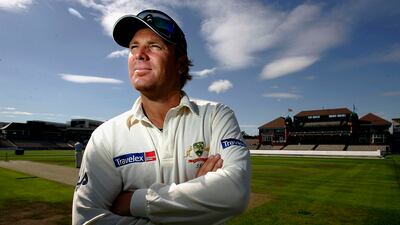
Australian cricketer Shane Warne has died. He was 52. Getty Images -

Shane Warne working as a TV pundit during a test match between Australia and Pakistan at The Gabba in Brisbane, Australia, in 2019. Getty Images -
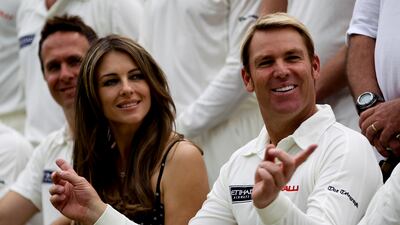
Shane Warne and Elizabeth Hurley before Shane Warne's Australia took on Michael Vaughan's England in a T20 match at Cirencester Cricket Club in 2013. Getty Images -
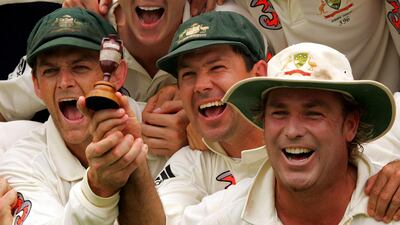
Australia's Adam Gilchrist, Ricky Ponting and Shane Warne celebrate with the Ashes trophy in 2007. Action Images -
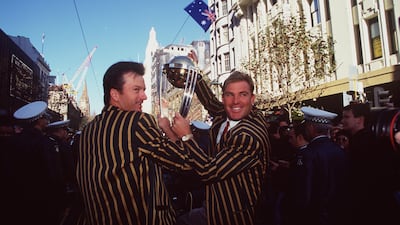
Australian captain Steve Waugh and vice captain Shane Warne during a ticker-tape parade through Melbourne, in celebration of the Australian cricket team's victory over Pakistan in the 1999 Cricket World Cup Final. Getty Images -
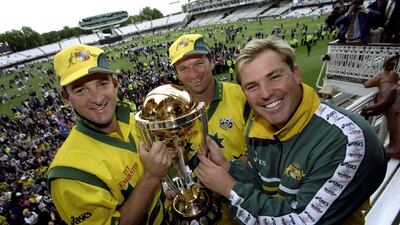
Mark Waugh, Steve Waugh and Shane Warne of Australia after victory over Pakistan in the Cricket World Cup Final at Lord's in London in 1999. Getty Images -
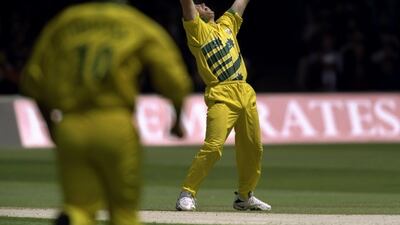
Shane Warne celebrates a Pakistan wicket in the Cricket World Cup Final at Lord's in London in 1999. Getty Images -
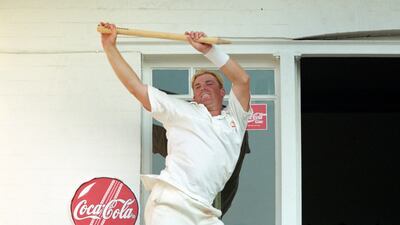
Shane Warne celebrates by dancing with a stump on the dressing room balcony after victory over England in the Fifth Ashes test match at Trent Bridge in 1997. Getty Images -
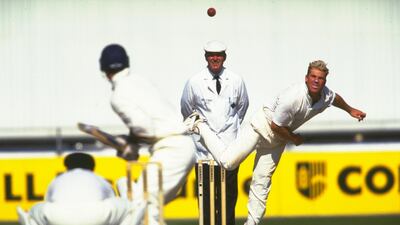
Shane Warne bowls to Graham Thorpe of England during the third test at Old Trafford in Manchester in 1997. Getty Images -
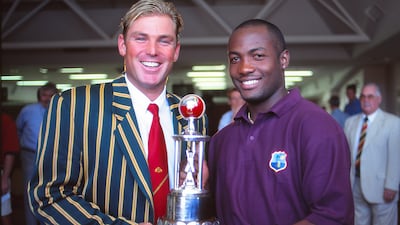
Shane Warne and Brian Lara of the West Indies in Australia in 1995. Getty Images -
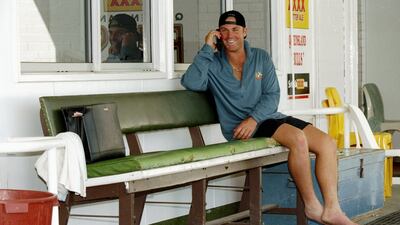
Shane Warne after recording a career best 8 for 71 in the first Ashes test against England at the Brisbane Cricket Ground in Woolloongabba, in 1994. Getty Images -
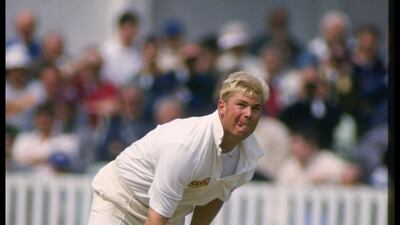
Warne in action against Somerset in 1993. Getty Images -
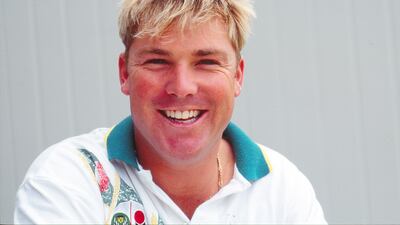
Shane Warne in 1990. Getty Images


He struggled for words to convey what it was like to be in a contest against the man. This was Michael Atherton, a man of more words than the Oxford English Dictionary. Someone who had shared the playing field with him, and the commentary box, too, and still remained awed by him.
The rest of us had to make do with a view from the boundary’s edge, 90 metres or so away. Or via the television screen. Which was privilege enough, too.
All those moments that come so readily to mind, even without searching YouTube.
The Gatting ball that announced him as a cricket phenomenon. He never looked back. He picked Graham Gooch’s pocket. He owned Herschelle Gibbs in the World Cup. He mesmerised Kevin Pietersen in the Ashes. He rumbled Sanath Jayasuriya.
All those moments were played out in hypercolour. It seemed like the rest of his life was, too. All the stuff that made the front pages, all the peccadillos which embossed his celebrity.
He was larger than life, but never larger than the game. He loved cricket, and his art in particular. Once, when he was in Dubai to promote a golf tournament, he said he was captivated by an ongoing series between Pakistan and England. So much so that he wanted to have a net with the two opposing leg-spinners, Yasir Shah and Adil Rashid.
So that’s what he did. In his tracksuit, on his holidays, he went to Sharjah Cricket Stadium and took his chance to shoot the breeze with two purveyors of his art. Not to promote a product. Not even for self promotion. Just because he loved it. And he was long since retired by this point. How grateful Yasir and Rashid must have been to have that personal audience with the great man.
And how grateful we should all be to have seen him. To have had him beat up our team with such beauty that it was a treat to see. Someone who could not be missed, but now will be missed so keenly. What a life.

