England captain Joe Root said his captaincy is not a "dictatorship" as he looked to galvanise the team ahead of the Boxing Day Ashes Test.
Root was critical of the lengths his seamers bowled in the Adelaide Test as Australia went 2-0 up. The captain's comment raised many eyebrows, especially since Test veterans James Anderson and Stuart Broad, who have taken more than 1,000 wickets between them were part of the attack.
Anderson responded in a newspaper column, conceding the lengths could have been fuller but that it would be wrong to blame the bowlers for the loss.
Former England pacer Steve Harmison suggested that could open up divides in the camp, stating he would have "been waiting for him at the top of the stairs" if a skipper made similar comments in his playing days.
But Root was also critical of the batting - including his own failure to post a century in the first two Tests - as well as the close catching.
Asked how his words had gone down with Anderson and Broad, Root explained: "What I said at the end of the game, it's not about pointing fingers. It's not about singling players out or trying to put blame on one department - collectively we weren't good enough.
"I was asked some direct questions after the game about our bowling and I answered them. If you'd asked me about the batting I'd have said something very similar.
"I like to give our senior bowlers responsibility, they've got over 300 Tests and over 1000 wickets between them. They know what they are doing, they are highly skilled bowlers, wonderfully talented players that time and time again have put in big performances for us.
"So it's about working alongside them, it's not a dictatorship. Every now and again, you don't always agree on everything, and that's fine. Ultimately it's about coming to a point where you get the results you want."
"It has to be [better], simple as that," Root added. "The two performances we've put out have not been good enough, there've been basic mistakes. We've addressed it, spoken about it and I expect us to be a lot better."
While everything has gone sideways for the visitors, Australia have answered every challenge with confidence.
They lost captain Tim Paine to a texting scandal before the series and his replacement, Pat Cummins, to Covid-19 protocols on the eve of the second Test.
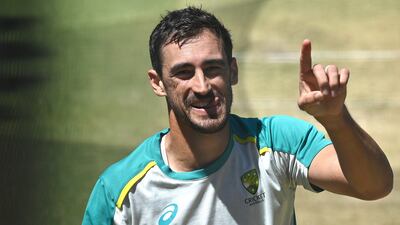
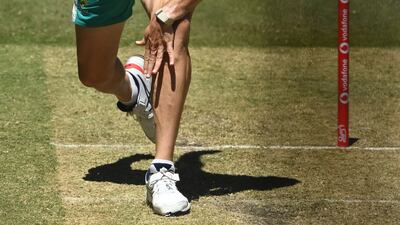
Cummins is set to return for the Melbourne Test after serving a period of isolation, while coach Justin Langer expects Mitchell Starc to be fit despite suffering a rib injury in Adelaide, where the left-armer quick took 6-80.
Fast bowler Josh Hazlewood looks set to sit out a second match with a side strain but Jhye Richardson and Michael Neser proved more than adequate replacements in Adelaide, where the former took 5-42 in the final innings.
On the batting front, Australia are in fine shape with Marnus Labuschagne having just overtaken Root at the top of the world rankings.
After being thrashed by nine wickets in the Brisbane opener, England lost by 275 runs in Adelaide to trail 2-0 in the five-match series, with the third match set to start on Sunday.

WHAT IS A BLACK HOLE?
1. Black holes are objects whose gravity is so strong not even light can escape their pull
2. They can be created when massive stars collapse under their own weight
3. Large black holes can also be formed when smaller ones collide and merge
4. The biggest black holes lurk at the centre of many galaxies, including our own
5. Astronomers believe that when the universe was very young, black holes affected how galaxies formed
Mercer, the investment consulting arm of US services company Marsh & McLennan, expects its wealth division to at least double its assets under management (AUM) in the Middle East as wealth in the region continues to grow despite economic headwinds, a company official said.
Mercer Wealth, which globally has $160 billion in AUM, plans to boost its AUM in the region to $2-$3bn in the next 2-3 years from the present $1bn, said Yasir AbuShaban, a Dubai-based principal with Mercer Wealth.
“Within the next two to three years, we are looking at reaching $2 to $3 billion as a conservative estimate and we do see an opportunity to do so,” said Mr AbuShaban.
Mercer does not directly make investments, but allocates clients’ money they have discretion to, to professional asset managers. They also provide advice to clients.
“We have buying power. We can negotiate on their (client’s) behalf with asset managers to provide them lower fees than they otherwise would have to get on their own,” he added.
Mercer Wealth’s clients include sovereign wealth funds, family offices, and insurance companies among others.
From its office in Dubai, Mercer also looks after Africa, India and Turkey, where they also see opportunity for growth.
Wealth creation in Middle East and Africa (MEA) grew 8.5 per cent to $8.1 trillion last year from $7.5tn in 2015, higher than last year’s global average of 6 per cent and the second-highest growth in a region after Asia-Pacific which grew 9.9 per cent, according to consultancy Boston Consulting Group (BCG). In the region, where wealth grew just 1.9 per cent in 2015 compared with 2014, a pickup in oil prices has helped in wealth generation.
BCG is forecasting MEA wealth will rise to $12tn by 2021, growing at an annual average of 8 per cent.
Drivers of wealth generation in the region will be split evenly between new wealth creation and growth of performance of existing assets, according to BCG.
Another general trend in the region is clients’ looking for a comprehensive approach to investing, according to Mr AbuShaban.
“Institutional investors or some of the families are seeing a slowdown in the available capital they have to invest and in that sense they are looking at optimizing the way they manage their portfolios and making sure they are not investing haphazardly and different parts of their investment are working together,” said Mr AbuShaban.
Some clients also have a higher appetite for risk, given the low interest-rate environment that does not provide enough yield for some institutional investors. These clients are keen to invest in illiquid assets, such as private equity and infrastructure.
“What we have seen is a desire for higher returns in what has been a low-return environment specifically in various fixed income or bonds,” he said.
“In this environment, we have seen a de facto increase in the risk that clients are taking in things like illiquid investments, private equity investments, infrastructure and private debt, those kind of investments were higher illiquidity results in incrementally higher returns.”
The Abu Dhabi Investment Authority, one of the largest sovereign wealth funds, said in its 2016 report that has gradually increased its exposure in direct private equity and private credit transactions, mainly in Asian markets and especially in China and India. The authority’s private equity department focused on structured equities owing to “their defensive characteristics.”
The specs
Engine: 2-litre 4-cylinder and 3.6-litre 6-cylinder
Power: 220 and 280 horsepower
Torque: 350 and 360Nm
Transmission: eight-speed automatic
Price: from Dh136,521 VAT and Dh166,464 VAT
On sale: now
APPLE IPAD MINI (A17 PRO)
Display: 21cm Liquid Retina Display, 2266 x 1488, 326ppi, 500 nits
Chip: Apple A17 Pro, 6-core CPU, 5-core GPU, 16-core Neural Engine
Storage: 128/256/512GB
Main camera: 12MP wide, f/1.8, digital zoom up to 5x, Smart HDR 4
Front camera: 12MP ultra-wide, f/2.4, Smart HDR 4, full-HD @ 25/30/60fps
Biometrics: Touch ID, Face ID
Colours: Blue, purple, space grey, starlight
In the box: iPad mini, USB-C cable, 20W USB-C power adapter
Price: From Dh2,099
ASSASSIN'S%20CREED%20MIRAGE
%3Cp%3E%0DDeveloper%3A%20Ubisoft%20Bordeaux%0D%3Cbr%3EPublisher%3A%20Ubisoft%0D%3Cbr%3EConsoles%3A%20PlayStation%204%26amp%3B5%2C%20PC%20and%20Xbox%20Series%20S%26amp%3BX%0D%3Cbr%3ERating%3A%203.5%2F5%3C%2Fp%3E%0A