
The speed with which vaccines to protect against Covid-19 were created raises hopes that effective vaccines for other deadly viruses, which have long perplexed drug makers, may be within reach.
Clinical trials of Covid-19 vaccines began just months after the virus emerged in late 2019, and ultimately yielded positive results.
But a vaccine for HIV, the virus that causes Aids and kills almost 700,000 people every year, has eluded developers for more than three decades.
The global race to produce coronavirus vaccines, in particular the development of messenger RNA or mRNA technology, gives hope to researchers who struggled for years to produce treatments that could save millions of lives.
Vaccines take several forms, with some made from bacterial or viral particles treated to prevent virulence, while others consist of inactivated or weaker virus particles.
Yet more are made from components of the pathogen or, like the Oxford-AstraZeneca Covid-19 vaccine, consist of viral vectors that deliver genetic material into the cells of recipients.
Two of the earliest approved and most effective vaccines against coronavirus, from Pfizer-BioNTech and Moderna, are based on mRNA technology.
Unlike other kinds of vaccines, which give the body a weakened or inactive virus to cause the production of antibodies, mRNA vaccines make cells produce a protein that starts an immune response.
The new mRNA technology is being readied to fight HIV and other viruses, including those that cause influenza, which also claims hundreds of thousands of lives each year.
“The technology is now proven and shown to be highly effective,” said Prof Eskild Petersen, of the University of Aarhus in Denmark, and chairman of the emerging infections taskforce at the European Society of Clinical Microbiology and Infectious Diseases.
-
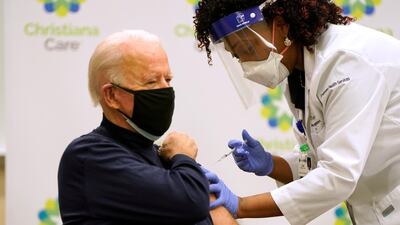
US President Joe Biden - Pfizer/BioNTech - first dose Dec 21 2020. Getty Images -

Israeli Prime Minister Benjamin Netanyahu - Pfizer/BioNTech - first dose December 19 2020. AFP -

Indian Prime Minister Narendra Modi - Biotech’s Covaxin - first dose February 28 2021. Getty Images -

Saudi King Salman bin Abdulaziz Al-Saud - Pfizer/BioNTech - January 8 2021. Getty Images -

Indonesian President Joko Widodo - Sinovac - first dose January 13 2021. Getty Images -
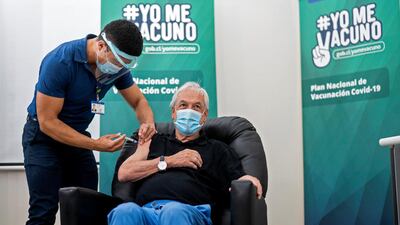
Chilean President Sebastian Pinera - Sinovac - first dose February 13. AFP -

South African President Cyril Ramasphosa - Johnson & Johnson - first dose February 17 (before it was approved by regulator). Getty Images -
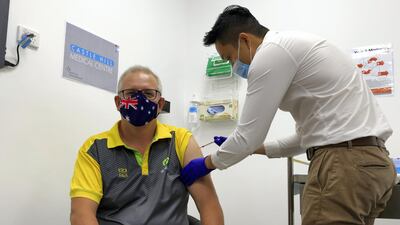
Australian Prime Minister Scott Morrison - Pfizer/BioNTech - first dose February 21. Getty Images -

Japanese Prime Minister Yoshihide Suga - Pfixer/BioNTech - March 16. AFP -

UK Prime Minister Boris Johnson - AstraZeneca - first dose March 19. Getty Images -

EU Commission President Ursula Von der Leyen - Pfizer/BioNTech - first dose April 15. AFP -

German Chancellor Angela Merkel - AstraZeneca - first dose April 16 2021. Getty Images/Twitter


"So of course, you will try this technology will other infections."
Now that the basic technology has matured, new mRNA vaccines can be produced in as little as six weeks, and they are easier to make than some other vaccines, for which production may require growing bacterial or viral particles, where yields may fluctuate.
"The RNA vaccines are essentially chemical vaccines so the quality control aspects are much, much easier to control and it's much easier to make sure you have a routine product at the end," said Ian Jones, a professor of virology at the University of Reading in England.
Moderna, the US pharmaceutical company, has two dozen mRNA vaccines in development, with about half in clinical trials.
HIV, influenza and the Zika virus, among other pathogens, are the focus, and the company is also looking at therapeutic vaccines against cancer.
German company BioNTech has mRNA cancer therapeutics in clinical trials, along with vaccines against tuberculosis, HIV and an influenza vaccine developed with Pfizer.
Scientists did not expect it would take so long to develop a working vaccine against HIV, said Dr Andrew Freedman, an infectious diseases expert at Cardiff University in Wales.
“Undoubtedly one of the major problems is the extent to which HIV mutates, and there are lots and lots of different strains," Dr Freedman said.
"Even within one infected individual, there are lots of different viral species present."
While mRNA is another type of vaccine, Dr Freedman says that it is not able by itself to solve the issue of the virus’s variability.
Such a vaccine against HIV could be a step forward but "it's very premature to say this is going to be the answer".
There are also HIV vaccines under development that do not use mRNA technology.
The Jenner Institute at the University of Oxford, which developed the Oxford-AstraZeneca Covid-19 shot, is starting trials of an HIV vaccine that uses as the vector an adenovirus that normally infects chimpanzees.
This has genetic material coding for HIV proteins added.
In another illustration that cutting-edge vaccine development extends well beyond mRNA, the Jenner Institute is also behind a malaria vaccine consisting of virus-like particles, which was recently found to be 77 per cent effective in clinical trials.
The result was a significant step forward in the fight against a disease that kills about 400,000 people a year, mostly in sub-Saharan Africa.
Although there are efforts to develop mRNA vaccines against malaria, there are limits as to how widely the technology can be used.
Messenger RNA vaccines are not suitable replacements for complex vaccines used against bacterial infections, which can consist of as many as 15 components.
Viruses may consist of just a handful of antigens – molecules that cause an immune response – while bacteria can contain thousands. It is harder to stimulate production inside human cells of many antigens using mRNA.
Bacterial vaccines may also require carbohydrate and lipid components, not just the proteins that mRNA vaccines help to create.
Although the technology cannot overcome all hurdles, David Taylor, professor emeritus of pharmaceutical and public health policy at University College London, said mRNA was likely to become "the favoured vaccine technology of the future".
“There will be a lot of diseases where it looks like it’s going to change the nature of vaccination,” Prof Taylor said.
“You’re delivering just a little fat capsule with just the RNA needed to make the protein you want to make.”
Likewise, Prof Jones regards mRNA vaccine technology as “a step change”, not least because it is now in commercial use.
“I think it has a very good future,” he said. “But not, perhaps, a future that is dramatically different from what has gone before, principally because it cannot address all vaccine issues or all vaccine types.”
There is also the question of how widely available mRNA vaccines will become. They can be costly, which may limit distribution in parts of the world with heavy infectious disease burdens.
“These are all patented technologies," Prof Jones said. "They’re not easily going to roll out to a mass market without the costs in the research being recovered in some way.
“There will be practical difficulties in rolling them out generally and quickly. But I do think as time goes on, their relative position in the vaccine market will inevitably grow.”

