
Rescued from the choppy seas of the English Channel or landing on the windswept beaches of the east of England, over the last three years thousands of people in small inflatable dinghies have made the perilous crossing from France.
As dozens died making the journey, the UK deployed the coastguard, the navy and the lifeboat service to try to rescue those attempting to make the journey.
-
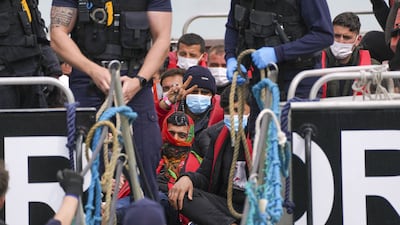
British Home Secretary Priti Patel has challenged opponents of her plan to send migrants to Rwanda to come up with a better idea to tackle small-boat crossings in the Channel. PA -
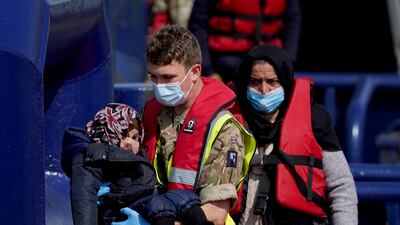
A rescuer carries a child as migrants are brought in to Dover, Kent, after a small-boat incident in the English Channel. PA -
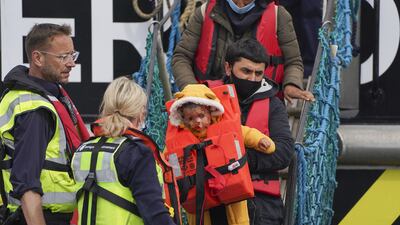
Under the new proposals, asylum seekers who try to enter the UK through the English Channel route from France will be flown to Rwanda in Africa on a one-way ticket. PA -

A migrant found at sea while attempting to cross the English Channel boards a bus to be taken for processing in Dover. AFP -
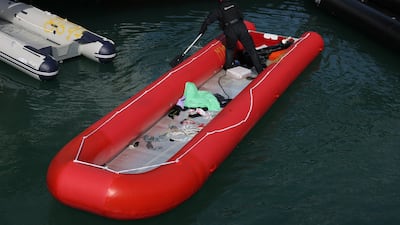
A border force officer parks a dingy used to carry migrants at Dover Port. Getty Images -
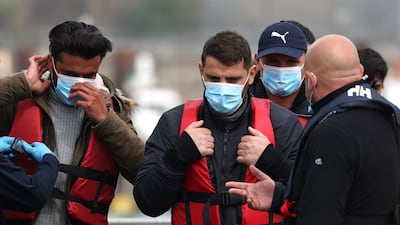
The number of migrants who have reached the UK by crossing the English Channel has topped 6,000 so far this year, official figures showed. Getty Images -

British navy ship 'HMS Tyne' on patrol in the English Channel off the coast of Dover. PA -
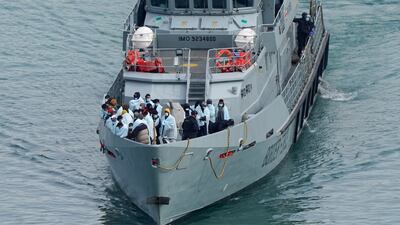
A group of people thought to be migrants are brought in to Dover, Kent, on board a Border Force vessel. PA


In 2021, an estimated 28,526 people crossed the channel in small boats. Data for the first half of 2022 showed over 8,000 had made the journey with tens of thousands more expected in the calmer, warmer summer months.
The arrivals have sparked a heated debate.
Some accuse the government of being soft on immigration, turning a blind eye to smugglers and not policing the country’s borders.
Others accuse the government of a callous disregard for human life and failing to meet obligations to those fleeing for their lives.
And now, the UK has said “enough”.
On this week's Beyond the Headlines, host James Haines-Young delves into the UK Government’s plan to send asylum seekers to Rwanda, we look at the criticism of the proposal from even the most vocal advocates for significant action and ask whether such proposals can even solve the issue.



