


We are in a crisis like no other. The Covid-19 pandemic and the plunge in global oil prices are posing a two-pronged challenge to the Gulf Co-operation Council countries. While reducing the pandemic's health toll is the top priority, member states are also having to address the economic impact of these combined shocks through swift policy action and enhanced regional co-operation. But there can be opportunity in every crisis. If GCC countries act decisively – building on their tech-savvy, well-educated youth and rapidly expanding the digital economy – the region will emerge from this crisis with a stronger foundation for a more diversified economy in the future.
Indeed, the wide-ranging containment measures are helping to slow the spread of the virus. Some countries, such as Saudi Arabia and the UAE, have begun to gradually reopen certain businesses and lift curfews. Nevertheless, these containment measures, though necessary to protect the people, are having a devastating effect on job-rich sectors such as retail, hospitality and tourism, with consequent risks to financial systems and the broader economy.

The Purchasing Managers' Index, or PMI, which measures economic trends in the manufacturing and service sectors, does not look promising. It is down some 12 per cent on average since January, which signals much weaker activity. Meanwhile, the Google Mobility Database indicates that retail and transportation have declined by an average of 40-60 per cent since early March.
In addition, oil prices have plummeted to historic lows in response to the collapse in global demand and uncertainty over the supply outlook. While Opec+, the group of petroleum-exporting nations, reached an agreement to reduce production by around 10 million barrels per day last month, global demand could decline by almost three times that amount compared with a year ago. This demand-supply imbalance is resulting in an unprecedented increase in inventories and downward pressure on prices. They have not been this low since 2001 and, if they remain at these levels, more than $160 billion of the GCC's annual revenue could be wiped out.
Governments are working hard to soften the blow through fiscal measures and central bank liquidity support. These efforts have supported a successful return by some countries to global capital markets, with Qatar, Saudi Arabia and the UAE issuing a combined $24bn last month, and recent gains in most GCC equity indices. Nonetheless, the twin shocks are expected to result in the deepest contraction in recent memory.
The IMF projects GCC growth to shrink by 3.3 per cent this year – equivalent to losing about $260bn in economic output. That projection does not take into account the impact of the latest Opec+ agreement, which could shave an additional two to four percentage points from respective country forecasts, or the additional risks that a deeper and more protracted global economic downturn would bring. Today, we are seeing signs that the economic recovery will take more time than initially expected.
-

A medical worker puts away a Covid-19 swab test at one of the Mussaffah testing facilities. Victor Besa / The National -
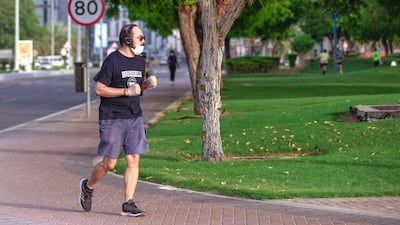
An Abu Dhabi resident goes for a jog along the Corniche in the capital as the government eases movement restrictions. Victor Besa / The National -
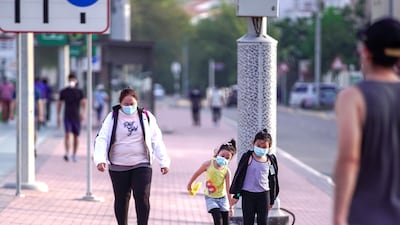
Abu Dhabi residents wear mandatory masks as they walk in the city. Victor Besa / The National -
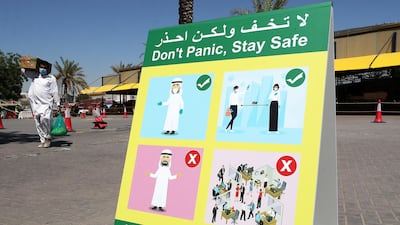
Safety instructions are on display outside Al Awir fruit and vegetable market in Dubai. Pawan Singh / The National -
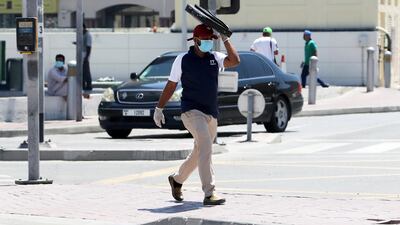
A person wearing protective face mask and covering his face with laptop bag on a hot day in Bur Dubai area in Dubai. Pawan Singh / The National -
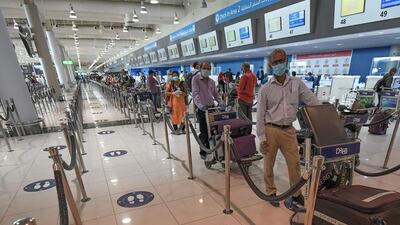
Indian citizens queue to check in at the Dubai International Airport before leaving the UAE on a flight back to their home country on May 7. Inbound flights for UAE residents have also begun operating from select cities. Karim Sahim / AFP -
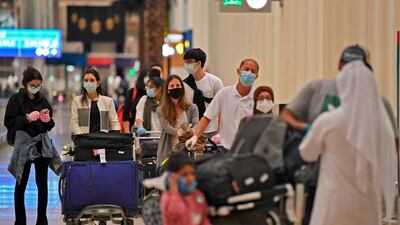
Passengers from an Emirates flight from London queue before being checked by health workers at Dubai International Airport on May 8. Karim Sahib / AFP -

Al Wahda Mall in Abu Dhabi has reopened to the public but with safety measures in place to protect shoppers and staff from contracting Covid-19. Victor Besa / The National -

Yas Mall in Abu Dhabi has reopened to the public from 12pm to 9pm. Measures remain in place to keep shoppers and staff safe. Victor Besa / The National -

Yas Mall in Abu Dhabi will be open from midday to 9pm. Supermarkets and pharmacies will be open from 9am to midnight. Victor Besa / The National -
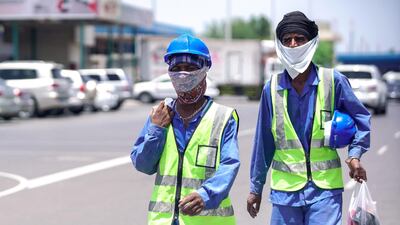
Workers pass by Al Mina vegetables and fruits market in Abu Dhabi. Victor Besa / The National -
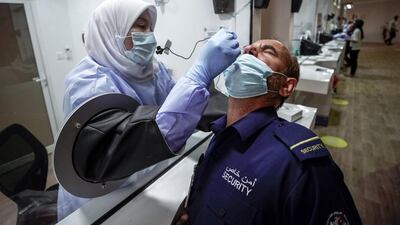
A security guard is given a free Covid-19 test at one of the Mussaffah testing centres. Victor Besa / The National -
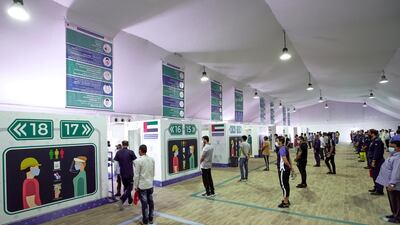
Workers line up to receive a coronavirus test at the Mussaffah industrial area in Abu Dhabi. Victor Besa / The National


The challenges are many. But the crisis presents an opportunity to accelerate the diversification of the region’s oil-based economies. Swift, comprehensive and well-sequenced policies will help GCC economies emerge stronger and more prosperous.
The immediate priority for governments remains to protect lives. This means strengthening healthcare systems, essential services and social safety nets to meet the needs of their resident populations, even in places where there is only limited room for policy changes.
The second priority is to preserve the engines of the economy. Countries have provided timely support to the private sector and households, both through targeted fiscal measures, easing monetary policy, and supporting the liquidity of central banks.
Where possible, governments should continue to pursue a mix of these timely and targeted policies and liquidity support to hard-hit sectors and groups. This can include, for example, providing temporary direct subsidies or deferred tax payments. It can also mean offering firms incentives to boost their spending by, for example, allowing fewer deductions at later stages of an investment (a form of accounting known as accelerated depreciation). This would support production of under-supplied goods and services.
Saudi Arabia’s recent measures to reduce government spending in some areas and to identify additional non-oil revenues will help create this space. They should be balanced in the near term against growth needs with compensation given to support lower-income households.
Countries with more limited fiscal space and large financing needs must begin fiscal adjustment now while reorienting government spending away from lower-priority areas or postponing non-essential spending to meet the pressing needs of today. Such policies should be part of a broader package of gradual medium-term fiscal consolidation with plans to rebuild buffers and ensure fiscal sustainability. Central banks should stand ready to provide further liquidity to banks, maintain or increase credit lines, modify or defer loan payments or provide guarantees.
The third priority is to lay the groundwork for the future. The severity of the shock and the resulting uncertainty call for an agenda of comprehensive economic transformation. In some countries, fiscal adjustments will have to come earlier than planned.

Governments will need to resume fiscal consolidation. But now more than ever, they must deliver on long-needed structural reforms to diversify their economies, spur private sector-led growth and create jobs. GCC countries could do more to increase small and medium-sized enterprises’ access to finance; improve the business environment, governance and transparency; promote domestic capital market development and advance the digital economy.
The last objective in particular holds considerable promise. Past technology investments are now bearing fruit. Advances in e-government have minimised interruptions to critical public services during lockdown, and strong internet and telecoms infrastructure have allowed many to work from home. While the short-term outlook is grim, technology-oriented sectors are still thriving, underscoring how economic structures can adapt quickly in places with high mobile penetration and technology usage. More broadly, digital transformation will facilitate competition by lowering barriers to entry, enabling tech-savvy youth to translate their dreams into future engines of growth.
Continuing to empower the tech-savvy younger generation to work and start businesses in the private sector should be the main pillar of the economic strategy in the post-Covid era. Governments in the region can no longer be the first port of call for someone looking for a job or a company looking to sell its products. They need to become an enabler—not a driver—of private sector growth.
By forcefully addressing the immediate needs and strategically preparing for the recovery, GCC economies will have positive spillovers to the broader Middle East and North Africa region. By building stronger economies, the region could see its $100bn in outward remittance flows expand. By ensuring their own future prosperity, GCC countries will also provide an anchor of stability and growth for the region as a whole.
Jihad Azour is the IMF’s director for the Middle East and Central Asia

