
Forty days have passed since the death of Oman's Sultan Qaboos bin Said, marking the end of one era and the dawn of another. With the official period of mourning having come to a close on Wednesday and national flags across the sultanate flying full mast once again, it is important to remember the legacy of Oman's departed leader – but also to reflect on the opportunities and challenges that lie ahead for the country and its new head of state, Sultan Haitham bin Tariq.
The longest-serving ruler in the Middle East, Sultan Qaboos was a father figure to Oman’s more than 4 million residents for almost half a century, a period during which he transformed what was once a sleepy and closed-off nation into a stable, progressive and relatively well-off one.
Indeed, after he succeeded his father in 1970 at the age of 29, Sultan Qaboos ushered in a period of development in Oman, which reportedly had only 12 hospital beds, 10 kilometres of surfaced roads and three primary schools – all of them for boys. He invested revenue from the oil industry into building critical infrastructure, while uniting the country and championing a tolerant society.
And while Sultan Qaboos will be remembered as the great moderniser of Oman, it is just as important to recognise him as a foreign policy pragmatist who played the role of a mediator between the region's awkward neighbours. A founding member of the Gulf Co-operation Council in 1981 – in the midst of the Iran-Iraq War – he also maintained dialogue with the regime in Tehran.
-
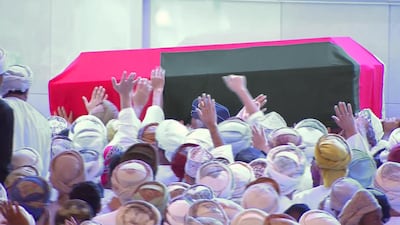
Omanis bid farewell to their leader during the funeral procession for Sultan Qaboos. AFP / Oman TV -
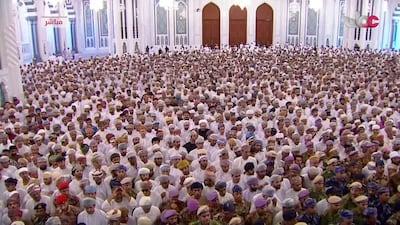
People attend a funeral service for Sultan Qaboos, at the Grand Mosque that bears his name in Muscat. Oman TV via AP -
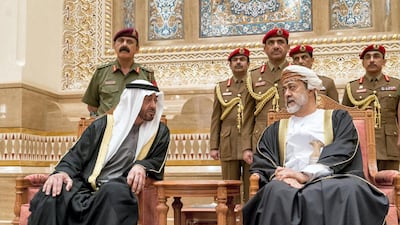
Sheikh Mohamed bin Zayed, Crown Prince of Abu Dhabi and Deputy Supreme Commander of the Armed Forces, left, offers condolences to Sultan Haitham in Muscat. MBZ/Twitter -
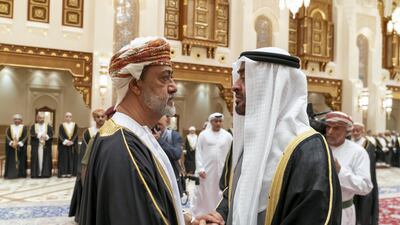
Sheikh Mohamed bin Zayed with Sultan Haitham. Ministry of Presidential Affairs -
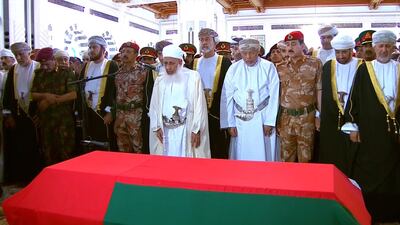
Prayers and funeral rites are held for Sultan Qaboos. AFP / Oman TV -
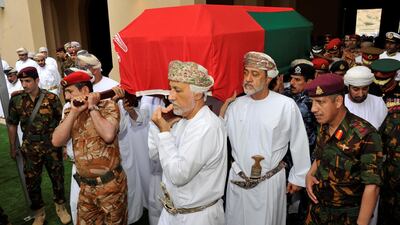
Oman's newly sworn-in Sultan Haitham bin Tariq Al Said carries the coffin of his cousin, Sultan Qaboos, during the funeral in Muscat. Reuters -
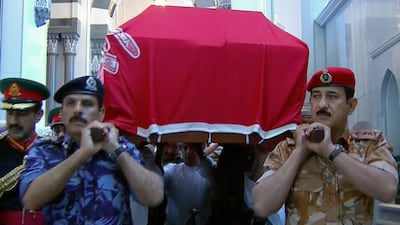
Members of the Omani military carry the coffin of Sultan Qaboos. AFP -
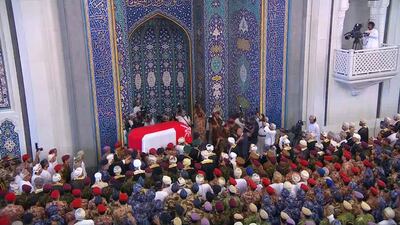
Omanis take part in the funeral of Sultan Qaboos at the Grand Mosque in the capital Muscat. AFP -
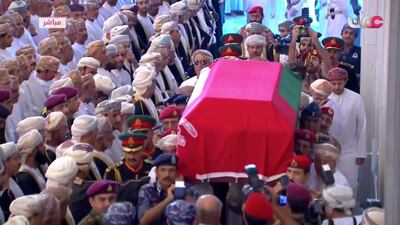
The coffin is carried to the Grand Mosque. Oman TV via AP -
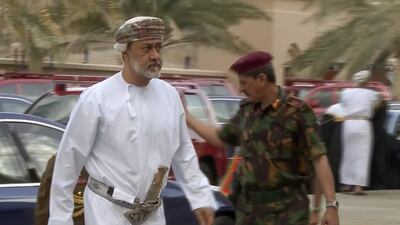
Sultan Haitham arrives at the Grand Mosque for the funeral. AFP / Oman TV -
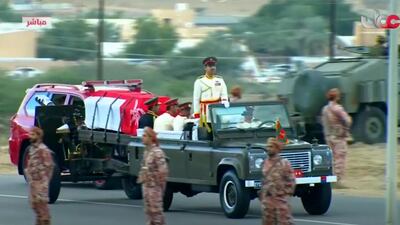
A motorcade carries the body of Sultan Qaboos. Oman TV via AP -

Sultan Qaboos had ruled Oman for almost 50 years, after coming to power in 1970. Oman TV via AP -
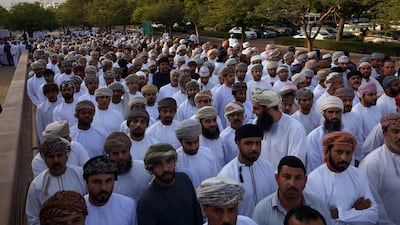
People gather in front of the Sultan Qaboos Mosque to perform funeral prayers. AFP -
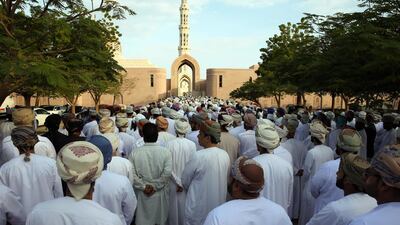
The streets of Muscat were packed as Omanis grieved over the death of Sultan Qaboos. AFP -
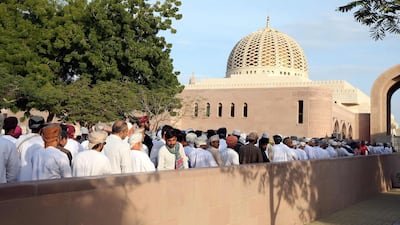
Authorities declared a 40-day mourning period in the country. AFP -
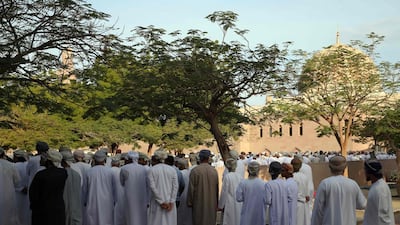
Omanis gather to enter the Sultan Qaboos Mosque to perform funeral prayers. AFP -
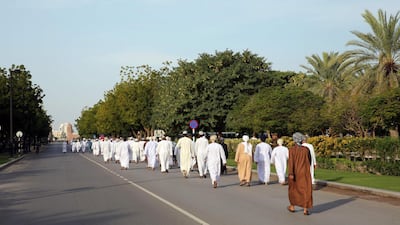
People walk towards the Sultan Qaboos Mosque to perform the funeral prayers. AFP -
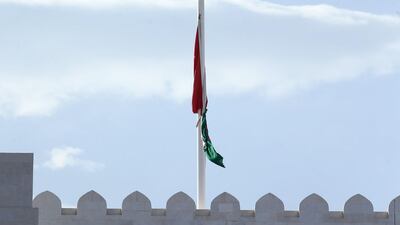
The Omani flag is seen at half-mast in the capital Muscat. AFP


Unsurprisingly, Sultan Qaboos' agenda both at home and abroad were intrinsically linked to each other. In his tribute for The National, the former British prime minister Tony Blair wrote that a great source of the sultan's anxiety was the adverse impact regional instability could have on Oman's path to development. "He would take me outside the room we were in, point across the sea towards Iran and say: 'You see this short distance, that is why we cannot afford conflict'," Mr Blair recalled.
It is this pragmatic approach that last month ensured a smooth transition of power. Despite concerns that no successor had been announced for years, a new ruler was named within hours of his death when a sealed envelope was opened on January 10.
The ascension of Sultan Haitham should no doubt signal a continuity of his predecessor's policies. While facing a daunting task trying to follow in the footsteps of Sultan Qaboos, it is worth pointing out that he is well qualified for the top job. Formerly the culture minister, his 18-year stint in the foreign ministry will prove useful as Oman continues to play the balancing role in the Middle East at a time of great strife in parts of the region.
He has also taken over the reins at a difficult time for the global economy, reflecting on his country’s financial state. Real GDP growth, which turned negative in 2017, remained low last year. The Omani population is also one of the youngest in the world – 46 per cent of its citizens are under 19 – which is always a blessing and a responsibility for policymakers.
However, as chairman of the committee that two years ago unveiled Oman's Vision 2040 – the government's strategy to diversify the economy away from oil while targeting a growth rate of five per cent per year in 20 years' time – Sultan Haitham already has a set of goals to achieve, as well as a blueprint on how to go about achieving them.
He deserves all the support he can get from the region and the wider world as Oman begins a new chapter in its history.

