


It is a poignant and tragic reality of violent conflict that not only are people’s lives put at risk, so too is their cultural inheritance and societal fabric. During wartime, places of worship, museums and ancient ruins – all of which can act as a treasure trove of collective human experience and achievement – are a frequent target for ideological extremists or those simply hungry for loot.
The Middle East has endured too many examples of such wanton vandalism and theft. The destruction and executions carried out by ISIS at Palmyra during the Syrian civil war are a brutal example of fanaticism and greed working hand in hand as the militants smashed ancient artefacts while quietly selling others on the black market. Neighbouring Iraq endured terrible crimes at the hands of ISIS, particularly the 2,500-year-old northern city of Mosul.
It was here, in June 2014, that ISIS stunned the country and the world when its gunmen overran one of the Arab world’s most historically and culturally significant cities, including its 12th-century Al Nuri Mosque. A month later, ISIS’s now-deceased leader, Abu Bakr Al Baghdadi, declared the terror group’s so-called caliphate from inside the mosque. Christians were driven from their homes; those who could not escape were killed. Churches and Christian heritage sites were either demolished or vandalised.

Three years later, Iraqi soldiers cleared ISIS from Mosul but the extremists left a parting shot, destroying Al Nuri Mosque with explosives as they went. Other significant buildings in the city, such as the Our Lady of the Hour Convent and Al Tahera church, were also left in ruins. The challenge since then was to restore not only bricks and mortar but the city’s spirit, too.
That challenge was met yesterday as seven-year project to reconstruct Al Nuri Mosque and its leaning minaret, along with damaged churches was completed. Iraqi Prime Minister Mohammed Shia Al Sudani attended a ceremony alongside a high-level Emirati delegation with the UAE's Minister of State at the Ministry of Foreign Affairs, Noura Al Kaabi and Minister of Culture Sheikh Salem bin Khalid Al Qassimi, as well as Unesco representatives and UN special envoy Mohamed Al Hassan.
The presence of Emirati figures was fitting; the UAE funded Unesco with a $50.4 million initiative driven by its Ministry of Culture, part of a total of $115 million mobilised for the restoration. "Our message is clear, “Ms Al Kaabi said. “Reviving heritage is reviving confidence in the future."
-
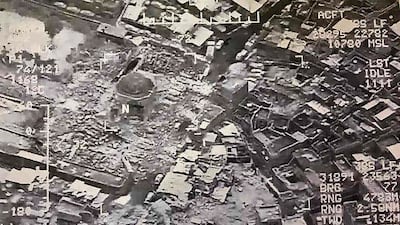
Al Nuri Mosque compound in Mosul. ISIS terrorists blew up the mosque and its iconic leaning minaret after their leader Abu Bakr Al Baghdadi declared a ‘caliphate’. All photos: AFP -
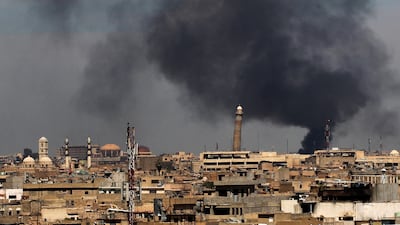
Smoke billows from behind the Great Mosque of Al Nuri in Mosul's Old City during an offensive by Iraqi security forces to recapture the city from ISIS in 2017 -
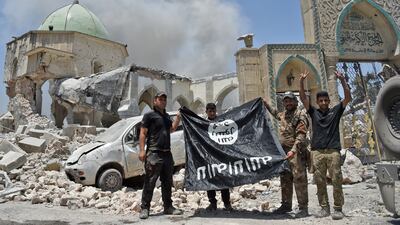
Members of the Iraqi Counter-Terrorism Service (CTS) with an ISIS flag held upside-down, after the terrorists were rooted out of Mosul -
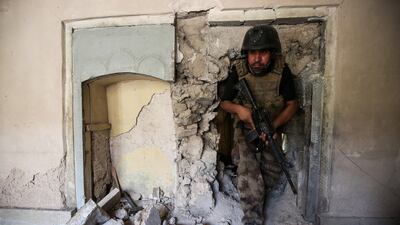
A counter-terrorism troop takes part in the advance towards the Grand Mosque, on the way to ISIS being overthrown in Mosul -
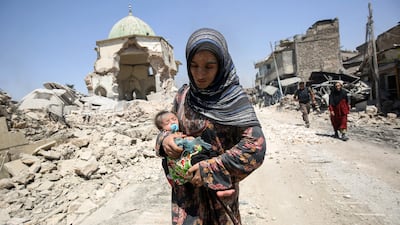
The destroyed Al Nuri Mosque became symbolic of the rise of ISIS in Iraq -
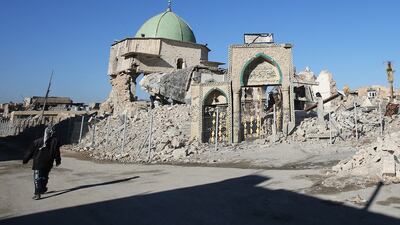
The mosque in January 2018, six months after Iraqi forces seized the country's second city from ISIS -
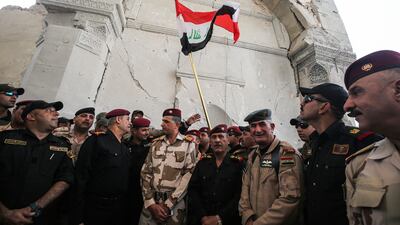
The Iraqi Army gather for a group photo with the national flag raised at the site of Al Nuri Mosque in July 2017, during the offensive to retake the city -
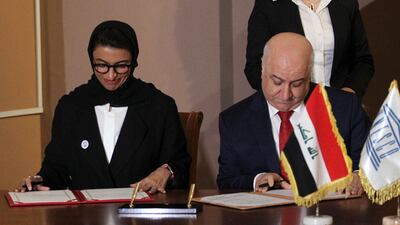
Noura Al Kaabi, UAE Minister of Culture and Knowledge Development at the time, and Iraqi Minister of Culture Firiyad Rawanduzi sign an agreement on the reconstruction of Al Nuri Mosque, at the Iraqi National Museum in Baghdad on April 23, 2018 -
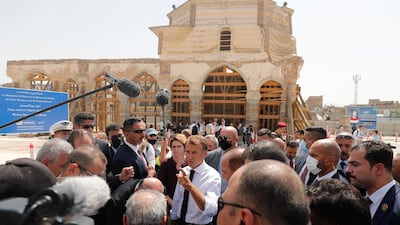
French President Emmanuel Macron tours Al Nuri Mosque in August 2021 -
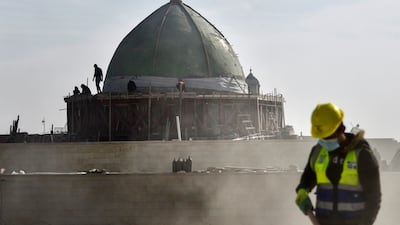
Builders work on the reconstruction of the historic mosque after its destruction at the hands of ISIS -
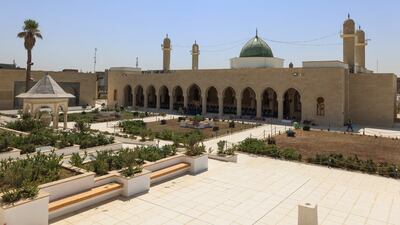
All's well that ends well, as the reconstructed Al Nuri Mosque dominates the Mosul skyline once again, ahead of a celebratory inauguration of restored heritage monuments in the city


Indeed, the project is as much about supporting Iraqis in the here and now as it is about preserving ancient places of worship. Work on the various sites led to more than 100 explosive devices being cleared, provided much-needed local employment and sent a message that Mosul is again open for business. In fraught times, it is also a powerful example how everyone can benefit from practical international co-operation.
Sadly, heritage across the world is still under threat amid unresolved conflicts – Sudan’s national museum was looted earlier this year – but what made yesterday’s event in Mosul so powerful is how is proved that, with the right will and determination, it is possible not only to restore valuable heritage but to heal societies, too.

