
It is a matter of pride for any country when it can add to its list of accomplishments a heritage site recognised by the UN Educational, Scientific and Cultural Organisation. The UAE on Friday added a second to its tally of such laurels, with Unesco listing Sharjah’s Faya palaeolandscape – after a collection of Al Ain's cultural sites was added in 2011.
Both these entries are in illustrious company, with the sizeable number of heritage sites in Egypt, Iraq, Lebanon, Saudi Arabia and Jordan, as indeed elsewhere in the Middle East and around the world. The designation of a heritage site adds to a country’s prestige, and indicates its contribution to human culture and history. The buzz that is generated contributes significantly to the local culture and the environment, and invariably boosts local tourism.
The UAE’s listing is likely to generate interest from all who call it home, citizens and residents, including students and hobbyists, as well as overseas enthusiasts who may be inclined to see for themselves what the Faya range looks like up close, and how this chain of limestone outcrops has over several decades helped historians and archaeologists gain a better understanding of human history in this part of the world.
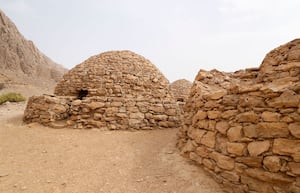
Visitors might want to learn more about, how the site will be preserved and what the responsibility – that comes with the honour of the listing – of its sustainable upkeep will entail.
Such interest can generate a healthy engagement and pride in national heritage.
"For over 210,000 years, this site has borne witness to the story of human innovation, resilience and adaptation in an arid environment,” Sheikha Bodour bint Sultan Al Qasimi, ambassador for the Faya Palaeolandscape World Heritage Nomination, told The National. “As one of the most important archaeological sites around the world, Faya Palaeolandscape is a living testament to humanity’s early presence in this region.”
The Unesco listing – plus the announcement that the Sheikh Zayed National Museum is opening in December – is a further reminder that the UAE, even as it is focused on the future, developing smart technologies and harnessing the power of artificial intelligence, is invested in its past. This is especially significant in a region that has seen immeasurable damage done to places of historical interest through the brutality and destruction of war.
Even amid the extensive destruction of countless sites in the Middle East, however, there are stories of rebirth, in terms of restoration. There are severable notable examples of the UAE’s commitment to preserve its heritage within the borders of the country. But it extends further – for example, in the rehabilitation in northern Iraq of the 12th-century Al Nuri mosque and the two churches, Al Tahera and Al Saa’a, destroyed by ISIS a decade ago.
The UAE donated $50.4 million towards their restoration, along with providing expertise and support and co-ordinating reconstruction.
Such efforts to rehabilitate and give due glory to historic monuments goes a long way in strengthening cultural understanding and imbibing especially in younger generations – some of whom have only seen the very worst of war and humanity – a sense of the past and the imperative of proper respect being accorded to historic sites.
As the UAE takes requisite measures in conserving the Faya palaeolandscape, welcoming visitors and researchers, it becomes an important symbol of remaining connected to the history of the land, and in doing so preserving a significant part of the larger history of the wider world.

EA Sports FC 26
Publisher: EA Sports
Consoles: PC, PlayStation 4/5, Xbox Series X/S
Rating: 3/5
Five expert hiking tips
- Always check the weather forecast before setting off
- Make sure you have plenty of water
- Set off early to avoid sudden weather changes in the afternoon
- Wear appropriate clothing and footwear
- Take your litter home with you
Our family matters legal consultant
Name: Hassan Mohsen Elhais
Position: legal consultant with Al Rowaad Advocates and Legal Consultants.
Ten tax points to be aware of in 2026
1. Domestic VAT refund amendments: request your refund within five years
If a business does not apply for the refund on time, they lose their credit.
2. E-invoicing in the UAE
Businesses should continue preparing for the implementation of e-invoicing in the UAE, with 2026 a preparation and transition period ahead of phased mandatory adoption.
3. More tax audits
Tax authorities are increasingly using data already available across multiple filings to identify audit risks.
4. More beneficial VAT and excise tax penalty regime
Tax disputes are expected to become more frequent and more structured, with clearer administrative objection and appeal processes. The UAE has adopted a new penalty regime for VAT and excise disputes, which now mirrors the penalty regime for corporate tax.
5. Greater emphasis on statutory audit
There is a greater need for the accuracy of financial statements. The International Financial Reporting Standards standards need to be strictly adhered to and, as a result, the quality of the audits will need to increase.
6. Further transfer pricing enforcement
Transfer pricing enforcement, which refers to the practice of establishing prices for internal transactions between related entities, is expected to broaden in scope. The UAE will shortly open the possibility to negotiate advance pricing agreements, or essentially rulings for transfer pricing purposes.
7. Limited time periods for audits
Recent amendments also introduce a default five-year limitation period for tax audits and assessments, subject to specific statutory exceptions. While the standard audit and assessment period is five years, this may be extended to up to 15 years in cases involving fraud or tax evasion.
8. Pillar 2 implementation
Many multinational groups will begin to feel the practical effect of the Domestic Minimum Top-Up Tax (DMTT), the UAE's implementation of the OECD’s global minimum tax under Pillar 2. While the rules apply for financial years starting on or after January 1, 2025, it is 2026 that marks the transition to an operational phase.
9. Reduced compliance obligations for imported goods and services
Businesses that apply the reverse-charge mechanism for VAT purposes in the UAE may benefit from reduced compliance obligations.
10. Substance and CbC reporting focus
Tax authorities are expected to continue strengthening the enforcement of economic substance and Country-by-Country (CbC) reporting frameworks. In the UAE, these regimes are increasingly being used as risk-assessment tools, providing tax authorities with a comprehensive view of multinational groups’ global footprints and enabling them to assess whether profits are aligned with real economic activity.
Contributed by Thomas Vanhee and Hend Rashwan, Aurifer
The%C2%A0specs%20
%3Cp%3E%0D%3Cstrong%3EEngine%3A%20%3C%2Fstrong%3E6-cylinder%2C%204.8-litre%20%0D%3Cbr%3E%3Cstrong%3ETransmission%3A%20%3C%2Fstrong%3E5-speed%20automatic%20and%20manual%0D%3Cbr%3E%3Cstrong%3EPower%3A%20%3C%2Fstrong%3E280%20brake%20horsepower%20%0D%3Cbr%3E%3Cstrong%3ETorque%3A%20%3C%2Fstrong%3E451Nm%20%0D%3Cbr%3E%3Cstrong%3EPrice%3A%20%3C%2Fstrong%3Efrom%20Dh153%2C00%0D%3Cbr%3E%3Cstrong%3EOn%20sale%3A%20%3C%2Fstrong%3Enow%3C%2Fp%3E%0A
Killing of Qassem Suleimani
The specs
- Engine: 3.9-litre twin-turbo V8
- Power: 640hp
- Torque: 760nm
- On sale: 2026
- Price: Not announced yet
All Black 39-12 British & Irish Lions
