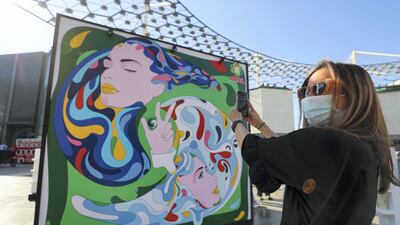
An art installation which comes to life via augmented reality with a mask on to prevent the spread of Covid-19, on October 22, 2020 in Dubai. Chris Whiteoak / The National


Covid-19 is no longer an emergency


The National
  • English
  • Arabic

May 08, 2023

More than three years after Covid-19 was declared "a public health emergency of international concern" by the World Health Organisation – the highest level of alert – the UN agency has stated that the emergency is over, bringing a long period of global upheaval to a symbolic close.

"It is with great hope that I declare Covid-19 over as a global health emergency". The announcement by WHO Director General Dr Tedros Adhanom Ghebreyesus will have brought relief to millions of people around the world, even as countries in the past year have continued to return to relative normality. Official word from the health body, however, is still greatly valued for its knowledge-based authority and for its universal health guidelines in the days when reliable information on the virus was limited.

Before the Covid-19 vaccines were developed and made accessible internationally, and especially in the first two years of the pandemic, the WHO provided a roadmap to the world and sensibly advised caution when uncertainty was high and the virus was more lethal than it is today after mass inoculations. The caveat remains that the end of the emergency does not mean Covid-19 is over as a global health threat. But just as we once frequently heard how we were "all in it together", it would appear that we have come a long way. Indeed, officially, we are all out of it together.

A moment to reflect on how far we have come, globally and nationally here in the UAE, is not out of place

Since the end of 2019, from the very early days of Covid-19, people all over the world have endured untold personal losses to varying degrees. The ending of the state of emergency – even in the very phrasing of the term – imparts a poignance to the confirmation that the worst is officially behind us. It is little wonder then that some WHO personnel grew emotional during the announcement, urging people to learn from the lessons of these past years.

A moment to reflect on how far we have come, globally and nationally here in the UAE, is not out of place. Dr Ghebreyesus's words are a sombre reminder of the profound ways in which the world changed, including how millions of people lived their lives. Even though the WHO stated a pandemic only in March 2020, the state of emergency came into force on January 30 that year. In the period between the early days of the emergency and Friday's announcement, the world lost more than 6.9 million people to the virus. In the UAE, we were fortunate to have a robust healthcare system and measures aimed at protecting the population, many other countries were not as prepared or able.

Since the time of lockdowns, masks, gloves, PCR tests, social distancing, and measures that may have often been a necessary inconvenience, in the past several months, much of the world has gradually turned a page and begun to live with the virus, without being held captive to its mutations and continued presence.

The world will increasingly adjust to the virus and to new cases of infections that have not wholly stopped, but drastically reduced. There is, however, no denying that the official word from the health authority gives countless people a sense of closure.

While the Covid-19 losses have been immense, we can live our lives confident in the knowledge robust and efficient health systems are in place – particularly in the UAE, in the case of future pandemics. Even as the world moves on, countries must remain vigilant and adequately prepared.


Types of policy

Term life insurance: this is the cheapest and most-popular form of life cover. You pay a regular monthly premium for a pre-agreed period, typically anything between five and 25 years, or possibly longer. If you die within that time, the policy will pay a cash lump sum, which is typically tax-free even outside the UAE. If you die after the policy ends, you do not get anything in return. There is no cash-in value at any time. Once you stop paying premiums, cover stops.

Whole-of-life insurance: as its name suggests, this type of life cover is designed to run for the rest of your life. You pay regular monthly premiums and in return, get a guaranteed cash lump sum whenever you die. As a result, premiums are typically much higher than one term life insurance, although they do not usually increase with age. In some cases, you have to keep up premiums for as long as you live, although there may be a cut-off period, say, at age 80 but it can go as high as 95. There are penalties if you don’t last the course and you may get a lot less than you paid in.

Critical illness cover: this pays a cash lump sum if you suffer from a serious illness such as cancer, heart disease or stroke. Some policies cover as many as 50 different illnesses, although cancer triggers by far the most claims. The payout is designed to cover major financial responsibilities such as a mortgage or children’s education fees if you fall ill and are unable to work. It is cost effective to combine it with life insurance, with the policy paying out once if you either die or suffer a serious illness.

Income protection: this pays a replacement income if you fall ill and are unable to continue working. On the best policies, this will continue either until you recover, or reach retirement age. Unlike critical illness cover, policies will typically pay out for stress and musculoskeletal problems such as back trouble.

MATCH INFO

Championship play-offs, second legs:

Aston Villa 0
Middlesbrough 0

(Aston Villa advance 1-0 on aggregate)

Fulham 2
Sessegnon (47'), Odoi (66')

Derby County 0

(Fulham advance 2-1 on aggregate)

Final

Saturday, May 26, Wembley. Kick off 8pm (UAE) 

Labour dispute

The insured employee may still file an ILOE claim even if a labour dispute is ongoing post termination, but the insurer may suspend or reject payment, until the courts resolve the dispute, especially if the reason for termination is contested. The outcome of the labour court proceedings can directly affect eligibility.


- Abdullah Ishnaneh, Partner, BSA Law 

Company Profile

Name: Thndr
Started: 2019
Co-founders: Ahmad Hammouda and Seif Amr
Sector: FinTech
Headquarters: Egypt
UAE base: Hub71, Abu Dhabi
Current number of staff: More than 150
Funds raised: $22 million

While you're here
Updated: May 08, 2023, 2:00 AM