


This week, violent protests in Iraq's capital have laid bare the dire, verging-on-collapsed state of the country's politics and society.
At least 30 people have died. The worst clashes took place in and around Baghdad's Green Zone, a high-security area that houses foreign embassies and, crucially, state buildings and institutions.
Official working hours in all provinces were suspended on Tuesday. Iran has closed its land border with Iraq, and both Emirates and Flydubai cancelled flights to and from Baghdad. In a sign of the chaos, a US official denied on Monday previous reports that the State Department was evacuating its embassy.
These are all signs of how grave the situation is. It is important to remember that it could get worse, eventually reaching a point of no return. For now, that threat has been diffused. Fear of renewed violence should make all sides drop their agendas and compromise. Iraqi Prime Minister Mustafa Al Kadhimi is calling for "restraint". He has experience steering his country through difficult times and should be listened to and supported at this critical moment.
There are echoes of the recent past. In 2019, hundreds were killed in anti-government protests. This time, however, the key problem is not a government, but the lack of agreement on the next one. Since October 2021, a political stalemate, aggravated by Iranian interference, has prevented parties from forming an administration.
-
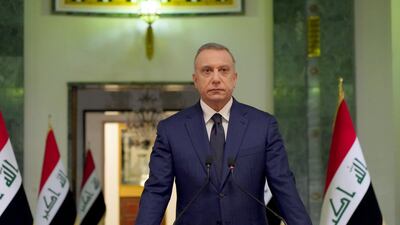
Iraqi Prime Minister Mustafa Al Kadhimi has threatened to resign if the political stand-off in the country is not resolved. Photo: Iraqi Prime Minister's Media Office -

An aerial view of Yafa Street in Baghdad after Shiite cleric Moqtada Al Sadr called on his supporters to withdraw from the Iraqi capital's heavily fortified Green Zone. AP -

Plumes of smoke rise after small fires were lit near the Tomb of the Unknown Soldier and Parliament in Baghdad. AP -
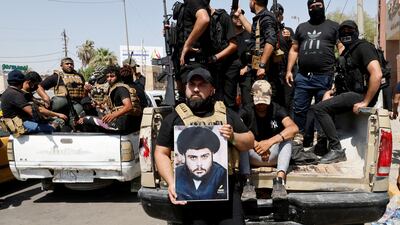
Mr Al Sadr's followers heed his call to withdraw from the Green Zone after violent clashes in Baghdad. Reuters -
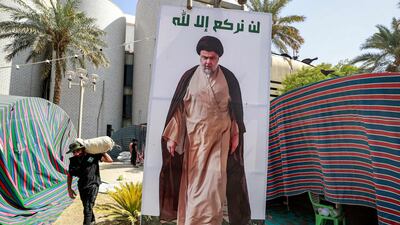
A supporter of Mr Al Sadr helps to dismantle the encampment in Baghdad's high-security Green Zone. AFP -
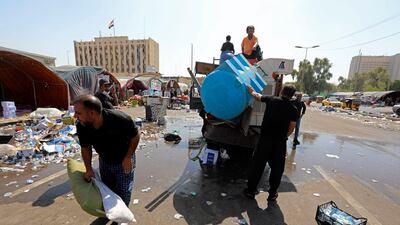
Supporters of Mr Al Sadr pack up belongings as they prepare to leave the Green Zone. AP -
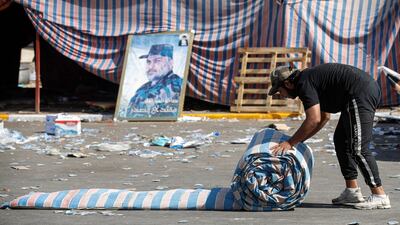
A supporter of Mr Al Sadr rolls up a mattress as their encampment in the Green Zone is dismantled. AFP -
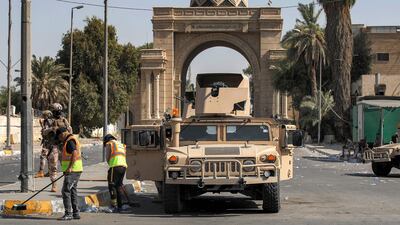
Municipality workers clean up while Iraqi army soldiers guard the entrance to the Green Zone. AFP -
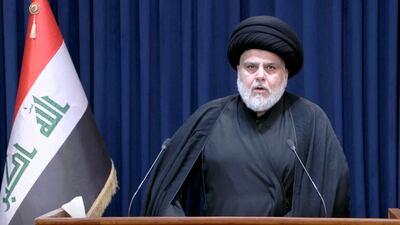
Mr Al Sadr addresses a news conference in Najaf, Iraq. Reuters -

Iraqi Shiite gunmen clash with government forces in the Green Zone of central Baghdad. EPA -
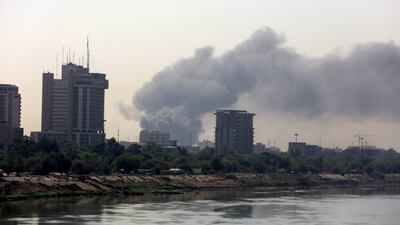
Smoke rises from a building in Baghdad. EPA -
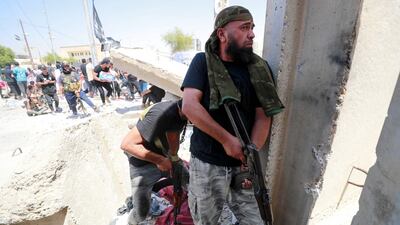
Armed members of Saraya Al Salam, the military wing affiliated with Shiite cleric Moqtada Al Sadr. AFP -
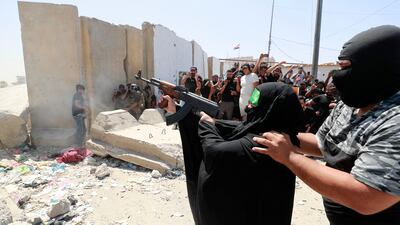
An armed member of Saraya Al Salam. AFP -
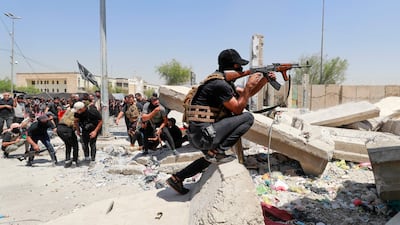
A member of Saraya Al Salam takes aim. AFP -
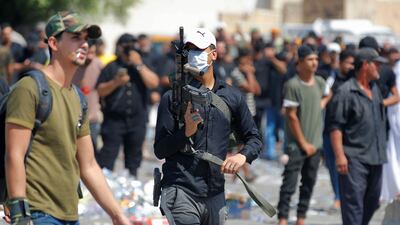
Armed members of the Peace Brigades militia in Baghdad's Green Zone. AFP -
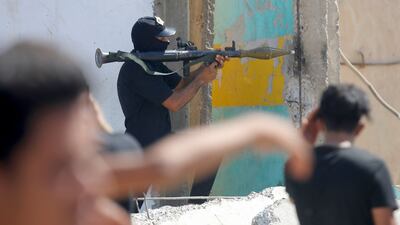
They are affiliated with Shiite cleric Moqtada Al Sadr. AFP -
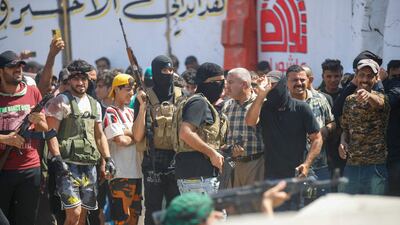
Peace Brigades members clash with security forces in the Iraqi capital. AFP -
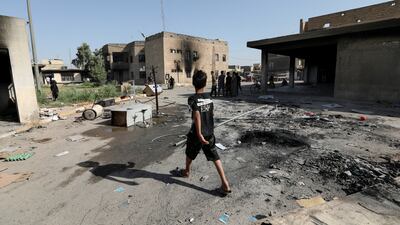
The office of rival Shiite party the Badr Organisation, which was burnt by Sadrists. Reuters -
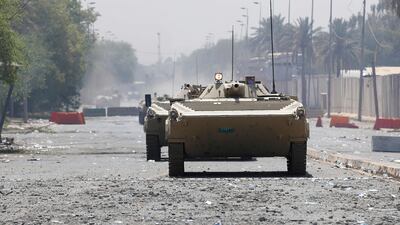
Iraqi security armoured vehicles during clashes with the Peace Brigades in the Green Zone. AFP -
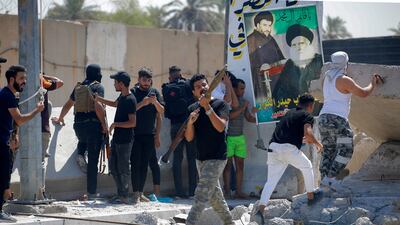
Peace Brigades members carry weapons in the fortified zone. AFP -
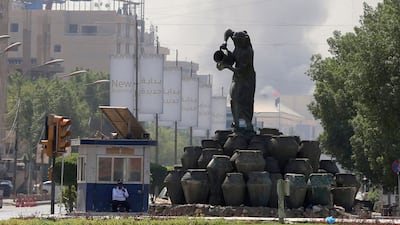
Smoke over Baghdad during an army-imposed curfew, a day after 23 Al Sadr supporters were shot dead. AFP -
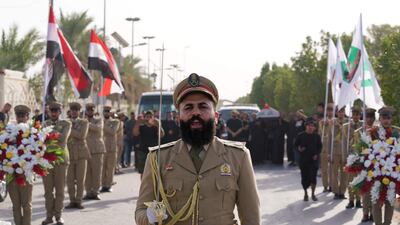
A Peace Brigades member leads a mass funeral in Najaf for Al Sadr supporters killed in the clashes in Baghdad's Green Zone. AFP -
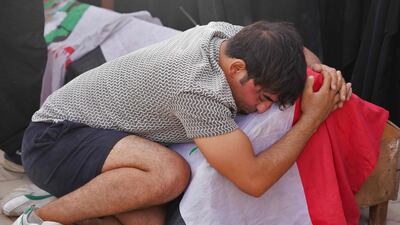
Tears during the mass funeral. AFP -

Mourners pray in front of the coffins of Al Sadr supporters. Reuters -
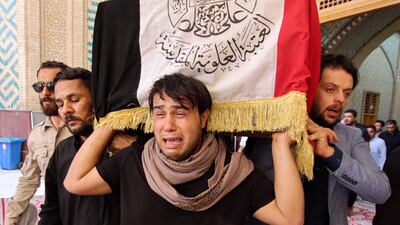
A coffin is carried at the funeral. AFP -
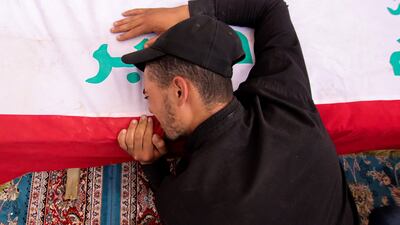
The ceremony took place at a cemetery in Najaf, central Iraq. AFP


The negative effects of this vacuum compound by the day, undermining state institutions, ruining public confidence and making it impossible to address Iraq's huge challenges, from the hobbling economy to environmental degradation.
It also means the country's potential is being wasted. Oil prices are high, something which Iraq, with its vast reserves, should be forensically taking advantage of. And with each day of uncertainty that passes, the lives of the country's young people are put on hold.
The new wave of violence comes as a result of long-standing anger, then. But the trigger was the sudden resignation from politics of populist Shiite cleric Moqtada Al Sadr. He says he resigned in protest of the country's political deadlock. The irony is that Mr Sadr's resignation from politics could hardly have been more political. His supporters represent an important bloc, who have stormed the Green Zone and parliament in recent weeks. But this deadlock will not be helped by his move. So far, the main effect of his decision has been the eruption of deadly violence, something that the vast majority of Iraqis dread.
Yesterday, however, he did call on his supporters to withdraw, saying: "Iraqi blood is forbidden and you have 60 minutes to vacate the parliament and the Green Zone." His calls were heeded.
The situation is urgent and anyone who calls for calm is doing the right thing. But even if catastrophe is averted for the moment, the fact remains that there is still no government on the horizon. Getting a representative one is the best way to avert chaos, and has to remain the priority.
Amid so many uncertainties, one thing is clear: the country's political process is at risk of entirely imploding. It needs to be rescued and reformed. On top of this, powerful leaders must see beyond partisan lines. Iraq is a diverse country, but there is mass consensus that most politicians are betraying the people by stirring, plotting and politicking instead of compromising. The betrayal is particularly egregious against young Iraqis, who yearn for stability far more than they do identity politics. If politicians do not start to see that, Iraq could be heading to a very bad place.

