


When Bassam Al Sheikh Hussein took several people hostage in a bank in the Lebanese capital of Beirut last week, unsurprisingly, people quickly gathered around the perimeter to watch as the drama unfolded.
What is surprising, however, was the crowd’s response. In footage captured by The National, many were sympathetic towards Mr Al SheikhHussein. His supporters chanted, “We are all Bassam” and “Down with the rule of the banks!”
Mr Al Sheikh Hussein’s actions were unlawful, and should not be condoned. He fired shots and told police he would kill the hostages and self-immolate unless he could access his $210,000 in life savings.
But much of public opinion in Lebanon has sided with him. He eventually walked away with $35,000, which he says will go to paying for his father’s urgent medical treatment. And fortunately, the hostages escaped uninjured.
On Friday, members of Mr Al Sheikh Hussein’s family were joined by supporters who blocked a road to protest against his detention, which they say was breach of the agreement that was made to end the standoff. One of his lawyers said he had been detained without a clear charge.
-
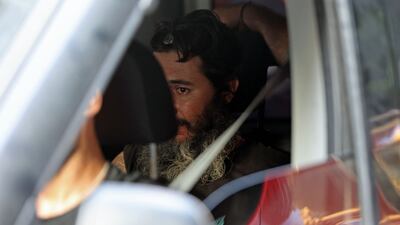
Bassam Al Sheikh Hussein, an armed man who took hostages at a Federal Bank branch in Beirut, sits in a police car after his arrest. AFP -
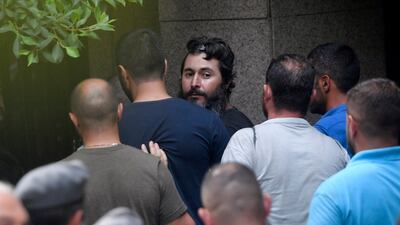
He was arrested as he left the bank. EPA -
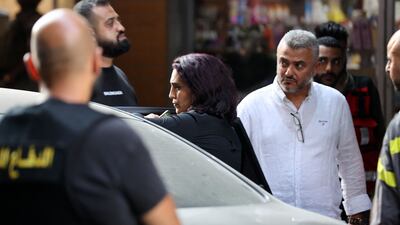
He held several customers hostage as he demanded the return of his bank deposits so that he could pay his father's medical bills. AFP -
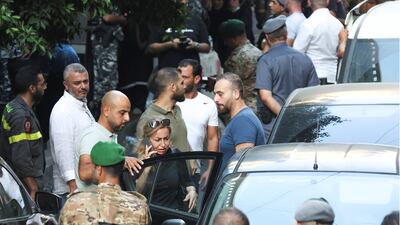
A woman who was held hostage inside the Federal bank of Lebanon enters a car after her release. Reuters -
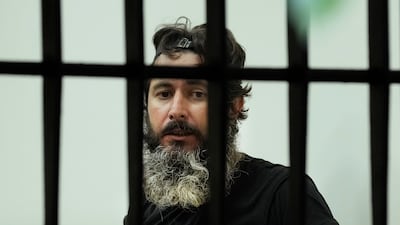
Mr Al Sheikh Hussein was reportedly armed with a rifle and is said to have doused the interior of the bank with petrol. AP -
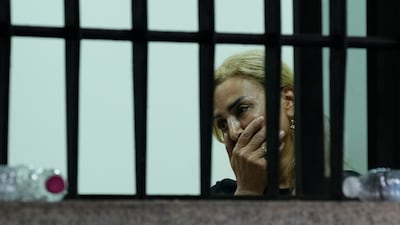
A woman held hostage in the bank cries. AP -
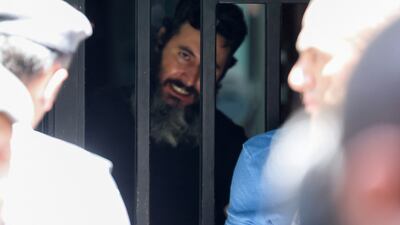
The siege ended without violence eight hours later on Thursday when the gunman reportedly left the bank and was arrested. Reuters -
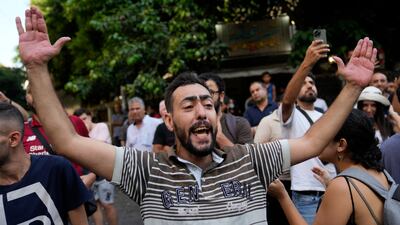
Many sympathised with Mr Al Sheikh Hussein and took part in protests outside the bank as they denounced local lenders and chanted 'We are all Bassam'. AP -
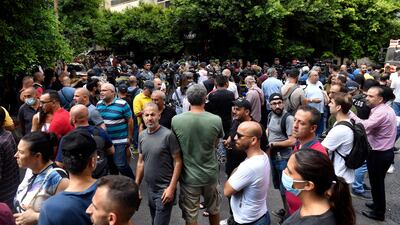
Lebanese bank customers stand near the bank where the armed man took customers and employees hostage. EPA -
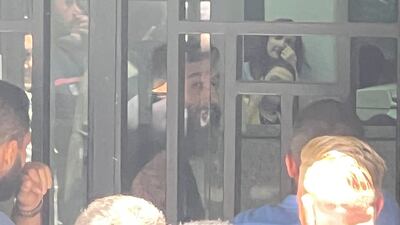
A Lebanese security official said Mr Al Sheikh Hussein was threatening to set himself ablaze unless he received his savings. AP -
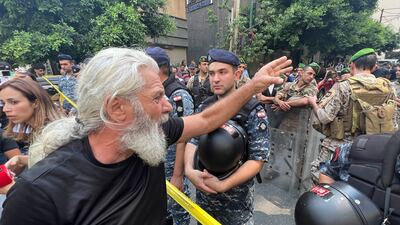
The demonstrations grew more heated, with protesters facing off against security forces dressed in riot gear. AP -
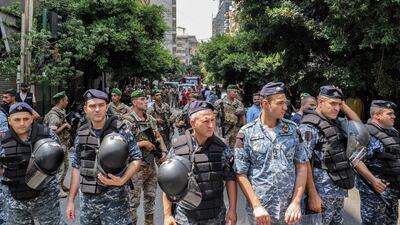
Army soldiers, behind, and security forces, front, stand guard outside the bank in Beirut. AFP -
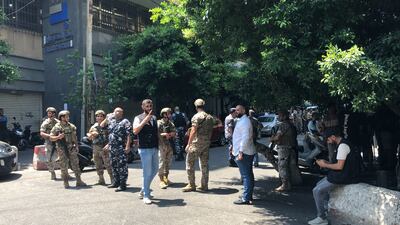
The incident is the latest between local banks and angry depositors unable to access their savings because of informal capital controls. Jamie Prentis / The National -
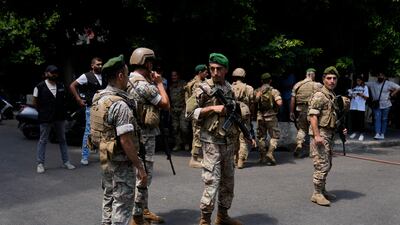
At least two shots were heard after the man entered the branch just before noon, according to witnesses and local media. Some customers managed to escape before he shut the branch doors. AP -

The Lebanese Red Cross on standby outside the bank, which was cordoned off by security forces. Reuters -

Lebanon’s National News Agency reported that Mr Al Sheikh Hussein was demanding to withdraw $210,000 and had threatened to set himself ablaze and kill everyone at the bank. Reuters -
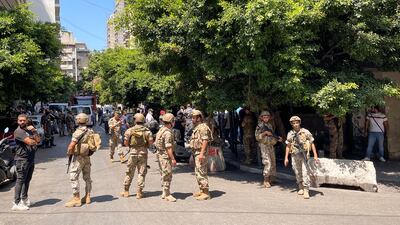
His father was in hospital and required $50,000 worth of treatment, according to the Association of Depositors in Lebanon. Reuters


It is understandable that authorities feel the need to do something. If only they applied the same determination in pursuing those responsible for Lebanon's financial meltdown. For example, Lebanon's central bank governor, Riad Salameh, who is widely viewed as playing a key role in the economic dysfunction. Every time efforts are made to arrest him, he is nowhere to be found. In March, he was charged with money laundering and illicit enrichment.
On Tuesday, Mr Al Sheikh Hussein was released without charge. An image then circulated on social media of him with his unwell father.
In a normal situation, the arrest of someone who acted so dangerously would be uncontroversial. In a country as broken as Lebanon, however, his actions have been viewed by many not as criminal recklessness, but a desperate, last ditch attempt to save a family member. It is important to remember that he was attempting to take money that already belonged to him.
The crowds that have since thronged to support him redirect blame entirely towards Lebanon's corrupt elite. Since the economy's collapse in 2019, the political class has been widely condemned for causing the crisis and doing nothing to help the country.
The vast majority of the population, like Mr Al Sheikh Hussein, only have Lebanese banks to hold their money. But these institutions have imposed informal capital controls for years, greatly restricting the availability of hard currency. Instead, most can only access the Lebanese pound, which, since 2019, has dropped in value by a massive 90 per cent.
It's not just the economy. Mr Al Sheikh Hussein's ill father finds himself suffering in a fast-deteriorating healthcare system. Workers are striking over unpaid wages, medication is running low and thousands of highly trained staff are going abroad.
The crisis in Lebanon is turning the country's economy upside down. The story of a hostage taker turning into a Robin Hood-style figure shows that the very idea of criminality is changing, too, and that many view the law and those who uphold it as an integral part of the problem.
This time, reality is more absurd than legend. Mr Al Sheikh Hussein did not steal from the rich to give to the poor. He stole from himself to give to his father. He should not be lionised. But there is no hiding from the fact that his many supporters view the most dangerous thieves in today's Lebanon not as the ones that target Beirut's banks.
Rather, they are the tiny minority who have taken from everyone else.

