


Almost two years ago, an explosion at Beirut’s port ripped through the Lebanese capital, killing more than 200 people. It was the largest non-nuclear explosion in history. It was caused by a stock of ammonium nitrate – mostly used as a fertiliser – that caught fire. In the aftermath of the explosion, it became clear that failings by senior officials, who should have known about the dangerous, large and poorly stored stockpile, paved the way for the blast.
Two years on, the twisted remains of grain silos at the port, which became a symbol of the blast, are still there, as are much of the contents they stored, now rotting. On Sunday, footage emerged online showing clouds of smoke across the port as parts of the facility fell down. They had been on fire for three weeks before their ultimate demise.
The state of the silos mirrors the wider circumstances of Lebanon today. Severe, sudden shocks might happen from time to time, but the main problem for the country is still a long-recognised and seemingly unstoppable decline. It is the result of corruption, inaction and mismanagement from political elites, as well as destabilising foreign influence.
The silos should have been torn down already, let alone rebuilt. Instead, nature is completing a dangerous job that should be the responsibility of the state, which has become ineffective through a total breakdown in governance and an absence of accountability.
The content of the silos, hazardous rotting grain, is also symbolic, this time of the critical food crisis facing the country.
As grain that could have bolstered the country’s stocks decays, Lebanese people are forced to line up for hours at bakeries that are struggling to provide enough bread. This week, The National reported from one of these queues, seeing first hand the chaos and desperation they contain.
-
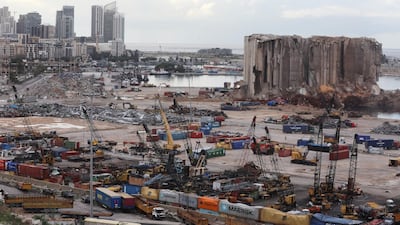
The site of the August 4 explosion at Beirut port in December. Reuters -
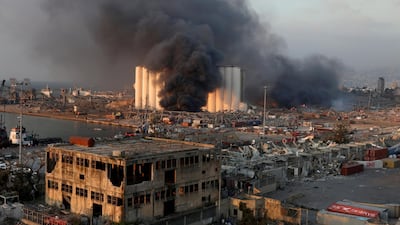
Smoke rises from the site of an explosion in Beirut's port area, Lebanon on August 4, 2020. Reuters -
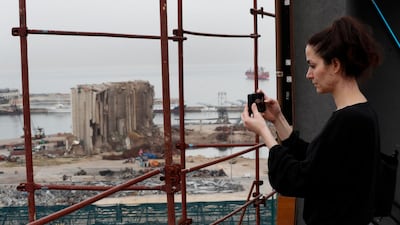
Joana Dagher, 33, who lost her memory for two full months from the trauma she suffered in the massive August explosion at the Beirut port takes pictures of the explosion scene from her damaged apartment rooftop. AP -
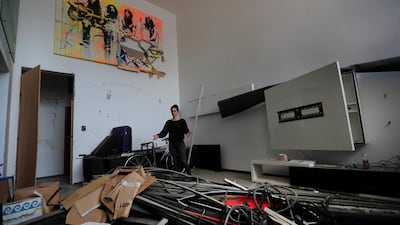
The mental health impact of the Beirut explosion that killed more than 200 and wounded more than 6,000 continues to lay its heavy weight on those who managed to survive the day. AP -
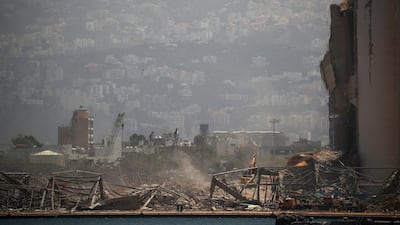
A general view shows damage at the site of the blast in Beirut's port area, Lebanon. Reuters -

A drone picture shows the destruction after the explosion in the seaport of Beirut, Lebanon. AP


Fights have broken out at them, understandable amid the heat and anger. But there are also plenty of examples of unacceptable behaviour. Authorities are known to have created separate queues for Lebanese nationals and non-nationals, particularly Syrians. Lines for the former often move quicker. One Lebanese man asked: “Now they’re checking people’s ID cards, aren’t people ashamed of themselves? Lebanese here and Syrians there, what kind of thinking is this? What era are we in?”
There have been some positive developments regarding the food crisis. A cargo ship carrying 26,000 tonnes of Ukrainian corn left Odesa early on Monday, and is due to arrive in Lebanon. A further 16 ships are expected to be in order to help ease global supply fears. They are the result of a recent deal struck between Ukraine and Russia with mediation from the UN and Turkey to allow for the export of Ukrainian food through a key Black Sea trade route. It is critical, and far from certain, that this arrangement is kept, not just for the sake of Lebanon, but for the wider world, particularly in countries whose food security is most at risk.
It might bring some respite for Lebanese people, but only in a situation that should never have been allowed to manifest. Fundamentally, as the two-year anniversary of the Beirut blast approaches, none of the governance issues that led to that failure have changed. Indeed, the situation has got worse.
At the last anniversary, The National observed that many more would have to pass before Lebanon and, crucially, the families of victims would have the transparency, justice and answers that they deserve. In 2022, not only does this remain the case, but new crises are emerging, too.

