


Cyclists in the UAE have every reason to feel good – and not just because the Middle East's only World Tour race, called the UAE Tour, begins early next year. This past week, Abu Dhabi was distinguished as a Bike City by Union Cycliste Internationale, the prestigious Switzerland-based governing body for international competitive cycling events. The recognition puts the UAE capital in good company; other UCI-recognised biker-friendly cities include Copenhagen, Bergen, Paris and Glasgow, where the climate summit, Cop26, is well under way and where the UAE reiterated its climate change commitments.
A peloton of bikers at first glance may not seem like the people most obviously associated with climate change, but cycling has an undeniable link with sustainability and keeping carbon emissions down. For one, there is less pollution where there are more bikers. When more people in the city take to cycling, even for short distances, it lowers emissions as much as it reduces the use of cars. It is, of course, incumbent on drivers of cars anywhere in the world to learn to give way to those on two wheels. But besides the sporting, fitness and traffic etiquette aspect of pedalling, there is a sense of community fostered when cycling is given as much priority as it is in the UAE.
The UAE is working at developing cycle tracks that can even help people to cycle to offices and back, for those thus inclined. The culture of cycling benefits people. It affects a city in numerous positive ways, promoting a sense of well-being that comes from being outdoors and incorporating exercise into a daily regimen.
As those in the cycling community know firsthand, it is a way of life easily adopted and encouraged. The UAE already has a sizeable community of cyclists. The two-time winner of the Tour de France title, UAE Team Emirates rider Tadej Pogacar, would agree. The 23-year-old cyclist last month even added the Giro di Lombardia crown to his Tour de France titles. For younger people just taking up the sport and the lifestyle, role models such as Pogacar are often just the sort of nudge and healthy influence they need to pick up a helmet and take to biking for life, along the way bettering one's chances of managing diabetes, obesity and other lifestyle diseases.
With velodromes in the works on Abu Dhabi's Hudayriyat Island and plans for a new 109-kilometre designated cycling track, the direction of urban development in Abu Dhabi is heartening. In the coming decade, the landscape of the city is likely to undergo an enormous shift. For one, the UAE will plant 30 million mangroves by 2030. As people who take their bikes out early morning to pedal by the water know, the sight of sunrise is an enormous draw for cyclists anywhere in the world. Abu Dhabi will have a natural edge in this regard as residents are already afforded the luxury of being able to pedal along the Eastern Mangroves, taking in the air that comes from being around these underwater carbon sinks, an environment unparalleled in tranquility.
And despite the pandemic affecting momentum, as it has globally, there are redevelopment projects planned for Abu Dhabi's parks, as part of Ghadan 21, a far-reaching Dh50 billion package of reforms that aims to improve every aspect of residents’ lives.
Even in neighbouring Dubai, Crown Prince Sheikh Hamdan bin Mohammed regularly promotes the sport, is a known cyclist and motivator for people to adopt lifestyles that centre around fitness. Just this past weekend, 33,000 people participated in the Dubai Ride. Among other expansions for the city's bikers, a new cycle track spanning 16km along Jumeirah Beach in Dubai is ongoing. There are already more than 460km of cycle paths in Dubai, and like in Abu Dhabi, this landscape will expand dramatically over the next few years. For reluctant exercisers in our families and social circles – and we all know a few – these biker-friendly plans could be spokes in the wheels. For all avid cyclists in the UAE, however, these are only more reasons to rejoice.
-
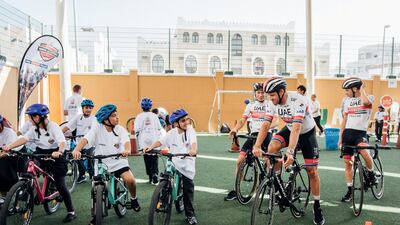
UAE Team Emirates cyclists deliver coaching clinics to pupils at Al Rebeeh School in Abu Dhabi in 2019. Photos: UAE Team Emirates -
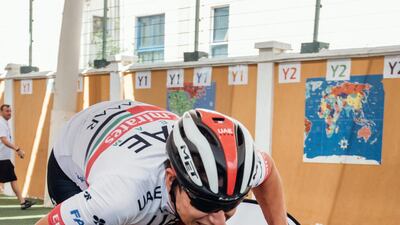
The visit took place during the team's end-of-season camp in the UAE. -
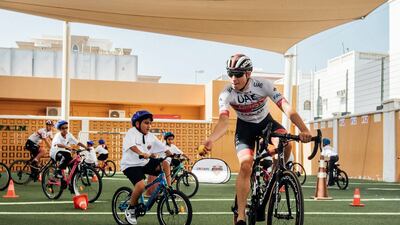
Budding cyclists received tips from the professional cyclists. -

More than 100 schoolchildren took part in the clinics. -
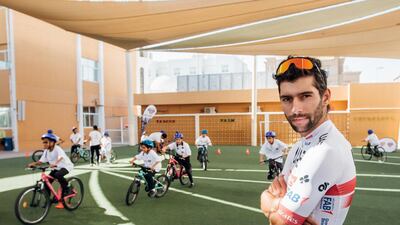
Fernando Gaviria was among the riders encouraging the pupils. -

UAE Team Emirates cyclists Also took part in a Q&A session. -
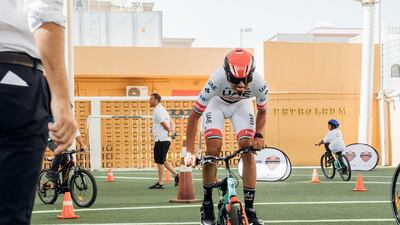
The team showed off their skills to the young riders. -
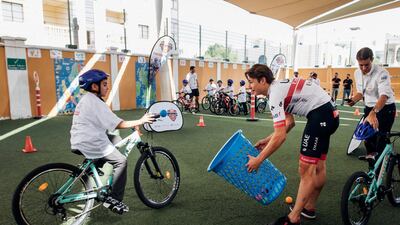
UAE Team Emirates cyclists deliver coaching clinics to children at Al Rebeeh School. -
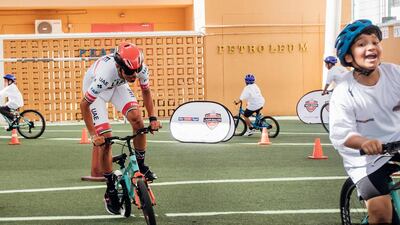
The team said the sessions could help to inspire the youths to represent the UAE in the future. -
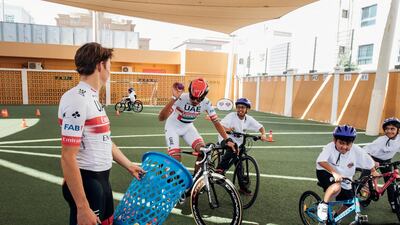
UAE Team Emirates cyclists and schoolchildren participate in a drill. -
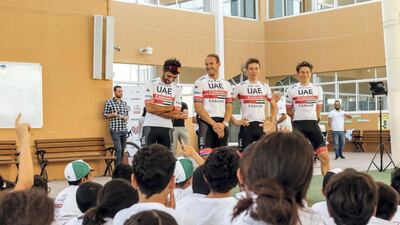
Alexander Kristoff, Fernando Gaviria, Yousif Mirza, Tadej Pogacar and Jasper Philipsen took part in the session. -
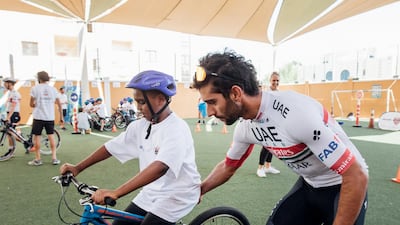
They helped young riders develop their skills.



