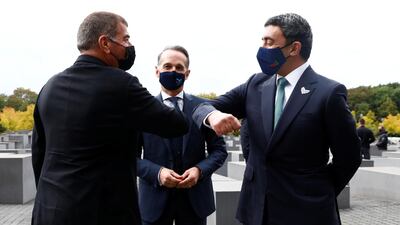
Six months ago, an Emirati and Israeli diplomat were unlikely to be seen together, much less co-author a newspaper article. Opening up direct relations and embassies seemed even more farfetched. But here we are now, an Emirati ambassador in Israel and an Israeli head of mission in the UAE in public, together, writing in one voice.
Conflict can last for generations, but peace can happen in an instant. With that diplomatic flash last summer, our nations and our people are now in a rush to make up for lost time. The speed of normalisation has been nothing less than breathtaking, even amid a worldwide pandemic and the regular challenges of sharing the world’s most troubled neighbourhood.
We are diplomats, representatives of our nations and agents of warming ties between the UAE and Israel. We believe in the power of our profession, that building trust through open and direct ties, combined with bold political leadership, can produce regional transformations.
Over these recent weeks, we now meet and talk often. Our conversations focus on growing economic ties, trade and tourism, health and educational exchanges and deepening people-to-people contacts. We facilitate and update each other on the near-daily announcements of new agreements between our universities, research institutes, start-ups and medical centres. Just last week, we recognised the joint partnership between the Mohamed Bin Zayed University of Artificial Intelligence and the Weizmann Institute of Science. We celebrated together the UAE space probe's successful arrival at Mars and wondered about future Israeli-Emirati space co-operation and missions.
We write this article together, proud that the UAE and Israel are leading the world in vaccinating our populations against Covid-19. With open and direct ties, our medical professionals are sharing data, learning from one another and charting new areas for research and for collaboration on vaccine distribution around the region and world.
-
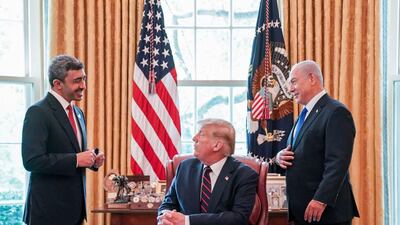
Sheikh Abdullah bin Zayed, UAE Minister of Foreign Affairs and International Co-operation, speaks to Donald Trump, US president at the time, and Israeli Prime Minister Benjamin Netanyahu in the Oval Office in September 2020. Ministry of Foreign Affairs and International Co-operation -
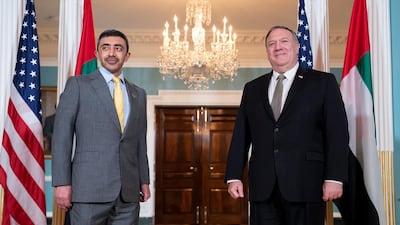
Sheikh Abdullah bin Zayed, UAE Minister of Foreign Affairs and International Co-operation, meets Mike Pompeo, US secretary of state at the time. Wam -
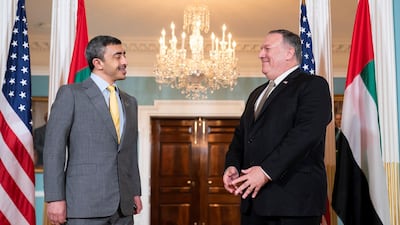
Sheikh Abdullah and Mr Pompeo in Washington. Wam -
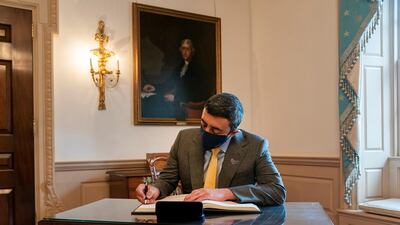
Sheikh Abdullah visits Washington in September last year. Wam -
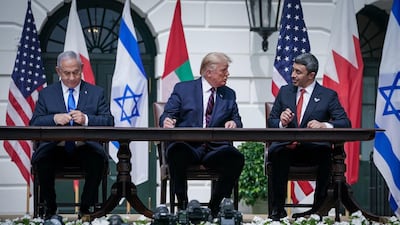
Sheikh Abdullah, UAE Minister of Foreign Affairs and International Co-operation, US President Donald Trump, centre, and Israeli Prime Minister Benjamin Netanyahu sign the Abraham Accord at the White House South Lawn. MOFAIC -
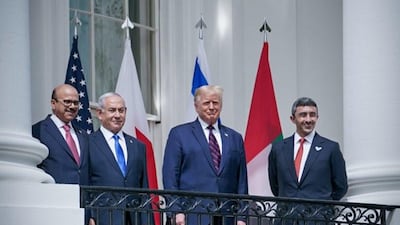
Sheikh Abdullah and, from left, Bahrain's Foreign Minister Abdullatif Al Zayani, Israeli Prime Minister Benjamin Netanyahu and US President Donald Trump at the White House. MOFAIC -
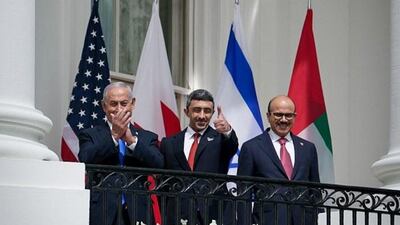
Sheikh Abdullah, Mr Al Zayani and Mr Netanyahu at the White House during the Abraham Accord signing ceremony. MOFAIC -
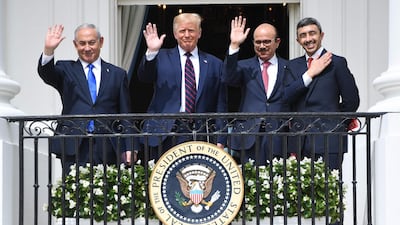
Sheikh Abdullah and, from left, Mr Netanyahu, Mr Trump and Mr Al Zayani wave from the Truman Balcony at the White House. AFP -
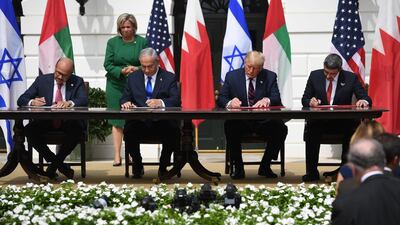
Sheikh Abdullah and, from left, Mr Al Zayani, Mr Netanyahu and Mr Trump sign the Abraham Accord. AFP -
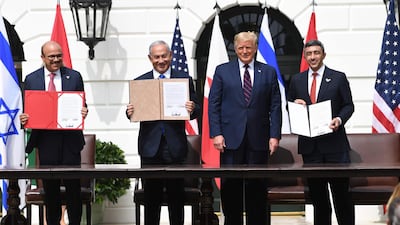
Sheikh Abdullah and, from left, Mr Al Zayani, Mr Netanyahu and Mr Trump after the signing ceremony. AFP -
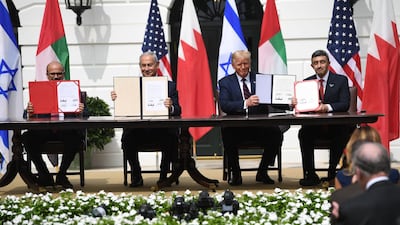
Sheikh Abdullah and, from left, Mr Al Zayani, Mr Netanyahu and Mr Trump after the signing ceremony. AFP -
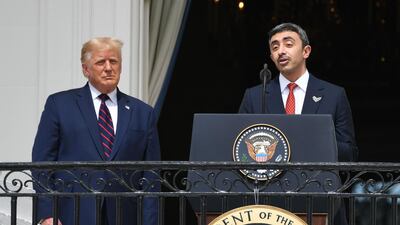
Sheikh Abdullah speaks from the Truman Balcony at the White House during the signing ceremony of the Abraham Accord. AFP -
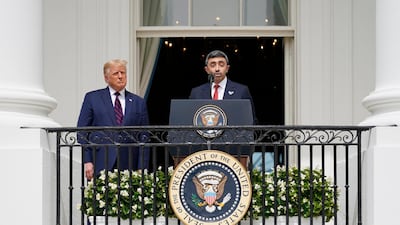
Sheikh Abdullah speaks as Mr Trump looks on before the signing of Abraham Accord on the South Lawn of the White House. AP -
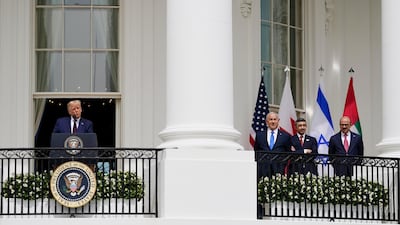
Sheikh Abdullah looks on from the White House as Mr Trump speaks at the Abraham Accord signing ceremony, also attended by Mr Al Zayani and Mr Netanyahu. AP -

Sheikh Abdullah bin Zayed, UAE Minister of Foreign Affairs and International Co-operation, Israeli Prime Minister Benjamin Netanyahu, left, and Bahraini Foreign Minister Abdullatif Al Zayani stand on the Blue Room Balcony during the signing ceremony. AP -
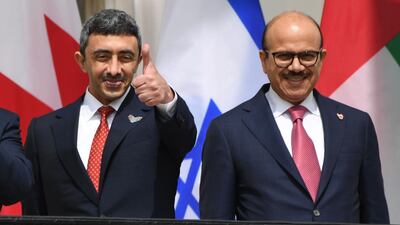
Sheikh Abdullah and Mr Al Zayani shortly before participating in the signing of the Abraham Accord. AFP -
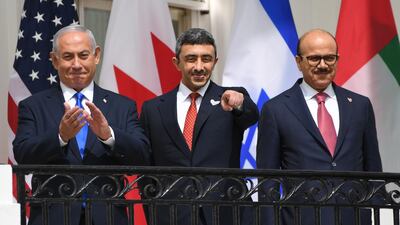
Sheikh Abdullah, with Mr Netanyahu, left, and Mr Al Zayani at the signing of the Abraham Accord on the South Lawn of the White House. AFP -
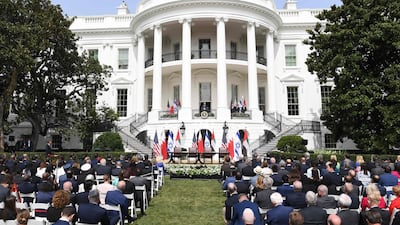
US President Donald Trump speaks from the Truman Balcony at the White House during the signing ceremony of the Abraham Accord. AFP -
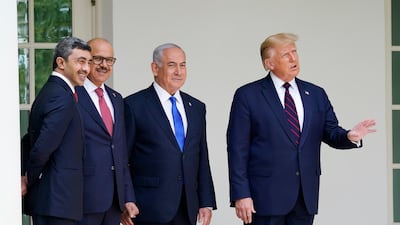
President Donald Trump walks to the Abraham Accord signing ceremony at the White House with Sheikh Abdullah bin Zayed, UAE Minister of Foreign Affairs and International Co-operation, Israeli Prime Minister Benjamin Netanyahu, and Bahrain's Foreign Minister Abdullatif Al Zayani. AP -
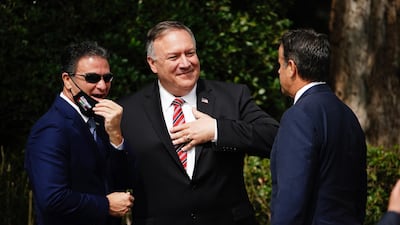
US Secretary of State Mike Pompeo arrives at the White House to attend the Abraham Accord signing ceremony hosted by President Donald Trump. EPA -
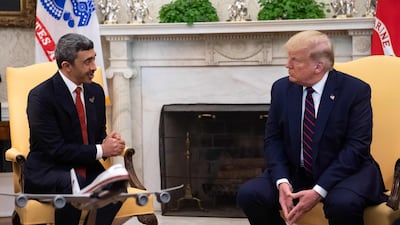
Sheikh Abdullah bin Zayed, UAE Minister of Foreign Affairs and International Co-operation, meets US President Donald Trump in the Oval Office of the White House before the signing of Abraham Accord. AFP -
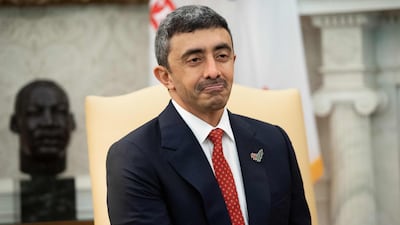
Sheikh Abdullah bin Zayed, UAE Minister of Foreign Affairs and International Co-operation, in the Oval Office. AFP -
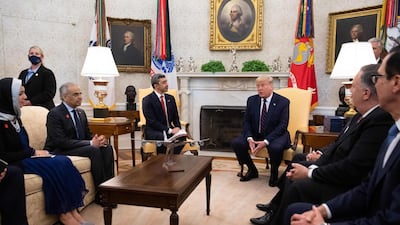
Sheikh Abdullah bin Zayed, UAE Minister of Foreign Affairs and International Co-operation, meets US President Donald Trump in the Oval Office of the White House. AFP -
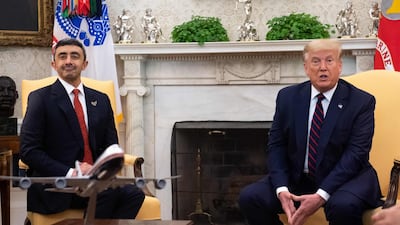
Sheikh Abdullah with Mr Trump in the Oval Office. AFP -
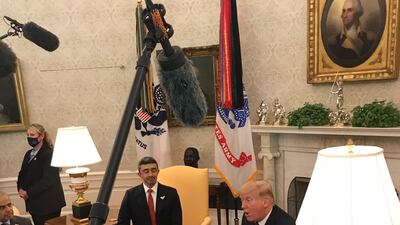
Sheikh Abdullah bin Zayed, UAE Minister of Foreign Affairs and International Co-operation, with by President Donald Trump at the White House. Mustafa Alrawi / The National -
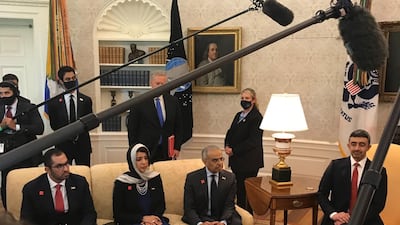
The UAE delegation led by Sheikh Abdullah bin Zayed, Minister of Foreign Affairs and International Co-operation, with US President Donald Trump at the White House. Mustafa Alrawi / The National -
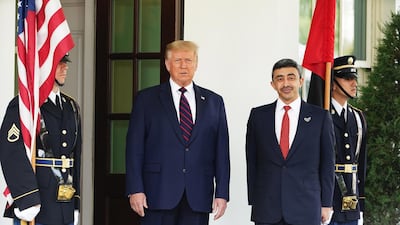
Sheikh Abdullah bin Zayed, UAE Minister of Foreign Affairs and International Co-operation, is welcomed to the White House by US President Donald Trump. EPA -
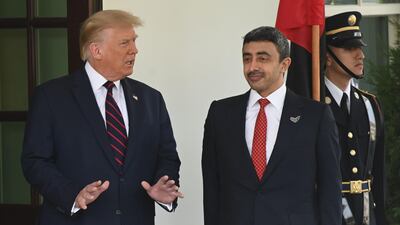
Sheikh Abdullah and Mr Trump outside the White House. AFP -
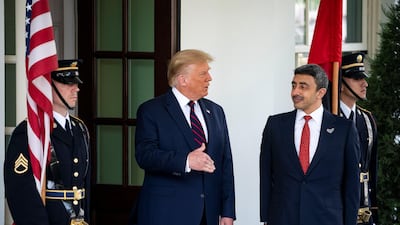
Sheikh Abdullah bin Zayed speaks to Mr Trump after arriving at the White House. Reuters -
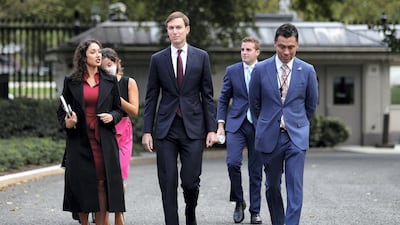
White House Senior Adviser Jared Kushner walks away following a television interview on the North Lawn at the White House in Washington. Reuters -
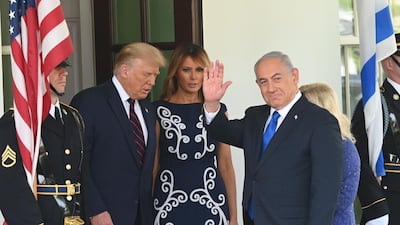
US President Donald Trump and First Lady Melania Trump welcome the arrival of Prime Minister of Israel Benjamin Netanyahu and his wife Sara on the North Lawn of the White House in Washington DC. AFP -
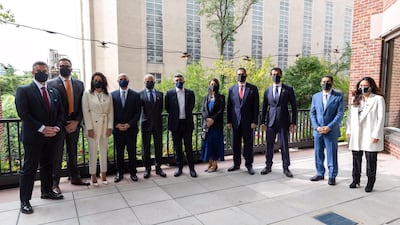
A delegation of senior UAE officials led by Sheikh Abdullah bin Zayed, UAE Minister of Foreign Affairs and International Co-operation, prepares to depart for the White House to sign the Abraham Accord. MOFAIC -
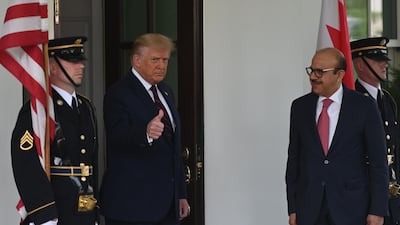
US President Donald Trump welcomes Bahraini Foreign Minister Abdullatif Al Zayani. AFP -

Bahraini Foreign Minister Abdullatif Al Zayani arrives at the White House in Washington DC. AFP -
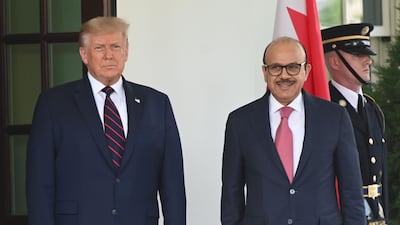
US President Donald Trump welcomes Bahraini Foreign Minister Abdullatif Al Zayani on the North Lawn of the White House in Washington, DC. AFP -
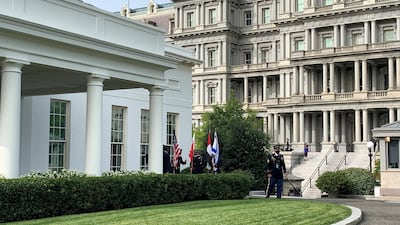
Preparations at the White House for the signing of the Abraham Accord. -
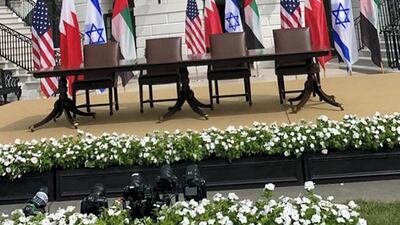
Preparations under way at the White House for the signing of the Abraham Accord. -
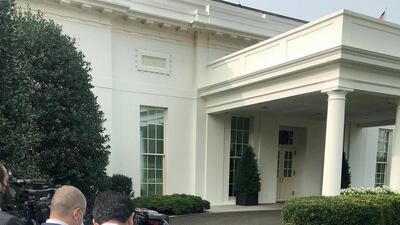
Preparations under way at the White House for the signing of the Abraham Accord. -

Preparation at the White House for the signing of the Abraham Accord. The National


As we move toward reopening our economies and restarting travel, UAE-Israeli cross-border trade, tourism and investment growth will quicken. As the two most dynamic and advanced societies in the region, the potential is limitless.
On Monday, Ambassador Al Khaja will enter the official residence of Israeli President Reuben Rivlin to present his diplomatic credentials. Meetings will follow with Prime Minister Benjamin Netanyahu and Foreign Minister Gabi Ashkenazi. Work will start on locating a site for a new embassy. For Head of Mission Na’eh, now entering his second month of work in the UAE, the days are already filled with official government meetings and direct engagement with Emiratis.
Six months ago, it would have been hard to imagine. But here we are, each of us and together, supported by and in the interests of the governments and people we serve. We are helping to write a new chapter in diplomacy and chart a new course of peace, prosperity and progress for the Middle East.
Mohamed Mahmoud Fateh Ali Al Khaja is the UAE Ambassador to the State of Israel
Eitan Na'eh is Head of Mission at the Embassy of Israel in Abu Dhabi

