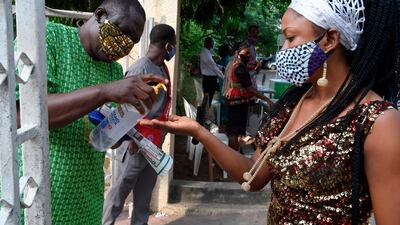
If something can be said of the effect of Covid-19 on the humanitarian sector it is this: never on a global scale has the need to save lives, alleviate suffering and maintain human dignity been this actively pursued.
There have been so many dimensions to the pandemic. Across the world people in the humanitarian line of work have seen and responded to a range of fall-outs, from the impact of Covid-19 on women and youth, the increased need for safe housing in conflict areas, to communities requiring access to hygiene products; humanitarian action has and must continue to respond to challenges in order to meet the needs of those suffering the most, in times of crisis and during the recovery stage.
During the course of the pandemic, our approach at Alwaleed Philanthropies has been to address the needs of the most vulnerable communities, exploring awareness levels, access to resources, the economic impact of the pandemic and assessing the level of physical and mental health support that was needed.
The pandemic has highlighted the cracks that exist within our communities – unequal access to health care being just one of the limitations of our institutions and infrastructure. We are, however, seeing organisations, philanthropies and governments adapt to new approaches and collaborate to lead humanitarian action and achieve better outcomes.
Governments, philanthropies and NGOs across the world have committed to building back stronger and healthier communities. This will have the potential to safeguard us from future crises. The lessons learnt during the pandemic are important not only for people who work in the humanitarian sector but for every member of society.
Empowering people on ground
From hospitals to schools, the pandemic has affected every part of society. Getting back on our feet will require a community approach for which it is vital to empower people on the ground. There is no longer a clear distinction of who a "humanitarian" is; healthcare workers, volunteers and transport professionals have been at the frontline and must be included in our economic recovery plans.
Humanitarian action must explore the diverse needs of each community. Localisation of response has been one of the most significant changes in the humanitarian approach during the pandemic. We have seen shortages of products in some countries, which has highlighted the need to have stronger local capabilities and connections to withstand these affects.
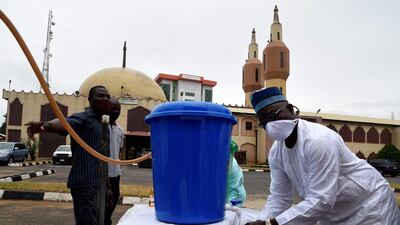
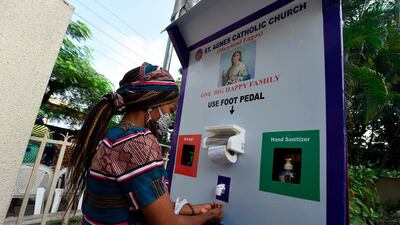
As part of our Covid-19 response, for example, to provide vital hygiene products across Africa we partnered with the Rabat-based Islamic World Educational Scientific and Cultural Organisation.
Humanitarian responses also need to adapt to more long-term strategies with a focus on empowering people. Besides addressing urgent needs, we also need to recognise the need for investment in employment infrastructure. People need jobs to afford protective products, housing and to guard themselves against future health crises. The loss of employment because of the pandemic ultimately weakens communities and makes them more susceptible to crises.
To overcome this, we have engaged with women and youth on the ground to reskill them, to promote entrepreneurship and strengthen local capabilities.
Digital and data-driven response
Digital solutions have gone a long way to protect and enable people and industries throughout the pandemic to have access to health care. Although digitalisation has already transformed the humanitarian sector, the pandemic accelerated its adoption globally. Digital solutions, such as tele-medicine have the advantage of reaching a wide audience and remote areas where doctors and hospitals are not easily accessed.
For community empowerment, even beyond medicine, digital solutions have the potential to provide discretion and information anytime, anywhere.
For example, we know how important it is for women in Saudi Arabia to have greater access to legal information. This resulted in the Waeya Legal Initiative, which includes an interactive legal resource for women on a variety of legal issues, including women’s issues and domestic violence.
The pandemic has highlighted the cracks that exist within our communities – unequal access to health care being just one of them
Digital platforms provide greater discretion and enable direct engagement with communities. We anticipate that the humanitarian sector will further use digital components when tackling both immediate crises and challenges ahead.
Additionally, the lack of access to data and information continues to be a barrier in global pandemic responses. Misinformation can increase instability. Through our own experience, at Alwaleed Philanthropies, we have been able to receive and share information with our partners during the pandemic. The importance of sourcing accurate data cannot be understated. In fact, reliable data must play a larger role on humanitarian agenda. Recognising this this will allow organisations to have a better understanding of what is needed and act faster.
Global collaboration, local mobilisation
With travel limitations and social distancing, it may feel as though communities are distant from one another. But it has actually been the opposite. We have seen a growth in community support and spirit. People are reaching out to their neighbours. Some businesses have shifted and are producing essentials such as hygiene products to meet demand. This trend for a community to be connected and support each other on-ground can result in greater mobilisation and action during future crises.
Additionally, the increase in the number of partnerships between organisations is set to be sustained through the recovery period. There have naturally been quicker response rates from philanthropies, NGOs and government institutions to meet the needs of the most vulnerable communities. This has set a precedent for collaboration.
Ultimately, the pandemic has illuminated the cracks within the humanitarian sector. It this has led to the accelerated transformation on both the local and global scale. We must enable emergency and long-term responses, while simultaneously laying the foundations for prevention and development.
There isn’t one solution to ensuring a healthy pandemic recovery and we cannot compartmentalise the challenges; we live in a complex network and we must work collectively to rebuild a healthier and more inclusive future.
Rana Alturaifi is the manager of global initiatives and Najla Aljeaid is the manager of local initiatives at Alwaleed Philanthropies

FROM%20THE%20ASHES
%3Cp%3EDirector%3A%20Khalid%20Fahad%3C%2Fp%3E%0A%3Cp%3EStarring%3A%20Shaima%20Al%20Tayeb%2C%20Wafa%20Muhamad%2C%20Hamss%20Bandar%3C%2Fp%3E%0A%3Cp%3ERating%3A%203%2F5%3C%2Fp%3E%0A
Which honey takes your fancy?
Al Ghaf Honey
The Al Ghaf tree is a local desert tree which bears the harsh summers with drought and high temperatures. From the rich flowers, bees that pollinate this tree can produce delicious red colour honey in June and July each year
Sidr Honey
The Sidr tree is an evergreen tree with long and strong forked branches. The blossom from this tree is called Yabyab, which provides rich food for bees to produce honey in October and November. This honey is the most expensive, but tastiest
Samar Honey
The Samar tree trunk, leaves and blossom contains Barm which is the secret of healing. You can enjoy the best types of honey from this tree every year in May and June. It is an historical witness to the life of the Emirati nation which represents the harsh desert and mountain environments
Mercer, the investment consulting arm of US services company Marsh & McLennan, expects its wealth division to at least double its assets under management (AUM) in the Middle East as wealth in the region continues to grow despite economic headwinds, a company official said.
Mercer Wealth, which globally has $160 billion in AUM, plans to boost its AUM in the region to $2-$3bn in the next 2-3 years from the present $1bn, said Yasir AbuShaban, a Dubai-based principal with Mercer Wealth.
“Within the next two to three years, we are looking at reaching $2 to $3 billion as a conservative estimate and we do see an opportunity to do so,” said Mr AbuShaban.
Mercer does not directly make investments, but allocates clients’ money they have discretion to, to professional asset managers. They also provide advice to clients.
“We have buying power. We can negotiate on their (client’s) behalf with asset managers to provide them lower fees than they otherwise would have to get on their own,” he added.
Mercer Wealth’s clients include sovereign wealth funds, family offices, and insurance companies among others.
From its office in Dubai, Mercer also looks after Africa, India and Turkey, where they also see opportunity for growth.
Wealth creation in Middle East and Africa (MEA) grew 8.5 per cent to $8.1 trillion last year from $7.5tn in 2015, higher than last year’s global average of 6 per cent and the second-highest growth in a region after Asia-Pacific which grew 9.9 per cent, according to consultancy Boston Consulting Group (BCG). In the region, where wealth grew just 1.9 per cent in 2015 compared with 2014, a pickup in oil prices has helped in wealth generation.
BCG is forecasting MEA wealth will rise to $12tn by 2021, growing at an annual average of 8 per cent.
Drivers of wealth generation in the region will be split evenly between new wealth creation and growth of performance of existing assets, according to BCG.
Another general trend in the region is clients’ looking for a comprehensive approach to investing, according to Mr AbuShaban.
“Institutional investors or some of the families are seeing a slowdown in the available capital they have to invest and in that sense they are looking at optimizing the way they manage their portfolios and making sure they are not investing haphazardly and different parts of their investment are working together,” said Mr AbuShaban.
Some clients also have a higher appetite for risk, given the low interest-rate environment that does not provide enough yield for some institutional investors. These clients are keen to invest in illiquid assets, such as private equity and infrastructure.
“What we have seen is a desire for higher returns in what has been a low-return environment specifically in various fixed income or bonds,” he said.
“In this environment, we have seen a de facto increase in the risk that clients are taking in things like illiquid investments, private equity investments, infrastructure and private debt, those kind of investments were higher illiquidity results in incrementally higher returns.”
The Abu Dhabi Investment Authority, one of the largest sovereign wealth funds, said in its 2016 report that has gradually increased its exposure in direct private equity and private credit transactions, mainly in Asian markets and especially in China and India. The authority’s private equity department focused on structured equities owing to “their defensive characteristics.”
Results
%3Cp%3E%3Cstrong%3EStage%203%3A%3C%2Fstrong%3E%3Cbr%3E1.%20Einer%20Rubio%20(COL)%20Movistar%20Team%20-%204h51%E2%80%9924%E2%80%9D%3Cbr%3E2.%20Remco%20Evenepoel%20(BEL)%20Soudal%20Quick-Step%20-%2014%22%3Cbr%3E3.%20Adam%20Yates%20(GBR)%20UAE%20Team%20Emirates%20-%2015%22%3Cbr%3E%3Cstrong%3EGeneral%20classifications%3A%3C%2Fstrong%3E%3Cbr%3E1.%20Remco%20Evenepoel%20(BEL)%20Soudal%20Quick-Step%3Cbr%3E2.%20Lucas%20Plapp%20(AUS)%20Ineos%20Grenaders)%20-%207%22%3Cbr%3E3.%20Pello%20Bilbao%20(ESP)%20Bahrain%20Victorious%20-%2011%22%3C%2Fp%3E%0A
Ms Yang's top tips for parents new to the UAE
- Join parent networks
- Look beyond school fees
- Keep an open mind
The biog
Favourite film: Motorcycle Dairies, Monsieur Hulot’s Holiday, Kagemusha
Favourite book: One Hundred Years of Solitude
Holiday destination: Sri Lanka
First car: VW Golf
Proudest achievement: Building Robotics Labs at Khalifa University and King’s College London, Daughters
Driverless cars or drones: Driverless Cars
Living in...
This article is part of a guide on where to live in the UAE. Our reporters will profile some of the country’s most desirable districts, provide an estimate of rental prices and introduce you to some of the residents who call each area home.
The Word for Woman is Wilderness
Abi Andrews, Serpent’s Tail
Results
Ashraf Ghani 50.64 per cent
Abdullah Abdullah 39.52 per cent
Gulbuddin Hekmatyar 3.85 per cent
Rahmatullah Nabil 1.8 per cent
UAE currency: the story behind the money in your pockets
How Islam's view of posthumous transplant surgery changed
Transplants from the deceased have been carried out in hospitals across the globe for decades, but in some countries in the Middle East, including the UAE, the practise was banned until relatively recently.
Opinion has been divided as to whether organ donations from a deceased person is permissible in Islam.
The body is viewed as sacred, during and after death, thus prohibiting cremation and tattoos.
One school of thought viewed the removal of organs after death as equally impermissible.
That view has largely changed, and among scholars and indeed many in society, to be seen as permissible to save another life.
What the law says
Micro-retirement is not a recognised concept or employment status under Federal Decree Law No. 33 of 2021 on the Regulation of Labour Relations (as amended) (UAE Labour Law). As such, it reflects a voluntary work-life balance practice, rather than a recognised legal employment category, according to Dilini Loku, senior associate for law firm Gateley Middle East.
“Some companies may offer formal sabbatical policies or career break programmes; however, beyond such arrangements, there is no automatic right or statutory entitlement to extended breaks,” she explains.
“Any leave taken beyond statutory entitlements, such as annual leave, is typically regarded as unpaid leave in accordance with Article 33 of the UAE Labour Law. While employees may legally take unpaid leave, such requests are subject to the employer’s discretion and require approval.”
If an employee resigns to pursue micro-retirement, the employment contract is terminated, and the employer is under no legal obligation to rehire the employee in the future unless specific contractual agreements are in place (such as return-to-work arrangements), which are generally uncommon, Ms Loku adds.
COMPANY%20PROFILE
%3Cp%3E%3Cstrong%3ECompany%20name%3A%3C%2Fstrong%3E%20Sav%3Cbr%3E%3Cstrong%3EStarted%3A%3C%2Fstrong%3E%202021%3Cbr%3E%3Cstrong%3EFounder%3A%3C%2Fstrong%3E%20Purvi%20Munot%3Cbr%3E%3Cstrong%3EBased%3A%3C%2Fstrong%3E%20Dubai%3Cbr%3E%3Cstrong%3EIndustry%3A%3C%2Fstrong%3E%20FinTech%3Cbr%3E%3Cstrong%3EFunding%3A%3C%2Fstrong%3E%20%24750%2C000%20as%20of%20March%202023%3Cbr%3E%3Cstrong%3EInvestors%3A%3C%2Fstrong%3E%20Angel%20investors%3C%2Fp%3E%0A
Key developments in maritime dispute
2000: Israel withdraws from Lebanon after nearly 30 years without an officially demarcated border. The UN establishes the Blue Line to act as the frontier.
2007: Lebanon and Cyprus define their respective exclusive economic zones to facilitate oil and gas exploration. Israel uses this to define its EEZ with Cyprus
2011: Lebanon disputes Israeli-proposed line and submits documents to UN showing different EEZ. Cyprus offers to mediate without much progress.
2018: Lebanon signs first offshore oil and gas licencing deal with consortium of France’s Total, Italy’s Eni and Russia’s Novatek.
2018-2019: US seeks to mediate between Israel and Lebanon to prevent clashes over oil and gas resources.
Mina Cup winners
Under 12 – Minerva Academy
Under 14 – Unam Pumas
Under 16 – Fursan Hispania
Under 18 – Madenat
Monster
Directed by: Anthony Mandler
Starring: Kelvin Harrison Jr., John David Washington
3/5
Our legal consultant
Name: Dr Hassan Mohsen Elhais
Position: legal consultant with Al Rowaad Advocates and Legal Consultants.
RESULT
Leeds United 1 Manchester City 1
Leeds: Rodrigo (59')
Man City: Sterling (17')
Man of the Match: Rodrigo Moreno (Leeds)