The dividing lines around identity have not gone away during the Covid-19 pandemic. The health crisis and the accompanying economic disruption have not stopped extremists and far-right groups from seeking to exploit the alienation of millions of people in order to incite conflict.
Viewed in isolation, it has sometimes seemed far-fetched that ideology can be blamed for the abrupt ending of lives in such a random way. But a new book called Incitement by Alexander Meleagrou-Hitchens, the research director on extremism programmes at George Washington University in the US, illustrates the long tail of one ideological figure.
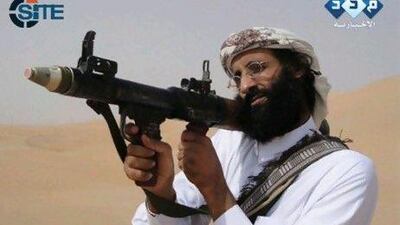
Examining the impact of Anwar Al Awlaki, the US-born Al Qaeda propagandist killed in an American drone strike in Yemen in 2011, Mr Meleagrou-Hitchens details how online lectures and videos directly launched mass attacks of a type that are regularly inflicted across the world.
People lay flowers and pay their respects to James Furlong in Wokingham. Furlong was among three people stabbed to death by Khairi Saadallah, a refugee from Libya. Getty Images
Attacks on an unsuspecting crowd in a park or shoppers in a market have diminished during the coronavirus-inspired lockdown. But when a Libyan asylum seeker stabbed three men in the English town of Reading earlier this month, the event almost seemed like a return to a normality.
Much remains unclear about what drove Khairi Saadallah. Feuds over the religion at the time of his birth or the rise of radicalisation in his homeland have surrounded the nature of the attack. However, seeking to kill as many strangers as possible placed Saadallah’s attack alongside the latest events that owe much to Awlaki.
Incitement shows how Awlaki, who was radicalised in the US and moved to the UK in 2002, initiated a new departure in mass violence.
Awlaki dissected the world in binary terms, between those who were fighting for "truth" and those propagating of falsehoods to oppress others. He weaponised alienation in way that departed from Osama bin Laden, his nominal leader, and he set the stage for the emerging terror masters of ISIS. Personal connections between Awlaki and the attacks are detailed in Incitement nearly adecade later – and they show few signs of abating.
Anwar Al Awlaki was killed in a drone strike in Yemen in 2011. But his teachings continue to influence terrorists.
The attraction of a mass killing for its proponents is two-fold.
At stake is the credibility of the state at the most fundamental level of not ensuring the safety of its citizens. In triggering a security response, the targeted state is in danger of haemorrhaging resources and becoming enfeebled as a result of the attacks. The attacker gains satisfaction both for revenging his alienation by killing other people and dealing a blow to the state they perceived as oppressive.
Some are deeply immersed in the teachings of Awlaki and others. But as time goes on, most are very far from religion. Indeed, far-right extremists adopted a policy of attack in an effort to strike their own blows.
When Awlaki arrived in London in 2002, he found a supportive community among the Muslim Association of Britain (MAB), a grouping that exists to this day, and the Federation of Student Islamic Societies (FOSIS). At one point in 2003, the MAB put on a national tour for Awlaki.
Mr Meleagrou-Hitchens concludes that there was an increasing hardening of Awlaki's view during his time in Britain. He quotes a witness that three of the 2005 London bombers were at a lecture he gave in 2003.
The following year, Awlaki took up residence in Yemen and by 2005, the author concludes that there could be little doubt his words were a justification for murder. By 2008, when Michael Hayden, the then US intelligence chief, was declaring the “near strategic defeat of Al Qaeda”, Awlaki was launching a "battle for hearts and minds". He declared that a vote in the US presidential election was an “attack” on Muslims.
The formal banking system remains the most used way of funding terrorism. AFP
Awlaki directed Umar Farouk Abdulmutallab, the Nigerian-born bomber who attempted to blow up flight North West Airlines flight 253 in 2009. Abdulmutallab first encountered Awlaki's sermons on compact discs for sale in London. He was a prominent figure in FOSIS and headed the Islamic Society at University College London.
Awlaki also swapped power point presentations with Nidal Hasan, who carried out the notorious attack in Fort Hood, Texas – also in 2009 – killing 12 soldiers and one civilian. Other followers include Roshonara Choudhry, who attempted to kill a British MP by stabbing him, and Zachary Adam Chesser, who tried to join Al Shabab. All these figure were pathfinders for dozens of others.
By the time ISIS came along, its propagandists were relying on Awlaki’s instructions.
The upsurge in attacks on restaurants and public spaces in France and Belgium in 2015 and 2016 was co-ordinated over the Telegram app by Rachid Kassim, who can be linked to Awlaki's rhetoric.
Junaid Hussain, a British hacker who was an important member of an ISIS group known as The Legion, gave an interview to describe how he had been inspired by Awlaki and his words "victory is on our side". Hussain also filled Twitter with Awlaki's quotes.
Drip by drip, killing for the sake of it is destined to repeat – and one man has had a big role.
Soft power was first mentioned in 1990 by former US Defence Secretary Joseph Nye. He believed that there were alternative ways of cultivating support from other countries, instead of achieving goals using military strength. Soft power is, at its root, the ability to convince other states to do what you want without force. This is traditionally achieved by proving that you share morals and values.
Dubai launched the pilot phase of its real estate tokenisation project last month.
The initiative focuses on converting real estate assets into digital tokens recorded on blockchain technology and helps in streamlining the process of buying, selling and investing, the Dubai Land Department said.
Dubai’s real estate tokenisation market is projected to reach Dh60 billion ($16.33 billion) by 2033, representing 7 per cent of the emirate’s total property transactions, according to the DLD.
Houthis: Iran-backed rebels who occupy Sanaa and run unrecognised government
Yemeni government: Exiled government in Aden led by eight-member Presidential Leadership Council
Southern Transitional Council: Faction in Yemeni government that seeks autonomy for the south
Habrish 'rebels': Tribal-backed forces feuding with STC over control of oil in government territory
What sanctions would be reimposed?
Under ‘snapback’, measures imposed on Iran by the UN Security Council in six resolutions would be restored, including:
An arms embargo
A ban on uranium enrichment and reprocessing
A ban on launches and other activities with ballistic missiles capable of delivering nuclear weapons, as well as ballistic missile technology transfer and technical assistance
A targeted global asset freeze and travel ban on Iranian individuals and entities
Authorisation for countries to inspect Iran Air Cargo and Islamic Republic of Iran Shipping Lines cargoes for banned goods
Living in...
This article is part of a guide on where to live in the UAE. Our reporters will profile some of the country’s most desirable districts, provide an estimate of rental prices and introduce you to some of the residents who call each area home.
Syria v Australia
2018 World Cup qualifying: Asia fourth round play-off first leg
Venue: Hang Jebat Stadium (Malacca, Malayisa)
Kick-off: Thursday, 4.30pm (UAE)
Watch: beIN Sports HD
* Second leg in Australia scheduled for October 10
How to apply for a drone permit
Individuals must register on UAE Drone app or website using their UAE Pass
Add all their personal details, including name, nationality, passport number, Emiratis ID, email and phone number
Upload the training certificate from a centre accredited by the GCAA
Submit their request
What are the regulations?
Fly it within visual line of sight
Never over populated areas
Ensure maximum flying height of 400 feet (122 metres) above ground level is not crossed
Users must avoid flying over restricted areas listed on the UAE Drone app
Only fly the drone during the day, and never at night
2017: Golden State bt Cleveland 4-1
2016: Cleveland bt Golden State 4-3
2015: Golden State bt Cleveland 4-2
2014: San Antonio bt Miami 4-1
2013: Miami bt San Antonio 4-3
2012: Miami bt Oklahoma City 4-1
2011: Dallas bt Miami 4-2
2010: Los Angeles Lakers bt Boston 4-3
2009: Los Angeles Lakers bt Orlando 4-1
2008: Boston bt Los Angeles Lakers 4-2
The Voice of Hind Rajab
Starring: Saja Kilani, Clara Khoury, Motaz Malhees
Director: Kaouther Ben Hania
Rating: 4/5
England Test squad
Ben Stokes (captain), Joe Root, James Anderson, Jonny Bairstow, Stuart Broad, Harry Brook, Zak Crawley, Ben Foakes, Jack Leach, Alex Lees, Craig Overton, Ollie Pope, Matthew Potts
Starring: Baneen Ahmad Nayyef, Waheed Thabet Khreibat, Sajad Mohamad Qasem
Rating: 4/5
Mercer, the investment consulting arm of US services company Marsh & McLennan, expects its wealth division to at least double its assets under management (AUM) in the Middle East as wealth in the region continues to grow despite economic headwinds, a company official said.
Mercer Wealth, which globally has $160 billion in AUM, plans to boost its AUM in the region to $2-$3bn in the next 2-3 years from the present $1bn, said Yasir AbuShaban, a Dubai-based principal with Mercer Wealth.
“Within the next two to three years, we are looking at reaching $2 to $3 billion as a conservative estimate and we do see an opportunity to do so,” said Mr AbuShaban.
Mercer does not directly make investments, but allocates clients’ money they have discretion to, to professional asset managers. They also provide advice to clients.
“We have buying power. We can negotiate on their (client’s) behalf with asset managers to provide them lower fees than they otherwise would have to get on their own,” he added.
Mercer Wealth’s clients include sovereign wealth funds, family offices, and insurance companies among others.
From its office in Dubai, Mercer also looks after Africa, India and Turkey, where they also see opportunity for growth.
Wealth creation in Middle East and Africa (MEA) grew 8.5 per cent to $8.1 trillion last year from $7.5tn in 2015, higher than last year’s global average of 6 per cent and the second-highest growth in a region after Asia-Pacific which grew 9.9 per cent, according to consultancy Boston Consulting Group (BCG). In the region, where wealth grew just 1.9 per cent in 2015 compared with 2014, a pickup in oil prices has helped in wealth generation.
BCG is forecasting MEA wealth will rise to $12tn by 2021, growing at an annual average of 8 per cent.
Drivers of wealth generation in the region will be split evenly between new wealth creation and growth of performance of existing assets, according to BCG.
Another general trend in the region is clients’ looking for a comprehensive approach to investing, according to Mr AbuShaban.
“Institutional investors or some of the families are seeing a slowdown in the available capital they have to invest and in that sense they are looking at optimizing the way they manage their portfolios and making sure they are not investing haphazardly and different parts of their investment are working together,” said Mr AbuShaban.
Some clients also have a higher appetite for risk, given the low interest-rate environment that does not provide enough yield for some institutional investors. These clients are keen to invest in illiquid assets, such as private equity and infrastructure.
“What we have seen is a desire for higher returns in what has been a low-return environment specifically in various fixed income or bonds,” he said.
“In this environment, we have seen a de facto increase in the risk that clients are taking in things like illiquid investments, private equity investments, infrastructure and private debt, those kind of investments were higher illiquidity results in incrementally higher returns.”
The Abu Dhabi Investment Authority, one of the largest sovereign wealth funds, said in its 2016 report that has gradually increased its exposure in direct private equity and private credit transactions, mainly in Asian markets and especially in China and India. The authority’s private equity department focused on structured equities owing to “their defensive characteristics.”
Living in...
This article is part of a guide on where to live in the UAE. Our reporters will profile some of the country’s most desirable districts, provide an estimate of rental prices and introduce you to some of the residents who call each area home.
December 2014: Former UK finance minister George Osbourne reforms stamp duty, replacing the slab system with a blended rate scheme, with the top rate increasing to 12 per cent from 10 per cent:
Up to £125,000 - 0%; £125,000 to £250,000 – 2%; £250,000 to £925,000 – 5%; £925,000 to £1.5m: 10%; Over £1.5m – 12%
April 2016: New 3% surcharge applied to any buy-to-let properties or additional homes purchased.
July 2020: Rishi Sunak unveils SDLT holiday, with no tax to pay on the first £500,000, with buyers saving up to £15,000.
March 2021: Mr Sunak decides the fate of SDLT holiday at his March 3 budget, with expectations he will extend the perk unti June.
April 2021: 2% SDLT surcharge added to property transactions made by overseas buyers.
Premier League clubs spent £230 million (Dh1.15 billion) on January transfers, the second-highest total for the mid-season window, the Sports Business Group at Deloitte said in a report.
Dubai Women's Tour teams
Agolico BMC
Andy Schleck Cycles-Immo Losch
Aromitalia Basso Bikes Vaiano
Cogeas Mettler Look
Doltcini-Van Eyck Sport
Hitec Products – Birk Sport
Kazakhstan National Team
Kuwait Cycling Team
Macogep Tornatech Girondins de Bordeaux
Minsk Cycling Club
Pannonia Regional Team (Fehérvár)
Team Auvergne-Rhône-Alpes
Team Ciclotel
UAE Women’s Team
Under 23 Kazakhstan Team
Wheel Divas Cycling Team
Groom and Two Brides
Director: Elie Semaan
Starring: Abdullah Boushehri, Laila Abdallah, Lulwa Almulla
Rating: 3/5
The specs: 2018 Maserati GranTurismo/GranCabrio
Price, base Dh485,000 (GranTurismo) and Dh575,000 (GranCabrio)
Engine 4.7L V8
Transmission Six-speed automatic
Power 460hp @ 7,000rpm
Torque 520Nm @ 4,750rpm
Fuel economy, combined 14.3L (GranTurismo) and 14.5L (GranCabrio) / 100km
How to avoid crypto fraud
Use unique usernames and passwords while enabling multi-factor authentication.
Use an offline private key, a physical device that requires manual activation, whenever you access your wallet.
Avoid suspicious social media ads promoting fraudulent schemes.
Only invest in crypto projects that you fully understand.
Critically assess whether a project’s promises or returns seem too good to be true.
Only use reputable platforms that have a track record of strong regulatory compliance.
Store funds in hardware wallets as opposed to online exchanges.
FINAL SCORES
Fujairah 130 for 8 in 20 overs
(Sandy Sandeep 29, Hamdan Tahir 26 no, Umair Ali 2-15)
Sharjah 131 for 8 in 19.3 overs
(Kashif Daud 51, Umair Ali 20, Rohan Mustafa 2-17, Sabir Rao 2-26)
Previous men's records
2:01:39: Eliud Kipchoge (KEN) on 16/9/19 in Berlin
2:02:57: Dennis Kimetto (KEN) on 28/09/2014 in Berlin
2:03:23: Wilson Kipsang (KEN) on 29/09/2013 in Berlin
2:03:38: Patrick Makau (KEN) on 25/09/2011 in Berlin
2:03:59: Haile Gebreselassie (ETH) on 28/09/2008 in Berlin
2:04:26: Haile Gebreselassie (ETH) on 30/09/2007 in Berlin
2:04:55: Paul Tergat (KEN) on 28/09/2003 in Berlin
2:05:38: Khalid Khannouchi (USA) 14/04/2002 in London
2:05:42: Khalid Khannouchi (USA) 24/10/1999 in Chicago
2:06:05: Ronaldo da Costa (BRA) 20/09/1998 in Berlin
The company offers payments/bribes to win key contracts in the Middle East
May 2017
The UK SFO officially opens investigation into Petrofac’s use of agents, corruption, and potential bribery to secure contracts
September 2021
Petrofac pleads guilty to seven counts of failing to prevent bribery under the UK Bribery Act
October 2021
Court fines Petrofac £77 million for bribery. Former executive receives a two-year suspended sentence
December 2024
Petrofac enters into comprehensive restructuring to strengthen the financial position of the group
May 2025
The High Court of England and Wales approves the company’s restructuring plan
July 2025
The Court of Appeal issues a judgment challenging parts of the restructuring plan
August 2025
Petrofac issues a business update to execute the restructuring and confirms it will appeal the Court of Appeal decision
October 2025
Petrofac loses a major TenneT offshore wind contract worth €13 billion. Holding company files for administration in the UK. Petrofac delisted from the London Stock Exchange

