
For over a year, Seha has been undergoing a transformation that will shape a modern, progressive healthcare network fit for the next 50 years, delivering healthcare excellence to the UAE community. Through this period, our teams have adopted an agile mindset, learning new ways of working and infusing innovation through their services, while keeping patient-centricity paramount.
This served us extremely well as Seha was once again entrusted to serve the nation at the onset of Covid-19. As the UAE's largest healthcare network, we were able to mobilise teams with scale and at record speed across the country to deliver outstanding care to patients. Our frontline heroes led the charge, supported by the wider Seha family, demonstrating resilience and a high sense of duty, navigating an ever-evolving situation. Our rich legacy in the UAE, backed by the vision of our leaders, held us in good stead during this time.
As the world slowed down, it was evident that healthcare services will be instrumental in bringing lives back to normal and directly support the engines of our economy. Our mission was not just about stopping the spread of this virus, but about ensuring the health of the nation so that we could collectively emerge stronger.

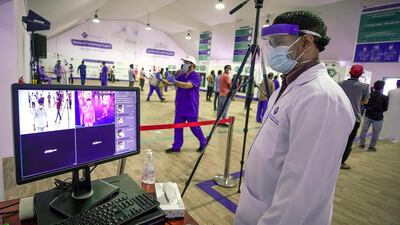
Our resilience was on display as we established 20-plus drive-through screening facilities, one of the first countries in the world to introduce this service. Seha's frontline workers along with its partners conducted 6.2 million of the over 20.5 million tests completed in the UAE since the beginning of the year.
We recognised the need to be prepared and to manage the load across our hospitals and limit in-person visitation. In the process, we opened three field hospitals and introduced the telemedicine virtual outpatient clinics, medication delivery services and child vaccination drive-through services for safe and seamless continuation of care.
The ability to deliver extraordinary care at such a critical time for our nation has come on the back of over a decade of service guided by Seha's vision to put the population we serve first, while adopting new trends and investing in innovations that will transform healthcare services. Seha remains prepared for the next set of inevitable challenges, while maintaining quality as a top priority. During the pandemic, our valuable workforce demonstrated continuous commitment to providing optimal patient care through continuous quality improvement despite stretched resources at times. Our frontline heroes rose to the challenge in this unprecedented era.
As home to diverse global communities, the UAE has placed a high importance on ensuring a strong healthcare ecosystem. The nation's health budget has grown by over 26 per cent between 2016 and 2020, which is indicative of the high priority placed on the quality of services available to citizens and residents. So, while much of the world's economy continues to be under pressure, the UAE has been able to open major business sectors including hospitality, tourism, real estate and more.

The year 2021 will see us accelerate our transformation journey. As we continue to evolve the country’s healthcare sector, we also need to build capacity and enhance capabilities. While the UAE has consistently attracted the best of healthcare talent, it is important that we continue to nurture and grow the Emirati professionals within the industry and invest in the next generation to lead the future of healthcare in the country.
A major part of the sector's future is embedded in advances in healthcare techniques and technologies, and we need to keep up with changing expectations and new possibilities. Technology has also fast-tracked the use of telemedicine facilities, with the Harvard Business Review reporting a staggering 2,000 per cent increase in use in the US between January and June 2020 because of Covid-19. While many of us are already able to source our vitals on our smartphones and watches, soon artificial intelligence, robotics, virtual reality and blockchain technology will shape the new normal for our industry.
The UAE’s response to Covid-19 has been an example to the world – showcasing the importance of healthcare investment, policy decisions and having high-calibre professionals. None of this would have been possible without collective efforts, whether through partnership with government, collaboration and innovation across teams or the support of the community. The solidarity witnessed has been underpinned by initiatives and committees launched in co-operation with multiple ministries including health, education and economy, to ensure that impact on day-to-day life is minimised.

The dynamic nature of the current situation has required us all to rise to new challenges, and I am humbled by the response of our Seha teams and our partners. Their devotion to combat the virus has been an inspiration, and it is a remarkable effort in support of the community during this pandemic. Now, more than ever, we must remain as a unified front and treat one another with kindness and respect so that we can care for many as possible in the time ahead.
As we enter the 50th year of the UAE’s formation, we can look back with pride at what the nation has achieved in this period – and in 2020 in particular. The strength demonstrated and resurgence around us are testaments to the UAE’s commitment to unlocking only the best outcomes for patients who seek care in the country.
At Seha, we will continue to champion world-class services and remain the backbone of health care in the country.
Dr Gareth Goodier is the group chief executive of Seha