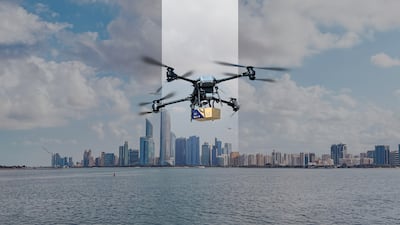

A new economy is forming in the sky above us. Drones carry medicines, inspect power lines, treat crops and deliver parcels; passenger services will soon follow. This is the low-altitude economy, a new economy that uses air space mostly below 1,000 metres, sometimes up to 3,000. Its actors are all machines and robots that range from helicopters and drones to electric vertical take-off and landing craft, or eVTOLs. Cheaper sensors, electric motors and better software are making routine flights practical – and creating new jobs, and a whole new economy in aviation, data, maintenance and logistics.
In western Sweden, emergency despatchers send drones carrying automated external defibrillators when an ambulance is alerted to suspected cardiac arrest. In a study of 55 cases, drones arrived first in 37, with a median lead of three minutes and 14 seconds. In cardiac arrest cases, seconds can mean the difference between life and death, and the drone puts equipment on scene before paramedics.
DJI, a Chinese technology company headquartered in Shenzhen, says more than 600,000 of its agricultural drones operated in over 100 countries by the end of last year. The company estimates they saved 410 million tonnes of water and cut carbon emissions by 51 million tonnes. In Brazil, precision spraying reduced herbicide use by up to 35 per cent showing how targeted spraying can help farmers use resources more efficiently.
Britain’s national grid is moving drone inspections into routine use after a four-year development programme. Pilots supervise flights from a control room, even when the drones are out of sight and near live power lines, and the AI scans high-resolution images for faults. The national grid owns 21,900 steel pylons in England and Wales, and it says drones make inspections faster, more consistent and less risky.
Zipline, an American drone delivery company, says it has completed more than three million deliveries; Wing and Walmart plan over 270 locations next year, reaching more than 40 million Americans; and Amazon aims to serve nearly 500 US cities and towns by the end of this year, delivering eligible parcels in as little as 30 minutes. Dubai has also begun drone deliveries: Keeta’s licensed service carries food and medicine in Dubai Silicon Oasis. Talabat and K2 separately plan to test drone-to-station deliveries for food and groceries.
However, there are early signs of challenges, even during test periods. In Richardson, Texas, residents near Amazon’s launch site reported frequent flights, noise and concerns about cameras. While Amazon says noise complaints make up less than 1 per cent of programme enquiries, cities must weigh convenience against residents’ costs and give them a voice.
While these stories of various forms of delivery and monitoring are interesting, the real economic impact can be seen in China, which is building the ecosystem at scale. By early this year, Shenzhen had opened 310 low-altitude logistics routes and built more than 1,200 take-off and landing sites. It produces about 70 per cent of China’s consumer drones and half its industrial drones. Across the country, registered drones logged 45.3 million flight hours last year, up 69.9 per cent.
By the end of 2024, China had more than 20,000 drone operations companies, with combined annual output of about $30 billion, over 2,300 drone research and development enterprises, and more than 1,000 models in mass production. Last year, new occupations included drone-swarm flight planners and low-altitude logistics specialists. Unmanned-aircraft exports were $2.16 billion in 2024, or 37.2 per cent of the global total. Estimates put DJI above 90 per cent of the global consumer-drone market and nearly 70 per cent of the overall sector.
China’s Civil Aviation Administration projected the low-altitude economy at about $210 billion last year and nearly $500 billion by 2035. Ten government bodies aim to establish more than 300 low-altitude standards by 2030; the aviation regulator has created a dedicated safety department. These are forecasts, but the country is building rules and infrastructure alongside the aircraft.
The opportunity lies in networks. Hospitals could move samples, utilities inspect assets more often and farms monitor crops precisely. Businesses could buy delivery or inspection services without aircraft; each flight needs communications, landing sites, maintenance, insurance and data.
A live map of the low sky could show routes, aircraft and urgent flights. Nasa has tested co-ordination for drones beyond an operator’s sight. Digital twins – models of streets, buildings and air space – help planners test routes. Radio networks may also locate aircraft and reroute them as weather changes.
Governments will decide whether this economy earns trust. They must set rules for registration, training, insurance and responsibility; mark corridors and restricted zones; approve landing sites; and address noise, privacy, data and emergencies. Heat, dust, coastal winds, poor visibility and battery limits will shape which services work in each climate.
A school leaver can study a three-year Bachelor of Aviation in Remotely Piloted Aircraft Systems at the University of New South Wales in Sydney, with flight training, aviation safety, airspace management, law and data. Gulf countries can begin with ports, energy sites, hospitals, farms and remote communities. Shared standards could connect regional markets, and expertise in heat, dust and coastal winds could become an export.
Success means faster services, safer infrastructure and better lives on the ground. We should be ready to build and benefit from this economy.

