

Why does cultural destruction cause outrage while cultural theft sometimes stirs a strange form of admiration for thieves?
The destruction of the ancient and monumental Buddhas of Bamiyan by the Taliban 25 years ago was described in contemporary reporting as an act of “cultural genocide”.
When ISIS extremists rampaged through the antiquities museum in Mosul more than a decade ago, destroying many precious Mesopotamian artefacts in their wake, the world was horrified by their actions. Reckless militants were considered to have waged war on history.
The demolition of parts of Palmyra by ISIS during the Syrian civil war was viewed as an attempt by extremists to destroy the country’s identity through a form of cultural annihilation.
The anger, sadness and outrage that each of these acts of vandalism elicited is evident even years later. Cultural destruction is a particular kind of loss, even if the devastation in Palmyra also prompted plenty of ethical discussions about whether it was appropriate to mourn so deeply for lost temples when extremist violence also extinguished so many lives.
Recovery from such acts of destruction is never easy nor straightforward, as can be seen in a modern assessment of those places.
In Mosul, the painstaking UAE-led restoration of historic landmarks after the last remnants of ISIS were purged from the city is widely regarded as having helped restore its heartbeat.
Photographs released this week of Afghanistan’s Bamiyan Province to mark the passing years since 2001 continue to radiate the absence of the huge statues from the sandstone cliffs. In Palmyra, meanwhile, the process of restoration will take years and is necessarily complex.
There is sadness and hope in some of these stories, but the universal impulse is to be horrified by the crime and the deliberate loss of history. But compare these three tales of cultural crime to recent acts of cultural theft, and a different rhetoric emerges.
Earlier this week, thieves broke into the Renoir Museum in the south of France and stole four paintings, dropping two as they made their exit.
-
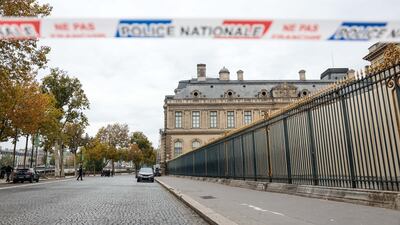
The Louvre in Paris has been robbed by several criminals who smashed windows and stole jewellery. EPA -

This emerald-and-diamond necklace that Napoleon gave to his wife, Empress Marie Louise, was taken. AFP -

An extendable ladder used by the thieves to access one of the upper floors of the museum. EPA -

Police officers work by the crane believed to have been used in the robbery. Reuters -
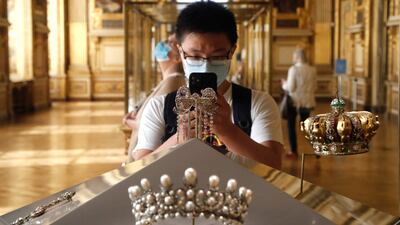
Empress Eugenie's crown being pictured. It was recovered after the thieves dropped it as they made their escape. AFP -

Police officers seal off the entrance to the museum. Getty Images -

The Louvre is sealed off after the robbery. Getty Images -

Police officers look for clues by a basket lift used by the thieves. AP -

A tiara, necklace and single earring from the sapphire set that belonged to Queen Marie-Amelie and Queen Hortense was among the items stolen. AFP -

Police at the scene. Getty Images


Most of the reporting of the crime has focused on the value of the works involved, in something akin to the manner of someone submitting an insurance claim for items to be replaced after accidental damage or loss.
What it didn’t overly concern itself with was the devastating nature of the loss, the slim chances of recovery or the violent nature of the crime, which involved hacksaws and knives to breach security. Maybe the prolific nature of the artist somehow mitigates the offence, but any work stolen is in all likelihood a work lost for good.
One of the big stories of last autumn was the theft from the Louvre in Paris of several priceless pieces, which was described in newspapers around the world as a “daring and audacious heist” and a “Hollywood-style robbery” or, jokingly, as “brazen daylight robbery”. It is hard not to notice the difference in tone between being appalled by cultural destruction when compared to the apparent applause for the thieves.
The speculation about what might happen next after the pieces were stolen was also rife, with plenty of chatter about whether the thieves would sell what they stole or melt it down. Meanwhile, a teenager who dressed up as a dandy detective and parked himself at the scene, and the manufacturer of the hydraulic cherry-picker that the thieves used to break into the institution, went viral around the world.

Anger at the theft was steadily sandblasted away by a form of admiration for the supposed derring-do of a bunch of criminals. Almost a year later, most of the haul is missing. One piece dropped on exit and badly damaged in the process is undergoing a slow restoration.
Europol, the law enforcement agency, recently reported that violent robberies by art thieves are increasing. That detail alone should dismantle the romanticisation of them as some kind non-violent smash-and-grab opportunists once and for all. Like the break-in at the Renoir Museum, the operation at the Louvre involved violent threats as well as confrontations with staff and visitors.
Last week, it was reported that planners in London are considering an application to open a tourist destination and licensed premises at the Hatton Garden safe deposit building that was the subject of a 2015 raid. The criminals have been venerated in TV, radio and film adaptations and in popular culture for that supposedly intoxicating mix of deception and brute force, while victims lost their life savings. If plans are given the go-ahead, those same people will have to endure a peculiar and hurtful form of victim baiting.
It is hard to understand why we collectively see theft and destruction through different lenses, when the resulting devastating loss is the same. That state of affairs should change. We must view “museum heists” as exactly what they are – violent acts of cultural destruction – rather than adorning them with some kind of glamourising narrative.

