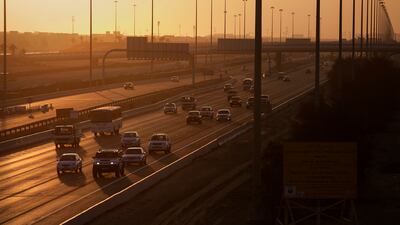

Time is one of the few resources we can’t manufacture, automate or outsource. Yet for decades, we have allowed the daily commute to steal quality time from us.
Across the world, congestion has been normalised. Any associated stress has been accepted. The journey between home and work has become a kind of dead zone in the day that is neither productive nor restorative.
But what if we’ve misunderstood what the commute could be? What if we have been thinking about it the wrong way, simply because we lacked an alternative to daily gridlock?

At Etihad Rail, that question has shaped how we think about our coming passenger rail services. What if travel, when it takes place in calm, predictable and safe environments, doesn’t just reduce stress, but gives people time back? Not in the strict chronological sense, of course - a minute will always be a minute - but in how time is experienced and in how much of it feels usable, meaningful and under our control.
This distinction matters. You don’t need me to tell you that your perception of time is deeply influenced by context such as noise, uncertainty, cognitive load and emotional state. A stressful commute feels longer, even when it isn’t. A calm commute feels shorter, even when the clock disagrees.
When journeys are calm, something important happens - the commute becomes time we can use, not time we lose.
That insight led us to investigate further. We set ourselves a clear challenge - to design a passenger service that deliberately leans into the growing body of research showing that people who commute in calm, predictable environments report higher daily satisfaction and lower stress.
Take crowding and personal space. Controlled trials among rail passengers show that reduced crowding and greater personal space lead to lower cortisol levels. Simply put, space matters.
Our response is to guarantee seating. When passengers book through our integrated app, which we will launch later this year, they are assigned a dedicated seat. That certainty, knowing you won’t be standing shoulder to shoulder with strangers, reduces stress before the journey even begins. This means more space, more predictability and less emotional strain.
This matters because research consistently shows that people underestimate the cumulative toll of stressful travel and overestimate their ability to adapt to it.
By contrast, stable and comfortable journeys can act as a mental buffer between the different roles we play each day, professional and personal. Such mental buffers create space to read, think, reflect or simply transition. In a world saturated with digital noise, that transition has become increasingly valuable.
This brings us to the UAE, and to the social importance of passenger rail. Our organising principle is simple: people will value rail not only because it moves them efficiently, but because it shapes the quality of time in between.
The UAE is entering a period where quality of life, productivity and well-being are understood as being deeply connected. Time has become a priority, as have questions about how to protect it, invest in it and help people use it better. Mobility is central to that conversation.
An Emirati-designed rail system built around calmness, with guaranteed seating, consistent timetables, intuitive booking, thoughtfully designed interiors and space to focus or unwind, does more than move people from A to B. It returns something they thought was lost - time.
For many of us, rail will be the difference between arriving at work already depleted and arriving ready to contribute. It will be the difference between reaching home drained and arriving present, with energy for family or friends. Rail could become not a commute you endure but one that adds value to your day.
-
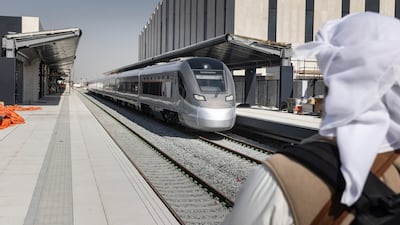
An Etihad Rail passenger train at the Mohamed bin Zayed City station in Abu Dhabi. All photos: Antonie Robertson / The National -

Inside the central concourse of the Mohamed bin Zayed City Etihad Rail station -
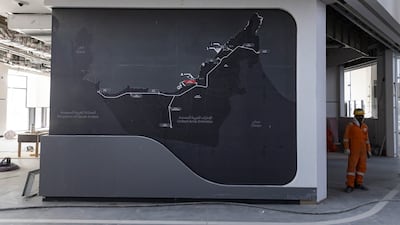
A map of the network at the Mohamed bin Zayed City station -
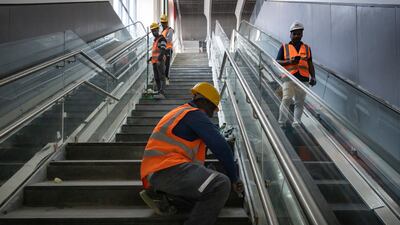
Work is advancing at Mohamed bin Zayed City station to get it ready for the opening -
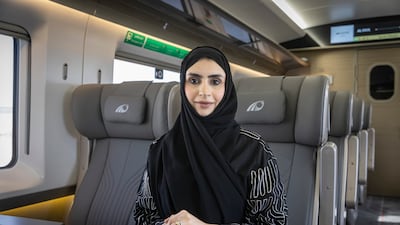
Azza Al Suwaidi, deputy chief executive of Etihad Rail Mobility, said the Mohamed bin Zayed City station is designed to feel open and intuitive, with spacious concourses, clear signage and comfortable waiting areas -
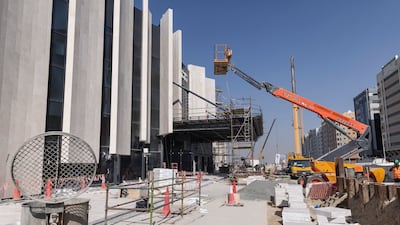
The distinctive exterior of the Mohamed bin Zayed City station -

The passenger service is to launch this year -

Onboard several seating classes are available such as business class -
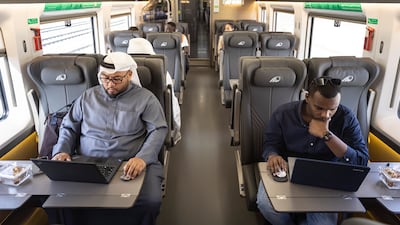
A look at the business class seating onboard -
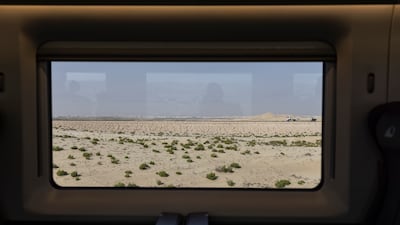
A view from an Etihad Rail passenger train as it travels through Abu Dhabi


When we talk about the future of mobility, we often focus on infrastructure, sustainability, speed and innovation. All of these matter, and Etihad Rail will continue to speak about them - but another transformation is underway. This is one rooted in psychology, well-being and human experience. The evidence from that transformation is already clear: calm environments change how we experience time. Such environments expand it and improve it. They return time to us.
That is the essence of “time gained”. It is why the next generation of mobility will be defined not just by how far or how fast we travel, but by what that travel allows us to do, to think and to become.
In the end, the most meaningful innovation Etihad Rail can offer is simple: when our services are introduced and scaled up, we will give people back their time. There are few gifts more valuable than that.

