
In Lebanon, as in many countries of the Middle East, food is far more than a meal. Cuisine is often synonymous with culture and identity, and the number of restaurants elsewhere serving food from the region shows how far it has travelled into the wider world.
In times of war people rely on food not just as a way to sustain their bodies but also to nourish their souls, to endure suffering by holding onto a way of life. Often, it is one of the last forms of connection to fellow citizens in places where nearly everything else has fractured.
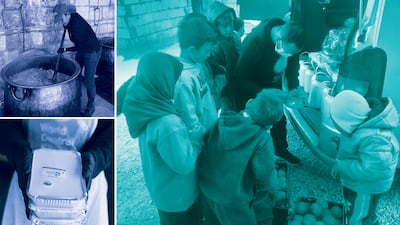
I know this intimately as a chef, and through the work I do with World Central Kitchen, one of the most active food aid charities in the region. In Gaza, for instance, we distribute thousands of meals every day to families living through unimaginable loss and displacement. In these moments, food becomes far more than aid. It grants dignity, routine, comfort and proof that people have not been forgotten. The moment food arrives, people gather, and in the ensuing movement and conversation there is a brief but essential return to normality. In that sense, food creates stability.
But across large parts of the region where conflict is becoming entrenched, a tragic reality is unfolding. Conflict isn’t just destroying buildings but dismantling the food systems that allow people to sustain themselves. Agricultural land becomes inaccessible. Water infrastructure collapses. Supply chains break down. Farmers lose access to seeds, fertiliser and fuel. Markets empty, and families who once relied on work, tourism or remittances suddenly depend on humanitarian assistance to survive. And yet, humanitarian funding globally is shrinking at the exact moment needs are becoming more prolonged and more complex.
This is why locally rooted food response matters. Foreign aid is often just part of the picture of survival. Communities depend on local cooks, farmers, restaurant owners, drivers and volunteers to keep entire social ecosystems functioning under impossible pressure. In Lebanon, chefs and cooks across the country are organising kitchens with our support or activating kitchens around them. There and across the Middle East, we have seen that when communities are empowered to cook for themselves and for one another, food bolsters their resilience.
Behind every meal in conflict zones is a chain of people that is now under strain: farmers, producers, transporters, market workers. In Lebanon, since March 2 more than 2 million people have been displaced due to the constant threats and airstrikes in the South, the Bekaa Valley and Beirut. The destruction of housing, roads, water and electricity infrastructure has been enormous. But the land itself is also being damaged. Many farmers are no longer able to reach their fields, and entire agricultural zones have become inaccessible due to ongoing airstrikes. In regions like the Bekaa and the South, where a majority of Lebanon’s agricultural lands are concentrated, vast areas are now left untended, disrupted or abandoned.
The environmental impact is severe and long-lasting. According to some estimates, more than 47,000 olive trees have been uprooted or destroyed – trees that take decades to mature and generations to sustain. The use of harmful materials in the conflict, including phosphorus, is altering soil composition, contaminating land and affecting arable land. The contamination could last for years.
The rainy season in Lebanon is about to end, and the destruction of the country’s water infrastructure means that even if the conflict were to end tomorrow, there will be no water for irrigation. Soil fertility, biodiversity and entire ecosystems are being compromised in parts of the country where nearly half of families depend directly or indirectly on agriculture.
Organisations like ours try as much as we can to source locally in order to keep the ecosystem alive and support livelihoods. Food that is produced locally moves faster, tastes familiar and, most importantly, preserves a sense of belonging. But local food systems are suffering intense price pressures that are becoming difficult to absorb. Since the beginning of the war in Lebanon, diesel prices have doubled, gasoline has surged by 75 per cent and cooking gas prices have climbed more than 60 per cent.
Ingredients are also slipping further out of reach. Prices of vegetables, meat and poultry have all increased by more than a third. The harsh reality is that for charities working in these environments, costs are rising far faster than funding.
The damage being done to food systems is also damaging the role food plays in holding society together. That is what is at stake not just in Lebanon, but throughout the region’s conflict zones – the capacity to feed, but also the culture and humanity surrounding the act of feeding.
But I believe that as long as there are people willing to cook, to share and to gather around for a meal, even in the most difficult conditions, our cuisine will hold us together. A mezze dish may be small, but the spirit behind it is far bigger than any war.