


A defining feature of the Middle East today is the geopolitical retreat of a once-imperial Iran. It is no longer as formidable as it was prior to the tragic events of October 7, 2023. The downsizing of this regional power ushers a new phase of geopolitics that can be appropriately described as the post-Iranian hegemony in large parts of the Middle East.
Iran’s infamous “Axis of Resistance” lies in disarray. Tehran has effectively lost Syria – a key ally and a pillar of its regional influence for nearly four decades. Not only has it lost Syria as a strategic partner, but the new leadership in Damascus, under interim President Ahmad Al Shara, has repositioned itself in opposition to Tehran, identifying with an “Arab Axis of Moderation”.
Meanwhile, Iran’s nuclear programme – once a major source of bargaining power for its leadership – has been severely degraded by the recent Israeli and American strikes. The extent of the damage remains to be verified by the International Atomic Energy Agency, but for now, it is difficult to assess the future of Iran’s nuclear capabilities. While it still retains enough power to intimidate its neighbours, Iran has suffered a significant, if not irreversible, geopolitical setback.
Domestically, the Islamic Republic is preoccupied with mere survival. Its economy is under strain due to harsh sanctions. Inflation remains at a staggering 40 per cent, unemployment is persistent – especially among university graduates – and the country suffers from poor governance and deep-rooted corruption. For example, because of mismanagement, Tehran – home to nearly nine million people – is suffering from severe water shortages, with the crisis getting worse. Socially, a new generation of Iranians is demanding reform and challenging the conservative religious establishment more openly.
-
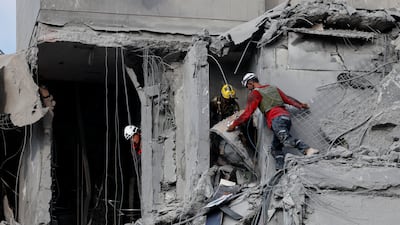
Rescue and recovery crews at work at a residential site in Be'er Sheva following a missile attack from Iran on June 24. Reuters -

Contrails from Israeli air defence system are visible as interceptor rockets are launched towards Iranian missiles during an Iranian attack on June 24. AP -
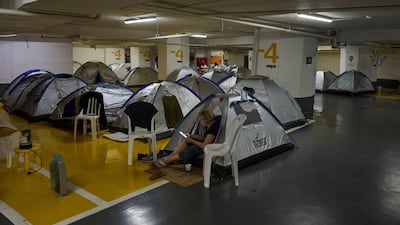
Residents spend the night in an underground garage as a precaution against Iranian missile attacks in Tel Aviv on June 23. AP -
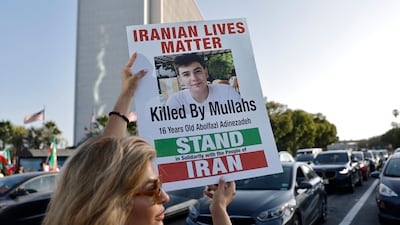
Supporters of regime change in Iran rally outside the Wilshire Federal Building in Los Angeles, California. The Los Angeles area holds the largest Iranian community in the world outside of Iran. AFP -
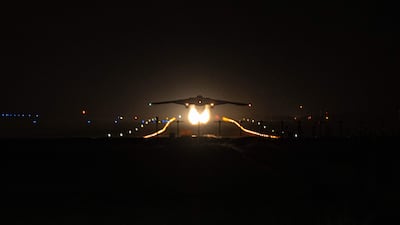
A US Air Force B-2 Spirit bomber takes off from Whiteman Air Force Base in Missouri to support Operation Midnight Hammer against Iran. AFP -

Projectiles in the sky over Doha, Qatar, on June 23 as the US military base at Al Udeid is attacked by Iran. AFP -
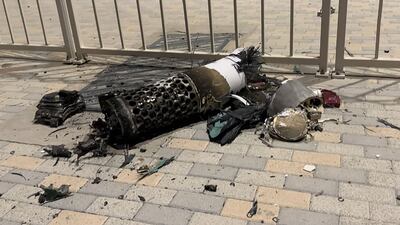
The remnants of an Iranian missile intercepted over Qatar. AFP


Iran’s future is in suspended animation. It is, at the very least, a more inward-looking country, still recovering from major regional setbacks, including the political and military degradation of Hezbollah in Lebanon, once the crown jewel of its axis, the diminished power of Hamas in Gaza, and its struggles to impose a sectarian agenda in Iraq.
There is no credible sign of an imminent collapse of the establishment, just as it is premature to discount its place as one of the four Middle Eastern powers, alongside Israel, Turkey and the Arab Gulf states.
However, as Iran retreats, it leaves behind a power vacuum – and three key regional powers are poised to fill it.
Israel, after its victory over Iran, is undeniably the region’s military hegemon today. It holds near-total air superiority stretching from the Mediterranean to Afghanistan – and much of the Levantine airspace is now effectively Israeli-controlled. Prime Minister Benjamin Netanyahu is already speaking of a “new Middle East centred on Israel”.
But as expected, Mr Netanyahu’s ongoing offensive in Gaza and aggressive moves towards annexing the West Bank – thereby eroding the prospect of a two-state future – are generating a pushback from the international community. A region defined by Israel’s military dominance, at a time when it repeatedly engages in war and fails to address the humanitarian disaster in Gaza, is unlikely to bring sustainable peace.
Ambitious and strategically opportunistic, Turkey sees an opening in the region, particularly in Syria, where it seeks influence. Ankara sees the country as part of its strategic backyard. However, Turkey’s reach remains mostly limited to northern Syria, and it cannot match Israel’s military power across the region. It, therefore, does not geopolitically qualify to be the master of the newly shaping Middle East.
The third regional pole comprises the Arab Gulf states, especially Saudi Arabia, the UAE and Qatar – the so-called “Gulf 3”, or G3. Economically prosperous, politically stable and hugely ambitious, the G3 are exerting power and influence. They are globally recognised as trusted partners. US President Donald Trump’s visit to the region earlier this year garnered plenty of international attention for the G3.
Like much of the Arab world, the trio will be relieved to see the near end of Tehran’s malign influence over the Middle East. A less destabilising Iran is welcome news for Gulf security.
These states are pursuing a dual strategy: continuing outreach and cautious engagement with Iran while improving their combined geopolitical heft as rising middle powers; and emerging as centres of influence while pursuing active foreign policy. Their goal is not dominance, but a more stable Middle East.
This does not imply total disappearance of Iranian influence. Rather, it signals a new phase in regional dynamics whereby the balance of power moves away from Tehran, at least for now. The opportunities associated with a shrinking Iran are immense. Fewer armed non-state actors. More space for diplomacy and peace initiatives. Renewed focus on geoeconomics as opposed to geopolitics. End of ideology, including possible end of radical political Islam.
At the end of the day, all states in the region stand to benefit from this post-Iranian hegemony of the Middle East, including Iran itself. It now has a rare opportunity to pivot from confrontation to co-operation. Much of this, however, still depends on the Islamic Republic and whether it chooses to act responsibly and pragmatically in the years to come.

