


Sixty kilometres or so from Dubai International Airport, they are working flat-out, building the world’s biggest airport.
Khalifa Al Zaffin, executive chairman of Dubai Aviation City Corporation, says Al Maktoum International Airport will be completed in phases, with the first set to be operational in 2032. Key contractors are mobilised, construction is proceeding and a contract has been issued to develop a second runway for the new airport. When completed, the initial section will be capable of handling up to 150 million passengers annually. In all, when it is finished, Al Maktoum International will cater for 260 million passengers a year. It’s intended to fully replace Dubai International Airport within 10 years.
In the UK, they can only look at what is unfolding in Dubai with wonder and envy. The sheer scale, the numbers, the dates – they make the country’s own history of airport expansion look anachronistic, desperately cack-handed and cumbersome.
They’ve been arguing about expanding Heathrow since 1968. If the third runway is ever built, the main London airport will accommodate 150 million travellers a year, which just happens to be the same as that first phase of Al Maktoum International.
Rachel Reeves, Chancellor of the Exchequer, has set a deadline of 2035 for the new runway to be operational, so three years after Al Maktoum International is up and running.
The contrast between the two could not be greater. Still, Prime Minister Keir Starmer and Ms Reeves insist Heathrow’s third runway is to go ahead. But if you were prone to gambling, which would you select as most likely to hit its targets?
It’s not only the comparison with Dubai that is stark. Other airports have been planned and built and expanded all around the world while the UK prevaricates. Britain argues while others get on and do the job.
Looking at how civil aviation develops and operates elsewhere is not only a statistics game. It matters for a simple reason, that airlines and passengers are examining like-for-likes on a daily basis. Air travel is a global industry; Dubai, London and other destinations are all bound up in international competition. Customers, whether they are companies like the passenger and freight operators, or business and leisure travellers, are scrutinising prices and what they receive for their money.
Decades of flight through Heathrow - in pictures
-
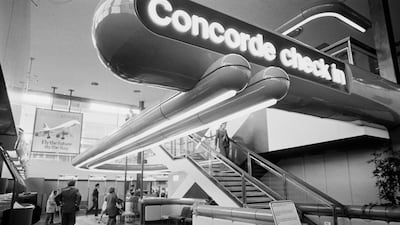
Heathrow Airport in London, the UK's busiest, has been a travel hub for decades. Here The National takes a look back at Heathrow through the years. All photos: Getty Images -
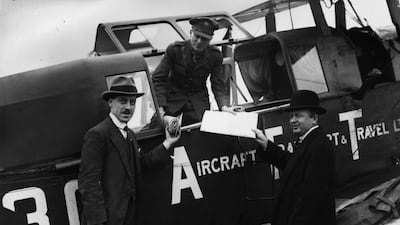
An Airco De Havilland biplane of the British airline, Aircraft Transport and Travel Limited, about to leave on the company’s inaugural flight from Hounslow Heath Aerodrome, later known as Heathrow, to Le Bourget, Paris, in August 1919 -
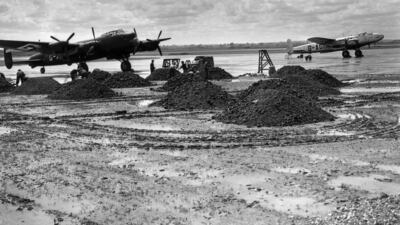
Waterlogged runways at London Airport - Heathrow's original name - one week before it became Britain's main aerial gateway to the US in 1946 -
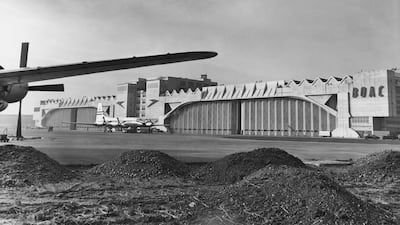
The new BOAC maintenance headquarters at London Airport circa 1955 -
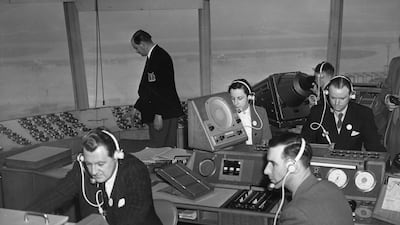
The air traffic control room at the airport's new terminal in 1955 -
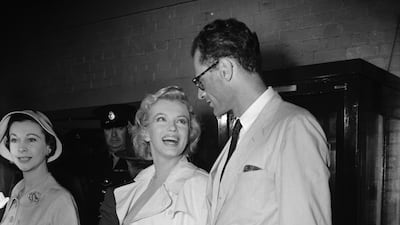
US film star Marilyn Monroe with her husband, playwright Arthur Miller, after arriving at the airport in July 1956 -
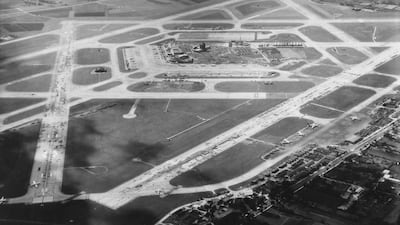
An aerial view showing the runways in 1958 -

The arrivals and departures board in 1960 -

A new airport gift shop, selling items by Chanel, Wedgwood and Pringle of Scotland, in 1961 -
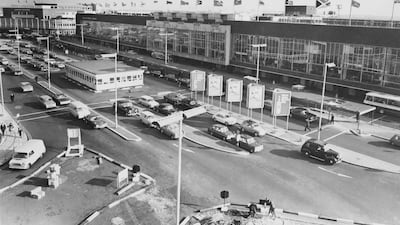
The Queen's Building and the No. 1 Building Europa at Heathrow in 1965 -
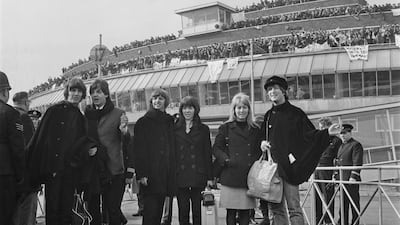
The Beatles leave Heathrow for Salzburg in Austria, to resume filming of the movie Help!, in 1965 -
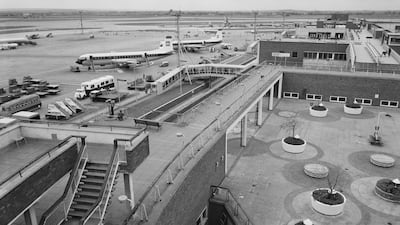
Passenger terminal gates at Heathrow in 1966 -
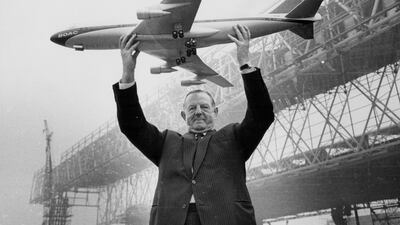
Keith Granville, managing director of BOAC, holding up a model of the Boeing 747 jet, with the new aircraft hangars under construction in the background, at Heathrow in 1969 -
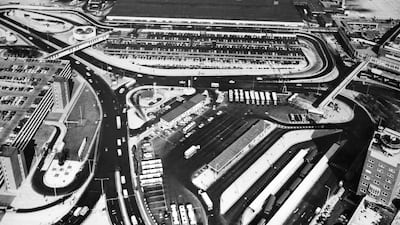
An aerial view of Heathrow in 1970 -
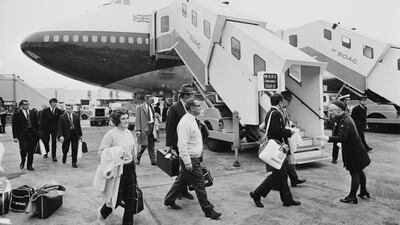
Passengers boarding the first BOAC Jumbo Jet 747 used for a commercial flight, from London Heathrow to New York, in 1971 -
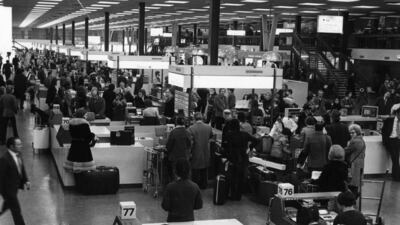
Passengers going through the departure lounge at Heathrow in 1973 -
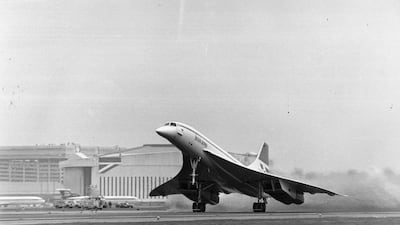
Concorde takes off from Heathrow on her first commercial flight for British Airways in 1976 -
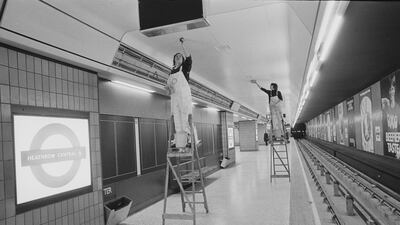
Men at work finalising the Heathrow Central underground station before its opening in 1977 -
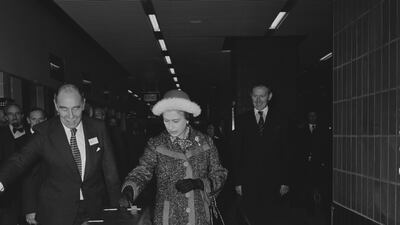
Queen Elizabeth II passing though the Tube gates at Heathrow Central station on its opening in 1977 -
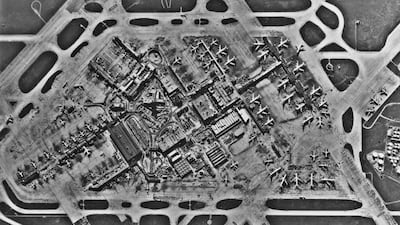
An aerial view of Heathrow in 1978 -

Passengers waiting near a departures board in 1979 -
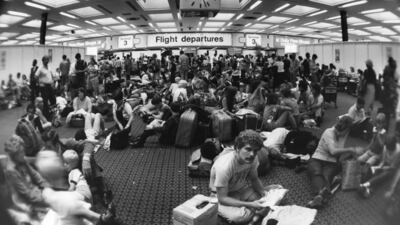
Holidaymakers waiting in the departure lounge at Terminal 3 of Heathrow in 1981 -
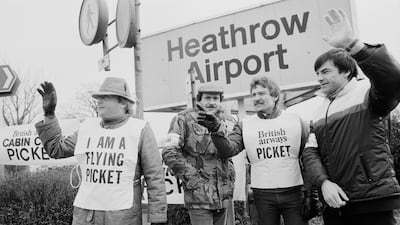
British Airways employees protesting at Heathrow in 1984 -
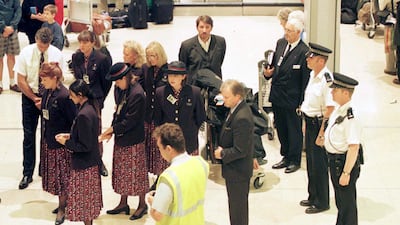
Passengers and staff observe a silence in Heathrow's Terminal One to mark the beginning of the funeral of Diana, Princess of Wales, in 1997 -
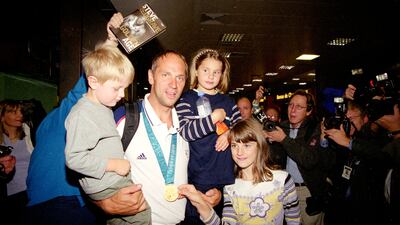
Rower Steve Redgrave at Heathrow with daughters Sophie and Natalie and son Zak after returning from the Sydney 2000 Olympic Games with his gold medal -
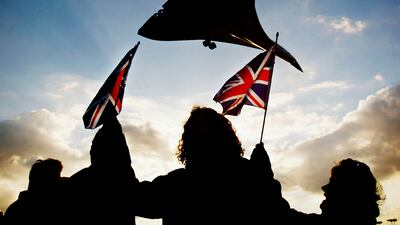
Spectators watch the last Concorde land at Heathrow in 2003 -
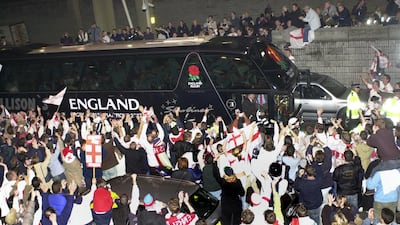
Fans surround the coach carrying the England rugby team at Heathrow, as they arrived from Sydney after winning the World Cup in 2003 -
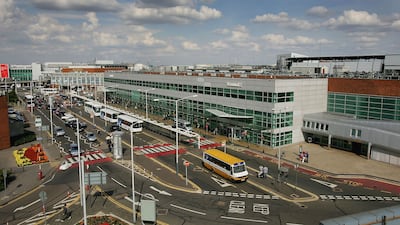
Heathrow's Terminal 2 in 2004 -
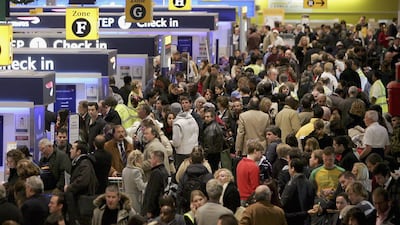
Passengers queue to check in at Terminal 1 of Heathrow Airport during the Christmas 2006 and New Year period -
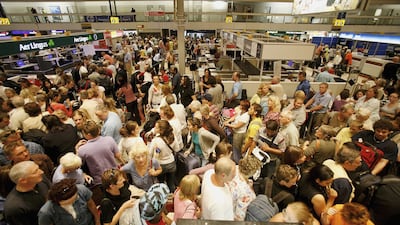
Passengers wait at Terminal 1 on August 10, 2006, after airport security was raised to critical when a terrorist plot to blow up planes in mid-flight from the UK to the US was disrupted by police -
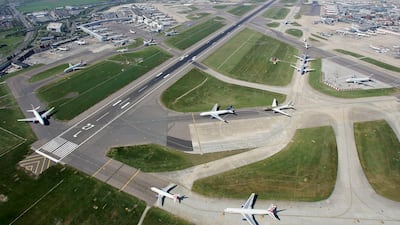
Planes queueing to take off at Heathrow in 2007 -
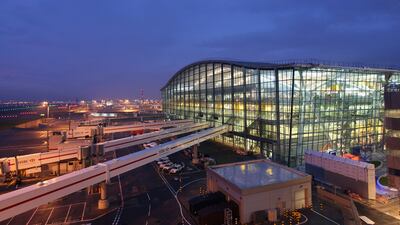
The new Terminal 5 at Heathrow in 2008 -
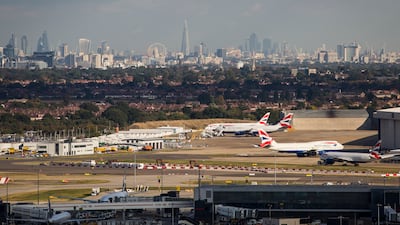
Aircraft at Heathrow Airport in front of the London skyline in 2016 -
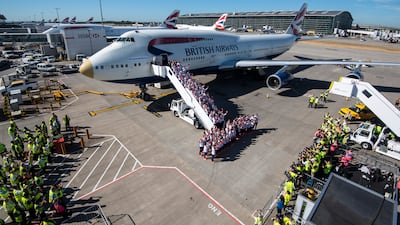
Members of Team GB arrive from Rio de Janeiro at Heathrow, after returning from the 2016 Olympics, which saw Great Britain's strongest performance at the Games in over a century -

A composite photo shows planes taking off from Heathrow in November 2016. Forty-two planes were captured between 10.17am and 11.17am and a montage was created from those single images -
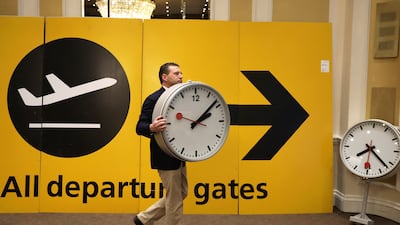
Items are arranged during an auction preview at Heathrow in 2018. The contents of Terminal 1, which closed in 2015, were being sold -
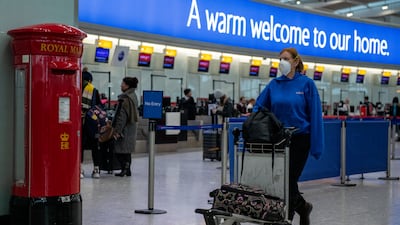
An airline passenger wearing a face mask pushes her bags through Heathrow's Terminal 5 during the coronavirus pandemic in 2020 -
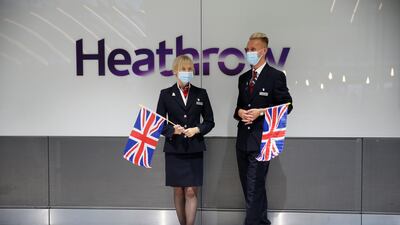
British Airways employees welcome Olympians returning from the Tokyo Olympics in 2021 -
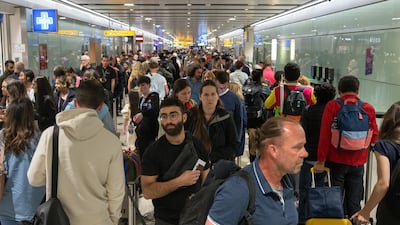
Travellers wait in a long queue to pass through the security check in 2022


At present, the most expensive airport in the world is Heathrow. It is set to become even more costly should the new scheme receive approval. Under plans submitted to the government, Heathrow is reckoning on spending £49 billion ($65.14 billion), to be recovered from increased landing charges that will in turn be recouped by the airlines from higher fares.
Again, Dubai rears its head. The bill for the new Al Maktoum International is estimated at £26 billion. By the end, Heathrow will have only three runways compared with Dubai’s five.
Heathrow’s funding will be private, reflecting a British way of paying for major infrastructure improvements that effectively encourages spending without financial comeback to the developer. They can "gold-plate" in the knowledge they are not bearing the expense, which ultimately the end user, in this case air passengers, will cough up.
The most glaring example of how this can play out, to the detriment of the consumer, is the UK water industry. It, too, was privatised, along with the British Airports Authority, operator of Heathrow, in the Thatcher era (1979-1990). The identical regulatory framework was applied and ever since, the price of water and the profits enjoyed by the water companies – but not the quality of service – has kept on climbing. A similar structure exists and will, barring an unlikely change in the rules, be followed again at Heathrow.
Of course, Heathrow is not Dubai. The London airport was built originally in the wrong location, at a West London site, which in today’s world of vastly busier air travel is no longer fit for purpose. It abuts the M25, one of Britain and Europe’s most congested motorways, and is in a part of the South-east that is criss-crossed by rivers and streams and their valleys. Adding a new runway is a mammoth undertaking, requiring complex engineering and environmental considerations.
Heathrow management believes it has found the solution by erecting a tunnel, diverting from the frequently jammed road under the airstrip. Cue probable campaigns and protests as wholesale protracted vehicle disruption, despite Heathrow’s assurances to the contrary, is almost certain to occur. To do it without would be nothing short of a miracle and few share Heathrow’s optimism.
What is telling is how a key plank in the UK government’s economic growth strategy is allowed to progress in such a manner. According to Ms Reeves, as she announced the government’s support for the third runway this year: "These are decisions the national government makes, and this Labour government backs Heathrow expansion, backs the third runway at Heathrow."
That is not her fault, it’s the UK methodology – same with the water companies. Witness also HS2 where the planned, landmark superfast rail service to the North-west has been drastically curtailed and subjected to monumental delay, and the bill spirals ever upwards.
A cheaper alternative to the Heathrow plan has been proposed by the self-made billionaire and airport hotel developer, Surinder Arora. His vision encompasses building a shorter runway that does not threaten the M25 and plays to the airlines’ preference for smaller, long-haul planes. Mr Arora, who counts Bechtel in his line-up, is also advocating Heathrow’s new terminal to be run by a company with a proven high-grade record in high-grade airport management to inject competition into the West London set-up. His final sum, for a runway and terminal, is £25 billion, again close to that Dubai £26 billion figure.
Mr Starmer and Ms Reeves may stick with Heathrow or as some would regard it, gamble, and pick Mr Arora. Or they could follow previous governments and admit defeat and consign Heathrow’s expansion to the drawing board. The difference this time is that it has been made vital to their economic growth strategy. In that sense, presumably, it must happen. But how remains to be seen.

