


The administration of US President Donald Trump, at the time of writing, appears on the brink of joining Israel’s war against Iran.
Mr Trump seems to be virtually announcing that the US will suddenly embrace an open-ended morass he had been skilfully avoiding. He abruptly left the G7 meeting in Canada, claiming he was about to tackle “stuff … much bigger than” a potential ceasefire, including “a real end“ (whatever that may mean) to the confrontation.
He’s now referring to Israel’s military posture with the possessive pronoun “we”. He even seems to be demanding “unconditional surrender“ from Iran – a phrase that is particularly inscrutable yet profoundly irresponsible and unachievable, short of highly implausible and extreme measures such as nuclear attacks or a full-scale ground invasion.
He has also mused about assassinating Iran’s supreme leader, Ayatollah Ali Khamenei. He wrote that he knows where Mr Khamenei is located, but that “we are not going to take him out [kill!], at least not for now”.
Mr Trump’s dire threats extended to Iran’s civilian population. He warned all 10 million residents of Tehran to evacuate immediately. He may be implying a potential US and/or Israeli tactical nuclear attack, or carpet bombings not seen anywhere for many decades.
The US President’s intervention still remains rhetorical, notwithstanding Washington’s role as Israel’s diplomatic defender and arms supplier. But it marks a dismaying shift in the American approach to the new Middle East conflict. The White House had previously appeared to be employing “constructive ambiguity“, in which Washington is deliberately unclear about what it may or may not do in a given crisis to maximise options and leverage with all parties.
-
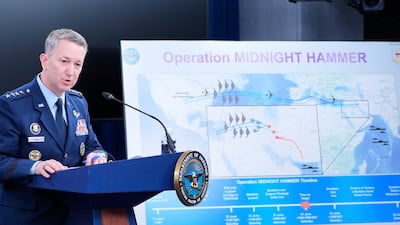
Gen Dan Caine, Chairman of the Joint Chiefs of Staff, holds a press conference at the Pentagon after the US military struck three sites in Iran. AP -
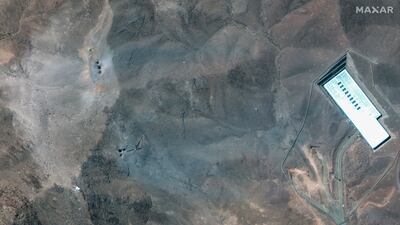
A handout satellite image made available by Maxar Technologies shows craters and ash on a ridge at the Fordow underground uranium enrichment following US air strikes. EPA -
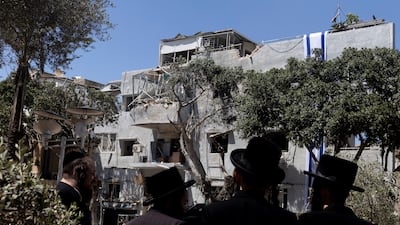
Ultra-Orthodox Jewish men look in shock at a building ruined in an Iranian missile strike in Haifa, Israel. Getty Images -
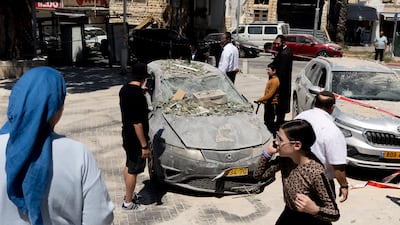
Cars damaged in Haifa. Getty Images -
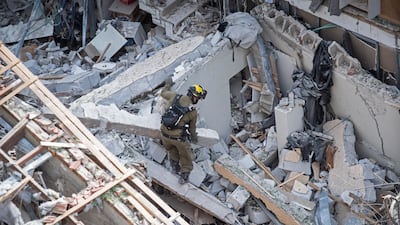
Debris in Tel Aviv. Israel was hit by a wave of aerial attacks from Iran after the US entered the war overnight and bombed several Iranian nuclear sites. Getty Images -
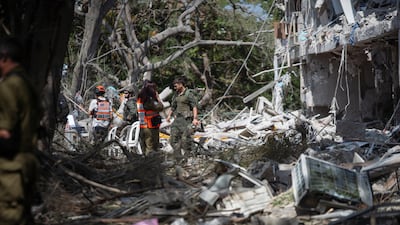
Emergency workers search for survivors in the Ramat Aviv neighbourhood of Tel Aviv, after it was bombed. Getty Images -
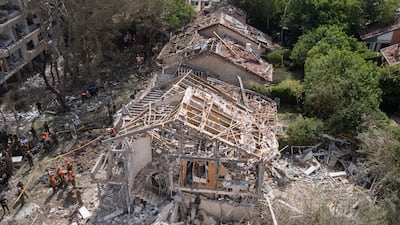
Residential buildings destroyed at the site of an Iranian air strike in Ramat Aviv. Getty Images -
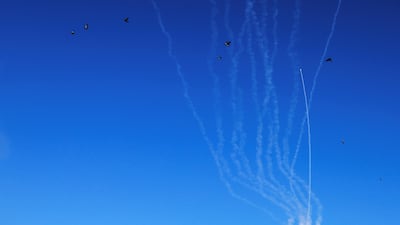
Missiles launched from Iran are intercepted over Tel Aviv. Reuters -
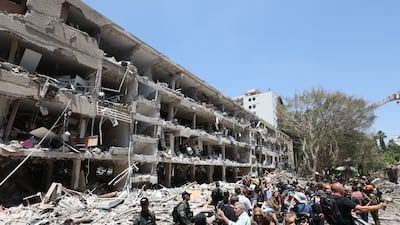
Israeli emergency teams at the site of an Iranian missile strike on a residential complex in Tel Aviv. EPA -
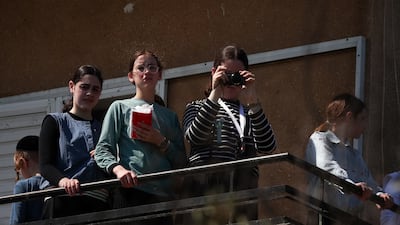
People look at a site bombed in Haifa. Reuters -
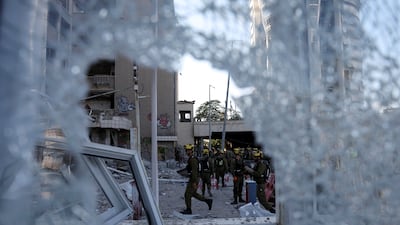
Israeli emergency personnel at a building hit by an Iranian missile strike, in Haifa. Reuters -
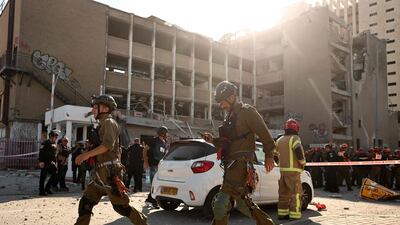
Israeli emergency personnel at a building hit by an Iranian missile strike, in Haifa. AFP -
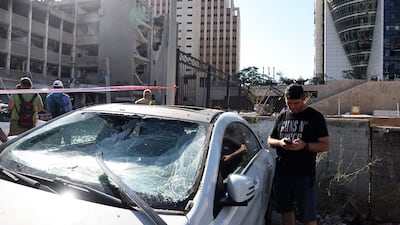
A car hit by a missile launched from Iran, in Haifa. AFP -

Israeli emergency personnel at a building hit by an Iranian missile strike, in Haifa. AFP -
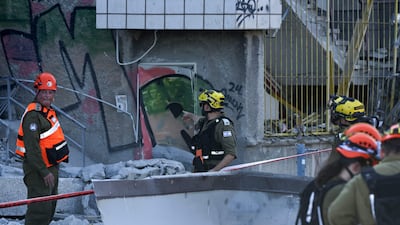
Israeli emergency personnel at a building hit by an Iranian missile strike, in Haifa. AFP -
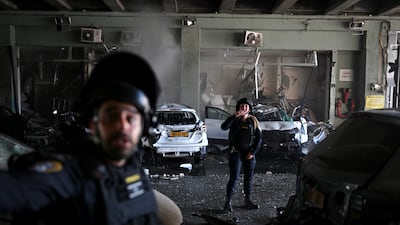
Israeli emergency personnel at a building hit by an Iranian missile strike, in Haifa. AFP -
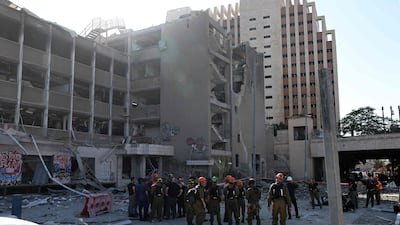
Israeli emergency personnel at a building hit by an Iranian missile strike, in Haifa. AFP -
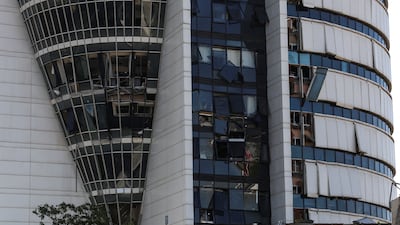
People gather outside a damaged building in Haifa. Reuters -
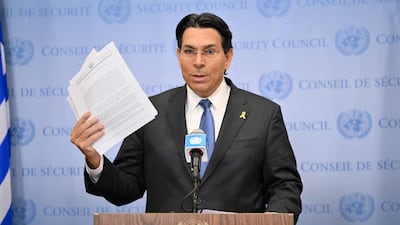
Israeli ambassador to the UN in Geneva addresses and emergency session. AFP -
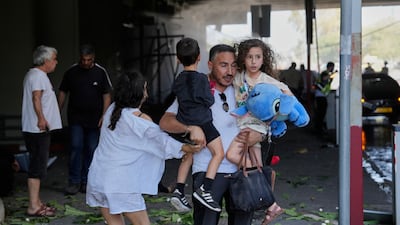
Israelis flee an Iranian missile strike in the port city of Haifa. AP Photo -
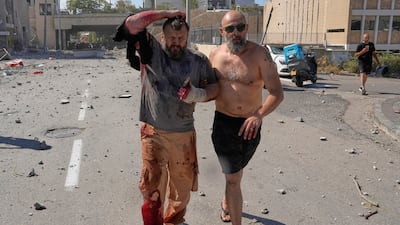
An injured man is helped after an Iranian missile strike in Haifa. AP Photo -
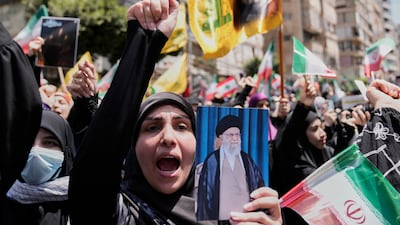
A protester holds up a portrait of Iran's supreme leader Ayatollah Ali Khamenei at a demonstration against Israeli attacks on Iran, in Beirut, Lebanon. AP Photo -

People take shelter as air raid sirens warn of incoming Iranian strikes in Tel Aviv. AP Photo -
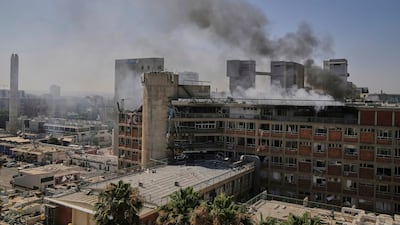
Smokes rises from Soroka Medical Centre, in Beersheba, southern Israel, after it was hit by an Iranian missile. AP -
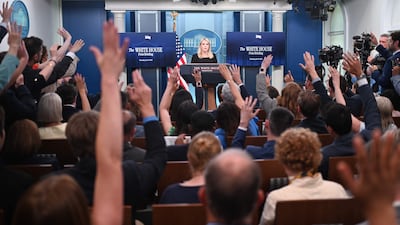
White House press secretary Karoline Leavitt takes questions from reporters. She said President Donald Trump would decide whether the US would join Israel’s war on Iran 'in the next two weeks'. AFP -
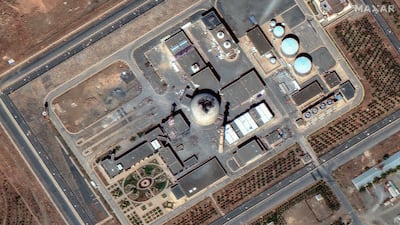
Iran's Arak heavy water reactor, in central Iran, after Israeli air strikes. Reuters -
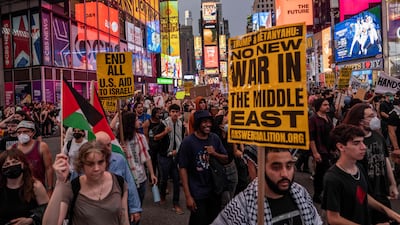
People march in Times Square, New York, to call on President Trump not to go to war with Iran. AFP -
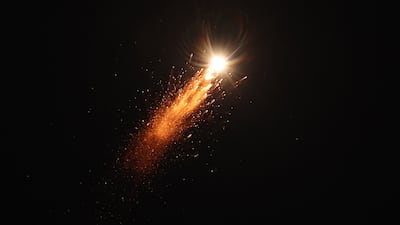
Israel's Iron Dome air defence system intercepts missiles fired from Iran over Tel Aviv. EPA -
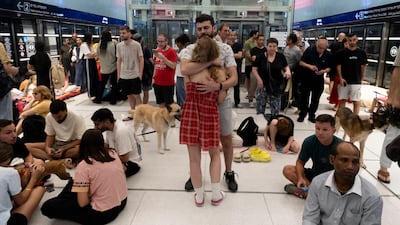
Israelis shelter in an underground train station in Ramat Gan after a missile warning. Getty Images -
Israeli special forces check the remains of a suspected Iranian ballistic missile in northern Israel. Reuters -
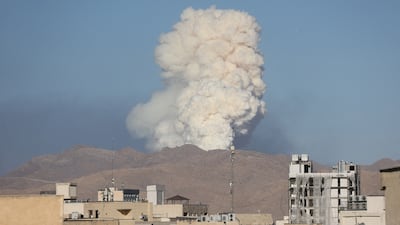
Smoke rises after an Israeli attack in the Iranian capital, Tehran. Reuters -
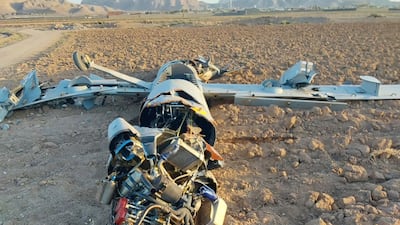
A picture released by Iran's armed forces claims to show an Israeli drone shot down outside the central city of Isfahan. AP -

People take cover inside a cable car tunnel in Haifa after an Iranian missile attack. Reuters -
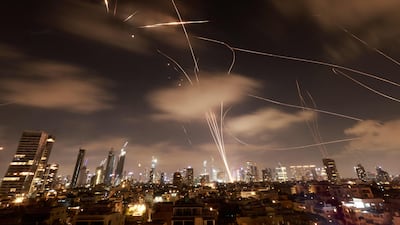
Israeli air defence systems fire at Iranian missiles over Tel Aviv. AFP -
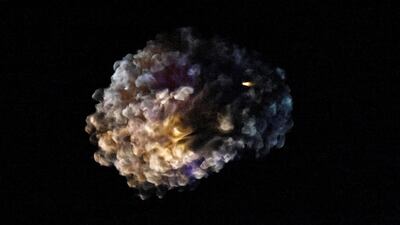
Missiles are intercepted above Ashkelon, Israel. Reuters -
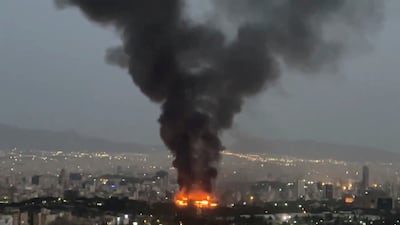
Smoke rises in Tehran. Reuters -
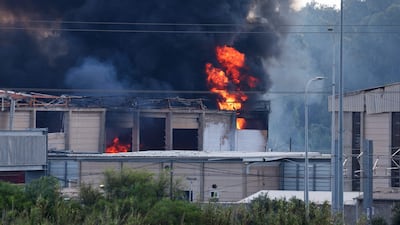
A building burns after strikes on the Israeli city of Herzliya, near Tel Aviv. AFP -
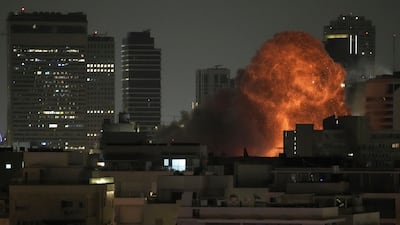
An Iranian missile causes an explosion in Tel Aviv. AP -
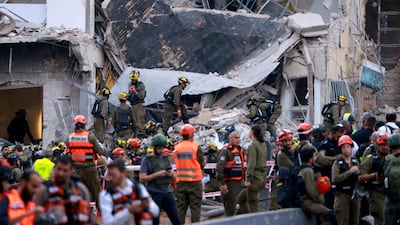
Rescuers sift through the remains of a damaged building in Tel Aviv after a barrage of Iranian rockets. AFP -

A wounded man is treated after an explosion in Tehran. AP


Mr Trump seemed to be skilfully employing this tactic, while appearing incoherent and self-contradictory. But he has now shifted to unambiguously supporting Israel’s attacks on Iran as virtually a joint project.
He had called Israel’s attacks “excellent”, but simultaneously insisted the US was not involved. He stressed that Iran should resume suspended nuclear negotiations, where Tehran was due to provide a counter-offer to the reported US proposal that promised a potential solution to the conundrum over Iran’s “right to enrich” uranium at 3.67 per cent, useful for electricity-producing reactors but not weapons.
Washington proposed that Iran undertake to join a regional nuclear energy consortium with its Arab neighbours, and, once that was established and functional, enrich uranium only through it. The idea appeared to brilliantly square the circle on the “right to enrich”.
The aspirational consortium would allow Mr Trump to tell Israel, its US supporters, and other hawkish Americans that he had persuaded Iran to forgo its “right to enrich”. However, since Tehran could continue such enrichment in practice until the consortium was established and functional, the Iranian government could tell its own public and the world that it had successfully defended its “right to enrich” and would be continuing that unless and until a regional consortium was up and running. Everyone’s a winner?
In the early days of the current conflict, the Trump administration managed to create, with the tacit aid of both Israel and, especially, Iran, the impression that Washington had neither given Israel a green nor a red light for the attack. It seemed that Mr Trump wanted everyone to believe that he put no barriers on Israel’s supposedly independent decision to attack Iran with full force as an adjunct to the negotiations designed to pressure Tehran to accept more restrictive terms.
This second constructive ambiguity appeared to be designed to allow Israel and its US supporters to assert that Israel had Washington’s full backing. Meanwhile, Iran could claim, with equal plausibility, that the US was not a direct party to the assault, so renewed negotiations with Washington wouldn’t be under fire or duress.
It strongly appeared, therefore, that the sometimes-maladroit Trump administration had powerfully rebuffed sceptics with two carefully crafted and remarkably skilful ambiguous positions on these highly challenging diplomatic and strategic conundrums.
Appearances, sadly, are sometimes deceiving. Mr Trump’s crude and bellicose intervention, which practically changes nothing in the balance of power between the two parties, strongly appears to have sacrificed both of these apparently cunning ambiguous stratagems in favour of threats that may or may not prove hollow and a new strategic posture towards Iran that may please Israel but offers little chance of a positive outcome for Washington.
During the last two years of the first Trump administration, the strategic goal of the intensive destabilisation and containment campaign that replaced former president Barack Obama’s JCPOA nuclear deal with “maximum pressure” – which mainly included debilitating unilateral American sanctions – was totally unclear. Was the purpose to soften Iran up for better terms in future talks, or did it seek regime change? Both aims had vocal backing among senior officials, and the policy never yielded sufficient gains to judge which camp had the President’s ear.
Israeli Prime Minister Benjamin Netanyahu has been clear that regime change, no matter how far-fetched, is the ultimate Israeli war aim. It’s hard not to read Mr Trump’s bellicosity and implied threats to join the fighting against Iran as answering this question in the second Trump term in favour of regime change.
If so, that’s a disastrous blunder, because regime change is almost never produced by bombing and sanctions alone. Instead of weakening authoritarian states, they end up intensifying public dependency on the existing regimes and provide a ready-made foreign bogeyman to be blamed for all their woes.
It seems Mr Trump is being led down the garden path by an Israeli Pied Piper who is promising outcomes that neither Israel nor the US can secure, absent a full-scale invasion and occupation of Iran. Instead, the policy is more likely to produce, at most, generalised destabilisation and political weakening for the establishment in peripheral areas dominated by ethnic minorities as well as vicious struggles for power within the regime and the heartland of the Persian “Islamic Republic”.
Mr Trump may be about to plunge Americans into yet another of the misguided, ill-advised and unwinnable “forever wars” he has railed against for years. That’s beyond ironic.
He may yet step back from the brink. But unless the US President’s radical shift in rhetoric is just crude psychological warfare against Iran, this certainly seems to be the alarming trajectory for his administration’s policies towards that country.

